The Complete Guide to Estonia Citizenship by Descent
The Complete Guide to Estonia Citizenship by Descent
Estonia offers a clear pathway to citizenship for those with Estonian ancestry. This guide outlines eligibility, required documents, and the steps to apply for citizenship by descent.
Estonia citizenship by descent allows individuals with Estonian heritage to claim citizenship through direct parental connections.
Unlike many other European countries with generous multi-generational programs, Estonia's citizenship by descent is strictly limited to one generation - meaning you can only claim through parents who were Estonian citizens at the time of your birth.
This highly restrictive approach reflects Estonia's careful management of citizenship and its emphasis on maintaining close cultural and familial ties to the country.
What Does "Estonia Citizenship by Descent" Mean?
Estonia citizenship by descent refers to the legal process that allows individuals born to Estonian parents to claim Estonian citizenship based on their direct parental connection. This pathway is governed by the jus sanguinis principle (right of blood), which means citizenship is transmitted through bloodline rather than birthplace.
Estonian nationality law is based on the Citizenship Act of 1995 (which came into force on April 1, 1995), establishing that children born to at least one Estonian parent automatically acquire Estonian citizenship at birth, regardless of where they were born.
Critical limitation: Estonia allows citizenship by descent only through parents, not through grandparents or more distant ancestors. This makes Estonia's program one of the most restrictive in Europe.
Dual citizenshiprestrictions: Estonia generally does not allow dual citizenship for those who naturalize. However, children born to Estonian parents can hold dual citizenship by birth, and this dual status is protected under Article 8 of the Constitution, which states that Estonian citizenship acquired by descent is inalienable and cannot be involuntarily revoked.
As an Estonian citizen, you gain all the rights and privileges of EU citizenship, including:
The right to live, work, and study anywhere in the 27 European Union member states
Access to a powerful passport with visa-free travel to
Full healthcare and education benefits across Europe
The ability to pass citizenship to your children automatically
Historical Background and Context
Estonia's citizenship laws are deeply shaped by its tumultuous 20th-century history, particularly the Soviet occupation that lasted nearly 50 years.
First Independence (1918-1940): Estonia declared independence on February 24, 1918, after centuries of foreign rule. The first Citizenship Law was adopted in 1922, establishing citizenship principles based on jus sanguinis. The Republic of Estonia existed as an independent nation until June 16, 1940, when it was occupied by the Soviet Union.
Soviet Occupation (1940-1991): On June 16, 1940, the Soviet Union occupied Estonia. From 1940-1941 and 1944-1991, Estonia was considered part of the USSR by Soviet authorities, and all local residents were deemed Soviet citizens. During this period:
Estonian citizenship effectively ceased to exist internationally
Hundreds of thousands of Estonians fled or were deported
Soviet authorities imposed their own citizenship framework
The international community largely viewed the occupation as illegal
Restoration of Independence (1991-Present): Estonia restored independence in 1991, becoming one of the first Soviet republics to break away. The restoration brought complex citizenship questions:
The citizenship restoration policy: Estonia restored citizenship to those who were citizens of the Republic of Estonia before June 16, 1940, and their descendants. This policy meant that Soviet-era immigrants and their children were not automatically granted Estonian citizenship but had to naturalize.
Statelessness issue: Initially, almost 30% of Estonia's population had no citizenship, creating significant statelessness. Estonia addressed this by:
Granting citizenship restoration to pre-1940 citizens and descendants
Creating "undefined citizenship" status (Estonian alien's passport holders)
Establishing naturalization pathways requiring 8 years residence and language proficiency
Implementing automatic citizenship for children born to non-citizen parents (reduced child statelessness)
Current citizenship framework: The Citizenship Act of 1995 governs modern Estonian citizenship, establishing clear pathways through birth, descent, naturalization, and special restoration provisions.
Major Estonian emigration destinations:
United States: Significant Estonian-American communities, particularly from pre-WWII and post-WWII waves
Canada: Large Estonian communities in Toronto and other major cities
Sweden: Major destination for WWII refugees
Australia: Post-WWII Estonian immigration
Germany, United Kingdom, and other Western nations
Important historical dates:
1918: Estonia declares independence, first citizenship framework
1922: First Citizenship Law adopted
June 16, 1940: Soviet occupation begins (critical date for restoration claims)
1991: Independence restored
April 1, 1995: Current Citizenship Act enters into force
2004: Estonia joins the European Union
Who Qualifies for Estonian Citizenship by Descent?
Estonian citizenship by descent has extremely limited eligibility compared to most European countries. You can only claim citizenship through direct parental connection.
You are entitled to Estonian citizenship by descent if:
At least one of your parents was an Estonian citizen at the time of your birth (regardless of where you were born)
You were born after your father's death, and your father was an Estonian citizen at the time of his death
That's it. Estonia does not extend citizenship by descent to grandchildren or more distant descendants.
Generational limit: Estonia allows descent only through the first generation (parents). You cannot claim through grandparents, great-grandparents, or any more distant ancestors.
Conditions for Eligibility
The Parental Citizenship Requirement
The fundamental requirement is straightforward but strict: at least one of your parents must have been an Estonian citizen at the time of your birth.
What this means:
Your parent held Estonian citizenship when you were born
It doesn't matter where you were born (Estonia or abroad)
It doesn't matter if your parent later renounced Estonian citizenship
You acquired Estonian citizenship automatically at birth by operation of law
What this doesn't mean:
Having Estonian grandparents does NOT qualify you
Having Estonian great-grandparents does NOT qualify you
Having Estonian ancestry further back does NOT qualify you
Special Case: Estonian by Birth (Pre-1940 Citizens)
There is a special restoration pathway for individuals who were Estonian citizens before June 16, 1940 (when Soviet occupation began), and their descendants.
Eligibility for restoration:
You or your ancestors were Estonian citizens before June 16, 1940
You lost citizenship due to Soviet occupation
This pathway can extend to descendants (children, potentially grandchildren in some cases)
Key difference: This is citizenship restoration, not citizenship by descent through the normal pathway. It's a special provision recognizing the illegal Soviet occupation.
Requirements for restoration claims:
Proving your ancestor was an Estonian citizen before June 16, 1940
Proving you are a direct descendant
No standard residency or language requirements (unlike naturalization)
Understanding Dual Citizenship Rules
Estonia's dual citizenship rules are complex and depend on how you acquired citizenship:
You CAN hold dual citizenship if:
You acquired Estonian citizenship by birth (through Estonian parent)
You are a child of parents holding different citizenships
Your Estonian citizenship is a basic right by blood (jus sanguinis)
Article 8 of the Constitution: "No one may be deprived of Estonian citizenship acquired by birth." This constitutional protection means:
Estonian citizenship by descent is inalienable
You cannot lose it involuntarily
You can hold other citizenships simultaneously
You generally CANNOT hold dual citizenship if:
You acquire Estonian citizenship through naturalization (must renounce previous citizenship)
You are naturalizing as an adult immigrant
Important clarification: There's a persistent myth that children with one Estonian parent and one foreign parent must "choose" citizenship at age 18. This is false. Children who acquired Estonian citizenship by birth (jus sanguinis) cannot lose it and will remain dual citizens for life.
Critical distinction:
First-generation immigrants: Naturalized citizens face dual citizenship restrictions
Second-generation and beyond: Considered "Estonian by blood" and can hold multiple citizenships
What If Your Parent Revoked Your Citizenship Before Age 18?
There is a special provision for this scenario:
You can reapply for Estonian citizenship if:
You were born to Estonian parents
Your parents revoked your Estonian citizenship before you turned 18
You now wish to reinstate it as an adult
This provision recognizes that minors cannot make citizenship decisions for themselves.
The Grandparent Problem
You CANNOT claim Estonian citizenship through grandparents alone. This is the most significant limitation of Estonia's program.
Why this matters:
Many European countries (Ireland, Poland, Italy, Lithuania, Latvia) allow claims through grandparents or even great-grandparents
Estonia's restriction to parents only means most diaspora descendants are ineligible
Your Estonian grandparent would need to have transmitted citizenship to your parent first
Example scenario:
Your grandmother was Estonian and left Estonia in 1935
She had your mother in Canada in 1950
At that time, your grandmother was no longer an Estonian citizen (had naturalized as Canadian)
Your mother did NOT acquire Estonian citizenship at birth
Therefore, you CANNOT claim Estonian citizenship
The chain must be unbroken: Each generation must have actually held Estonian citizenship at the time the next generation was born.
Required Documents
Obtaining Estonian citizenship by descent requires proving your identity and your direct parental connection to an Estonian citizen.
Your Personal Documents
Core identity documents:
Current valid passport
Your original birth certificate (showing both parents)
Proof of current address
Marriage certificate (if applicable and name changed)
Proving Your Parent's Estonian Citizenship
The critical requirement is proving your parent was an Estonian citizen when you were born.
Acceptable evidence:
Primary documents (strongest proof):
Your parent's Estonian passport (issued before or around the time of your birth)
Your parent's Estonian identity card
Your parent's Estonian birth certificate (if they were born in Estonia)
Official documents from Estonian authorities confirming citizenship status
Secondary documents:
Estonian military service records
Estonian school records
Estonian residence registration documents
Documents from Estonian National Archives
What If Documents Are Missing?
Estonian National Archives can help:
The Estonian National Archives conduct research to locate historical documents proving citizenship. Research can be based on:
Defense forces service
Land ownership records
Passport records
Church baptism records
Birth, marriage, death registers
Important note: Research conducted under a male ancestor's name has a higher probability of success due to historical record-keeping practices.
Where to request documents:
Estonian National Archives:
General historical records and citizenship documentation
Documents related to persons who departed Estonia by 1926
Tallinn City Archives:
Church baptism records for Tallinn and North Estonia
Tartu Historical Archives:
Church baptism records for South Estonia region
Important: A birth certificate alone is not sufficient to prove Estonian citizenship. You need actual proof of citizenship status (passport, ID card, or official citizenship confirmation).
Proving Your Lineage
You need to establish the direct connection between you and your Estonian parent:
Required documents:
Your birth certificate showing your parent's name
Your parent's birth certificate
Marriage certificates (if name changes occurred)
Any legal name change documents
Document Authentication
All foreign documents must be properly authenticated for use in Estonia:
Apostille Requirements:
All foreign documents must be validated by Apostille
Documents from Hague Convention countries need an Apostille from the competent authority
In the U.S., contact the Secretary of State of the issuing state
Translation Requirements:
All foreign documents must be officially translated into Estonian
Translations must be completed by certified translators
Both original apostilled documents and certified translations must be submitted
Where to get Apostilles:
United States:
State documents: Secretary of State of the issuing state
Federal documents: U.S. Department of State
Processing: Varies by state (typically 1-3 weeks)
Cost: Typically $5-30 per document
United Kingdom:
Foreign, Commonwealth & Development Office (FCDO)
Processing: 3-4 weeks
Cost: £30 per document
Canada:
Global Affairs Canada
Processing: 10-20 business days
Cost: CAD $50 per document
Australia:
Department of Foreign Affairs and Trade (DFAT)
Processing: 10-15 business days
Cost: AUD $80 per document
The Application Process
Step 1: Determine Your Eligibility
Before beginning, honestly assess whether you qualify:
Key questions:
Was at least one of your parents an Estonian citizen when you were born?
Do you have documentation proving your parent's Estonian citizenship?
Can you prove your direct connection to that parent?
If you answer "yes" to all three, you likely qualify for Estonian citizenship by descent.
If your closest Estonian ancestor is a grandparent or more distant: You do NOT qualify under the standard descent provisions. You would need to explore:
The special restoration pathway for pre-1940 citizens
Standard naturalization after 8 years of residence
Step 2: Gather Information About Your Parent
Collect information about your Estonian parent:
Helpful details:
Full name (in your country and in Estonia)
Date and place of birth
Estonian passport or ID card details
When they left Estonia (if applicable)
When they acquired citizenship of another country (if applicable)
Step 3: Obtain Proof of Your Parent's Estonian Citizenship
This is the most critical step.
If your parent has Estonian documents:
Request copies of their Estonian passport or ID card
Obtain their Estonian birth certificate
If documents are lost or unavailable:
Contact the Estonian National Archives for research
Provide as much information as possible about your parent
Request archival search for citizenship documentation
Professional genealogists specializing in Estonian records can assist with this research, though it may be challenging for records from the Soviet period.
Step 4: Obtain Your Birth Certificate
Get your birth certificate:
Must show both parents' names
Must be original or certified copy
Will need apostille and translation
Step 5: Authenticate and Translate
Get apostilles:
Submit all foreign documents for apostille certification
Ensure apostilles are from the correct issuing authority
Translate to Estonian:
Have all documents officially translated into Estonian by certified translators
Ensure translations are complete and accurate
Translator should be recognized by Estonian authorities
Step 6: Submit Application
Applications are submitted to Estonian authorities either in Estonia or through Estonian diplomatic missions abroad.
Application options:
Option 1: In Estonia
Submit application at any Service Office of the Police and Border Guard Board
Make reservation online before submitting
Bring all original documents, translations, and apostilles
Option 2: Through Estonian Embassy/Consulate abroad
Schedule appointment at nearest Estonian diplomatic mission
Bring all original documents, apostilles, and translations
Embassy forwards application to Estonia
Application must include:
Completed application form (in Estonian)
Your identity documents
Proof of your parent's Estonian citizenship
Your birth certificate showing parental connection
All required translations and apostilles
Application fee payment
Step 7: Wait for Decision
Processing timeline:
Standard processing: Typically completed within 1-2 months from registration
Complex cases requiring archive research: Up to 1 year
Restoration cases (pre-1940): Variable timing
During processing:
Authorities review all documents
May verify information with Estonian archives
May request additional documentation
Communication typically through embassy/consulate or directly if in Estonia
Step 8: Receive Citizenship Confirmation
Once approved:
You receive official confirmation of Estonian citizenship
You can apply for Estonian passport and ID card
Register with Estonian authorities (population register)
Full EU citizenship rights begin immediately
Passport application:
Apply at Police and Border Guard Board office in Estonia or Estonian embassy
Provide biometric photo and fingerprints
Standard processing: 30 days (€40)
Expedited processing: 2 days (€58) - only available in Estonia
Estonian passport valid for 10 years
Timeline and Costs
Realistic Timeline Breakdown
Total timeline: 3-12 months typical (depending on document availability)
Phase 1: Document Gathering (1-6 months)
Eligibility assessment: 1-2 weeks
Estonian archive research (if needed): 2-6 months
Foreign document gathering: 2-4 weeks
Document authentication and translation: 3-6 weeks
Phase 2: Application Submission (1-2 weeks)
Application preparation: 1 week
Embassy appointment scheduling: 1-2 weeks
Document submission: 1 day
Phase 3: Government Processing (1-2 months standard)
Standard processing: 1-2 months from registration
Complex cases: Up to 12 months
Phase 4: Passport Application (1 month)
After citizenship confirmation: 30 days standard processing
Cost Breakdown
DIY Route (if attempting independently):
Estonian archive research (if needed): €200-1,000
Foreign vital records: $50-200
Apostilles: $50-200
Official Estonian translations: €100-400
Application fees: Minimal
Passport application: €40 standard / €58 expedited
Total: €500-2,000 (depending on document availability)
With Professional Services:
Genealogy research: €500-2,000
Document procurement: €300-1,000
Legal consultation: €500-2,000
Translations and apostilles: €200-500
Application management: €500-1,500
Total: €2,000-7,000 depending on case complexity
Much lower costs than other European programs because eligibility is straightforward (either your parent was Estonian or not) and doesn't require extensive multi-generational research.
9 Benefits of Estonian Citizenship
1. European Union Citizenship
Estonian citizenship automatically grants you European Union citizenship, providing:
Freedom of movement to live, work, and study in any of the 27 EU member states without visas or permits.
Countries included: Germany, France, Spain, Netherlands, Sweden, Denmark, Ireland, Italy, Portugal, Austria, Belgium, Poland, and 15 others.
No sponsorship needed: Accept any job in any EU country without employer sponsorship or work permits.
Business freedom: Start a business anywhere in the EU with full access to the European single market.
2. Powerful Digital Nation Passport
The Estonian passport allows visa-free travel to 179+ destinations.
Visa-free access includes:
All EU countries (27)
United States (ESTA, 90 days)
Canada (eTA, 6 months)
United Kingdom (6 months)
Japan (90 days)
Australia (eTA, 90 days)
Most of South America
Most of Asia
The Estonian passport consistently ranks in the top 15-20 most powerful passports globally.
3. World's Most Advanced Digital Society
Estonia is globally recognized as the most digitally advanced nation:
e-Residency program: Estonia pioneered digital residency for global entrepreneurs
99% of government services online: Tax filing, voting, prescriptions, business registration all digital
Blockchain-secured: Government systems use blockchain technology for security
Digital signatures: Legally binding digital signatures since 2000
Fast internet: Some of the fastest internet speeds in Europe
4. Thriving Tech and Innovation Hub
Estonia offers exceptional opportunities for tech professionals and entrepreneurs:
10 unicorn companies: Highest per capita in Europe (Skype, Wise, Bolt, Pipedrive, etc.)
Highest startup density: Most startups per capita in Europe
E-residency for business: Run an EU business remotely with Estonian digital infrastructure
Favorable tax environment: 0% corporate tax on reinvested profits
English widely spoken: Especially in tech and business sectors
NATO and EU member: Political stability and international integration
5. Education Benefits
As an EU citizen with Estonian citizenship:
Free higher education in Estonia: University education is tuition-free in Estonian for citizens
High-quality education system: Consistently ranks at top of PISA scores globally
EU-wide access: Study anywhere in the EU at domestic student rates
English-language programs: Many programs taught in English
EU tuition examples:
Estonia: Free for Estonian-language programs, €1,500-7,500/year for English programs
Germany: Often free for undergraduate programs
France: €170-600/year at public universities
Scandinavia: Free in several countries
6. Healthcare Access
Estonian National Health System: Comprehensive universal healthcare coverage for residents.
European Health Insurance Card (EHIC): When traveling in the EU, receive necessary healthcare at local prices.
Modern digital healthcare:
99% of medical records digitized
E-prescriptions standard
Remote consultations widely available
High-quality medical care
7. High Quality of Life
Estonia offers exceptional quality of life:
Clean environment: 50% of country covered in forest
Safe country: Low crime rates, high personal safety
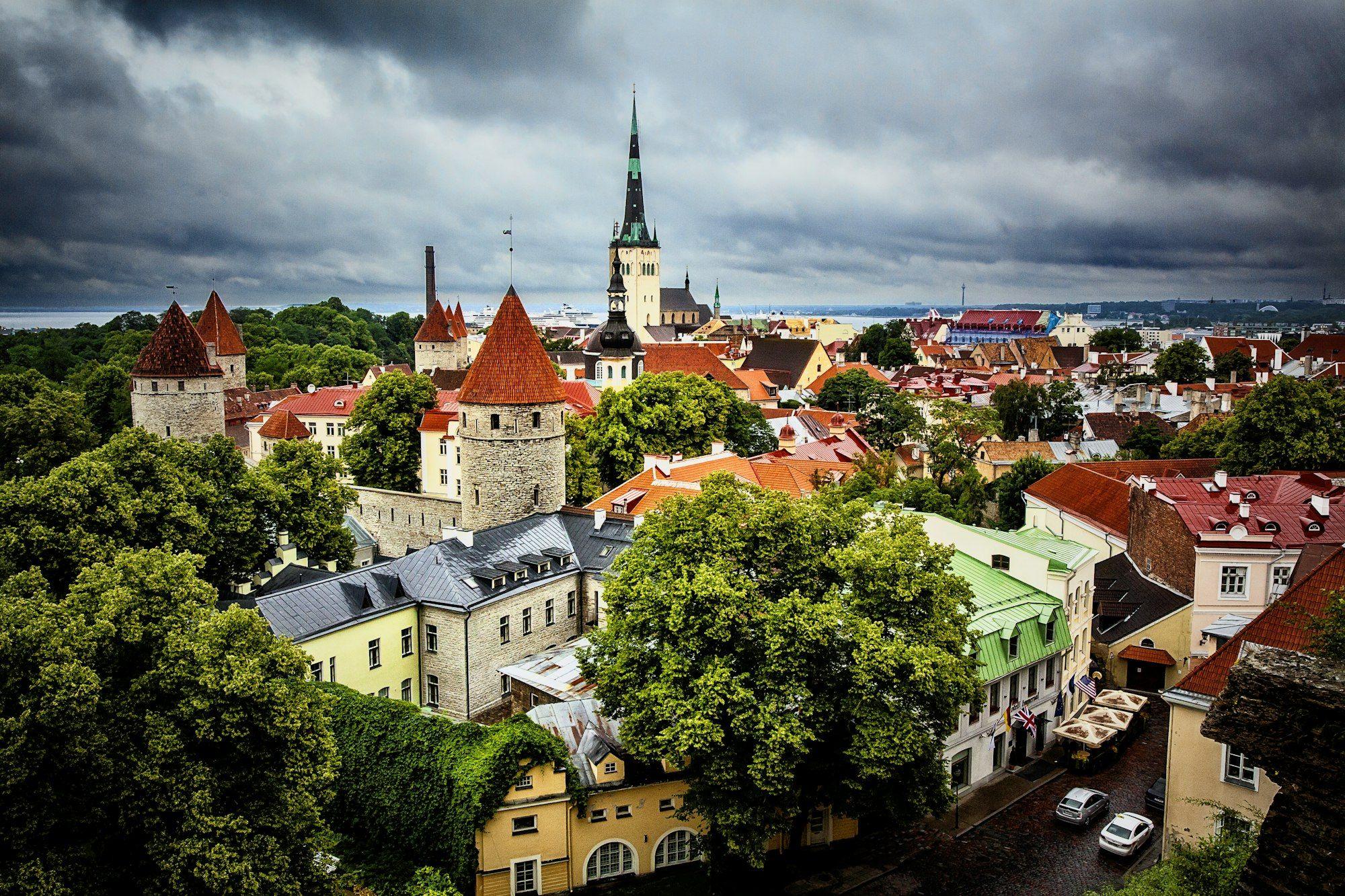
Medieval charm: UNESCO-listed Tallinn Old Town
Baltic coastline: Beautiful beaches and nature
Four distinct seasons: Snowy winters, warm summers
Affordable cost of living: Much lower than Western Europe
8. Dual Citizenship Permitted (By Birth)
Estonia allows dual citizenship for those who acquire it by birth. If you qualify for Estonian citizenship by descent, you can retain your current citizenship.
Compatible with:
United States (U.S. recognizes dual citizenship)
Canada (Canada permits dual citizenship)
United Kingdom (UK allows dual citizenship)
Australia (Australia permits dual citizenship)
Most countries worldwide
Constitutional protection: Estonian citizenship acquired by birth is protected by Article 8 of the Constitution and cannot be involuntarily revoked.
9. Passing Citizenship to Your Children
Automatic transmission: Any children you have are automatically entitled to Estonian citizenship if you are an Estonian citizen at the time of their birth, regardless of where they're born.
No generation limit: Your children can pass Estonian citizenship to their children, continuing the legacy indefinitely.
Dual citizenship for children: Children born with Estonian citizenship retain it even if they acquire another citizenship by birth.
Citizenship by Descent Programs
While Estonia's citizenship by descent program is extremely limited (parents only), many people with European heritage may qualify for citizenship through other ancestral lines. CitizenX offers comprehensive citizenship by descent services for several European countries with generous multi-generational ancestry programs.
CitizenX Citizenship by Descent Services
CitizenX specializes in helping individuals reclaim their European heritage through citizenship by descent programs. Our expert team navigates complex legal requirements, conducts genealogical research, and manages the entire application process from eligibility assessment to passport receipt.
Note: CitizenX does not currently offer Estonia citizenship by descent services due to the program's very limited scope (parents only). However, we offer full services for many other European countries with more generous programs.
Countries where CitizenX offers full citizenship by descent services:
Italy Citizenship by Descent - $25,000
No generational limit
Can claim through great-grandparents and beyond
100% online process
Approximately 6 months to passport after recognition
Claim through parents, grandparents, or great-grandparents
Lithuanian archive research included
Approximately 6 months to passport after approval
Each program includes complete eligibility assessment, comprehensive document research and retrieval, apostille and translation coordination, legal representation, application management, and dedicated 24/7 concierge support until passport receipt.
Why Choose CitizenX for Citizenship by Descent
Expert Knowledge: Our team specializes in European citizenship law and has helped over 11,500 clients successfully obtain their ancestral citizenship.
Comprehensive Service: We handle everything from genealogical research and archive documentation to legal representation and government liaison.
Time Savings: We manage the bureaucracy, document hunting, and complex legal requirements, saving you hundreds of hours of work.
Higher Success Rate: With proper documentation, legal expertise, and established relationships with government authorities, we maximize your chances of approval.
Proven Track Record: With 11,500+ citizens helped and counting, CitizenX has the experience and connections to make your application successful.
Explore CitizenX citizenship by descent programs to discover if you qualify for European citizenship through your ancestry.
Frequently Asked Questions
Can I claim Estonian citizenship through my grandparents?
No. Estonia only allows citizenship by descent through parents. If your grandparent was Estonian but your parent was not an Estonian citizen when you were born, you cannot claim Estonian citizenship through descent.
What if my parent was Estonian but naturalized as a citizen of another country?
If your parent was an Estonian citizen at the time of your birth, you acquired Estonian citizenship automatically, even if your parent later naturalized elsewhere. Estonian citizenship by birth cannot be involuntarily revoked.
Do I need to speak Estonian?
No language requirement exists for citizenship by descent. You automatically acquired citizenship at birth if your parent was Estonian. However, if you need to prove citizenship through archives, communication with authorities may require Estonian or English.
Can I hold dual citizenship?
Yes. Estonian citizenship acquired by birth (jus sanguinis) is constitutionally protected and allows dual citizenship. You can hold Estonian citizenship alongside other nationalities.
What if I was born in Estonia but my parents weren't Estonian?
Being born in Estonia does not automatically grant citizenship. Estonia follows jus sanguinis (citizenship by blood), not jus soli (citizenship by birthplace). You need at least one Estonian parent.
Can my spouse become Estonian through my citizenship?
No, your spouse cannot claim citizenship through your Estonian ancestry. They would need to qualify independently or through standard naturalization after living in Estonia for 8 years.
What about the pre-1940 restoration pathway?
If your ancestors were Estonian citizens before June 16, 1940, there may be a special restoration pathway available that extends beyond the parent-only limitation. This requires proving your ancestor's pre-1940 citizenship and researching Estonian National Archives.
How long does the process take?
If you have all required documents, standard processing is 1-2 months. If archive research is needed to locate your parent's citizenship documents, the process can take 6-12 months.
How much will this cost?
DIY approach costs €500-2,000 depending on whether archive research is needed. Professional genealogy and legal services cost €2,000-7,000 total.
Can my children get Estonian citizenship?
Yes. Children born to Estonian citizens automatically acquire Estonian citizenship at birth, regardless of where they're born. You can pass this valuable EU citizenship to future generations.
Why is Estonia's program so limited compared to other countries?
Estonia's restrictive one-generation policy reflects its post-Soviet approach to citizenship, emphasizing close family ties and preventing claims from distant diaspora descendants. Other countries like Ireland, Poland, and Lithuania have more generous multi-generational programs.
What if my parent is deceased?
You can still claim Estonian citizenship if your parent was an Estonian citizen at the time of your birth (or at the time of their death if you were born posthumously). You'll need to prove their citizenship through archival documents.
Is there any way to qualify beyond the parent limitation?
The only alternative pathway is the special restoration provision for pre-1940 citizens and their descendants, or standard naturalization requiring 8 years of residence in Estonia. Otherwise, Estonia's descent program is strictly limited to one generation.