The richest cities in the world are being redefined — not by where wealth currently sits, but by where it is moving. The global capital of capital is shifting eastward, and the speed of this migration is accelerating in ways that would have been unthinkable a decade ago.

New York, London, and Tokyo still dominate legacy rankings of the richest cities in the world, but those rankings measure accumulated stock, not directional flow. The real story of wealth in 2026 is a story of movement: out of high-tax, high-regulation Western capitals and into Dubai, Singapore, and — surprisingly — El Salvador.

This isn't speculation. It's math. When New York City levies a combined top marginal tax rate of 51.8% and Dubai charges zero, rational actors move. When London abolishes its 200-year-old non-domicile tax regime and Singapore offers zero capital gains tax alongside a booming family office ecosystem, the money follows. When Japan's inheritance tax hits 55% — the highest on Earth — and El Salvador taxes Bitcoin gains at 0%, a new generation of digital-native wealth finds its home elsewhere.

aerial view of trees, river, and architectural landmark
Photo by Sergio Sala / Unsplash

The question isn't whether the richest cities in the world are changing. It's whether the traditional wealth capitals can stop the bleeding.

History shows us: wealth capitals always shift

This has happened before. Every era gets the financial capital it deserves, and every financial capital eventually loses its crown. Understanding this pattern is essential to understanding where we are now.

Amsterdam dominated global finance for over a century. The Dutch Golden Age gave the world its first stock exchange (1602), its first central bank (the Wisselbank, 1609), and its first IPO through the Dutch East India Company. Amsterdam pioneered options trading, futures contracts, and securitized international debt. By the mid-1600s, it was the undisputed center of global capital.

structures near body of water
Photo by Azhar J / Unsplash

Then the rot set in. The Dutch "real" economy — trade and manufacturing — stagnated as England industrialized. Capital stayed in Amsterdam but increasingly flowed into foreign sovereign debt rather than domestic productive investment. The financial establishment grew conservative. Political fragmentation across Dutch provinces prevented unified economic policy. The French invasion of 1795 delivered the coup de grâce, but Amsterdam's decline had been underway for decades. By the early 1800s, London had definitively replaced Amsterdam as the world's financial center.

The transition took roughly 150 years.

London's own reign lasted about two centuries before the same pattern repeated. The United States surpassed Britain as the world's largest economy in the late 19th century, but London maintained its financial primacy through institutional inertia and the sterling system. Then came 1914. World War I transformed America from a debtor to a creditor nation overnight. The interwar period saw New York gain ground rapidly. World War II settled the question: London was physically damaged, the British Empire was dissolving, and the Bretton Woods Conference of 1944 officially installed the US dollar as the world's reserve currency. US Secretary Henry Morgenthau stated explicitly that American policy aimed to "move the financial center of the world from London and Wall Street, to the US Treasury."

The London-to-New York transition took roughly 30 to 50 years.

time lapse photography of woman walking on street while holding umbrella near London telephone booth beside wall
Photo by Jack Finnigan / Unsplash

Notice the acceleration. Amsterdam to London: 150 years. London to New York: 30-50 years. In each case, the same ingredients were present — economic stagnation in the incumbent, competitive tax and regulatory environments in the challenger, a catalyzing geopolitical event, and a critical mass of talent and capital choosing to relocate.

Every one of those ingredients is present today.

🇺🇸 New York: still rich, rapidly leaking

New York City remains home to 123 billionaires according to the Forbes 2025 list — more than any city on Earth, with a combined net worth of $759 billion. It topped the Forbes city ranking for the fourth consecutive year. By the Knight Frank Wealth Report's count, New York hosts 16,630 ultra-high-net-worth individuals (those with $30 million or more). By sheer stock of wealth, New York's position appears unassailable.

But the flow data tells a different story entirely.

cars parked near brown building
Photo by Redd Francisco / Unsplash

IRS Statistics of Income migration data reveals a sustained hemorrhage. In the 2021-2022 filing period alone, New York state lost 107,798 net tax returns — 476,051 filers and dependents moved out while only 253,349 moved in. More critically, the adjusted gross income leaving exceeded the income arriving by over $14.1 billion in just two years. The average AGI of outbound filers was $126,665, but the high-income cohort tells the real story: 31,485 households earning $200,000 or more left New York, with an average income of $713,310. Their top destination? Florida, which gained a net 60,210 residents from New York, with average incomes of $182,895.

Why are they leaving? The tax math is brutally simple. A high earner in New York City faces a federal rate of 37%, a state rate of up to 10.9%, a city rate of 3.876%, and a net investment income tax of 3.8% — a combined top marginal rate that can exceed 55%. Move to Miami and the state and city components drop to zero. The same income, the same work, hundreds of thousands of dollars more in the bank account every year.

At the county level, the data is even more stark. Manhattan alone lost over $16 billion in taxable income according to Tax Foundation analysis of IRS data — representing 13% of its remaining tax base. San Francisco lost over $8 billion, or 20% of its tax base. Between 2000 and 2020, New York state cumulatively lost approximately $1.1 trillion in adjusted gross income to outmigration. Florida, over the same period, gained roughly $1.75 trillion.

This isn't a blip. It's a structural repricing of where American wealth chooses to reside.

Miami is the primary domestic beneficiary. CitizenX's proprietary HNWI migration modeling at citizenx.com/exodus — built from IRS SOI data and Federal Reserve Survey of Consumer Finances methodology — shows Miami-Dade County absorbing a disproportionate share of America's wealthiest movers. The pattern is consistent year after year: hedge fund managers, tech founders, and crypto entrepreneurs are concentrating in South Florida at rates not seen since the pandemic-era exodus began. Citadel moved its headquarters. Founders Fund opened its Miami office. The flow of $200K+ earners into Florida dwarfs every other state destination. Miami has become the domestic staging ground — the first stop on a longer journey toward full global tax optimization.

aerial photography of city at daytime
Photo by Ashley Satanosky / Unsplash

But here's the critical insight: the domestic migration from New York and California to Florida and Texas is merely the first leg of a global reallocation that extends far beyond US borders. Miami is zero state tax. Dubai is zero everything. The same logic that moves a portfolio manager from the Upper East Side to Brickell eventually moves them from Brickell to DIFC. Wealth is moving toward zero, and Miami is a waypoint, not a final destination.

🇬🇧 London: the non-dom destruction

If New York is leaking, London is facing a self-inflicted wound. In April 2025, the United Kingdom abolished its 200-year-old non-domicile tax regime — one of the most consequential tax policy changes in modern British history.

Under the old system, wealthy foreign residents could elect to be taxed only on UK-source income and gains, with foreign income taxed only when remitted to the UK. This arrangement could persist for up to 15 years and was a primary reason why London attracted an extraordinary concentration of global wealth. Approximately 74,000 non-domiciled residents called the UK home, including 37,800 long-term residents who paid an annual charge of £30,000 to shelter offshore income.

The new system taxes all UK residents on worldwide income and gains as they arise. A replacement four-year "Foreign Income and Gains" regime offers temporary relief for new arrivals, but the message to existing non-doms was clear: your tax holiday is over.

The departures began before the ink was dry. Consultancy firm Chamberlain Walker found that approximately 1,800 non-doms left the UK during the 2024/25 tax year — 50% above the Office for Budget Responsibility's forecast of 1,200. Oxford Economics survey data indicated that 63% of non-doms planned to leave within two years. High-profile departures made headlines: Goldman Sachs International CEO Richard Gnodde relocated to Italy; Norwegian shipping billionaire John Fredriksen and Egyptian-born businessman Nassef Sawiris moved to the UAE.

And this is layered on top of the damage already inflicted by Brexit. According to the New Financial think tank, 440 financial services firms have relocated at least part of their business, staff, or legal entities from the UK to the EU since the Brexit vote. Banks moved £900 billion in assets — roughly 10% of the entire UK banking system. The Lord Mayor of the City of London himself estimated that Brexit cost London approximately 40,000 financial sector jobs. Dublin absorbed 135 firms and 10,000 jobs. Paris took 102 firms. Luxembourg, Frankfurt, and Amsterdam divided the rest.

The UK's tax burden tells the rest of the story. The top marginal income tax rate is 45%, with an additional 2% National Insurance above the upper threshold — an effective 47%. But between £100,000 and £125,140, the personal allowance taper creates an effective marginal rate of approximately 60%. Capital gains tax was raised in October 2024 from 10%/20% to 18%/24%. Inheritance tax stands at 40% above a £325,000 threshold that has been frozen since 2009. The tax-to-GDP ratio is projected to reach 37% — the highest since 1947.

The Z/Yen Global Financial Centres Index still ranks London second globally. But the gap with New York has been narrowing from above, while Singapore and Dubai close in from below. The UBS Global Wealth Report projects UK millionaires will fall from 3.06 million to 2.54 million by 2028 — a decline of over half a million. The question London must answer is stark: at what combined rate of income tax, capital gains tax, inheritance tax, and regulatory friction does a city stop being a wealth magnet and start becoming a wealth repellent?

🇯🇵 Tokyo: the slow fade

Tokyo presents the quietest crisis among the traditional richest cities in the world. There is no single dramatic policy shift, no Brexit-style rupture. Instead, there is a grinding, decades-long erosion that has transformed one of the world's great economic powerhouses into a cautionary tale.

Japan's top combined marginal income tax rate — national plus local — reaches approximately 55%. Its inheritance tax rate tops out at 55%, the highest in the world, applying to inherited amounts over ¥600 million (roughly $4 million). In 2015, Japan cut the basic inheritance tax exemption by 40%, broadening the base significantly. The gift tax also reaches 55%, with an annual exemption of just ¥1.1 million — about $7,300. And since July 2015, Japan has enforced an exit tax of 15.315% on deemed capital gains for anyone with financial assets exceeding ¥100 million who has lived in Japan for five of the past ten years.

aerial view of city buildings during night time
Photo by Takashi Miyazaki / Unsplash

The economic context makes these rates even more punishing. Japan's nominal GDP in dollar terms fell from $5.55 trillion in 1995 to $4.27 trillion in 2025. Its share of world GDP collapsed from 17.8% to 3.6% over the same period. GDP per capita dropped from $44,210 — third highest in the world in 1995 — to $34,713, now ranked around 36th globally. Germany overtook Japan for third-largest economy in 2023; India claimed fourth place. Japan is now the world's fifth-largest economy, and falling.

The yen's depreciation amplifies everything. The currency weakened from approximately 103 yen per dollar in early 2021 to 161 yen per dollar at its July 2024 low — losing roughly one-third of its value in three years. The Bank of Japan intervened with ¥15.3 trillion in direct currency purchases during 2024 alone, but the structural weakness persists: Japan's public debt at 240% of GDP constrains monetary policy, effectively transferring fiscal weakness from the bond market to the exchange rate.

And then there is the demographic catastrophe. Japan recorded just 686,061 births in 2024 — the first time below 700,000 since records began in 1899. Deaths exceeded births by 908,574, the largest natural population decline ever recorded. The total fertility rate fell to 1.15, far below the 2.1 replacement level. Thirty percent of the population is 65 or older. The population is projected to fall to 88 million by 2065, from today's 123 million.

Tokyo remains fourth in the Knight Frank City Wealth Index and re-entered the top 20 of the Global Financial Centres Index at 19th. But it is notably absent from the Forbes top 10 cities for billionaires despite having 292,300 millionaires (third globally). The paradox of many millionaires but few billionaires speaks to Japan's wealth ceiling — the combination of extreme inheritance taxation, economic stagnation, and currency debasement that prevents wealth accumulation at the highest levels. Tokyo's wealth is broad but shallow, and getting shallower every year.

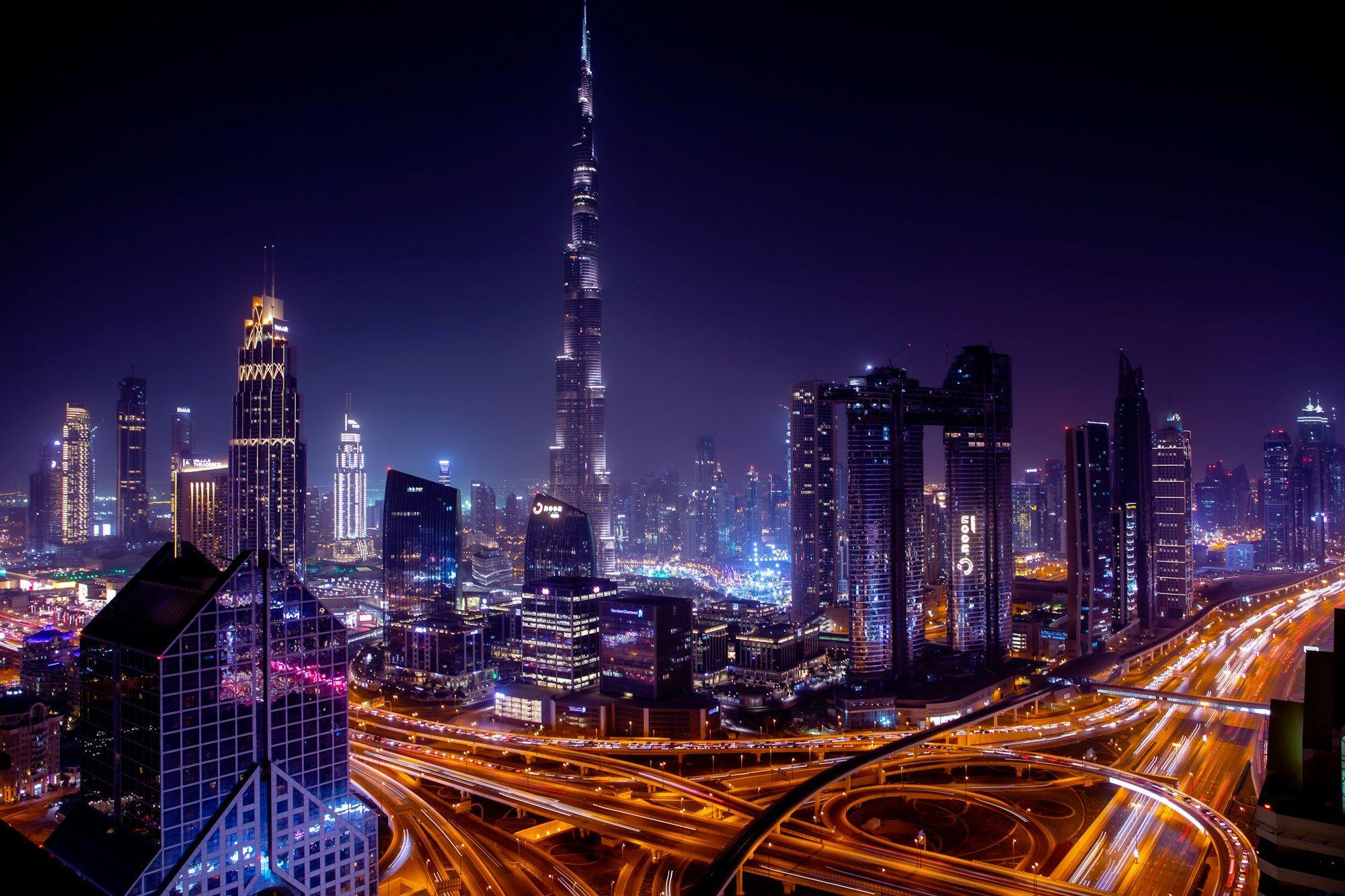
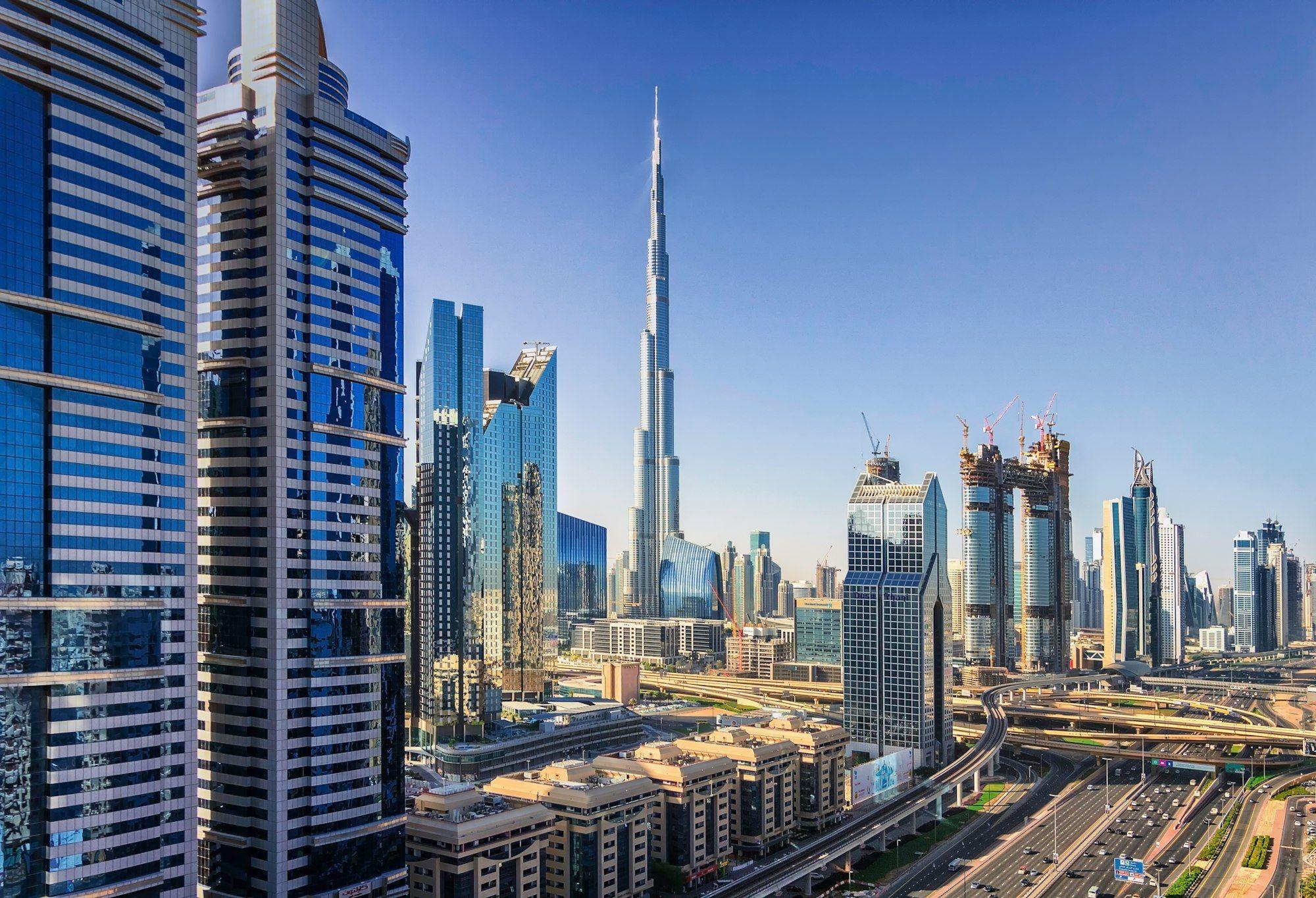
🇦🇪 Dubai: the zero-gravity wealth magnet

What happens when a city offers zero percent personal income tax, zero capital gains tax, zero inheritance tax, unrestricted profit repatriation, and no currency controls — and pairs these with world-class infrastructure, geographic centrality between Europe and Asia, and relentless government ambition?

Dubai answers that question. And the answer is explosive growth across every metric that matters.

Dubai's population surpassed 4.04 million in November 2025, adding over 208,600 residents in 2024 alone — a 5.5% annual increase. The city grows by approximately 567 people per day. But these aren't ordinary migrants. Dubai's DIFC (Dubai International Financial Centre) now hosts over 120 family offices and 800 family-related structures managing more than $1.2 trillion in assets, according to DIFC CEO Arif Amiri in a Bloomberg interview. Nearly 200 new family offices were established in DIFC in 2025 alone. Foundations registered for wealth management surged 53% in 2024.

city during day
Photo by ZQ Lee / Unsplash

The hedge fund story is even more dramatic. DIFC registered its 100th hedge fund in 2025, doubling from 50 at the start of 2024. Eighty-one of those 100 are billion-dollar-plus AUM firms. The roster reads like a who's who of global finance: Millennium Management, Balyasny Asset Management, Brevan Howard, BlueCrest Capital, BlackRock, PIMCO, Oak Hill Advisors. DIFC now ranks among the world's top five hedge fund centers. Wealth and asset management AUM in the center exceeds $700 billion — a 58% increase from $444 billion just one year prior.

The real estate market reflects this inflow. Knight Frank data shows Dubai prime residential values increased 147% over five years through Q4 2024. Prime villa prices surged 94% from Q1 2020 to Q4 2024. Transaction volumes hit record after record: 47,269 deals in Q3 2024 alone, up 41.8% year-over-year. Total 2024 transaction value exceeded AED 761 billion (roughly $207 billion). By September 2025, year-to-date sales had already surpassed 140,000 transactions, heading toward an all-time annual record above 200,000. Dubai led the world in $10 million-plus home sales for the fifth consecutive quarter in Q1 2025.

Perhaps the most telling statistic: 95,000 homes in Dubai are now worth more than $1 million, representing 18.1% of all housing stock — up from just 6.3% in 2020. Knight Frank coined the term "accidental millionaires" for homeowners who bought before the boom.

Dubai's Golden Visa program issued 158,000 visas in 2023, nearly doubling the 79,617 issued in 2022. The ten-year renewable visa — no local sponsor required, no minimum stay — has become a primary mechanism for attracting global talent and capital. The UAE introduced a 9% corporate tax in June 2023, but personal income remains untaxed, and free zone companies can still qualify for zero-rate treatment.

On the Z/Yen Global Financial Centres Index, Dubai rose to 11th place — up from 16th just a few editions ago. UAE FDI inflows reached $45.6 billion in 2024, a 48.5% increase year-over-year. The trajectory is clear: Dubai is not merely attracting the wealthy. It is building the institutional infrastructure — family offices, hedge funds, legal frameworks, golden visas — to retain them permanently.

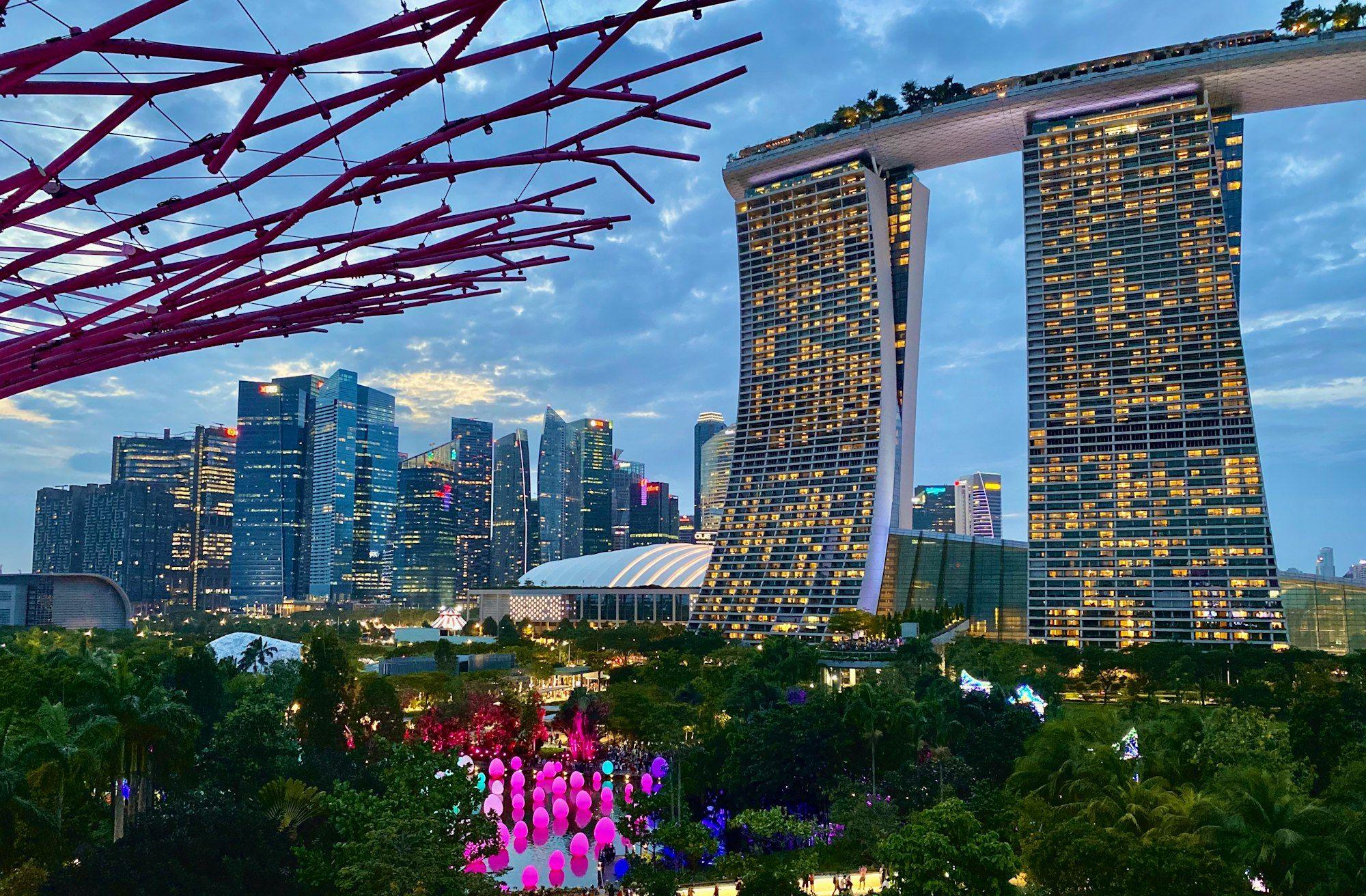
🇸🇬 Singapore: Asia's quiet wealth superpower

If Dubai is the flashy disruptor, Singapore is the institutional heavyweight. Its rise as a global wealth capital has been methodical, regulatory-driven, and staggering in scale.

The numbers from the Monetary Authority of Singapore are extraordinary. Total assets under management reached S$6.07 trillion (approximately $4.7 trillion) in 2024 — the first time exceeding S$6 trillion, up 12.2% year-over-year. Net inflows alone totaled S$290 billion, up 50% from S$193 billion the prior year. Seventy-seven percent of AUM is sourced from outside Singapore. The Boston Consulting Group projects Singapore wealth management will grow at 8.5% per annum through 2028 — faster than any other global wealth center.

white concrete statue near city buildings during daytime
Photo by Jisun Han / Unsplash

The family office explosion is the headline story. In 2020, Singapore hosted approximately 400 single family offices with MAS tax incentives. By the end of 2024, that number exceeded 2,000 — a fivefold increase in four years, confirmed by MAS Deputy Chairman Chee Hong Tat at the UBS Asia Wealth Forum in January 2025. Singapore now hosts 59% of all family offices in Asia. The tax incentive structure is clear and competitive: Section 13O requires minimum S$20 million AUM, Section 13U requires S$50 million, and the Global Investor Programme requires S$200 million with S$50 million deployed in Singapore.

Forbes 2025 counts 60 billionaires in Singapore, with a combined net worth of $259 billion — making it the seventh-ranked city globally for billionaire count. The UBS Billionaire Ambitions Report puts the number even higher at 55 resident billionaires with combined wealth of $258.8 billion, a 65% year-over-year increase. The city's 242,400 millionaires and 336 centi-millionaires place it fourth globally by wealthy resident population, having surpassed London by some measures.

Singapore's tax regime, while not zero, is strategically designed for wealth preservation. The top personal income tax rate was raised to 24% on income above S$1 million — still roughly half of New York City's combined rate. There is no capital gains tax and no inheritance tax (abolished in 2008). The corporate rate is a flat 17%. For family offices and wealth structures, the effective tax burden can be negligible.

Singapore's GDP grew 4.4% in 2024, its fastest pace since 2021. The financial sector's growth doubled. The city ranks fourth on the Global Financial Centres Index, just one rating point behind Hong Kong — and closing fast. The key driver of Singapore's wealth surge is the displacement of Hong Kong following the 2020 National Security Law and China's regulatory crackdowns. Chinese tech billionaires, Southeast Asian tycoons, and Indian family wealth have flowed into Singapore at unprecedented rates.

The 60% Additional Buyer's Stamp Duty on foreign property purchases shows Singapore isn't desperate for any capital — it's selective, channeling foreign wealth into financial assets and business formation rather than speculative real estate. That's the mark of a confident, mature wealth ecosystem.

🇸🇻 El Salvador: the sovereign startup that changes everything

El Salvador as one of the richest cities in the world? Not yet. Not even close by conventional metrics — GDP per capita sits at approximately $5,744. But to dismiss El Salvador is to fundamentally misunderstand the nature of 21st-century wealth formation — and to miss what may be the most consequential jurisdiction play of this generation.

Think of El Salvador not as a developing country that adopted Bitcoin, but as a sovereign startup — a nation-state running an experiment in radical economic freedom with the full legislative, monetary, and foreign policy tools that only sovereignty provides. Dubai can offer zero taxes, but it answers to Abu Dhabi. Singapore can offer family office incentives, but it participates in every multilateral compliance framework on Earth. El Salvador is writing its own rules from scratch, with a president who understands that in a world of global tax competition, sovereignty is the ultimate competitive advantage.

man surfing on sea waves during daytime
Photo by Mark Harpur / Unsplash

On September 7, 2021, El Salvador became the first nation to adopt Bitcoin as legal tender. President Nayib Bukele began systematically acquiring BTC for the national treasury, eventually instituting a "one Bitcoin per day" purchase policy. As of January 2026, the government holds approximately 7,547 BTC. At Bitcoin's all-time high of roughly $126,000 in October 2025, those holdings were worth nearly $950 million. Even after the significant pullback to approximately $67,000 by February 2026, the treasury remains valued at roughly $500 million — still well above the estimated blended acquisition cost.

But the treasury is secondary to the policy framework. El Salvador taxes Bitcoin capital gains at zero percent. All crypto-related income — from mining, staking, airdrops, and trading — is completely exempt. Crypto exchanges, wallet providers, and payment processors operating in El Salvador are exempt from corporate income tax, service transfer tax, and municipal taxes on digital asset transactions. For the growing class of crypto-native wealth, El Salvador offers something no traditional financial center can match: complete fiscal neutrality on digital asset gains.

And here is the detail that separates El Salvador from every other zero-tax jurisdiction on this list: El Salvador does not participate in the OECD's Common Reporting Standard (CRS).

This matters enormously. CRS is the global automatic exchange of financial account information between tax authorities — the system that ensures your bank in Singapore reports your balances to HMRC, or your Dubai brokerage account shows up on your IRS filing (via FATCA, its American equivalent). Over 120 jurisdictions participate. Dubai does. Singapore does. Switzerland does. Even the Cayman Islands and the British Virgin Islands do.

El Salvador doesn't.

This isn't an oversight. It's a feature. For legitimate wealth structuring — particularly for individuals who have already settled their tax obligations or who are tax residents of territorial systems — the absence of CRS means genuine financial privacy in a world where it has become almost extinct. Combined with zero capital gains tax on Bitcoin, a territorial tax system that exempts foreign-source income, and a sovereign government that is ideologically committed to economic freedom, El Salvador occupies a unique niche that no city-state or free zone can replicate.

The results are visible on the ground. Land prices in El Zonte — the famous "Bitcoin Beach" — have risen 134.8% since the Bitcoin Law was enacted, with luxury projects reaching $1,058 per square meter compared to $34 before adoption. Tether executives purchased real estate in La Libertad in 2024. The $1 million "Freedom Visa" — granting lifelong residency and citizenship eligibility for a Bitcoin or USDT investment — is limited to 1,000 applicants per year and requires no physical residency. Volcano Bonds, offering 6.5% annual yield with proceeds split between Bitcoin purchases and energy infrastructure, were reportedly oversubscribed three times by October 2025.

The country's credit trajectory tells its own story. Fitch upgraded El Salvador to B (stable) from CCC+. Moody's raised it to B3 from Caa3. S&P upgraded to B. Tourism contributed $2.8 billion in 2023 — 8.1% of GDP — with visitor numbers up 17% in 2024. FDI net inflows reached $759.7 million in 2023.

Does El Salvador carry risks? Of course. Bitcoin's 47% drawdown from its 2025 peak directly impacts the national treasury. The IMF's December 2024 deal required Bitcoin acceptance to become voluntary and the government Chivo wallet to wind down. Public Bitcoin adoption among Salvadorans has declined to roughly 3% penetration. Critics, including The Economist, have called the experiment a failure in domestic adoption terms.

But here's what the critics consistently miss: El Salvador isn't competing to be a domestic payments system. It's competing to be a jurisdiction. It is positioning itself as the sovereign home base for a generation of crypto entrepreneurs, Bitcoin maximalists, and digitally native wealth holders who control significant and rapidly growing fortunes. VanEck analysts have compared its trajectory to "the next Singapore" — and while that comparison is premature in scale, the strategic logic is identical: a small nation with few natural resources using tax policy, regulatory framework, and ideological commitment to attract disproportionate capital.

And in the long run, El Salvador may win this race precisely because of what it is: not a city within someone else's legal system, not a free zone that exists at the pleasure of a federal government, not a financial center constrained by multilateral compliance treaties it didn't design. It is a fully sovereign nation that has made a generational bet on Bitcoin, on economic freedom, and on the proposition that the future of wealth will be digital, borderless, and allergic to surveillance. Every other jurisdiction on this list — including Dubai and Singapore — must ultimately answer to the OECD, to FATF, to the global compliance apparatus. El Salvador answers to El Salvador.

That's not a bug. That's the product.

The eastward tilt: connecting the data

Step back and the pattern is unmistakable. The flow of wealth is moving along a clear vector: east, and toward zero.

The IRS data shows American wealth moving from high-tax states to low-tax states — $29 billion in net AGI to Florida, $10.9 billion to Texas, billions more to Nevada, Arizona, and Tennessee. CitizenX's exodus data shows Miami absorbing the lion's share of HNWI domestic moves. But this domestic migration is the shallow end of a deeper current. The same tax-sensitivity that drives a hedge fund manager from Manhattan to Miami drives them from Miami to Dubai, from Dublin to Singapore, from San Francisco to San Salvador.

Consider the tax arithmetic facing a wealthy individual today:

In New York City, they face a combined top rate exceeding 51% on income, 23.8% on long-term capital gains (up to 37% including state), and 40% on their estate. In London, they face 47% on income (with a 60% effective rate trap between £100K-£125K), 24% on gains, and 40% on inheritance. In Tokyo, they face 55% on income, 20% on securities gains, and 55% on inheritance.

In Dubai, they face 0% on all three. In Singapore, they face 24% on income — with zero on gains and zero on inheritance. In El Salvador, they face 0% on Bitcoin gains, with foreign income exempt under a territorial system — and no automatic reporting of their financial accounts to foreign governments.

The differential isn't marginal. It's existential for wealth preservation across generations. A family with $100 million in assets faces potential inheritance tax bills of $40 million in London, $55 million in Tokyo, and $40 million in New York — or zero in Dubai, Singapore, and El Salvador. Over two generations, the compounding difference is the difference between dynastic wealth and dissolution.

UAE FDI inflows reached $45.6 billion in 2024. Singapore FDI hit $192 billion. London lost £900 billion in banking assets post-Brexit. The DIFC doubled its hedge fund count in a single year. Singapore's family office count grew fivefold in four years. The numbers don't argue. They declare.

What the next decade looks like

The richest cities in the world in 2035 will look different from the richest cities in 2025. Not because New York, London, and Tokyo will cease to be wealthy — they will remain enormous concentrations of capital and talent. But because the marginal dollar, the next family office, the next billionaire relocation will increasingly choose Dubai, Singapore, or a jurisdiction like El Salvador that offers radical fiscal incentives.

Three forces will accelerate this shift. First, the Great Wealth Transfer: UBS projects $83 trillion will change hands over the next 20-25 years. Heirs are more mobile, more tax-sensitive, and more globally minded than the generation that built the wealth. They will optimize. Second, digital wealth formation: the crypto economy creates fortunes that are natively borderless, held by individuals who have no legacy attachment to any particular city. These fortunes will go where the tax rate is lowest and the privacy is strongest. Third, policy divergence: every major Western nation is raising taxes on wealth, gains, and inheritance simultaneously. The UK just abolished non-dom status. The US is debating carried interest reform and potential wealth taxes. Japan's defense surtax will raise corporate rates further in 2026. Meanwhile, Dubai and Singapore are actively lowering barriers to entry — and El Salvador is building an entirely new model from sovereign first principles.

Miami is where American wealth goes first. Dubai and Singapore are where global wealth goes now. El Salvador is where the most forward-thinking, digitally native wealth will go next — because it offers the one thing no other jurisdiction can: full sovereignty combined with full Bitcoin alignment, zero capital gains, and zero automatic information exchange with foreign tax authorities. It is the only jurisdiction on this list that is simultaneously pro-Bitcoin, pro-privacy, and pro-economic freedom as a matter of national identity — not just policy convenience.

If history is any guide — and the Amsterdam-to-London and London-to-New York transitions suggest it is — the shift won't announce itself with a single event. It will compound quietly, year after year, as each incremental policy decision in the West pushes capital eastward and each new family office registration in DIFC or MAS confirms the trend. By the time legacy rankings catch up to the new reality, the transition will already be well advanced.

The richest cities in the world are being redefined right now. The only question left is whether the traditional capitals will change course — or whether they'll read about their own decline in a history book, just as Amsterdam once did.