Best Second Passports for French Citizens in 2026
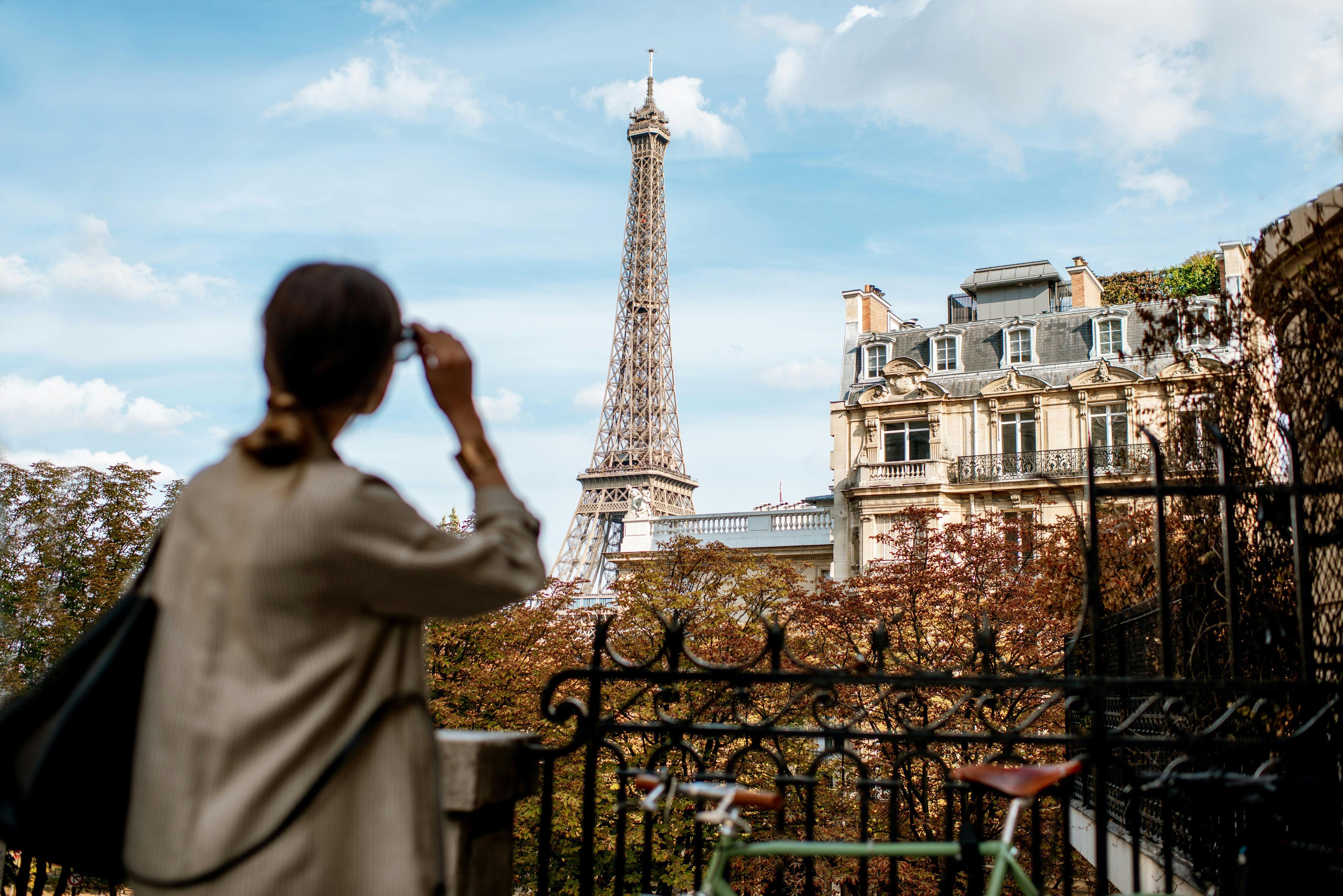
If you're a wealthy French, the window to act is now. This post breaks down the best second passport options for French citizens in 2026, why each one makes sense, and what they actually cost.
AR
Co-founder & CEO
Reading time: 18 minOct 18, 2026 • 12:36 PM
France just proposed taxing you even after you leave.
Let that sink in. The 2026 national budget includes a provision for citizenship-based taxation. If you're a French citizen and you relocate to a jurisdiction with taxes 40% lower than France's, you'll still owe taxes to the French state on your worldwide income. You could be living in Dubai, running your business from Singapore, paying rent in a country you actually chose, and Paris will still send you a bill.
The US has been doing this for decades. It's the reason Americans abroad line up at H&R Block offices in London and Tokyo every April. And now France wants to import that model to Europe.
Cash is king. But passport is queen.
I've been warning about this. The EU is fiscally broken, and broken governments follow a predictable script: print money, let inflation inflate asset prices, tax the paper gains, then punish anyone who tries to leave. France is running that script faster than almost anyone else in Europe right now.
If you're a wealthy French citizen, the window to secure a second passport is shrinking. Not because the programs are going away, but because the cost of waiting is going up every year as France tightens the screws. This post covers the best Plan B passport options for French nationals in 2026, why each one makes sense, and what the process looks like.
The French tax trap: what's actually happening
France has always been aggressive on taxes. That's not new. What's new is the direction of travel: from taxing residents to taxing citizens, regardless of where they live.
The citizenship-based taxation proposal in the 2026 budget is the clearest signal yet. If it passes in its current form, moving to a low-tax country won't free you from the French fisc. You'll carry your tax obligations with you like luggage.
But even before that proposal, the signs were everywhere.
France's wealth tax, the ISF, was replaced in 2018 by the IFI, a real estate wealth tax. Macron sold that as a reform. In practice, it shifted the burden rather than reducing it. And there's constant political pressure to bring back a broader wealth tax. Every election cycle, it comes up. Every economic downturn, the calls get louder.
The broader European pattern reinforces this. The Netherlands just voted for a 36% tax on unrealized capital gains starting in 2028, plus a five-year exit tax for citizens who leave. Spain lost 1,000 high-net-worth taxpayers in 2024, the first negative millionaire migration since they imposed a wealth tax. Norway raised wealth taxes expecting 146 million dollars in new revenue; instead, individuals worth 54 billion dollars left, creating a net revenue loss of 448 million dollars. The UK government is now trying to close a 2-billion-pound hole with a 20% exit tax on assets.
The pattern is always the same. Raise taxes. Watch the wealthy leave. Lose more revenue than you raised. Panic. Try to stop people from leaving.
France is accelerating through this cycle. Citizenship-based taxation is the endgame move. It says: we don't care where you live, you owe us.
And then there's the EU-wide push to register all personal assets in a central European register. Bank accounts, shares, vehicles, precious metals, artwork, Bitcoin. The justification is "financial transparency" and "combating money laundering." But you don't build a comprehensive asset registry unless you plan to use it.
Ray Dalio put it simply: your location is as important as your allocation. I'd take it further. For French citizens, your citizenship is becoming your allocation, because Paris wants to tax you based on the passport you hold, not the country you live in.
A second citizenship from outside the EU changes that equation entirely.
Why French citizens have an advantage (and a deadline)
France has always allowed dual citizenship. Unlike Germany, which only changed its law in June 2024, France has permitted its citizens to hold multiple nationalities for decades. There's no legal barrier. You can acquire a St. Kitts passport, a Vanuatu passport, a Sao Tome passport, and keep your French one. No renunciation required, no government approval needed.
That's the advantage. The deadline is the tax side.
If citizenship-based taxation passes, the calculus changes. Right now, a French citizen who moves to Dubai and establishes tax residency there is largely free from French income tax. If the new rules take effect, that same person owes France the difference. The value of having a second citizenship as a tool for tax restructuring drops significantly unless you're willing to consider the harder step: actually renouncing French citizenship.
I'm not suggesting that's what most people should do. But I am saying that the option to restructure your tax life using a second citizenship is more valuable today than it will be next year, and much more valuable than it'll be in 2028.
Even setting aside the tax angle, a second passport gives you something France can't take away: the unconditional right to enter and reside in another sovereign country. If France follows Germany's lead on any kind of mobility restriction, if there's another lockdown situation, if exit taxes make leaving punishingly expensive, your second passport is the one thing they can't revoke.
From taxation to confiscation: the bigger picture
I keep telling clients: it starts with taxation and ends with confiscation. The steps are always the same.
Step one: print money. The ECB did this aggressively from 2020 onward.
Step two: inflation. Asset prices rise in nominal terms. On paper, everyone is richer.
Step three: tax the paper gains. The Netherlands is doing this with unrealized capital gains. Others will follow.
Step four: exit taxes. Stop the money from leaving. The Netherlands, the UK, and now France are all moving here.
Step five: global taxation. Tax citizens no matter where they live. France is pioneering this in Europe.
Step six: asset registries. Know exactly what everyone owns. The EU is building this now.
Step seven: seizure. When the fiscal situation gets desperate enough, governments take what they need. The US did it with gold in 1933 under Executive Order 6102. Cyprus did it with bank deposits in 2013. It happens.
We're at steps four and five in France right now. The asset registry is being built. If you think step seven is impossible in a modern European democracy, you haven't been paying attention to what "impossible" things happened in 2020.
This is why Bitcoin in self-custody matters. They can't seize what they can't find, and they can't freeze a wallet they don't control. That's Bitcoin's entire value proposition boiled down to one sentence: seizure resistance.
And this is why a second passport matters. A mobility freeze, like the lockdowns that grounded Europe for months, is the physical equivalent of an asset freeze. Different mechanism, same loss of freedom. A second citizenship ensures you can always go somewhere, even if France decides its citizens shouldn't.
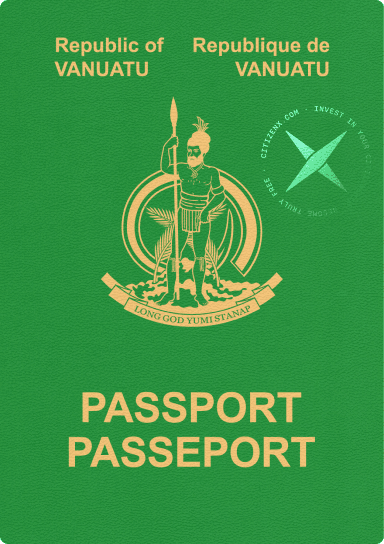
Vanuatu Citizenship by Investment: French-speaking, fast, and zero-tax
Here's something most people don't realize about Vanuatu: it's a French-speaking country.
Vanuatu was jointly administered by France and Britain until independence in 1980. The country is officially trilingual: Bislama, English, and French. French is widely spoken, taught in schools, and used in government. There are French-language newspapers, French cultural institutions, and a Francophone community that traces back generations.
For a French citizen looking at CBI options, this matters more than you'd think. You're not moving to a completely alien culture. You're getting citizenship in a country where you can speak your language, where the legal system has French influences, and where the Francophone connection is a living part of daily life. Compare that to, say, Nauru or some of the Pacific island programs where you'd have zero cultural connection. Vanuatu is different.
The CBI program itself runs through the Development Support Program, starting at 130,000 USD for a single applicant. And the speed is unmatched: approval in 30 to 60 days. If you want a passport in your hands within two months, Vanuatu is realistically the only program that can deliver that.
The passport covers around 90 to 100 countries visa-free, including the UK, most of Schengen for short stays, Singapore, and Hong Kong. For a French citizen, the travel score is secondary since your French passport handles the heavy lifting. But Vanuatu's list is actually reasonable for a CBI program.
The tax angle is where Vanuatu really stands out. No income tax. No wealth tax. No inheritance tax. No capital gains tax. Zero. If you're restructuring away from the French tax system, Vanuatu citizenship gives you a non-EU nationality anchored in a zero-tax jurisdiction. Combined with residency in Dubai or Singapore, that's a clean structure.
There's been some friction with the EU over Vanuatu's visa waiver in the past. The EU temporarily suspended it over due diligence concerns, and Vanuatu responded by tightening its processes. The situation has largely normalized, but check the current Schengen status before applying if that matters to you specifically. For most French citizens, it won't, since you have unlimited Schengen access on your French passport anyway.
Vanuatu's value for the French is the combination: Francophone culture, fastest processing time on the market, zero-tax jurisdiction, and a non-EU escape hatch. That package is hard to beat at 130,000 USD.
Saint Lucia Citizenship by Investment: French in the Caribbean
Another detail that often gets overlooked: Saint Lucia has deep French roots.
The island changed hands between France and Britain fourteen times before the British finally took permanent control in 1814. That history left a mark. Saint Lucian Creole, known as Kweyol, is a French-based creole language spoken by most of the population. Street names, place names, local cuisine, and cultural traditions all carry French influence. The island celebrates Jounen Kweyol (Creole Day) every October. Catholic traditions brought by the French remain central to island life.
For a French citizen, Saint Lucia feels more familiar than most Caribbean islands. You'll hear French-inflected speech everywhere. The food has French Caribbean roots. The cultural DNA is Francophone even if the official language is English.
Saint Lucia's CBI program is well-established. The National Economic Fund donation route starts at 240,000 USD for a single applicant. There's also a real estate option starting at 300,000 USD in approved developments. Processing typically runs three to four months.
The passport is strong: around 145 to 150 countries visa-free, including the UK, the full Schengen area, Singapore, and Hong Kong. It's in the same tier as St. Kitts and Grenada. If you want your second passport to function as a serious standalone travel document, Saint Lucia delivers.
Saint Lucia also signed a tax information exchange agreement with France, which means there's a functioning legal relationship between the two countries. That can actually work in your favor when structuring things properly, because it means the relationship is formalized rather than adversarial.
For French clients who want Caribbean CBI with a cultural connection, Saint Lucia is the obvious pick. You're getting a top-tier passport from a country that's been shaped by French civilization for three centuries.
Sao Tome Citizenship by Investment: affordable and under the radar
Sao Tome keeps showing up in CBI conversations for a reason: the price-to-value ratio is hard to argue with.
The program starts at around 150,000 USD for a single applicant through the government donation route. Processing runs three to five months. The due diligence is handled by international compliance firms.
Sao Tome is a Portuguese-speaking country, not French-speaking. But for French citizens, the Lusophone world isn't as foreign as it might seem. Portugal is right next door to France culturally and geographically. Many wealthy French already have property in Portugal or connections to the Lusophone business world through former French colonies in West Africa that neighbor Sao Tome. The cultural gap is smaller than you'd expect.
The passport covers about 70 to 75 countries visa-free. Modest by CBI standards. But for a French citizen keeping their French passport for travel, the Sao Tome passport's visa-free score is irrelevant. It's your exit document. Your proof that you belong somewhere outside the EU. Your Plan B if France decides to lock the door.
The program is also low-profile. Less media scrutiny than Caribbean programs, less political controversy, less chance of getting caught up in some EU blacklist drama. For someone thinking in decades, that quiet profile is a feature.
I'm seeing increasing demand from French clients alongside the German and Dutch interest. The common thread is the same: people watching their home governments tighten the tax noose and deciding they want an exit before it closes.
St. Kitts and Nevis Citizenship by Investment: the premium option
St. Kitts launched the world's first CBI program in 1984. Forty-plus years of continuous operation. When people ask me which CBI passport has the longest track record and the most established infrastructure, the answer is always St. Kitts.
The donation route starts at 250,000 USD for a single applicant through the Sustainable Island State Contribution. Real estate starts at 400,000 USD in approved developments, with resale possible after seven years.
The St. Kitts passport opens around 155 to 160 countries visa-free. That's the strongest CBI passport available. The UK, Schengen, Singapore, Hong Kong, most of Latin America and Asia. If you ever needed to travel exclusively on your second passport, St. Kitts covers nearly everywhere you'd want to go.
For French clients who want the best possible CBI passport and aren't primarily concerned about price, St. Kitts is the answer. The banking infrastructure is established. The legal framework is mature. The reputation is solid.
Processing runs four to six months. Not as fast as Vanuatu, but the end product is a meaningfully stronger travel document.
Other Caribbean Citizenship by Investment options
Dominica has the best value in the Caribbean. Government fund donations start at 100,000 USD for a single applicant. The passport gets you into around 140 to 145 countries visa-free, including the UK and Schengen. If budget is the main consideration and you want a solid Caribbean passport, Dominica is where I usually start the conversation.
Grenada is the play if you have US business interests. It's the only Caribbean CBI country with an E-2 treaty investor visa agreement with the United States. Grenada citizenship can be your path to living and working in the US. Donation starts at 235,000 USD. For anyone with American business ambitions, the E-2 access alone justifies the cost.
Antigua and Barbuda rounds out the main Caribbean options at 230,000 USD for a family through the National Development Fund. Passport covers about 150 countries visa-free. Antigua requires seven days of physical presence during the first five years, which is worth knowing but not a serious obstacle for most people.
All of these get you to the same place: a legal citizenship outside the EU that no French tax authority or EU institution controls.
The strategic framework for French citizens
Let me lay out how I think about this specifically for the French.
If speed is the priority, go Vanuatu. Passport in under two months, French-speaking country, zero-tax jurisdiction. It's the fastest exit option on the market and it has a cultural connection most French clients don't expect.
If you want Caribbean CBI with a French cultural link, Saint Lucia is the pick. Strong passport, Francophone heritage, established program.
If budget is the main factor, Sao Tome at 150,000 USD or Dominica at 100,000 USD. Both get the job done without the premium price.
If you want the strongest possible second passport, St. Kitts. 155+ countries visa-free, four decades of track record.
If you have US business interests, Grenada for the E-2 visa access. Nothing else offers that.
Most French clients I work with fall into two categories. The urgency buyers grab Vanuatu first for immediate coverage, then start a Caribbean application in parallel for the stronger passport. The considered buyers take their time comparing Saint Lucia, St. Kitts, and Grenada, and pick based on their specific situation. Both approaches work. The one that doesn't work is waiting.
Bitcoin and passports: the full sovereignty stack
I keep coming back to this pairing because they address the same problem from opposite sides.
Governments control you through two levers: your money and your movement. Bitcoin in self-custody handles the money side. Nobody can freeze your wallet. Nobody can inflate away your sats. Nobody can impose unrealized gains taxes on coins they don't know you have. Buy Bitcoin and get it off exchanges. That's the foundation.
A second passport handles the movement side. If France locks down borders again, if exit restrictions tighten, if leaving becomes prohibitively expensive through exit taxes, your second citizenship is the door that stays open. You're not running. You're exercising your legal rights as a citizen of another country.
For wealthy French citizens, the complete setup is: Bitcoin in self-custody, a second passport (ideally from outside the EU), and established residency in a jurisdiction that respects your freedom. Dubai, Singapore, certain parts of Latin America, even El Salvador if you're deep in the Bitcoin world.
The people moving fastest on this are typically French entrepreneurs and investors who've already been through one cycle of the French government changing the rules on them. They've watched the ISF become the IFI, watched Macron promise reform and deliver half-measures, watched the 2026 budget include citizenship-based taxation. They've decided that hoping for better policy isn't a strategy.
A mobility freeze, like 2020's endless lockdowns and travel bans, is the physical version of an asset seizure. Both are government crackdowns on your freedom. The right to leave is a fundamental human right. Every state that ever revoked it, the Soviets, the East Germans, Cuba, North Korea, did so because they wanted to keep the people inside. Because when you can't leave, you accept whatever they impose on you.
I'm not saying France is North Korea. I'm saying the tools are being assembled, quietly, legally, one budget proposal at a time. And the people who see it coming are the ones who'll have options when it matters.
What the process looks like
Pick your program. Prepare your due diligence documentation: clean criminal record, legitimate source of funds, supporting paperwork. Programs have gotten stricter on compliance over the past five years.
Work with an authorized agent. Don't try to do this yourself. A good agent handles the paperwork, communicates with the CBI unit, and catches problems before they become rejections. The fee is worth it.
Processing runs from one month (Vanuatu) to six months (some Caribbean programs). Background checks are thorough. You'll get updates through your agent.
After approval, you make the qualifying investment or donation. Then you receive your citizenship certificate and passport.
Total timeline: two to seven months depending on the program.
Budget for additional costs beyond the investment itself: due diligence fees (5,000 to 10,000 USD per applicant), agent fees, government processing fees, legal fees. For a family application, add 20,000 to 50,000 USD on top of the investment amount.
What I'd do if I were a wealthy French citizen
I'll be concrete.
If I were a French national with a net worth above 2 million euros and I could read the writing on the wall, here's my 90-day plan.
Apply for Vanuatu citizenship immediately. French-speaking country, fastest program on the market, zero tax. I'd have a second passport in hand within two months.
Start a Saint Lucia or St. Kitts application in parallel. Saint Lucia for the cultural connection and strong passport. St. Kitts for the strongest CBI travel document available. Pick based on whether the Francophone angle or the pure passport strength matters more.
Move a meaningful portion of liquid wealth into Bitcoin self-custody. A hardware wallet, seed phrase properly secured, and nobody else's permission needed to access it. Not all my wealth. But enough to function if French banks freeze my accounts tomorrow during some "compliance review."
Establish residency in a non-EU jurisdiction. Dubai and Singapore are the obvious choices. But also look at countries where your Vanuatu or Saint Lucia citizenship unlocks additional options.
Consult a cross-border tax advisor before doing anything else. French exit tax rules, the proposed citizenship-based taxation, social security obligations, these are complex and the consequences of getting them wrong are expensive. Plan first, move second.
None of this requires renouncing your French citizenship. None of it is illegal. You're building optionality. You're making sure that no single government, not even one as historically aggressive as France's, has total control over both your money and your movement.
The bottom line
France is leading Europe toward citizenship-based taxation. If that passes, being French will come with a tax bill no matter where you live. The asset registry is being built. Exit taxes are on the table across the continent. The noose is tightening.
If you're a French citizen with means, the question is simple: do you want options, or do you want to hope that the government stops here?
Cash is king. But passport is queen. And when your government is trying to tax you based on the passport you carry, having a second one isn't just smart. It's necessary.
Don't figure this out during the next crisis. Figure it out now, while you still can, while the programs are open and the borders aren't closed.
This article is for informational purposes only and does not constitute legal, tax, or immigration advice. Consult qualified professionals for advice specific to your situation.
CitizenX helps high-net-worth individuals secure second citizenships and build sovereign lifestyles. Contact us to discuss your Plan B.
Related articles