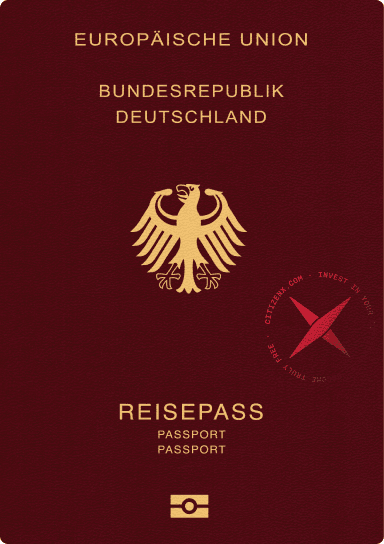
Best Second Passports for German Citizens in 2026

If you're a wealthy German, the window to act is now. This post breaks down the best second passport options for Germans in 2026, why each one makes sense, and what they actually cost.
AR
Co-founder & CEO
Reading time: 17 minSep 29, 2026 • 2:44 PM
Germany changed the game in June 2024. For the first time in over half a century, Germans can hold dual citizenship without giving up their German passport. That alone would make this a good year to think about a Plan B. But then the conscription law happened.
If you haven't been paying attention: Germany quietly rewrote its military service rules. Any man between 17 and 45 now needs a permit from the Bundeswehr to leave the country for more than three months. Read that again. A permit. From the military. To leave.
I've been saying this for years. Cash is king. But passport is queen.
Most people think about financial sovereignty and stop there. Bitcoin in self-custody, offshore accounts, maybe some gold. All good. But what's the point of protecting your wealth if you can't protect your ability to move? A mobility freeze is a cash seizure by another name. You can have ten million euros in a cold wallet and still be stuck inside borders someone else controls.
We saw dry runs of this during COVID. Governments locked down movement for months. People with second residencies and passports had options. Everyone else waited for permission.
If you're a wealthy German, or really any European watching this unfold, the window to act is now. Not after the next crisis. Now.
This post breaks down the best second passport options for Germans in 2026, why each one makes sense, and what they actually cost.
Why Germans need a Plan B passport (even with one of the world's best)
The German passport ranks among the top five in the world for visa-free travel. Depending on the index you look at, it opens somewhere between 190 and 195 destinations without a visa. So why would anyone bother getting a second one?
Because a passport's travel score means nothing if you can't use it.
The new conscription framework is the clearest example. But it's not the only one. EU-wide discussions about capital controls, digital identity requirements, and travel restrictions have been circulating in policy circles for years. Some of these are already being tested in pilot programs. The trend line points in one direction: more government control over who moves where and when.
A second passport isn't about getting into more countries. Germans can already go almost everywhere. It's about making sure you can always leave.
There's also the tax angle. Germany's tax residency rules are aggressive. If you want to restructure your life for tax efficiency, having citizenship in another country gives you a legal foundation to establish residency elsewhere. You can't do that on a tourist visa.
And since June 2024, you don't have to choose. The Staatsangehoerigkeitsgesetz reform means Germans can now acquire foreign citizenship without automatically losing their German one. Before this change, taking a second passport meant surrendering the German one, which made the whole exercise pointless for most people. That barrier is gone.
The conscription factor
Let me be direct about this because I think most commentators are underplaying it.
Germany's updated Wehrpflicht rules mean that men aged 17 to 45 need permission from the military authorities to live abroad for extended periods. The details are still being worked out in practice, and enforcement is uneven. But the legal framework is there. And legal frameworks have a way of being enforced exactly when you least expect it.
Think about what this means for a 35-year-old German entrepreneur who spends half the year in Dubai or Singapore. Under the new rules, he technically needs military approval to do that. Maybe nobody checks today. Maybe nobody checks next year. But the mechanism exists, and that should worry you.
History doesn't repeat, but it does have patterns. Governments that grant themselves emergency powers tend to keep them. Governments that create travel-restriction frameworks tend to use them. The lockdowns proved that populations will mostly comply if the justification sounds serious enough.
A second passport is your insurance policy against this. If Country A says you can't leave, Country B says you can enter. That's the whole game.
How citizenship by investment works
Citizenship by investment, or CBI, is straightforward. You make a qualifying financial contribution to a country, usually through a government fund donation or a real estate purchase, and in return you receive citizenship and a passport. The process typically takes three to six months, sometimes less.
These aren't fake passports or gray-market documents. CBI programs are run by sovereign governments, regulated by international compliance firms, and recognized worldwide. You go through due diligence, background checks, and an application process. If you pass, you become a citizen with full rights.
The investment amounts range from roughly 100,000 USD on the lower end to 400,000 USD or more for premium programs. Some include real estate you can later sell, so the net cost can be lower than the headline number.
For Germans, there's a specific calculation that matters. You already have an excellent travel document. So the "passport strength" of the CBI country is mostly irrelevant. What you're buying is optionality: a legal right to reside in another sovereign territory, independent of anything the German government decides to do. The visa-free score is a bonus, not the point.
Sao Tome and Principe: the one nobody expected
If you follow CBI circles at all, you've noticed that Sao Tome keeps coming up. There's a reason for that.
Sao Tome and Principe is a small island nation in the Gulf of Guinea, off the west coast of Central Africa. Population around 230,000. It's not a major economic player. It's not a tourist hotspot. And that's precisely why its CBI program is interesting.
The program launched relatively recently, and pricing starts at around 90,000 USD for a single applicant through the government donation route. Processing times have been running three to five months. The due diligence is handled by international compliance firms, and the program has been structured to meet current international standards.
Why is demand from Germans specifically so high?
First, the price point. At 90,000 USD, it's one of the more accessible CBI options on the market. For a German family office or entrepreneur, this is a rounding error on their net worth but it buys them something money usually can't: a way out.
Second, Sao Tome is a Portuguese-speaking country with historical ties to Portugal and, by extension, the broader Lusophone world. Holding Sao Tome citizenship opens certain residency pathways in Portuguese-speaking countries that wouldn't otherwise be available. For Germans who already spend summers in the Algarve or have business interests in Brazil, those connections actually matter.
Third, and this is the part most people miss: Sao Tome's passport strength is modest. Around 70 to 75 countries visa-free, depending on the year. For most passport shoppers, that's a dealbreaker. For Germans, it's irrelevant. You're keeping your German passport for travel. The Sao Tome passport is your exit ticket, your Plan B, your proof that you belong somewhere else if you ever need to.
The program is also relatively under the radar compared to Caribbean options. Less media scrutiny, less political noise, less chance of the program getting suspended because some journalist wrote an outrage piece about "selling citizenship." That matters if you're thinking long term.
I'm seeing more and more German clients ask about Sao Tome specifically. The demand has picked up noticeably since the conscription law changes. People are connecting the dots.
Vanuatu: the fastest passport on the market
Vanuatu's CBI program has been around since 2017, and it has processed thousands of applications. The Development Support Program, or DSP, is the main route. Pricing starts at 130,000 USD for a single applicant.
What makes Vanuatu stand out is speed. Approvals can come through in 30 to 60 days. For someone who wants a second passport quickly, that's hard to beat. The Caribbean programs typically take three to six months. Sao Tome runs three to five months. Vanuatu can have you holding a passport in under two months.
The passport itself provides visa-free or visa-on-arrival access to around 90 to 100 countries, including the UK, most of the EU's Schengen area for short stays, Singapore, and Hong Kong. Again, for a German, the travel score is secondary. But Vanuatu's access list is actually decent for a CBI program.
Vanuatu has no income tax, no wealth tax, no inheritance tax, and no capital gains tax. If you're restructuring your tax life, Vanuatu citizenship gives you a non-EU citizenship that can support a tax residency change. This is relevant for Germans considering a move to Dubai, Singapore, or another low-tax jurisdiction. Having citizenship in a zero-tax country adds another layer to your planning.
There's been some controversy around Vanuatu's program. The EU temporarily suspended its visa waiver for Vanuatu passport holders a few years back over due diligence concerns. Vanuatu responded by tightening its processes, and the situation has largely stabilized. But it's worth knowing about. If Schengen access matters to you for the second passport specifically, check the current status before applying.
For Germans, Schengen access on the second passport is mostly irrelevant anyway. You have unlimited Schengen access on your German passport. Vanuatu's value is as a non-EU escape hatch, and for that purpose it works well.
St. Kitts and Nevis: the original and still relevant
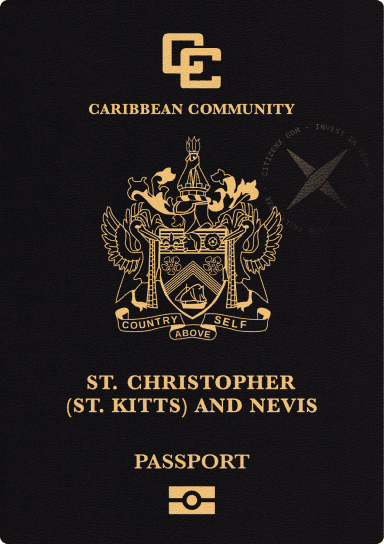
St. Kitts and Nevis launched the world's first CBI program in 1984. It's been running for over 40 years. That track record matters.
The program offers two routes: a donation to the Sustainable Island State Contribution starting at 250,000 USD for a single applicant, or a real estate investment starting at 400,000 USD in approved developments (with a resale option after seven years, reduced to 200,000 USD if you hold for seven years under certain options).
The St. Kitts passport provides visa-free access to around 155 to 160 countries, making it one of the strongest CBI passports available. You can travel to the UK, the entire Schengen area, Singapore, Hong Kong, and most of Latin America and Asia without a visa.
For Germans who want their second passport to also function as a strong standalone travel document, St. Kitts is hard to beat. If you ever needed to travel exclusively on your second passport for whatever reason, the St. Kitts document would cover most of where you'd want to go.
St. Kitts also has a well-established legal and banking infrastructure for international clients. Setting up accounts, companies, and holding structures is straightforward by CBI country standards.
Processing times run four to six months, sometimes a bit longer. It's not as fast as Vanuatu, but the due diligence is thorough and the program's reputation is solid.
The higher price tag relative to Sao Tome or Vanuatu reflects the stronger passport and longer track record. For German families who want premium CBI, St. Kitts is still the benchmark in the Caribbean.
Other Caribbean options worth considering
St. Kitts isn't the only Caribbean game in town. Several neighboring countries run CBI programs that might fit your situation better depending on budget, timeline, and specific needs.
Dominica has one of the most affordable Caribbean CBI programs. The government fund donation starts at 100,000 USD for a single applicant. The passport gets you into around 140 to 145 countries visa-free, including the UK and Schengen. Dominica has been quietly building a reputation for program integrity over the past decade. If budget matters and you want Caribbean CBI, this is usually where I point people first.
Grenada is the Caribbean CBI country that also gives you access to the US E-2 treaty investor visa. If you have business interests in the United States, or might want to in the future, pay attention. The donation route starts at 235,000 USD for a single applicant. Passport strength sits around 145 to 150 countries visa-free, comparable to St. Kitts. The E-2 angle is the real differentiator here, and for the right person it's worth every dollar of the premium.
Antigua and Barbuda rounds out the main Caribbean options with donations starting at 230,000 USD for a family through the National Development Fund. They also have a real estate route. The passport covers about 150 countries visa-free. One catch: Antigua requires you to physically visit the country for at least seven days during the first five years. Not a dealbreaker for most people, but worth knowing if you want zero residency requirements.
The right choice comes down to your budget, your timeline, and whether things like US E-2 access or zero residency requirements matter to you. But every program on this list gets you to the same place: a legal second citizenship that exists outside the reach of any EU government.
The strategic framework: how to think about this
Let me lay out how I think about Plan B passports for German clients, because the logic matters more than the specific country.
Start with why. If your primary concern is mobility insurance, you want speed and sovereignty. That points toward Vanuatu for speed, or Sao Tome for value and low profile. You're not trying to impress anyone with the passport; you're trying to have one that works when you need it.
If you want a genuine second travel document that works almost as well as the German one, you're looking at St. Kitts, Dominica, or Grenada. These cost more but give you a passport that can function independently at a high level.
If you have US business interests, Grenada is the obvious choice for the E-2 visa access.
If tax optimization is part of the plan, Vanuatu's zero-tax regime is attractive. But tax planning is complex and jurisdiction-specific. Don't pick a CBI country for tax reasons alone without talking to a qualified tax advisor who understands both German tax law and your target structure.
Most of the Germans I work with end up in one of two camps. The pragmatists go for Sao Tome or Vanuatu. Fast, affordable, gets the job done. The premium buyers go for St. Kitts or Grenada. Stronger passport, established reputation, higher cost but more versatility.
Some do both. A Vanuatu passport now for immediate coverage, and a Caribbean application in parallel for the stronger document later. That's not unreasonable if budget allows.
Bitcoin and passports: the sovereign individual toolkit
I keep coming back to this pairing because they solve the same problem from different angles.
Bitcoin in self-custody protects your wealth from seizure and capital controls. A second passport protects your physical freedom from travel restrictions and conscription. Together, they make you much harder to coerce.
Governments have two primary leverage points over citizens: their money and their movement. If you address both, the power dynamic shifts. You're no longer entirely dependent on one government's goodwill.
People hear this and think it sounds paranoid. I'd argue it's the same logic that leads a company to hold insurance and keep cash reserves. You hope you never need them. But if you do, nothing else matters.
For wealthy Europeans, the combination of Bitcoin self-custody, a second passport, and residency outside the EU is what I call the full sovereignty stack. Each piece works on its own. But when you have all three, you're in a fundamentally different position than someone who has none.
The Germans I talk to who are most aggressive about this are typically entrepreneurs and investors between 30 and 50. They've built real wealth, they've watched governments change the rules on them before, and they've decided that trusting any single state with both their money and their mobility is a bet they're not willing to make anymore.
What the process actually looks like
If you're reading this and thinking about getting started, here's what to expect.
The first step is choosing your program. That means understanding your priorities, budget, and timeline. Everything I've laid out above should help with that.
Next comes due diligence preparation. You'll need a clean criminal record, a legitimate source of funds, and documentation to prove both. CBI programs have gotten significantly stricter on compliance over the past five years. If you have any issues in your background, address them before applying. Failed applications are expensive and can complicate future attempts.
The application itself involves forms, supporting documents, passport photos, medical clearance, and the investment or donation funds. Most people work with an authorized agent who handles the paperwork and liaises with the CBI unit. I'd strongly recommend going through an established agent rather than trying to DIY this.
Processing takes anywhere from one month for Vanuatu to six months for the Caribbean programs. During this time, the CBI unit runs background checks, often through international due diligence firms. You'll receive updates through your agent.
Once approved, you make the qualifying investment or donation. Some programs require payment at application, others at approval. After that, you receive your citizenship certificate and passport.
The entire process, from initial consultation to passport in hand, typically runs two to seven months depending on the program.
Costs beyond the investment itself include due diligence fees (typically 5,000 to 10,000 USD per applicant), agent fees, government processing fees, and legal fees. Budget an additional 20,000 to 50,000 USD on top of the investment amount for a family application. Exact numbers depend on the program and your family size.
The dual citizenship reform: what actually changed
Since this is specifically about Germans, it's worth understanding exactly what changed with the law.
Before June 2024, German nationality law generally required you to give up your existing citizenship when naturalizing as German, and give up your German citizenship if you voluntarily acquired another nationality. There were exceptions for EU and Swiss citizens, and for cases involving special hardship, but the default was single citizenship.
The Modernisierung des Staatsangehoerigkeitsrechts, which took effect on June 27, 2024, eliminated this requirement. Germans can now acquire foreign citizenship without losing their German nationality. No caveats, no exceptions.
This was primarily designed to help immigrants to Germany maintain their original citizenship when naturalizing. But the flip side is just as significant: Germans can now go out and get a second passport without any risk to their German one.
Before this reform, the CBI conversation with German clients always had an asterisk. "Yes, you can get a St. Kitts passport, but you might lose your German one." That asterisk is gone. The path is clear.
I expect CBI applications from German nationals to increase significantly over the next two to three years as awareness of both the dual citizenship reform and the conscription changes spreads. The people moving now are the early movers. The wave hasn't hit yet.
What I'd do if I were a wealthy German
I'll be specific because I think vague advice is useless.
If I were a German national with a net worth above 2 million euros and I wanted a Plan B, here's what I'd do in the next 90 days.
Apply for Vanuatu citizenship immediately. The speed is the point. I'd want a second passport in hand within two months while I sort out the rest of my plan.
In parallel, start a St. Kitts or Grenada application for the stronger long-term passport. This takes longer but gives me a premium travel document for the future.
Move a meaningful portion of my liquid wealth into Bitcoin self-custody. Not all of it. But enough that if my bank accounts got frozen tomorrow, I could still function.
Start researching residency options in a stable, non-EU jurisdiction. Dubai, Singapore, and certain Latin American countries are popular for a reason. Having residency established somewhere means you have an actual place to go, not just a passport.
Get professional advice on restructuring tax residency if moving outside Germany is on the table. German exit tax rules are complex and need careful planning.
All of this is legal. None of it requires you to renounce anything or break any rules. You're diversifying your personal sovereignty the same way you'd diversify an investment portfolio.
The bottom line
Germany's dual citizenship reform opened a door. The conscription law changes should be the push that gets you through it.
If you're a German with means, the question isn't whether to get a second passport. It's which one, and how fast.
Cash is king. But passport is queen. And in a world where governments are quietly building the infrastructure to restrict movement, the queen might be the more important piece on the board.
Don't wait for the next lockdown or the next emergency decree to figure this out. By then it'll be too late, and you'll be standing in line with everyone else who thought they had more time.
This article is for informational purposes only and does not constitute legal, tax, or immigration advice. Consult qualified professionals for advice specific to your situation.
CitizenX helps high-net-worth individuals secure second citizenships and build sovereign lifestyles. Contact us to discuss your Plan B.