Guide to Botswana Citizenship by Investment in 2026
Guide to Botswana Citizenship by Investment in 2026
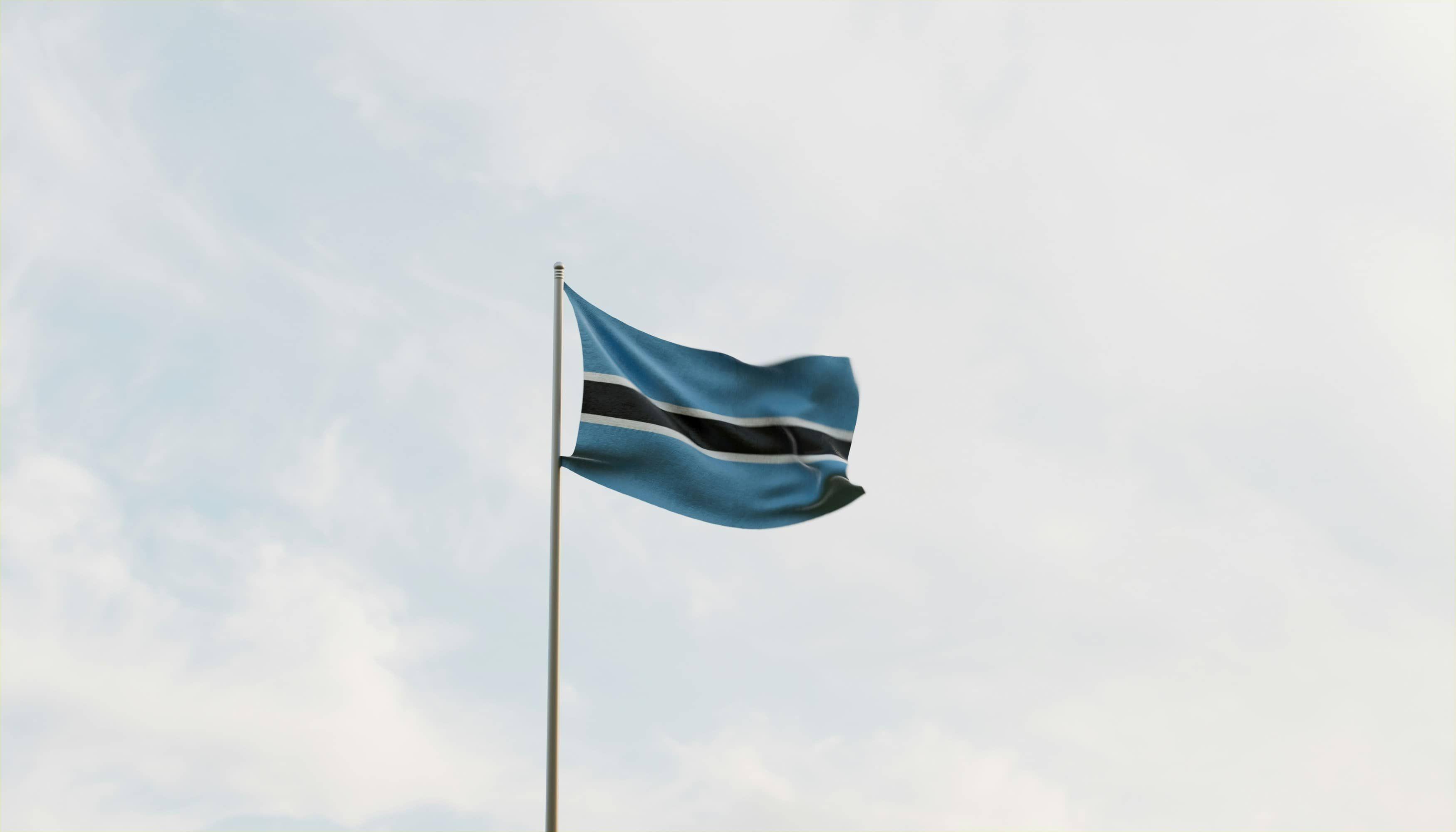
In December 2025, Parliament passed a Citizenship Amendment Bill creating "economic citizenship" under a new Section 15A of the Citizenship Act. Entry price: USD 75,000. Processing target: 60 days. That undercuts every Caribbean program on earth.
Botswana just changed the math for African citizenship.
In December 2025, Parliament passed a Citizenship Amendment Bill creating "economic citizenship" under a new Section 15A of the Citizenship Act. Entry price: USD 75,000. Processing target: 60 days. That undercuts every Caribbean program on earth.
But the price alone is not why this matters. The country behind this program has run a multiparty democracy for nearly 60 unbroken years. It holds investment-grade credit ratings — the highest of any African sovereign. It taxes only income earned domestically, meaning your foreign earnings are entirely outside its reach. And it does not automatically share your financial data with other governments. Botswana does not participate in CRS.
That combination — low entry cost, stable governance, territorial taxation, financial privacy — is rare. It's rarer still in Africa. Here's what you need to know.
The program: what's been announced
The Botswana Impact Citizenship Program was developed in partnership with Arton Capital, the advisory firm behind CBI programs in Antigua, Jordan, and elsewhere. The MoU was signed at the UN General Assembly in September 2025. Parliament approved the enabling legislation on December 17, 2025.
Published thresholds:
Main applicant: USD 75,000–90,000 (government contribution)
Spouse: USD 10,000
Children under 18: USD 10,000 each
Adult dependents: USD 5,000 each
Due diligence: approximately USD 5,000 per adult
Target sectors include manufacturing, mining, agriculture, infrastructure, financial services, tourism, technology, and health. Annual quotas will limit numbers. Applications go through licensed agents — the same model São Tomé uses.
The USD 75,000 is the government contribution. Add professional fees, due diligence, document preparation, and transfer costs, and total all-in spend for a single applicant will likely run USD 100,000–120,000. Still well below Dominica, St. Lucia, or Grenada. And for a family of four, the per-head cost drops materially.
One important caveat: The full regulatory framework was not published as of March 2026. The bill had passed its second reading and was in committee stage. A pre-registration portal attracted over 464 applications from 77 countries in its first week — institutional demand is clearly there. But formal applications are not yet open. Watch the BotswanaCitizenship.com portal for launch confirmation.
Existing residency pathways
The CBI program is not yet running. But there are ways in right now.
Investment visa — entry visa for up to 5 years (multiple entry) for business investors. Cost: BWP 1,000–2,500 (~USD 75–190). Processing: 7–14 days through the Department of Immigration and Citizenship.
Investor work permit — the primary residency vehicle. Botswana uses a points-based scoring system requiring 60%+ across investment amount, job creation for nationals, sector relevance, and business viability. An investment of BWP 1,000,000 (~USD 70,000–93,000) earns maximum points. Required documents: company registration, share certificates, trading licenses, bank statements, employee lists, medical reports, police clearance. Processing: 1–3 months. Application fee: ~USD 165.
Permanent residence requires 5 years of continuous lawful residence. Application: BWP 3,000 (~USD 225). Processing: approximately 6 months.
Investment sectors organize into three tiers: Tier 1 (government-sponsored, automatic approval), Tier 2 (production — agriculture, manufacturing, mining, utilities, construction), and Tier 3 (services — finance, IT, tourism, trade, communications).
The process runs through the Department of Immigration and Citizenship and the Ministry of Investment, Trade and Industry.
Standard naturalization: why almost nobody takes this route
Normal naturalization requires 10 years of aggregate residence within a 12-year period, plus 12 consecutive months before the application date. There is also a Setswana language requirement. For most foreign investors, this is a barrier in every practical sense.
The CBI program cuts this to 60 days. That's the entire point.
Spousal naturalization is faster — 5 years of continuous residence while married to a Botswana citizen. And ministerial discretion exists for cases of "distinguished service," but this is not a reliable planning tool.
If you are evaluating Botswana, plan on either the CBI route or a long-term residency strategy, not naturalization through the standard track.
Dual citizenship: what just changed
This is recent and it matters.
Botswana historically prohibited dual citizenship outright. An adult who acquired foreign nationality automatically lost Botswana citizenship. That made any CBI program commercially useless — no one pays $75,000 for a passport that costs them their existing one.
The Citizenship Amendment Act No. 23 of 2024, signed August 2024, first permitted adult dual citizenship. Then the Boko government's December 2025 legislation went further, enabling multiple citizenship — holding more than two passports simultaneously. This directly enables the CBI by letting economic citizens keep their existing travel documents.
One restriction: economic citizens cannot vote in Botswana elections. The legislation acknowledges their primary allegiance is elsewhere. That is a fair trade for most CBI buyers.
The tax case
Botswana operates a territorial (source-based) tax system. Income earned outside Botswana is not taxed. For clients with income across multiple jurisdictions, that is the headline. Your offshore dividends, your foreign business income, your overseas capital gains — none of it touches Botswana's tax system.
Personal income tax tops out at 25%:
Taxable income (BWP)
Rate
0–48,000
0%
48,001–84,000
5%
84,001–120,000
12.5%
120,001–156,000
18.75%
Over 156,000
25%
Corporate income tax: 22% standard. 15% for approved manufacturers and IFSC-certified financial services companies. Companies in the SPEDU development zone: 5% for the first five years, then 10%.
Capital gains: Integrated into the income tax system. On share disposals, 75% of net gains are taxable — effective rate ~18.75% for individuals. Gains on BSE-listed securities held over one year: fully exempt.
Inheritance: A Capital Transfer Tax applies at progressive rates up to 5% for individuals and 12.5% for companies. Not zero — Mauritius and Seychelles have no estate tax — but still modest.
VAT: 14%. Dividends (domestic): 7.5% withholding. Non-resident interest/royalties: 15%. About 18 double tax agreements, including with the UK, France, India, China, UAE, and South Africa.
Transfer duty on property for non-citizens: 10% on the first BWP 2 million, 15% above that. Citizens pay 5%. This is not the jurisdiction for a real-estate-led investment strategy.
CRS/AEOI: Botswana responds to information requests but does not automatically share account data. Botswana was removed from the EU Grey List in February 2024 and is on no current EU or OECD blacklist.
The passport
Approximately 88 visa-free or visa-on-arrival destinations. That puts it roughly 60th globally and 4th in Africa — behind Seychelles, Mauritius, and South Africa.
Within SADC, Botswana passport holders travel visa-free to most of the 16 member states. A 2023 bilateral deal with Namibia allows border crossing on national identity documents alone.
At $75,000 and 88 destinations, this is not a mobility optimization play. Grenada gets you Schengen at $150,000+. Vanuatu gets you 98 destinations at comparable prices. Botswana's value is not in the travel document — it's in the legal status, the tax treatment, and the financial privacy that comes with it.
The economy: what the diamond slowdown means for you
GDP: approximately USD 19.4 billion in 2024. GDP per capita: $7,696 nominal, $20,538 PPP — among the highest in Sub-Saharan Africa. Growth: -3.0% in 2024 after 2.7% in 2023.
The contraction is structural. Diamonds account for roughly 90% of exports and 25–30% of GDP through Debswana, the 50/50 joint venture with De Beers. Lab-grown diamond competition hit global prices starting in 2022–2023, and reduced Chinese demand compounded the problem. Mining output fell 24% in 2024. Anglo American's planned De Beers sale introduces more uncertainty.
That's the reason Botswana is launching a CBI program right now. Revenue diversification is a fiscal necessity, not just a strategy.
Despite this, all three major rating agencies maintain investment-grade ratings: S&P at BBB (negative outlook), Moody's at Baa1 (negative), Fitch at BBB (stable). Foreign reserves sit at approximately $3.2 billion — around five months of import cover. The fiscal deficit widened to an estimated 7–8% of GDP in FY2024/25.
Governance is the counterweight. Botswana scores 57/100 on Transparency International's CPI — 3rd in Sub-Saharan Africa, 43rd globally. The October 2024 election saw the ruling BDP lose power after 58 years, and the transition was peaceful. That institutional depth is rare on any continent.
Cost of living in Gaborone
Gaborone is one of the most affordable capitals in Africa. Monthly costs for a family of four: approximately $2,078 excluding rent. Single professional: ~$572. One-bedroom apartment in the city center: BWP 3,500/month (~USD 265), roughly half of comparable accommodation in Johannesburg.
International school fees: $6,300–$9,200 annually at institutions like Westwood International School (IB) and Maruapula — well below Nairobi's $15,000–30,000 range. Monthly utilities average BWP 845 (~USD 64). Internet (~USD 81 for 60 Mbps) costs more than South Africa.
Private healthcare (Gaborone Private Hospital, Bokamoso Private Hospital) handles most day-to-day needs. Complex cases go to Johannesburg. Private health insurance is non-negotiable for expatriates.
Legal system, property, and banking
Legal system: Roman-Dutch law with English common law influence — the same framework as South Africa, without South Africa's political volatility. World Justice Project Rule of Law Index: 50th globally, 4th in Africa. Property rights are constitutionally protected.
Land: Three categories. Freehold land — a small fraction of the total — can be purchased outright by foreigners. State land is available on leases up to 99 years. Tribal land, the majority of the country, is restricted to citizens. All foreign property purchases require approval from the Ministry of Local Government, Land, and Housing. The 10–15% transfer duty makes property a costly entry point for non-citizens.
Banking: Nine commercial banks regulated by the Bank of Botswana, including Standard Chartered, Absa, Stanbic, and First National Bank. All maintain U.S. correspondent banking relationships. Account opening requires a passport, residence permit, and standard KYC documentation. The Botswana Pula has been fully convertible since 1999. Capital controls are minimal. Profits and investment proceeds can be repatriated without restriction.
The Botswana Stock Exchange (est. 1989) is the third-largest in Southern Africa by market capitalization (~BWP 947 billion, early 2026). Liquidity is limited, but BSE-listed securities held over one year are exempt from capital gains tax.
The IFSC (International Financial Services Centre) offers a 15% corporate tax rate on qualifying financial services income from non-residents — the mechanism behind Gaborone's positioning as a regional financial hub. Small in scope compared to Mauritius's IFC ecosystem, but the framework exists.
Botswana vs. Mauritius, Seychelles, and Rwanda
For HNWIs evaluating African options, the comparison looks like this:
🇧🇼 Botswana
🇲🇺 Mauritius
🇸🇨 Seychelles
🇷🇼 Rwanda
CBI program
Yes, launching 2026 (~$75K)
No
No
No
Min. investment (residency)
~$70–93K (business)
$50K (business) / $375K (property)
$1,000,000
$500K (property) / $1M (business)
Time to citizenship
60 days (CBI) / 10 yrs (standard)
2 yrs ($500K fast-track)
11 yrs minimum
5 yrs
Top personal income tax
25%
15%
15–30%
30%
🇲🇺 Mauritius wins on tax efficiency in most categories: zero capital gains, zero inheritance, 15% top personal rate, 45+ treaties, and a passport that gets you into 150+ countries. Its 2-year fast-track citizenship route at $500,000 still lags behind Botswana's CBI on speed and price. The tradeoffs are higher residency investment thresholds, full CRS participation, and higher cost of living.
🇸🇨 Seychelles has Africa's strongest passport and zero capital gains tax. But residency requires $1 million and citizenship takes 11 years. Nobody is buying Seychelles for speed.
🇷🇼 Rwanda has momentum — Kigali has become a credible tech and conference hub, and governance metrics are strong. But worldwide taxation at 30% top rates and a 73-destination passport limit its appeal for internationally mobile individuals with foreign income. For business operators in East Africa, it makes more sense than for wealth migration.
Botswana at $75,000 with 60-day processing is in a category by itself on price-to-acquisition ratio. The passport is weaker than Mauritius or Seychelles. The tax regime is less competitive than Mauritius on some measures — 25% personal rate vs. 15%, capital gains integration, 5% estate tax. What Botswana has that none of the others offer: the cheapest legal path to a second citizenship on the African continent, no automatic financial data exchange with foreign governments, and governance credibility that cannot be manufactured.
The risks
Be clear-eyed about what you're buying.
The diamond economy is contracting. Both S&P and Moody's downgraded Botswana in late 2025 — still investment grade, but the direction matters. Foreign reserves are declining. The fiscal deficit is widening. The CBI program exists partly because the government needs new revenue sources. That creates dependence, and dependence creates policy risk if the program underperforms expectations.
The regulatory framework is still incomplete. Full fee schedules, due diligence standards, appeals procedures, and revocation grounds were not published as of March 2026. Early-stage CBI programs routinely hit delays. Jordan's program, also developed with Arton, launched with ambitious timelines and took longer than advertised. Plan accordingly.
Tribal land restrictions effectively eliminate real estate as a CBI investment vehicle. The transfer duty for non-citizens (10–15%) makes property expensive even where it's available. Botswana is a business-investment program, not a real-estate program.
Standard naturalization applicants face a real language barrier — Setswana proficiency is required, and ministerial discretion is not a reliable workaround.
None of this disqualifies Botswana. It tells you what the program actually is. You are buying: a clean legal path to a second nationality at the lowest entry price currently available on the continent, in a country with 60 years of institutional stability, territorial taxation, and no automatic foreign account reporting. That is a specific value proposition with a specific buyer profile.
If you have offshore income you want to protect, a second citizenship is on your roadmap, and you want the fastest and cheapest legitimate route in Africa — the window is opening in 2026. Watch it closely.