Citizenship by exception sounds like a shortcut. Get your name in front of the right minister, make the right investment, and a presidential decree hands you a passport: no years of residency, no language test, no bureaucratic queue.
The pitch is real. Serbia, Albania, the UAE, and Malta all offer (or have offered) some version of this. And for specific situations, it genuinely makes sense. But the version being marketed to HNWIs in 2026 is often stripped of its most important qualifier: these programs run on political discretion, not law. There is no application portal, no binding criteria, and no right of appeal. The government decides. Every time, individually, for reasons it doesn't have to explain.
That's a very different risk profile from a codified citizenship by investment program. This article maps the CBE landscape honestly: who offers it, what it actually costs, and where it quietly falls apart.
In a standard citizenship by investment program, there's a law. It says: invest X, pass due diligence, wait Y months, get citizenship. Miss a requirement and you're told why. Meet all requirements and the government can't arbitrarily deny you.
CBE works differently. A head of state or cabinet grants nationality to individuals judged to serve the "national interest." The criteria are elastic by design. There's no standard form. No published minimum. No appeals process. A president decides whether your contribution (economic, scientific, cultural, athletic) clears whatever bar they've set that week.
The FATF-OECD flagged this in their November 2023 joint report, warning that discretionary citizenship programs "bring significant risks of money laundering, fraud, and other forms of misuse" and often operate "at lower cost and sometimes with greater speed and fewer due diligence checks" than formal CBI schemes. That last clause matters: the lack of standardized vetting that makes CBE attractive to applicants is also what makes it legally fragile.
Roughly 15–20 countries now operate some form of CBE pathway. The ones that matter most for investment migration clients are Serbia, Albania, the UAE, and Malta. Each has a different structure, a different risk profile, and a different passport outcome.
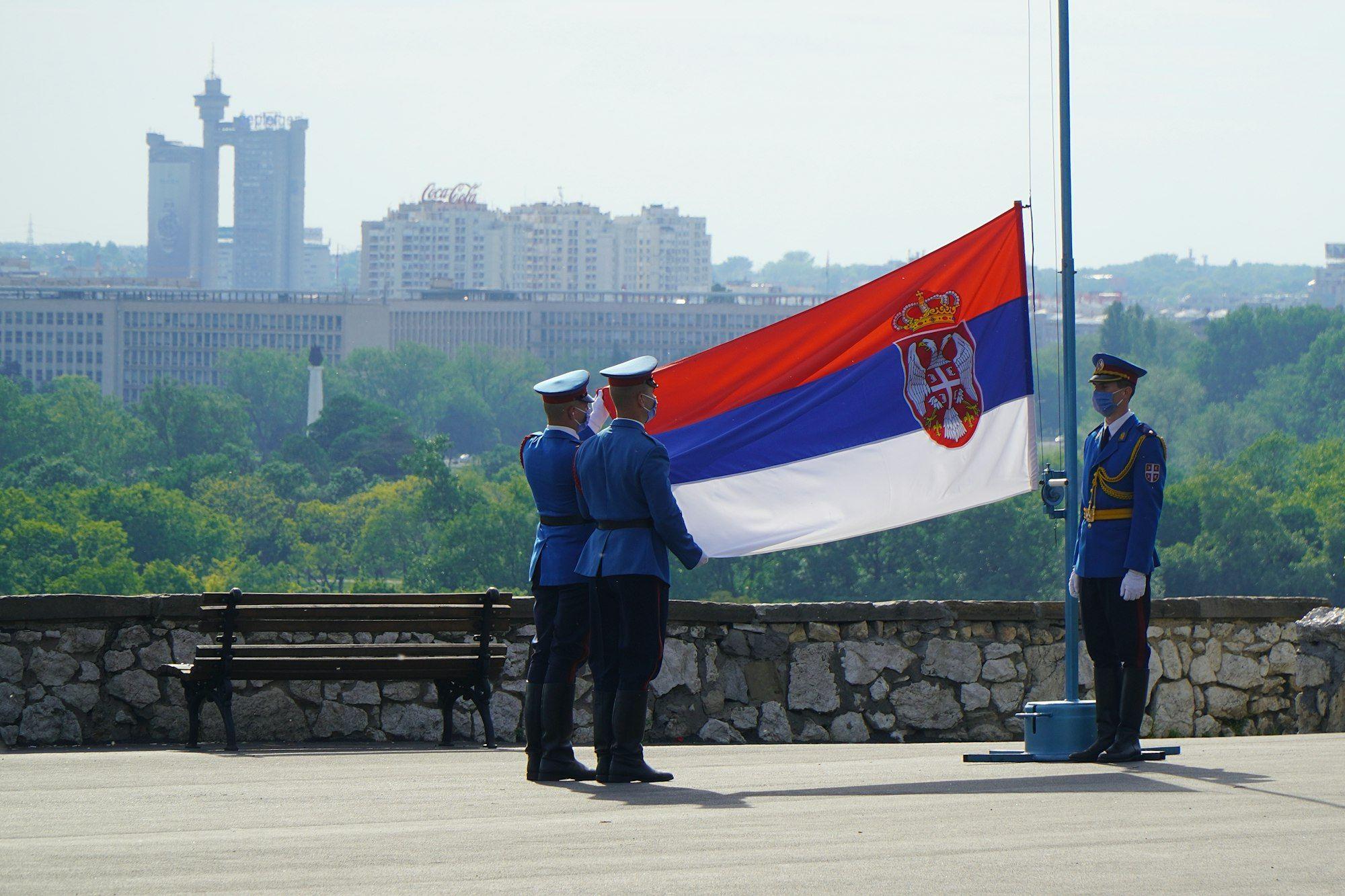
Serbia's pathway is Article 19 of its Citizenship Law; roughly translated: any foreigner can be admitted to citizenship if it's in Serbia's national interest, regardless of standard naturalization conditions. The Government acts on a motion from the competent Ministry. That's the entire legal framework.
In practice, what qualifies as national interest? Business investments that create jobs. Technology expertise. Cultural recognition. Humanitarian contributions. The list is illustrative, not exhaustive. There's no fixed investment minimum. Applications go through the Ministry of Interior and can be approved in as little as three months, with two required visits to Belgrade.
CitizenX structures the route at €375,000 total: government fees of €177,500, a non-refundable contribution of €172,500, and €25,000 for CitizenX's own fees. This involves company incorporation and a government donation. High-profile past recipients include Steve Wozniak, Ralph Fiennes, Johnny Depp, and Adriana Lima, which tells you what the Serbian government considers nationally interesting: famous people, preferably with some media profile.
Worth flagging: claims circulating among immigration agents that a €600,000 real estate investment guarantees Serbian citizenship are false. CitizenX is direct about this: presenting company incorporation as mandatory is misinformation that "may lead to serious legal and financial consequences." Serbia has never had a formal CBI program. Anyone telling you otherwise is either confused or lying.
What the Serbian passport gives you: 137 visa-free destinations, Schengen access for 90 days, plus Russia, China, Turkey, Japan, and Brazil. It's one of very few passports that works visa-free across both the Schengen zone and the Russia-China axis, which for certain clients is genuinely useful.
What it doesn't give you: access to the US, UK, Canada, or Australia without a visa. Serbia's FY2024 US visa refusal rate sits at 17.77%, more than five times the 3% threshold required for Visa Waiver Program consideration. Serbia is not a Global Entry partner. For clients who regularly travel to North America or the UK, the Serbian passport creates friction rather than removing it.
On tax, Serbia is genuinely interesting. 15% corporate tax (among Europe's lowest), flat 10% personal income tax, and a banking system outside the CRS. Capital gains for locally incorporated companies face zero tax. But: Serbian tax residency is triggered at 183 days per year, and residents are taxed on worldwide income. The non-CRS banking advantage is real but requires physical presence to activate.
Now for the part that gets buried in competitor guides.
In December 2025, investigative outlet BIRN published a detailed report showing that Serbia has been stalling citizenship for Russian nationals who received preliminary approval, and had already renounced their Russian citizenship to meet Serbian requirements. They are now, technically, stateless. The Serbian government didn't publicly revoke their approvals; it simply stopped processing them. Meanwhile, Kremlin-connected Russians continue receiving discretionary citizenships without issue.
This is what discretionary programs look like when geopolitics shifts. There's no legal mechanism to compel completion. No SLA. No judicial remedy. You can be left in a gap between two nationalities while the government decides whether completing your case is politically convenient.
The EU raised similar concerns when the Serbian government proposed legislative amendments to simplify citizenship acquisition in early 2025. The European Commission objected, citing migration and security risks around the visa-free Schengen access that Serbian passport holders enjoy. The amendments were withdrawn. The program is now under more scrutiny than it was 18 months ago, not less.
🇦🇱 Albania: the suspended promise
Albania's CBE operates under Law No. 113/2020, giving the Council of Ministers authority to grant citizenship to foreigners whose presence serves national interest. Applications go through the Ministry of Interior, forward to the Council of Ministers, and if approved, the President issues a decree. The applicant then has six months to take an oath. Miss that deadline and the citizenship is void.
Five categories qualify: economic contributors (employment-creating investments, renewable energy, tourism); scientists and academics; cultural figures; athletes; and individuals strengthening Albania's social or political interests. No minimum investment is published. Government fees are low, but translation, notarization, due diligence, and legal costs add up.
The Albanian passport covers roughly 119–123 countries visa-free, including Schengen. The US situation is worse than Serbia's: Albania's FY2024 US visa refusal rate is 33.37%. One in three applicants for a B-visa is denied. Albania is not a Global Entry partner.
Albania was also planning a formal CBI program, originally expected at around €100,000. Prime Minister Edi Rama suspended it in March 2023, explicitly linking the decision to the ECJ's then-ongoing review of Malta's program. After the April 2025 ruling against Malta, Albania's CBI remained on indefinite hold. The pathway that exists now (the Article 9 CBE route) is rarely used and carries substantial uncertainty.
CitizenX identifies seven failure modes for Albania CBE applicants: weak documentation (the most common rejection reason), incomplete background checks, unclear source of funds, overreliance on intermediaries promising guaranteed outcomes, missing the oath deadline, and assuming family inclusion is automatic. The last one trips people. Spouses and children are not automatically included; each case is judged separately.
🇦🇪 UAE: the invitation-only model
The UAE's citizenship program is the most exclusive on this list. After a 2021 amendment to Federal Law No. 17/1972, the UAE opened citizenship to exceptional individuals, but there is no application form. There is no queue. You cannot apply. You can only be nominated by a federal entity and approved by a Ruler's Court, Crown Prince's Court, Executive Council, or the Cabinet.
Categories include investors with UAE property, doctors and specialists, internationally awarded scientists, intellectuals and creatives of global stature, and accomplished athletes. The process takes 12–18 months once nominated. The citizenship is only available to the exceptional merit route, not via the standard Golden Visa path.
This is worth stating clearly because it creates enormous confusion: a UAE Golden Visa is not a pathway to citizenship. A Golden Visa is a 5–10 year renewable residency permit. More than 50,000 were issued in 2024. You can live in the UAE for 30 years on a Golden Visa and still not qualify for a passport. The two programs are entirely separate.
The UAE passport, if you can get it, is extraordinary. 179+ visa-free destinations, including the US, UK, Schengen, Canada. Zero personal income tax. Zero capital gains tax. The naturalized citizenship covers dual nationality, unlike traditional UAE naturalization, which requires renouncing all other citizenship after 30 years of residency plus demonstrating Arabic fluency.
The risks are proportional to the prize. UAE citizenship can be revoked for conviction of a moral turpitude offence, fraud, exercising citizenship rights in another country, or critically residing outside the UAE for more than four consecutive years. The MENA Rights Group has documented systematic citizenship stripping as a tool of political crackdown, with cases where revocation leaves the individual stateless and with no legal recourse. For naturalized citizens, the protection floor is lower than for citizens by birth.
The honest summary: UAE citizenship is the best passport outcome in investment migration, and for 99% of readers it is not available to them.
🇲🇹 Malta: terminated and in transition
Malta's program ended on April 29, 2025, when the European Court of Justice ruled unanimously that the MEIN scheme violated EU law. The court held it amounted to "the commercialisation of the grant of the nationality of a Member State and, by extension, of Union citizenship." Cyprus terminated in 2020. Bulgaria in 2022. Malta was the last EU CBI holdout.
The MEIN required a €600,000–€750,000 contribution to the National Development and Social Fund (depending on whether the applicant chose the 12- or 36-month residency track), real estate at €700,000 or a €16,000 annual rental commitment, and a €10,000 philanthropic donation. Total cost for a family of four ran €850,000–€1.1 million. Despite a 23% rejection rate and multi-layer due diligence, the program generated over €1.4 billion since 2015.
Malta is now developing a Citizenship by Merit replacement framework under Legal Notice 159 of 2025, expected to launch in late 2025. The new model shifts from financial contribution to exceptional achievement in technology, science, entrepreneurship, and innovation. It requires 12 months' residency plus proof of English or Maltese and genuine evidence of exceptional service. No fees or application forms were public as of early 2026.
There's a structural irony here. Malta's old CBI (codified, transparent, with published requirements and a 23% rejection rate) was ruled illegal. Its replacement is discretionary, with no published criteria, decided case-by-case by government officials. If the ECJ struck down the transparent version for commercializing citizenship, it's not obvious the opaque version survives future scrutiny either.
Existing MEIN citizenships are not retroactively invalidated. But increased scrutiny is coming.
The six ways CBE programs quietly fail applicants
Six problems come up repeatedly across CBE programs, and most promotional guides skip at least four of them.
Capital goes in before approval. Serbia's route requires €375,000 with no escrow and no refund mechanism. Albania's costs (legal fees, translations, due diligence) are fully non-recoverable on denial. There's no codified approval threshold to meet. You can do everything right and still hear nothing.
No legal recourse when it stalls. The Serbian situation is the cleanest example: preliminary approval was given, original citizenship was renounced, processing stopped. There is no court where those applicants can demand completion. The discretion that creates the shortcut also eliminates any appeal when the shortcut closes.
Programs change without warning. The UAE can revoke citizenship by executive action. Serbia withdrew proposed legislative reforms under EU pressure. Albania suspended its CBI entirely. In January 2026, a US Presidential Proclamation cut visa validity for Antigua and Dominica passport holders from 10 years to three months, specifically because of those countries' CBI programs. Programs built on political goodwill rather than statute are exposed to exactly this kind of overnight change.
The passport still doesn't work for the US. Serbia's adjusted US visa refusal rate is 17.77%. Albania's is 33.37%. Neither is a Global Entry partner. Both require visas for the UK and Canada. For clients who travel regularly to North America, this isn't an edge case. It's a recurring friction the passport was supposed to solve.
Regulatory risk follows the passport. The OECD and FATF are watching discretionary programs closely. The EU has draft regulations in development that could suspend visa-free access for countries with investment migration schemes. Banking due diligence, wealth management onboarding, and institutional compliance reviews increasingly ask about citizenship history and source of nationality. Less transparent programs create more friction in those conversations, not less.
Due diligence is unstandardized. FATF noted specifically that CBE programs operate "sometimes with greater speed and fewer due diligence checks" than formal CBI. That observation doesn't stay inside the application process; it follows the passport into every KYC form the holder completes afterward.
🇸🇻 El Salvador's Freedom Visa: a structurally different answer
El Salvador's "Adopting El Salvador" Freedom Visa (launched December 2024 in partnership with Tether) is a codified CBI with published requirements, a transparent timeline, and one critical structural difference from every CBE on this list: the $1,000,000 contribution is paid only after due diligence approval.
The initial commitment is $999. That's the non-refundable registration deposit. The remaining $999,001 is due only after passing KYC, AML, and criminal background checks. You know the outcome before you commit the capital. Every other program on this list works in the opposite order.
The $1 million is paid in Bitcoin or USDT (Tether via Ethereum), payable to government development funds. Government fees total $999. CitizenX (a licensed official processor that handles roughly half of all Freedom Visa applications) charges $21,000. Spouses and children under 18 (or under 25 if full-time students) pay $999 each. The program accepts 1,000 applicants per year.
Processing takes approximately 42 days, making it the fastest CBI program currently operating. The entire application is online; no visit required unless you want one. Passports can be collected in El Salvador or at embassies in Los Angeles, Barcelona, or Dubai. Documents need to be apostilled and translated into Spanish within 60 days of submission.
What the Salvadoran passport gives you: 134–137 visa-free destinations, including the full Schengen Area, the UK, Japan, Singapore, South Korea, Russia, Israel, and most of Latin America and the Caribbean. The US still requires a visa. But the US relationship around El Salvador's passport is more nuanced than a single entry in a visa requirements table.
The US relationship that changes the calculation
In April 2025, US Customs and Border Protection announced a Global Entry partnership with El Salvador, one of roughly 20 such partnerships globally. Salvadoran citizens can apply for Global Entry, gaining access to automated CBP kiosks, TSA PreCheck enrollment, and the Global Entry Mobile app. The program costs $120 for five years.
To put this in context: Serbia's visa refusal rate is 17.77%. Albania's is 33.37%. Neither is a Global Entry partner. A Serbian CBE applicant and an El Salvador CBI holder both need a US visa, but the Salvadoran passport holder can apply for Global Entry and clear customs in under two minutes at every major US airport. The Serbian passport holder waits in the regular queue.
The US-El Salvador relationship extends well past Global Entry. President Bukele was the first Latin American leader invited to the Trump White House in the second term. Secretary of State Marco Rubio and DHS Secretary Kristi Noem both chose El Salvador as their first overseas destination. El Salvador has been accepting US deportation flights and hosting CECOT operations on behalf of American law enforcement. El Salvador is a founding member of CAFTA-DR, the free trade agreement implemented in 2006, which provides formal trade protections and international arbitration rights for US investors.
The comparison with Serbia and Albania isn't primarily about passport power scores. It's about trajectory. In an environment where the US is suspending visa privileges for countries with permissive CBI programs, El Salvador's passport is moving in the opposite direction.
Tax and financial privacy: where El Salvador separates further
Legislative Decree 969 (March 2024) eliminated all taxation on foreign-sourced passive income. Only income generated within El Salvador is taxed. No wealth tax. No inheritance tax. No property tax. No capital gains tax on Bitcoin profits.
For a high-net-worth individual whose income originates abroad (which describes the typical Freedom Visa applicant) the effective personal income tax rate is zero. Technology investments receive 15-year tax exemptions. Free trade zones offer income tax holidays of 15–20 years.
El Salvador does not participate in the Common Reporting Standard (CRS), meaning Salvadoran banks do not automatically report account holdings to foreign tax authorities. The country has not committed to CARF (Crypto Asset Reporting Framework), which went live January 1, 2026 in participating jurisdictions. The OECD has identified El Salvador as one of only seven "relevant jurisdictions" that have not committed to CARF, alongside Argentina, Australia, India, Panama, Philippines, and Vietnam.
Serbia shares some of this profile (non-CRS banking, 0% capital gains for locally incorporated companies, 15% corporate tax) but the comparison breaks down at the personal income level. Serbia taxes worldwide income for tax residents (triggered at 183 days annually). El Salvador's territorial system exempts all foreign-source income regardless of physical presence. For a crypto investor managing a multi-million dollar portfolio from outside El Salvador, this isn't a marginal difference.
Serbia vs. El Salvador: the honest comparison
The $1 million price tag on El Salvador's program is the highest entry point in CBI globally. Some clients will look at Serbia's €375,000 and find it more accessible. This is a legitimate calculation. But the two programs are not solving the same problem.
Serbia offers: lower cost, potential EU accession upside (targeted for 2029–2030), visa-free access to Russia and China, and a lower cost of living for those who actually relocate. For clients seeking genuine geopolitical diversification away from the Western bloc, or betting on Serbian EU membership eventually arriving, the CBE pathway has real strategic logic.
El Salvador offers: legal certainty (codified under Legislative Decree No. 286, not presidential discretion), capital protection (the $1 million is committed post-approval), 42-day processing, Global Entry, the closest US diplomatic alignment of any CBI program currently operating, zero crypto capital gains, territorial taxation, and non-participation in both CRS and CARF.
There's also a path that Serbia genuinely can't offer: Salvadoran citizens who later establish residency in Spain can apply for Spanish citizenship after two years under the special Ibero-American naturalization track. That's an EU passport through a legal, well-worn route, without EU political risk on the front end.
Albania doesn't compete with either at this point. Its CBI is suspended, its CBE pathway is rarely used, its US visa refusal rate is 33%, and the program has no clear timeline for reopening.
Who CBE is actually for and who it isn't
CBE programs work for specific situations. If the goal is the cheapest possible second citizenship and US travel isn't a priority, Serbia's €375,000 route has real appeal. If you're a world-class scientist or athlete with relationships in the UAE, the nomination pathway is worth pursuing even knowing the odds.
But most people researching CBE programs don't fit those profiles. Most are HNWIs who want legal certainty, don't want their capital sitting at risk before an outcome is known, and need a passport that works for North America and Europe. For that group, CBE's structural problems aren't acceptable trade-offs; they're the core of why the programs fall short.
El Salvador's Freedom Visa costs more. $1 million is the highest entry point in CBI globally. But the post-approval payment structure means you're never committing that capital blind. The 42-day timeline is the fastest available. The Global Entry partnership is real and already in effect. The US diplomatic relationship is currently closer than it's been at any point in El Salvador's modern history. And the territorial tax system, combined with non-participation in CRS and CARF, creates financial privacy architecture that CBE programs in Serbia and Albania don't offer at a structural level.
The conclusion isn't that CBE is worthless. It's that the version being sold (as a faster, cheaper path to a problem-free second passport) is often misrepresenting what you actually receive. A presidential decree is not a statute. Discretion is not a guarantee. And a passport that requires a visa for the US, UK, and Canada is solving only part of the mobility problem most clients actually have.
Interested in the El Salvador Freedom Visa or evaluating how it fits alongside other options? Our team at CitizenX handles roughly half of all Freedom Visa applications as a licensed official processor. Book a consultation and we'll walk through your specific situation, no obligation.