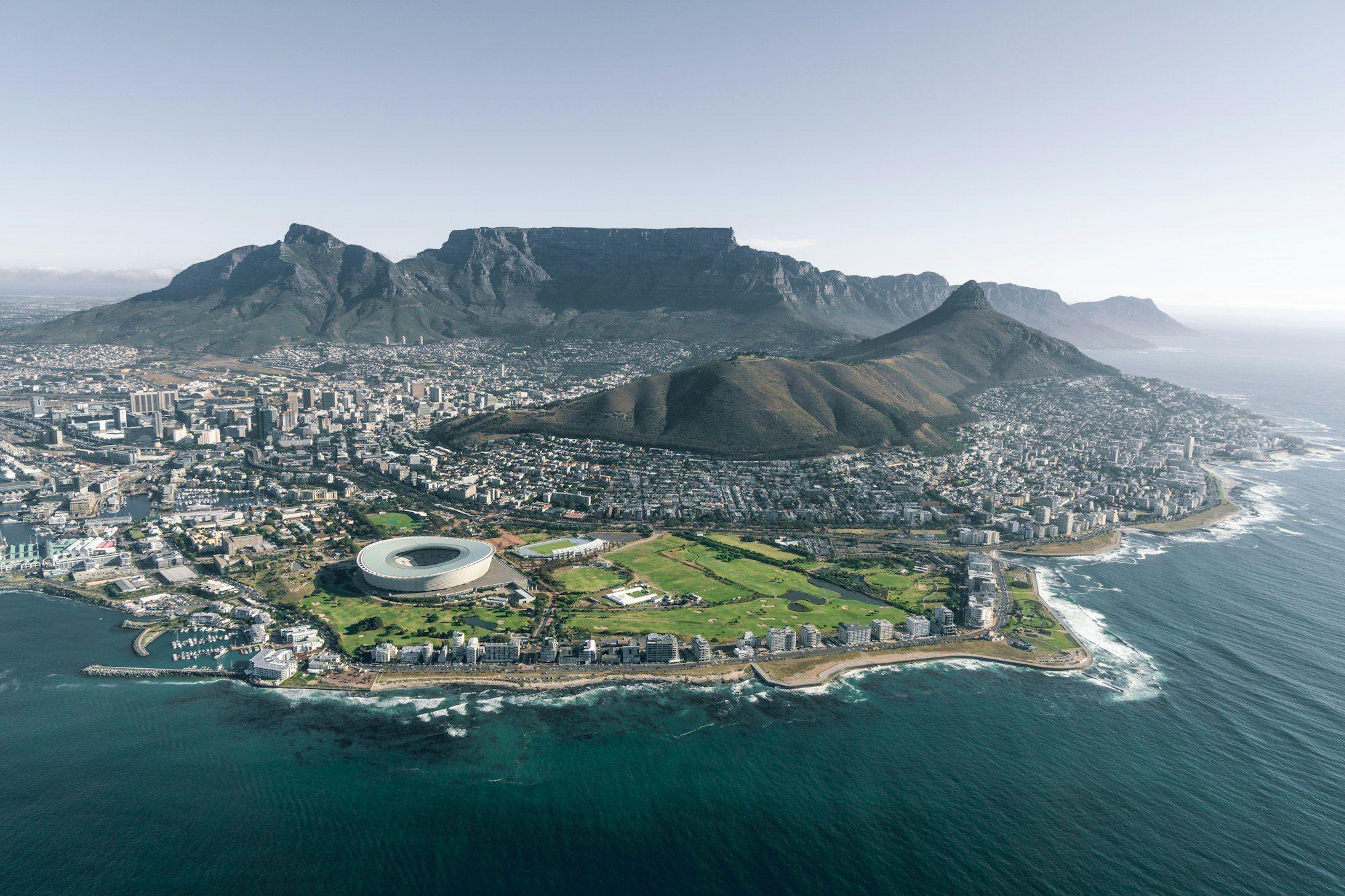
Discover the top 10 tax-free countries in Africa in 2026, from Mauritius and Seychelles with 0% capital gains to territorial regimes that exempt foreign income.
Africa rarely makes the shortlist when investors map out where to base themselves for tax. That is a mistake. Several African jurisdictions charge no capital gains tax at all, tax only locally sourced income and leave foreign earnings alone, or hand retirees and skilled expats some of the most generous reliefs anywhere. For an investor who wants low tax and a foothold in one of the world's fastest-growing regions, the options are better than most people assume.
This guide ranks the ten best tax-free countries in Africa for 2026, with a focus on what matters to high-net-worth investors: 0% capital gains tax, territorial systems that exempt foreign income, and special regimes built to attract capital. Every figure has been checked against current 2025–2026 rules, which in Africa change fast and are sometimes reformed at short notice. Treat this as a map, not advice, and confirm the detail for your own situation before you move.
What "tax-free" means in an African context
Almost no country is tax-free in the literal sense, and Africa is no exception. What you find instead are three useful patterns. The first is the absence of specific taxes that hit investors hardest, above all capital gains tax and inheritance tax. The second is territorial or source-based taxation: many African countries tax only income earned inside their borders and ignore your foreign income entirely, which can leave an international portfolio largely untaxed locally. The third is targeted relief, such as Morocco's pension break or special-zone regimes for qualifying employees.
For someone living off investments and foreign income, a source-based country with no capital gains tax can be far more valuable than a headline low rate. That is the lens used below.
1. Mauritius: no capital gains tax, no inheritance tax
Mauritius is the standout. The island levies no capital gains tax on the disposal of shares, property, or other assets, for residents and non-residents alike. There is no inheritance or succession tax, and dividends paid by a Mauritian company to a resident individual are tax-free regardless of size. Personal income tax runs on a simple three-band scale introduced from 1 July 2025: nothing on the first MUR 500,000, 10% to MUR 1 million, and 20% above that. Corporate tax sits at a flat 15%, with effective rates often much lower for qualifying global-business activity.
The residency route is well established too. A property purchase of at least USD 375,000 in an approved scheme earns a permanent residence permit, while a business investment from USD 50,000 secures a ten-year occupation permit. Permanent residents need to spend only a few days a year on the island to keep their status. Combine the zero capital gains treatment with political stability and a strong banking sector, and Mauritius is the obvious first stop for investors looking at Africa.
2. Seychelles: a territorial system with zero capital gains
Seychelles taxes on a territorial basis. Income earned inside Seychelles is taxed locally, while foreign-source income is generally exempt, subject to the economic-substance conditions introduced in 2021. There is no capital gains tax, no inheritance tax, no estate or gift tax, and no annual wealth tax. For an investor whose income comes from overseas businesses, dividends, or long-held assets, that combination can mean very little local tax.
You become tax resident mainly through the 183-day presence test, and longer-term residence is available through investment. The one thing to watch is substance: the era of paper structures claiming blanket exemption with no real activity is over, and the rules now expect genuine presence behind any company. For individuals actually living there and holding assets long term, though, Seychelles remains one of the cleanest territorial setups in the region, with the bonus of being one of the most desirable places on earth to spend the year.
3. Namibia: no capital gains tax and source-based rules
Namibia does not tax capital gains for individuals, with narrow exceptions tied to mining and petroleum rights. Just as important, it runs a source-based system: income from a Namibian source is taxed, and income from outside the country generally is not. That means most foreign income and foreign capital gains fall outside the Namibian net. One detail to note is that foreign interest is treated as Namibian-sourced and is taxable, so the exemption is broad but not absolute.
For investors who want stability and a low-friction tax position in southern Africa, Namibia is underrated. It has a small, stable economy, good links to South Africa, and a dollar-pegged currency. There is even an emerging residency-by-investment route for those who want to put down longer-term roots, which pairs naturally with the source-based tax treatment.
4. Botswana: stable, source-based, and low-key
Botswana is one of Africa's most stable and best-run economies, and its tax system is source-based: tax is levied on income that accrues in or is derived from Botswana, not on worldwide income. Foreign income that has no Botswana source generally stays outside the tax base, though resident companies are taxed on foreign interest and dividends, with foreign dividends taxed at 10%. Where capital gains are taxable, only 75% of the gain is brought into charge, which softens the effective rate.
Botswana will not give you an outright 0% on everything, but for an entrepreneur or investor who values stability and a clean source-based framework, it is a serious option. It tends to attract those building businesses on the continent rather than pure portfolio investors, but the tax treatment of truly foreign income is favourable either way.
5. Djibouti: territorial tax at the gateway to the Red Sea
Djibouti is an unusual entry, and an interesting one. It operates a territorial system under which a resident's foreign-source income is generally not taxed locally as long as it is not remitted into the country. Non-residents are taxed only on Djibouti-source income, and local rates are progressive up to 30%. For an investor whose income sits offshore, that territorial treatment can be very efficient.
The appeal here is strategic rather than scenic. Djibouti sits on one of the world's busiest shipping lanes, hosts major logistics and port infrastructure, and has positioned itself as a trade and finance gateway between Africa, the Middle East, and Asia. It suits a specific kind of internationally mobile investor or business owner who wants a low-tax base near the Gulf without leaving the African continent.
6. Morocco: a haven for foreign pensions
Morocco earns its place through one of the most generous retiree regimes anywhere. Residents drawing a foreign pension that they repatriate to Morocco have long received an 80% reduction in the income tax on that pension. The 2025 Finance Law went further: from 1 January 2026, retirees receiving only basic pensions and life annuities are fully exempt from income tax on them, and freed from filing an annual return. For a retiree with overseas pension income, that is close to a tax-free landing.
Working investors are not left out. The Casablanca Finance City regime offers a 20% flat income tax for up to ten years to qualifying expat employees of CFC-certified companies, a useful rate for senior people relocating with an international employer. Add a mild climate, low cost of living, and easy access to Europe, and Morocco is a strong choice for both retirees and mobile professionals.
7. Eswatini: a quiet source-based option
Eswatini, the small kingdom between South Africa and Mozambique, taxes income on a source basis: tax applies to income derived from a source within or deemed to be within the country, regardless of where the recipient lives. Income that is truly foreign-sourced generally falls outside that base. It is not a glamorous wealth hub, and the local market is small, but the source-based principle is the same one that makes its larger neighbours attractive to investors with offshore income.
Eswatini suits a narrow profile: someone with a regional business footprint who wants a low-cost southern-African base and whose investment income arises abroad. As always with source-based systems, the value lies entirely in where your income is actually earned.
8. Zambia: source-based with a regional footprint
Zambia operates a source-based system, taxing income deemed to arise from a Zambian source. Non-residents are generally taxed only on Zambian-source employment income. The important caveat for investors is that residents are taxed on foreign interest and dividends, so it is not a clean exemption on all passive income. Capital appreciation outside the defined categories is generally outside the income-tax net, and the country has been working to modernise its system.
Zambia is best understood as a base for those active in mining, agriculture, or regional trade rather than a pure tax shelter. But for the right profile, the source-based treatment of most foreign income, combined with a large and resource-rich economy, makes it worth a look in any African shortlist.
9. Egypt: a passport play more than a tax residence
Egypt belongs on this list for a different reason. Its draw is not day-to-day tax residency but its citizenship-by-investment program, established under Law No. 190 of 2019, which grants citizenship for a qualifying contribution starting around USD 250,000. Crucially, the program requires no residency before or after you apply, so it does not force you into Egyptian tax residency at all. You can hold the passport while remaining tax resident wherever suits you best.
That makes Egypt a clean diversification tool. The passport allows dual nationality, offers useful regional access, and can support an application for the US E-2 investor visa. For an investor who wants a second citizenship as a hedge without changing where they pay tax, Egypt is one of the most practical routes on the continent. You can read the detail in our guide to Egyptian citizenship by investment.
10. Angola: territorial today, but the window is closing
Angola makes the list with a clear warning attached. As things stand, it taxes on a territorial basis, so residents pay tax only on Angolan-source income and foreign earnings are left alone. That has made it quietly attractive for those with offshore income who do business in the country's large, oil-driven economy.
The catch is that this is changing. A reformed Personal Income Tax Code, put out for consultation in 2025, would shift Angola from territorial to worldwide taxation of residents, with marginal rates up to 25%, expected to take effect from 2026. Angola is the clearest example on this list of why timing matters: a regime that looks generous today can be rewritten in a single budget cycle. It is a useful illustration of the broader trend covered in the next section.
How to choose the right African tax residency
The best tax-free country in Africa depends on your income, your business, and how you actually want to live. A few rules of thumb help.
If you want a polished, zero-capital-gains base with proper banking and an easy residency route, Mauritius is the default, with Seychelles close behind for those who prefer a territorial system and island life. If your income is mostly foreign and you want a source-based shelter, Namibia, Botswana, Djibouti, Eswatini, and Zambia all leave most offshore earnings untaxed locally, with Namibia and Botswana offering the most stability. If you are retiring on a foreign pension, Morocco is hard to beat. And if you simply want a second citizenship as a hedge rather than a new tax home, Egypt does the job without changing where you pay tax.
Two cautions apply across all of them. Tax residency is not the same as immigration status: the benefits usually require you to relocate, meet presence tests, and often make a qualifying investment. And African tax regimes can change quickly, as Angola's pending shift shows, so always confirm the current position and take cross-border advice before committing.
The bigger picture: tax is tightening, plan accordingly
The regimes above are attractive today. The global direction of travel is not, and Africa is no longer insulated from it. Governments under fiscal pressure are widening their tax nets, reaching for residents' worldwide income, and making it more expensive to leave. Two patterns should shape how you think about timing.
Worldwide taxation and exit taxes
The clearest African cautionary tale is South Africa. It taxes residents on their worldwide income and gains, wherever they live and invest. Worse, leaving is not a clean break. Ceasing South African tax residency triggers an exit tax under Section 9H, a deemed disposal of your worldwide assets the day before you go, with capital gains taxed at an effective rate of up to 18%. The pressure is real: SARS data shows that more than 51,500 individuals formally ceased to be South African tax residents between the 2017 and 2024 tax years, and many discovered the cost only when the assessment arrived.
Angola's planned move from territorial to worldwide taxation, noted above, points the same way. So does the wider global mood, from France's debate over taxing its citizens for years after they emigrate to the steady spread of exit taxes and tighter residency tests. None of this is fixed in stone. A low-tax position you hold today can be gone tomorrow, and leaving can be taxed in its own right.
Why it pays to diversify
Put this together and the case for diversifying is strong. Relying on a single country, for both your residency and your citizenship, concentrates your risk in exactly the place where rules can change against you. If that country adopts worldwide taxation, an exit tax, or citizenship-based rules, your options narrow precisely when you most want them open.
This is why more investors, in Africa and beyond, are building a plan B: a second residency in a territorial or zero-capital-gains jurisdiction, and often a second citizenship for mobility and security. African programs such as Egypt's give you a passport without forcing a change of tax home, while residency routes in Mauritius and Namibia pair a real base with favourable tax treatment. Many globally minded Africans also look further afield, adding a non-African citizenship as insurance. Either way, the move is to build that flexibility while the good options are open, not after the rules change.
Build your residency and citizenship strategy with CitizenX
Choosing a tax-friendly country is one piece of a larger plan. The strongest setups usually combine a tax residency with the right immigration route, and often a second citizenship for long-term mobility and security. Matching the regime to a concrete program is where the strategy becomes real.
Which African country has no capital gains tax?
Mauritius charges no capital gains tax on shares, property, or other assets, and no inheritance tax. Seychelles and Namibia also do not tax capital gains for individuals, subject to narrow exceptions in Namibia for mining and petroleum rights.
What is territorial taxation, and which African countries use it?
Under territorial or source-based taxation, you are taxed only on income earned inside the country, while foreign income is generally exempt. Seychelles, Namibia, Botswana, Djibouti, Eswatini, and Zambia all apply versions of this, though several still tax some categories of foreign passive income.
Can I get an African passport without living there?
Yes. Egypt's citizenship-by-investment program requires no residency before or after applying and allows dual nationality, so you can hold the passport without becoming an Egyptian tax resident.
Do these tax benefits require me to relocate?
Usually yes. Most of the favourable regimes depend on becoming tax resident, which means meeting presence tests and often making a qualifying investment. Egypt's citizenship route is the main exception, since it does not require residence.
This article is general information, not tax or legal advice. Tax rules change frequently and vary by individual circumstance. Always seek qualified cross-border advice before making decisions.