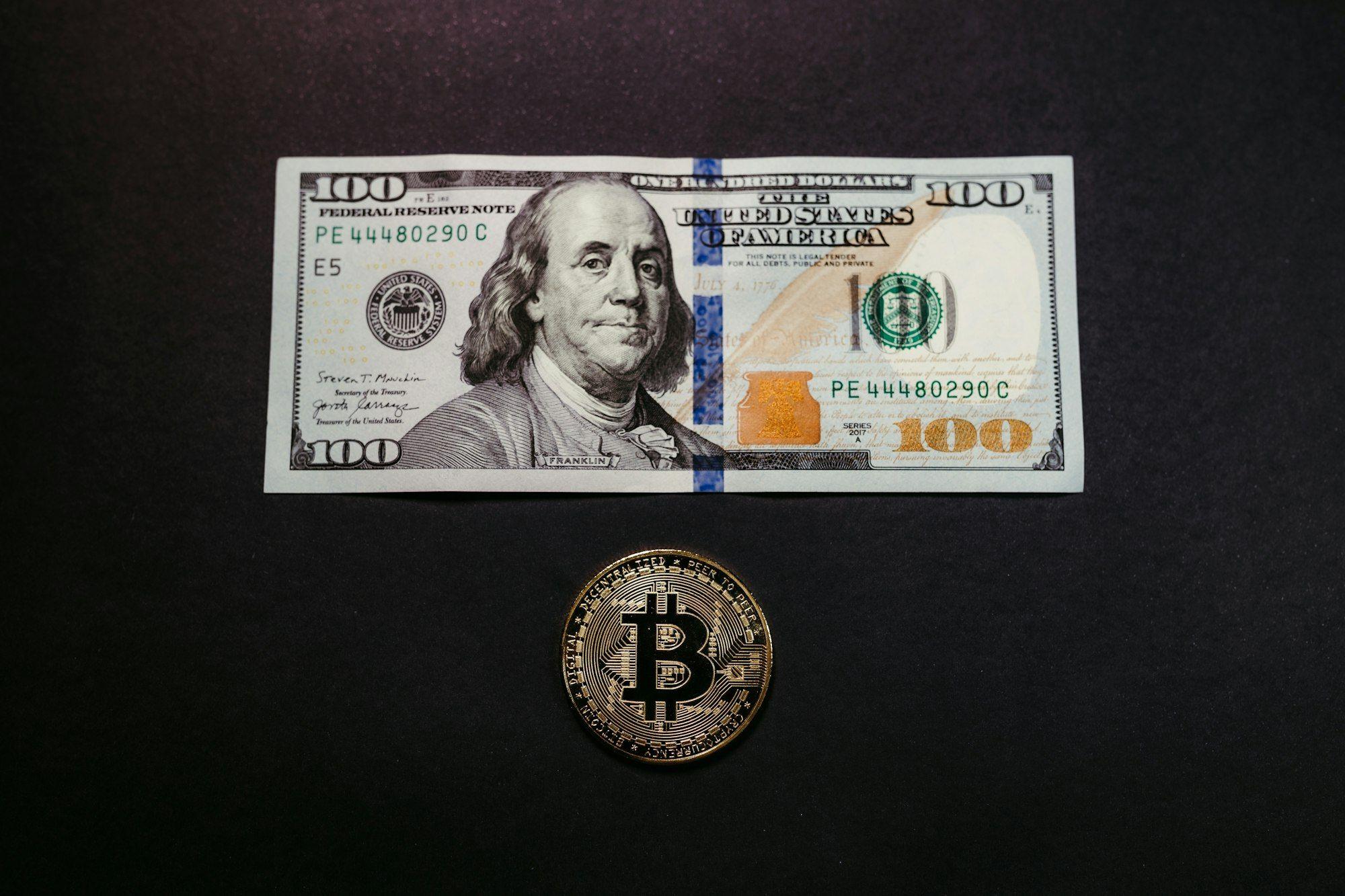
The rise of Bitcoin has created a new class of internationally mobile investors. Some hold their wealth in self-custody; others use regulated custodians, funds, or companies. Their assets can move across borders, but their legal identities, residence rights, tax obligations, and banking relationships cannot be transferred as easily.
That tension is what makes the concept of the crypto whale interesting to CitizenX. Someone with substantial digital assets may have global financial exposure while remaining dependent on a single passport, immigration system, or jurisdiction.
There is an important measurement problem, however. A public blockchain can show the balance of an address. It cannot reliably tell us how many individual crypto millionaires, centi-millionaires, or billionaires exist. A high-balance address may belong to an exchange holding assets for customers. One individual may control dozens of addresses. A person may also hold assets on multiple blockchains or through intermediaries.
This 2026 edition of the CitizenX Crypto Whale Index therefore focuses on observable indicators, the limits of those indicators, and the practical choices large digital-asset holders face.
Key findings
Wallets are not people. Address balances can be counted, but those balances should never be relabeled as a census of wealthy individuals.
Bitcoin whales are commonly described by BTC holdings rather than dollar net worth. A threshold such as 1,000 BTC is a convention, not a legal or universally accepted definition.
Custody matters. Exchange and institutional addresses can represent pooled assets, which distorts attempts to infer individual wealth.
Valuations are time-sensitive. A wallet's dollar value changes with market prices even when its BTC balance is unchanged.
Citizenship and residency are distinct from financial mobility. A second passport can provide additional nationality-based rights, but it does not automatically create tax residence, banking access, or the right to live in every country.
What is a Bitcoin whale?
In cryptocurrency discussions, a whale is a person or entity holding enough of an asset to potentially influence a market through trading, transfer, or custody decisions. For Bitcoin, analysts often use as a reference point. Others track holdings above 100 BTC, or focus on the largest known exchange and institutional wallets.
Those thresholds are descriptive. Bitcoin itself does not classify wallets as whales, and no regulator maintains a definitive worldwide registry of whale identities.
A large position can be held by an individual, corporate treasury, investment fund, exchange, custodian, or an address controlled by a group. The category therefore includes very different economic actors.
Bitcoin's maximum protocol supply is 21 million BTC. A holding of 1,000 BTC is a substantial proportion of that finite supply, but the market value of such a holding depends on the prevailing BTC price. Neither the protocol supply nor a wallet balance establishes its owner's total net worth.
What can the blockchain actually tell us?
Bitcoin's ledger publicly records transactions and unspent transaction outputs. Researchers can reconstruct address-level balances and monitor how those balances change across time.
Useful directly observable measures include:
Indicator
What it measures
What it does not prove
Addresses holding at least 1,000 BTC
Number of addresses above a balance threshold at a snapshot in time
Number of unique individual whales
BTC held in large-balance address bands
Distribution of coins among published address ranges
Distribution of personal wealth
BTC transferred on-chain
Recorded movements between outputs or addresses
Whether beneficial ownership changed
Known exchange or custodian balances
Assets visible in publicly associated addresses
Assets or net worth of the exchange's shareholders
Bitcoin market capitalization
Circulating supply multiplied by a quoted market price
Total realizable wealth or money available for withdrawal
Public explorers and address-distribution services, including mempool.space and BitInfoCharts' Bitcoin Rich List, are useful for checking blockchain-derived measurements. These should be read as address statistics, not person-level wealth estimates.
Why a Bitcoin address is not an investor
Consider a custodial address containing several thousand BTC. The coins may represent deposits from many customers. Calling that address a single billionaire would be incorrect even if the balance exceeded a dollar-based threshold.
The opposite problem also exists. Someone using self-custody may spread their coins across many addresses for privacy, security, and wallet-management reasons. Counting each address as a different person would overstate participation and understate some investors' aggregate holdings.
Blockchain analytics firms sometimes try to group related addresses through entity clustering. That can make some estimates more informative, but it introduces inference and uncertainty. It still does not provide a verified census of natural persons and their worldwide assets.
How many Bitcoin whales are there?
There is no authoritative public count of individual Bitcoin whales. There are, however, continuously updated counts of Bitcoin addresses within balance ranges.
If you want to assess concentration, begin with a balance threshold—such as 100 or 1,000 BTC—and record the count of qualifying addresses from a clearly identified on-chain source. Document the observation date and methodology. Where known custodian addresses are included, disclose that fact.
Do not add address categories together to infer the total number of wealthy people, and do not convert a balance distribution into a claim about how many people have a million dollars in cryptocurrency.
For a longitudinal index, use the same threshold, source, and extraction rules at each observation date. Otherwise, changes may be caused by methodology rather than changes in ownership or market participation.
How many crypto whales are there across all cryptocurrencies?
The problem becomes harder outside Bitcoin. Different chains use different account models, token standards, smart contracts, bridges, and custody systems. A person may hold assets across multiple chains; a single DeFi smart contract can hold assets beneficially associated with thousands of users.
A dollar-denominated count also depends on which assets are included, whether stablecoins count, how illiquid tokens are priced, whether locked assets are included, and how liabilities are netted. Without consistent identity resolution and a disclosed valuation methodology, an exact global count would be misleading.
A credible cross-chain analysis should distinguish at least four layers: blockchain addresses, inferred entities, beneficial owners, and individuals' net wealth. Most publicly available on-chain datasets speak primarily to the first layer.
How the CitizenX Crypto Whale Index should be read
Rather than publishing a purported worldwide census of crypto-rich individuals, CitizenX tracks the questions most relevant to someone holding meaningful digital assets.
1. On-chain concentration
Look at large-balance address bands, their share of observed supply, and how the distribution evolves using consistent public blockchain data. Note known custodian addresses and avoid treating addresses as unique owners.
2. Market and liquidity exposure
Bitcoin can be highly liquid compared with many other digital assets, but the ability to sell a position at a displayed market price depends on market depth, execution method, venue access, and market conditions. A quoted valuation is not a guaranteed realizable amount.
3. Custody and counterparty risk
Self-custody brings key-management, recovery, inheritance, and operational risks. Custodial services introduce different forms of counterparty, insolvency, and jurisdictional exposure. The right solution depends on the holder's circumstances and professional advice.
4. Regulatory and banking access
Digital assets are global in technical design, but exchanges, banks, custodians, and immigration authorities apply local rules. Some financial institutions ask for a detailed source-of-funds and source-of-wealth trail even when assets are traceable on-chain.
5. Personal jurisdiction risk
A person's passport, residence permits, tax residence, family circumstances, and legal obligations may matter more in a crisis than the location of a digital wallet. A diversified personal jurisdiction strategy can reduce reliance on one immigration or nationality system, although every additional status has its own rules.
Citizenship considerations for large digital-asset holders
For an investor with substantial cryptocurrency holdings, an additional citizenship is generally best understood as an optionality tool, not a tax shortcut or a way to bypass financial compliance.
A second nationality may provide additional routes for international travel, the right to enter or reside in the issuing country, and a contingency if access to one's original country becomes more difficult. The value depends on the rights actually attached to that nationality and the countries involved.
It does not automatically grant residence in third countries, change existing tax obligations, confer unrestricted banking access, or eliminate source-of-funds checks. Citizenship, legal residence, domicile, and tax residence are separate concepts.
Anyone funding a citizenship application from digital assets should prepare a clear evidence trail. Depending on the application, this can involve historical exchange statements, wallet transaction records, acquisition dates, evidence of original capital, realized-gain documentation, and professional explanations of the source of wealth.
A careful application process also evaluates sanctions, eligibility restrictions, nationality laws, family inclusion, program due diligence, and the reporting consequences of acquiring or holding a second citizenship.
What about crypto-friendly citizenship programs?
Some jurisdictions have developed frameworks for digital assets, while others offer citizenship or residence pathways relevant to international entrepreneurs. These two features should not be confused.
A country with favorable digital-asset policies does not necessarily accept cryptocurrency directly as a citizenship-program contribution. An applicant may need to convert assets into fiat currency through a compliant institution and document that conversion. Program rules, eligible nationalities, and payment procedures can change.
At CitizenX, we help clients compare citizenship pathways and understand the practical documentation required for an application. The appropriate route depends on the applicant's existing citizenships, family, goals, source of funds, and tolerance for geopolitical risk.
Frequently asked questions
Is every wallet with 1,000 BTC a Bitcoin whale?
It is often classified as a whale address, but it may belong to a custodian or institution rather than one individual. The distinction matters.
Can we count Bitcoin millionaires from the blockchain?
Not reliably. Blockchain balances alone do not identify unique people, off-chain holdings, debts, ownership shares, or total net worth.
Does a second citizenship help a crypto investor protect assets?
It can diversify nationality and entry rights, but it does not itself protect a wallet from theft, change asset ownership, or determine the tax treatment of holdings. Legal structuring and security arrangements require separate analysis.
Can someone pay for citizenship by investment with Bitcoin?
Payment procedures depend on the program and service providers. Applicants should not assume a government accepts direct crypto payments; compliant fiat conversion and source-of-funds documentation may be required.
Can an investor change tax residence by obtaining a second passport?
Usually not by that step alone. Tax residence is determined under applicable domestic laws and, where relevant, tax treaties. Professional advice is important before relocating or changing financial arrangements.
Conclusion
The concept of the crypto whale is useful, but precision matters. Bitcoin makes address-level ownership patterns visible without making every ultimate owner identifiable. A serious index should distinguish measurable on-chain activity from unsupported claims about the number or net worth of people.
For digital-asset investors, the more important question is often not how many whales exist, but how dependent they remain on one country for citizenship, residence, family security, and legal continuity. Explore citizenship options with CitizenX.
Methodology: This guide does not estimate the worldwide number of crypto millionaires, centi-millionaires, or billionaires. On-chain address statistics refer to addresses, not verified natural persons. All financial, legal, and immigration information is general and is not individualized advice. Updated October 2026.