Best citizenship by investment programs for stateless citizens
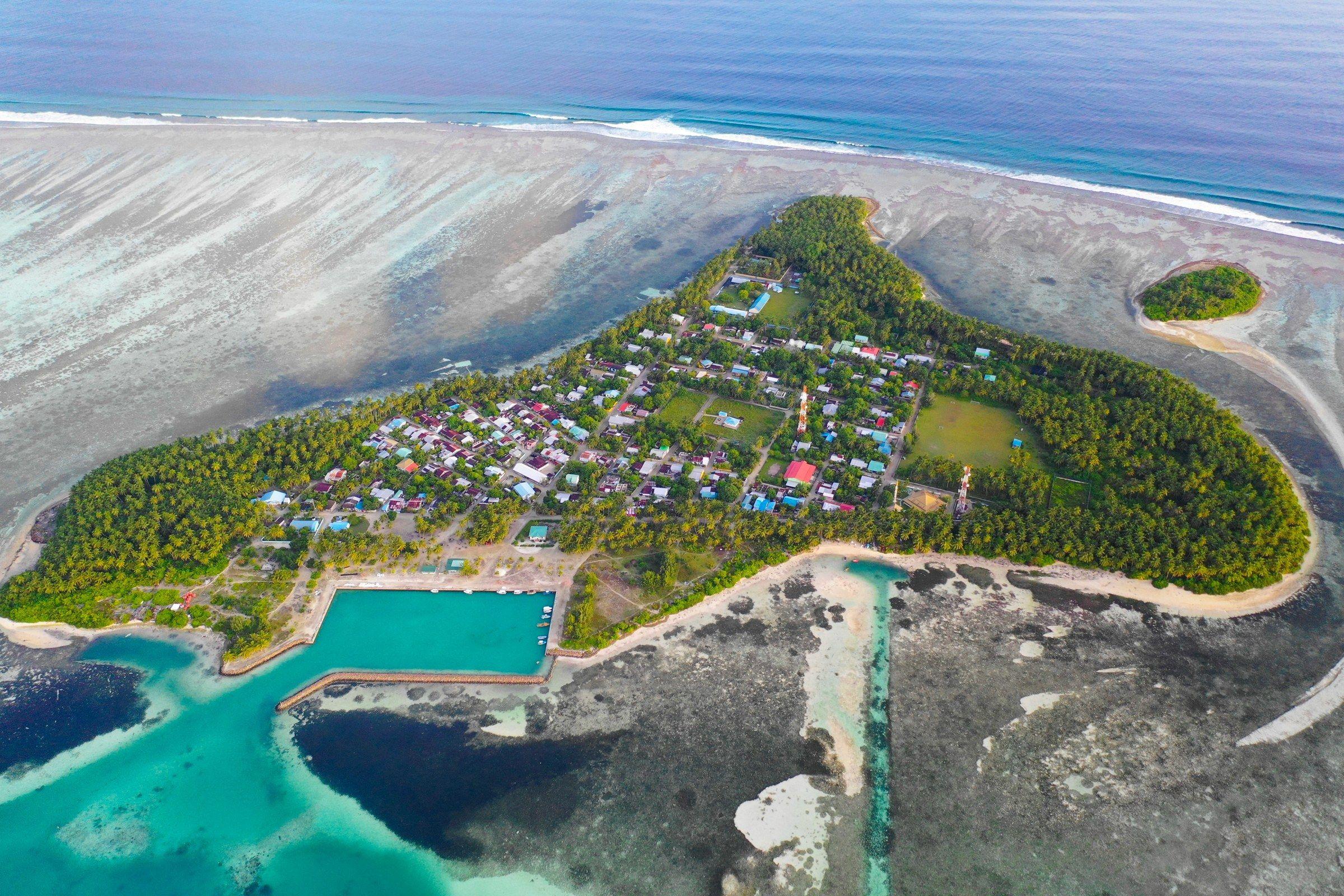
For a stateless person, citizenship can change the foundation of everyday life. Here is why São Tomé and Nauru deserve a closer look, and what determines whether either route can work for you.
AR
Co-founder & CEO
Reading time: 25 minNov 21, 2026 • 11:10 PM
The nationality field on a form looks simple. Choose your country and move on.
If you are stateless, that field can stop the entire process. Ordinary things like banking, studying, and traveling can become complicated. Each new form can mean having to explain your situation all over again.
Citizenship is the foundation underneath those plans. It gives you a formal relationship with a country and a nationality you can document. That is why, when I look at citizenship options for a stateless person, I start with whether the route can actually resolve their status.
São Tomé and Príncipe and Nauru are two of the strongest citizenship by investment programs to consider if you are stateless. São Tomé's regulations expressly address stateless applicants, and its citizenship unit has recorded their applications. Nauru has publicly confirmed granting citizenship to a stateless applicant. Those are meaningful reasons to put both on your shortlist.
The right choice still depends on your documents, family, background, and budget. Being open to stateless applicants is the beginning of the assessment. Your own application has to work all the way through to citizenship and passport issuance.
This guide explains how I would approach that decision, what the costs actually mean, and where each program deserves particular attention.
Which citizenship by investment programs are best for stateless people?
My starting recommendation is straightforward: look at São Tomé for its lower published cost and express recognition of stateless applicants; look at Nauru for its demonstrated stateless approval and broader family categories. The better fit depends on the people applying and the documents they can provide.
| What matters | São Tomé and Príncipe | Nauru |
|---|---|---|
| Evidence relevant to stateless applicants | Regulations contemplate proof of stateless status; the CIU has reported stateless applications | Program Office has publicly announced a successful stateless applicant |
| Principal contribution | $90,000 for one applicant | $90,000 under the current temporary offer |
| Published contribution and program-fee baseline for one applicant | $95,750 | $102,700 under the offer |
| Relocation | No residence requirement | No residence requirement |
| Family consideration | Particularly worth assessing for an individual, couple, or family with minor children; adult-dependent issuance needs careful confirmation | Worth assessing where the application includes a wider family group |
| First question to resolve | Can the CIU accept your evidence of status and identity? | Can the Program Office verify your identity, history, and proposed family group? |
The fee baselines use the published charges for São Tomé and Nauru. They exclude professional fees and other case-specific expenses. The family and document questions deserve just as much attention as the price.
Nauru's current contribution offer is scheduled to close on December 31, 2026. The authority's filing and acceptance conditions matter; an inquiry or an engagement letter alone does not secure the offer. Confirm that your completed application can meet the applicable deadline.
You may notice Nauru's official website uses the name Naoero. This article uses Nauru, the name many applicants still search for.
Find your second passport
Create an account to compare programs and see your all-in cost, including government fees and due diligence.
Create accountWhat does “stateless” mean when applying for citizenship?
If you searched for “stateless citizens,” the more precise legal term is stateless persons: people whom no state recognizes as its nationals under its law. Once you validly acquire a nationality, you are no longer stateless under that definition.
The effect on any residence permit or protection document issued because you were stateless is a separate question under the rules where you live. Build that review into your plan before applying.
That distinction affects which service you need. An expired passport, a delayed renewal, or missing identity papers does not, by itself, establish statelessness. You may still hold a nationality and need help proving or documenting it.
Refugee status and statelessness are different legal categories. A refugee may retain a nationality but be unable to rely safely on the protection of that country. A person can be both a refugee and stateless, but you cannot infer one status from the other.
Before choosing a program, establish what your current documents actually say about you.
| Document or status | What it generally establishes | What still needs checking |
|---|---|---|
| Residence permit | Permission to live in the issuing country on specified terms | Whether there is a route to that country's nationality |
| Convention Travel Document | A recognized means of international travel for an eligible refugee or stateless person | Destination acceptance, visas, and any exit or re-entry conditions |
| Recognition of stateless status | An authority's assessment of your nationality position | Which citizenship routes are available to you |
| Citizenship certificate | Evidence of a grant or recognition of nationality | Passport issuance and any further registration requirements |
A Convention Travel Document can make travel possible while your nationality situation remains unresolved. Acquiring citizenship involves a separate legal process. Nauru's framework, for example, provides for a citizenship certificate followed by passport procedures.
If you are unsure which category describes you, that is a sensible place to begin. There is no benefit in paying for an investment application before understanding the problem it is supposed to solve.
Why São Tomé and Príncipe deserves a place on your shortlist
São Tomé's strongest argument for this audience is unusually concrete: its citizenship by investment framework acknowledges stateless applicants in the documentation itself.
The regulations expressly address stateless status
Annex III of Decree-Law No. 07/2025 includes proof of the stateless status of an applicant and their descendants among the listed documents. That is a useful starting point for an applicant whose circumstances fall outside a standard national-passport checklist.
There is also evidence of actual use. The Citizenship by Investment Unit's first-year report, dated September 2026, records 10 applications from stateless people.
The report does not identify the individual outcomes of those ten files. It supports the claim that the program has received stateless applications; it does not establish ten successful passport issuances.
That gives you a practical starting point with the authority. The next conversation should be about your particular documents and what the CIU needs to verify them.
Your documents still have to establish who you are
The same regulations contain identity and background requirements. The reference to statelessness needs to be read alongside those requirements. The CIU still has to establish who you are and verify your history.
This is where preparation matters. You might have a residence card, a recognized travel document, a birth record, an official status decision, and years of business or employment records. The task is to organize that evidence into a coherent application and confirm what the CIU will accept in your circumstances.
A useful preliminary assessment should identify the gaps before you order translations, obtain multiple certificates, or pay submission fees. If a particular document is unavailable, the question is what the authority accepts in its place and whether that answer can be obtained before the file is submitted.
The contribution is relatively accessible
São Tomé's published contribution is $90,000 for one applicant or $95,000 for an eligible family of two to four, with additional charges. The contribution goes to the National Transformation Fund and is due after approval in principle.
For someone comparing the cost of resolving their nationality position, this is a serious option to examine. But compare complete written quotes. Your financial decision includes professional work, document preparation, and any additional requirements your case creates.
It also helps to be clear about what the payment buys. This is a contribution route. You are not acquiring an asset that you can later sell to recover the money. Assess the expense against the value of the citizenship and your ability to fund the process comfortably.
You can pursue the route without relocating
São Tomé does not require physical residence or relocation. Since an April 2026 operational update, the national-ID process also provides for remote issuance with video verification.
For a stateless applicant, that can make a practical difference. A route that requires relocation may create preliminary questions about visas, travel-document acceptance, and the ability to enter the destination. A process that can be handled remotely deserves particular attention where travel itself is difficult.
Still, ask how every identity step will work for you. Include document certification, any interview, video verification, and eventual delivery in the plan. “Remote” should describe a workable process for your situation.
Be realistic about time to passport
São Tomé's published timeline is approximately two months to a decision, followed by roughly three to four months for postapproval passport issuance. These are program estimates. Your own file may take longer.
An applicant who needs alternative identity evidence should budget time for obtaining and reviewing it before the government's processing clock begins. There may also be follow-up questions after submission.
For practical planning, we currently use an eight-month time-to-passport estimate for São Tomé. I would keep room for delays in a complex case and avoid making an urgent move dependent on the earliest advertised date.
Adult dependents require particular care
Family eligibility deserves a closer look. In April 2026, the CIU placed adult-child passport issuance on hold pending legislative changes. A September 2026 honorary consulate update also described a hold on final naturalization and passport issuance for specified adult family members.
If your plan depends on including adult children, parents, or grandparents, obtain current written confirmation that they can complete the process. An application being accepted is only useful if the intended family members can receive the citizenship and documents you are planning around.
I would start with São Tomé if keeping costs manageable is a priority, your identity can be documented, and your family plan does not depend on unresolved adult-dependent arrangements.
Why Nauru is a leading option for stateless applicants
Nauru's case is supported by a public example of the outcome that matters: a stateless person becoming a citizen.
There is a publicly confirmed stateless approval
In September 2025, Nauru's Program Office announced that a stateless applicant from Kuwait had been granted citizenship following extensive checks. The office described verification of the person's identity, history, and finances.
This gives you a concrete example of a stateless person completing the route. It also shows what mattered in that case: reliable evidence that allowed the government to verify the applicant's history.
Your situation may differ from the published example. A different residence history, missing records, or a different family group can change the analysis. The useful lesson is that statelessness itself does not make a successful application impossible.
The program has a defined contribution route
Nauru's Economic and Climate Resilience Citizenship Program uses contributions to support national development and resilience. Its current published principal contribution is $90,000 under the temporary offer, with other fees added.
The program's own application guide describes a staged process: application and review, approval in principle, payment instructions, and the citizenship and passport formalities.
That structure gives you something concrete to evaluate. You should be able to see the required documents, the payments due at each stage, and what happens between an approval letter and receiving your final documents.
For an applicant who has spent years dealing with uncertain nationality paperwork, that clarity is valuable. Ask for it in writing from the beginning, including the parts that remain dependent on government decisions.
Wider family categories can change the recommendation
Nauru's current legislation includes a spouse, children, parents, grandparents, and siblings within the specified family categories. Each person's relationship, identity, background, and applicable eligibility still have to be assessed.
This can make Nauru especially worth considering when you want to resolve the position of several generations or include a sibling. The contribution for a single applicant is only one part of that decision. What matters is whether the proposed structure works for the actual people you want to include.
I would map the family before comparing quotes: who is stateless, who holds a nationality, which documents each person has, and whether everyone needs to apply together. A family of four can involve four different legal situations.
No relocation requirement, with identity procedures to complete
Nauru has no residence requirement and provides ways to complete the process without traveling to the island, including permitted arrangements for the oath.
The principal applicant must attend a due diligence interview, which can take place virtually or at an approved location. Certain family members may also be interviewed.
Treat this as a preparation exercise. Make sure dates, addresses, employment history, and the explanation of your nationality position are consistent with the evidence in your file. An accurate, well-organized history makes it easier to answer questions clearly.
Keep approval and delivery separate
Nauru gives a typical three-to-four-month period from submission to citizenship approval. Document preparation and the remaining formalities affect the overall schedule.
For planning, we currently use seven months to passport for Nauru. Your own estimate should follow a review of your documents and the current processing position.
I would give Nauru particular attention if you want to apply with a wider family group or place a high value on its demonstrated record of granting citizenship to a stateless applicant.
What does citizenship by investment actually cost?
A contribution figure is a starting point. Your budget needs to cover the whole application.
Using the published charges for São Tomé and Nauru, the single-applicant calculation looks like this:
| Published charge | São Tomé and Príncipe | Nauru, with current offer |
|---|---|---|
| Principal contribution | $90,000 | $90,000 |
| Submission or application fee | $5,000 | $5,000 |
| Separately listed due diligence fee | Not separately listed | $6,000 |
| Separately listed bank due diligence and transaction charge | Not separately listed | $1,200 |
| Citizenship documents or passport | $750 | $500 |
| Published contribution and fee baseline | $95,750 | $102,700 |
“Not separately listed” means the published schedule has no separate charge in that category. It does not mean every additional expense is included. These calculations exclude professional fees, document work, and any case-specific charges.
For another point of reference, our standard single-applicant illustrations currently show $110,113 for São Tomé and $128,375 for Nauru. Your own quote should follow a review of your circumstances, including any additional document work your case requires.
I would want that quote to answer four questions clearly:
- What is the total for everyone applying? Include each family member and the exact services covered.
- What is payable before the government decides? Separate onboarding, document work, submission, and due diligence from the main contribution.
- What happens if the application does not proceed? Understand which payments are refundable, which are already earned or spent, and which have been paid to the authorities.
- What could change the total? Identify any excluded work or additional checks before you commit.
Payment timing is part of affordability. Having the money available eventually is different from being able to transfer it when the approval arrives. Nauru's regulations, for example, require approval fees within 30 days of the approval-in-principle letter.
If a family member will fund your application, raise that at the start. São Tomé permits sponsorship with checks and a fee for the benefactor. Nauru also provides for benefactor checks. The source of the money and the permitted payment route still need to be agreed.
What documents does a stateless applicant need?
The most useful way to prepare is to build a complete picture of your identity, your nationality position, and your financial history.
The checklist below is a preparation framework. It is not a declaration that both governments accept every document listed or require exactly the same file. The authorities determine the final requirements for your case.
Start with the documents you already have
Collect your current residence and identity documents, any travel document, birth and family records, and any formal decision recognizing your stateless status. Include previous documents where they help explain the history.
Make a note of differences in spelling, transliteration, dates, or names. A surname written differently across two alphabets may have a straightforward explanation, but the person reviewing the file needs to see it.
Do the same for your address history. If you moved between countries, put the dates in order and identify the records that support each period. A clear chronology is often more useful at the first assessment than a large folder of unexplained scans.
São Tomé's eligibility guidance emphasizes complete, accurate documentation and identity checks. The practical objective is to make your evidence understandable and verifiable.
Explain how your nationality situation arose
Prepare a factual account of your position: whether you were born without a recognized nationality, previously held one, or have received decisions concerning a claim to nationality.
Where you have official letters or decisions, include them. Where you do not, identify the gap. Do not assume that an adviser can replace a missing official document with a personal declaration without asking the authority.
UNHCR's handbook on protecting stateless persons explains why establishing nationality status can involve difficult evidentiary questions. Investment-program requirements remain a separate assessment; any alternative evidence must be acceptable to the relevant citizenship authority.
You also should not contact an authority that may put you at risk simply because a generic checklist asks for a document. If your situation involves protection concerns, coordinate that question with the adviser handling your current status.
Document the lawful source of your funds
Think through how the money was earned and how it will reach the approved recipient. Depending on your circumstances, the supporting record might involve employment income, business profits, an asset sale, an inheritance, or an approved sponsor.
A bank balance answers how much is in an account. The application may also need to explain where it came from. São Tomé expressly requires a legitimate source of funds in its published eligibility criteria; Nauru includes financial review in its application process.
For your own preparation, connect the stages: the original activity or transaction, the supporting documents, the account receiving the proceeds, and the proposed payment account. Ask what is needed before moving funds between accounts solely for the application.
Review every family member individually
Create a short list showing each person's relationship to the principal applicant, age, current nationality or stateless status, residence, and documents.
This helps reveal the real decision. Perhaps the principal applicant can proceed, but an adult child's inclusion changes the preferred program. Perhaps your spouse already has citizenship elsewhere and needs a separate assessment of what acquiring another nationality would mean.
The family plan should follow those facts. Adding everyone to a quote before checking them can create a false sense that the whole household has already been cleared.
How the application process should work
The application processes in São Tomé and Nauru involve an authorized agent, document preparation, government checks, and completion after approval. Here is how I would organize the work from your side.
1. Establish your current status and the outcome you need
Begin with your documents, where you live, and the practical problem you want to solve. Do you need a nationality for yourself, a route for your entire family, or a solution that fits alongside an existing residence permit?
Also ask whether you may already have a claim to nationality. An investment route should earn its place in the recommendation after that question has been considered.
2. Confirm that the proposed program can accept your case
This is the stage for resolving unusual identity documents, nationality history, family eligibility, and any relevant restrictions. Where a point needs the program authority's interpretation, seek that interpretation before treating it as settled.
Be specific about the answer you receive. A general statement that stateless people may apply does not establish that your particular documents have been accepted.
3. Agree the scope, price, and payment schedule
Your engagement should make the work concrete. Identify who prepares the application, who communicates with the authorities, what document work is included, and what happens if more evidence is requested.
The quote should also distinguish your adviser’s assessment from the government's eventual decision. A preliminary review can identify problems; the citizenship authority retains control of the application outcome.
4. Prepare and submit a consistent file
Resolve discrepancies, complete translations and certifications as required, and check document validity before submission. Keep copies of the final application and supporting records.
For your own peace of mind, ask for a clear confirmation of submission and a description of what happens next. You should know whether a file is still being prepared or is actually with the authority.
5. Complete the review and any identity procedures
Respond carefully to questions and keep your adviser informed of material changes. If you move, change your name, or receive a new decision about your immigration status during processing, ask how it should be reflected in the file.
Prepare for any interview by reviewing your submitted information, checking dates, and identifying anything you may need to explain. You should feel comfortable walking through your history in your own words.
6. Complete the postapproval requirements
Follow the official payment instructions and deadlines, then complete the remaining citizenship and passport steps. Keep the distinction between an approval in principle, a citizenship grant, and documents ready for use clear throughout.
For your planning, request separate estimated dates for the remaining milestones. If you need to apply for a visa or update your residence records afterward, allow time for that additional work too.
7. Put the new documents to use carefully
Check the personal details on every document. Keep certified records of the grant and ask how renewals, replacements, and future family registrations are handled.
Then establish what must be updated where you already live. Citizenship acquisition should fit into a plan for your residence, travel, family, and financial records, rather than ending with a passport delivery notification.
How I would choose between São Tomé and Nauru
Once both routes have been assessed for eligibility, the decision becomes more personal.
If you are applying alone and keeping the cost manageable is the priority, start by evaluating São Tomé. The lower published baseline makes it a sensible first comparison. Check that your document set is workable and that the expected delivery period fits your plans.
If your application includes adult children, parents, grandparents, or siblings, give Nauru particular attention. A family route has value only if the people you want to include can complete it. Resolve São Tomé's current adult-dependent issuance position before making a comparison based on its family contribution alone.
If your documents are the main challenge, let the authority's response guide the recommendation. A lower quote or a faster standard estimate is secondary to having a credible, accepted way to prove identity and background.
If your current residence depends on refugee or stateless status, review that relationship before proceeding. UNHCR's guidance on cessation of refugee status explains that acquiring a new nationality and enjoying its effective protection can affect refugee status. The consequences for your residence and documents require an assessment under the rules where you live.
That is how I would make the decision: which route can your family complete, what will it cost, and does the expected timeline fit your plans?
What citizenship can change in your everyday life
The value of a first nationality can be difficult to express through a passport ranking. The real question is what becomes possible once your nationality is established and documented.
Think about the decisions you want to make over the next five years. Applying to a university. Visiting family. Signing a business agreement. Moving for work. Planning for a child. Where has the absence of a recognized nationality created uncertainty, and what additional requirements would remain after citizenship?
That second question is useful. A national passport gives you a different basis for travel applications, but entry rules still belong to the destination country. Citizenship also should not be treated as a promise that a particular bank will open an account, that a visa will be approved, or that your existing tax position will change.
I would write down the three or four outcomes you care about most and verify each separately. If a particular country is central to your plans, check its current entry and residence requirements. If a specific institution matters, establish its requirements directly.
For families, ask how future children may acquire and document nationality. The answer should come from the applicable nationality law and registration procedure. São Tomé's official guidance, for example, frames transmission to future generations as subject to national law.
This approach gives the decision substance. You can judge the value of citizenship against your actual plans and avoid attributing benefits to it that require a separate application.
How can a stateless person get citizenship without investment?
Citizenship by investment is one possible route. It is an expensive route, and it is sensible to review alternatives before committing to it.
Recognition, descent, or restoration
Start with the countries connected to your birth, parents, and previous nationality history. There may be a basis for recognition of an existing nationality, acquisition through a parent, or restoration following a loss.
UNHCR's statelessness guidance explains how gaps in nationality laws and missing proof of family or birthplace links can contribute to the problem. The practical response is to investigate your actual links with appropriate advice. A family history alone does not establish an entitlement, but it can identify the questions worth asking.
Naturalization where you already live
If you have an established life in a country, assess whether its naturalization rules offer a realistic path. Consider the requirements you already meet, the remaining time, and the evidence you would need.
Article 32 of the 1954 Statelessness Convention calls on contracting states to facilitate naturalization of stateless persons. It does not create an automatic right to citizenship in any country you choose. Domestic rules and your individual circumstances remain central.
Specific provisions for stateless people
Some countries have nationality provisions designed for particular stateless applicants. The United Kingdom's official registration guidance is one example: eligibility depends on factors such as when and where the person was born. It is not a general offer of British citizenship to every stateless person overseas.
An investment application may make sense where these alternatives are unavailable, unsuitable, or too uncertain for your plans. If another route is stronger, that should be clear in the recommendation.
Residence can also be valuable in its own right, but evaluate its endpoint carefully. For example, the UK statelessness residence route is an application for permission to stay, with its own conditions. Residence, settlement, and nationality are separate stages.
Other citizenship by investment programs
For any other program, ask the same document question first. Dominica's official application guide, for example, lists a current passport among its standard requirements. A stateless applicant would need to establish whether acceptable alternatives are available in their circumstances.
That checklist alone does not prove a universal exclusion. It does show why you should get a program-specific answer before choosing a contribution or property investment.
São Tomé and Nauru stand out in this guide because there is direct evidence relevant to stateless applications. Their suitability still has to be established for you.
Frequently asked questions
Can a stateless person get citizenship by investment?
Yes, it is possible. Nauru has publicly announced a successful stateless applicant, and São Tomé's regulations expressly address proof of stateless status. Your application still has to meet the relevant program's identity, background, financial, and procedural requirements. Begin with an assessment of your actual documents.
Can I apply if I do not have a national passport?
Potentially. The document issue must be resolved with the program authority. Gather any recognized travel document, residence or identity card, birth record, and status decision you hold, and ask what evidence will be accepted. Neither program should be approached on the assumption that having no passport removes the need to establish identity.
Is a refugee travel document a passport for a stateless person?
A Convention Travel Document may allow eligible people to travel internationally, subject to the relevant rules. It does not itself grant nationality. Refugees and stateless people are distinct categories, although they can overlap.
Which is cheaper: São Tomé or Nauru?
For the published single-applicant charges compared above, São Tomé has the lower baseline. Your final comparison should use written quotes covering your full family and required work. A price advantage is useful only after the proposed route and document requirements are workable.
Can my children apply with me?
Assess each child by age, relationship, nationality position, and documents. São Tomé's adult-dependent operational notices make current confirmation especially important for adult children. Nauru's legislation provides wider family categories, subject to the applicable requirements. Ask about the position of anyone approaching an age threshold during processing.
Do I have to move to São Tomé or Nauru?
Neither São Tomé nor Nauru requires residence as part of the published route. You still need to complete the required identity and citizenship formalities, using the arrangements permitted for your application.
How long will it take to receive a passport?
Use an estimate based on your documents and the current processing position. Ask for separate time allowances for preparation, government review, contribution and citizenship formalities, and passport delivery. A standard approval estimate does not cover every stage of a complex application.
Can someone sponsor my application?
Both São Tomé and Nauru provide for benefactors or sponsorship, with additional checks and costs. Confirm the sponsor's documentation and payment arrangements before relying on this structure.
Is citizenship guaranteed or impossible to revoke?
No adviser can guarantee a government decision. Citizenship is a legal status governed by the country's law, including applicable loss or cancellation provisions. Nauru's Act, for example, contains cancellation grounds. A truthful, complete application and an understanding of your ongoing obligations are essential.
What if I cannot afford citizenship by investment?
Start by checking existing nationality claims, provisions for stateless people, and naturalization where you live. UNHCR's guidance and a qualified local adviser can help you understand those alternatives. Citizenship by investment is one possible route, and it should be considered alongside the others.
Start with an eligibility assessment
If you are stateless and considering citizenship by investment, I would begin with your documents and your family situation. Those facts determine whether São Tomé, Nauru, or another route deserves your time and money.
The outcome of that first review should be practical: which program can be considered, what needs clarification, what the complete cost would be, and what a realistic process looks like.
At CitizenX, we bring that work into one platform, with a dedicated Concierge and a preliminary compliance review before onboarding. You can start with the São Tomé program or Nauru program and get guidance on the next step for your circumstances.
Request your eligibility assessment with CitizenX.
You deserve a clear answer about what is possible, what it will take, and how to move forward.
This article provides general information, not legal, tax, financial, or investment advice. Program rules, fees, and procedures can change. Individual eligibility and the effect of acquiring nationality on your existing status require a case-specific assessment.
Related articles