Iraqis face the hardest version of this problem: one of the world's weakest passports, and an industry that slams half its doors in their face. Here's the honest map of which second citizenship programs actually accept Iraqi applicants in 2026, and how to qualify.
Iraqis face the hardest version of this problem: one of the world's weakest passports, and an industry that slams half its doors in their face. Here's the honest map of which second citizenship programs actually accept Iraqi applicants in 2026, and how to qualify.
Most articles about second passports for Iraqis are written by agents who want your retainer, so they bury the most important fact until you've signed. I'll put it in the second paragraph instead: several major citizenship-by-investment programs restrict or outright ban Iraqi nationals. St Kitts and Nevis, the industry's flagship, won't take an Iraqi application at any price. Others accept Iraqis only under conditions, usually years of residence outside Iraq.
That's the bad news. The good news is that real doors remain open, including one of the best programs in the Caribbean, and Iraqis walk through them every month. You just need the accurate map, not the sales version.
I've been saying this for years. Cash is king. But passport is queen.
An Iraqi businessman with money in Dubai and Amman and Istanbul already understands the first half. The second half is the unfinished business: the document you carry still decides which airports you clear, which banks onboard you without a compliance escalation, and which borders your family can cross when it matters.
Why Iraqis need a Plan B passport
I almost don't need to write this section, because no nationality I cover knows the argument more intimately.
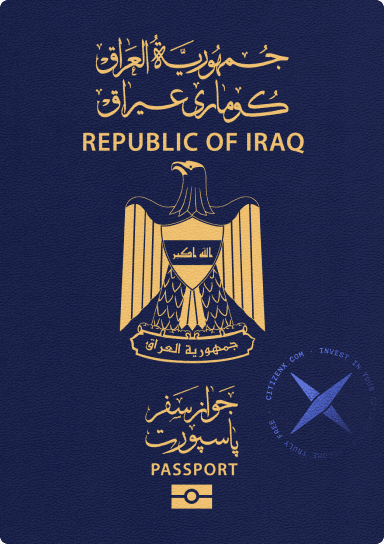
The Iraqi passport reaches roughly 30 destinations without a visa, which puts it in the bottom handful worldwide. Nearly every business destination on earth wants an application, an interview, and weeks of your life. Visa rejection rates for Iraqis are brutal even with perfect paperwork, because the decision was made about the passport before it was made about you.
Then there's everything the travel statistics don't capture. Two generations of Iraqis have watched legal status, property, and savings depend on which way politics broke in a given year. The people who came through it best were, almost without exception, the ones with something outside: a residency in Amman, a company in Dubai, a family member with a European passport. Optionality wasn't a luxury. It was the difference between families that could move and families that couldn't.
A second citizenship is that lesson made permanent. It's a legal identity that exists regardless of what happens in Baghdad or Erbil, issued by a country with no stake in Iraqi politics, that no future government can cancel.
One piece of genuinely good news: Iraq allows dual citizenship. The 2006 constitution permits Iraqis to hold multiple nationalities, so unlike Chinese or Burmese applicants, you're not risking your original citizenship by acquiring another. The obstacle isn't Iraqi law. It's the other side's door policy.
The honest map: who takes Iraqi applicants
Here's the 2026 picture, program by program. Rules change, so verify before filing, but this is the current shape of it.
Closed: St Kitts and Nevis bans Iraqi nationals outright, with no exceptions for residence abroad. Don't let anyone bill you hours pursuing it.
Conditional: Dominica reviews Iraqi applications case by case, generally requiring that you haven't lived in Iraq for roughly the past decade. Vanuatu requires five years of documented residence outside Iraq with proof of permanent residency elsewhere. Antigua and Barbuda restricts several nationalities and applies residence-abroad conditions; Iraqi files there are possible but narrow.
Open: Grenada imposes no nationality ban. Iraqi applications go through the same process as everyone else's, with due diligence doing the work that other programs outsource to blanket bans. Sao Tome and Principe, the newest program, restricts almost no one and accepts Iraqi applicants.
El Salvador publishes no nationality ban for its Freedom Passport program, though its screening runs through international sanctions databases like everyone else's. More on that option below.
Notice what this means. The two programs most worth your attention are the industry's newest entry and one of its most respected veterans. That's a workable menu, not a locked building.
How citizenship by investment works
The mechanics are simple. You make a qualifying contribution to a country, usually a government fund donation or real estate purchase, and receive citizenship and a passport in return. Programs are run by sovereign governments, vetted by international compliance firms, and the resulting citizenship is recognized worldwide.
For Iraqi applicants, the due diligence stage is the entire game. Expect the deepest checks the industry runs: international databases, sanctions lists, source-of-funds tracing, and an interview. None of this is a reason to be discouraged. It's a reason to prepare. An Iraqi file with clean records, documented wealth, and years of banking history in Dubai or Amman clears these checks regularly. A thin or improvised file doesn't.
Investment amounts in 2026 run from about 90,000 USD to 250,000 USD and up, plus fees.
Grenada: the open door in the Caribbean
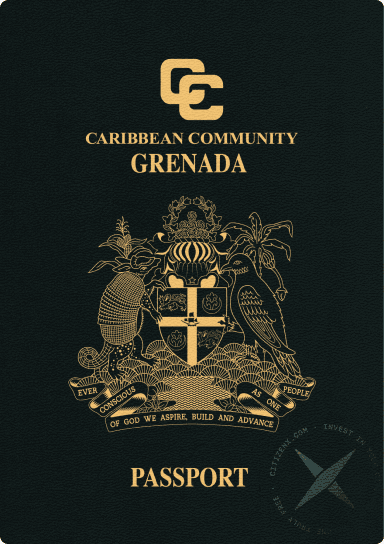
Grenada starts at 235,000 USD through its National Transformation Fund, with real estate routes from 270,000 USD. For Iraqi applicants it's the headline option, because it's the strongest program with no nationality bar.
And it happens to be an excellent passport in its own right: roughly 145 to 150 destinations visa-free, including the whole Schengen area, the UK, Singapore, Hong Kong, and China. From an Iraqi baseline of 30 destinations, this is the single largest legal mobility upgrade available to you anywhere.
Grenada also carries the US E-2 treaty investor route, which Iraq has no direct access to. The caveat I give everyone: US rules now require three years of domicile in Grenada before an investment-acquired citizenship supports an E-2 application, so treat the E-2 angle as a long-term feature, not a quick door, and get current US immigration advice.
Expect seven months or more of processing on an Iraqi file, and expect the interview to be thorough. That's the price of a program that judges you individually instead of banning you categorically. Pay it gladly.
Sao Tome and Principe: the value route
Sao Tome and Principe, a small island nation off Central Africa, launched its program in August 2025 with donations from about 90,000 USD for a single applicant. It restricts almost no nationalities, Iraqis included.
The passport is modest, around 70 destinations, but that's still more than double the Iraqi passport, at the lowest price in the industry. For an Iraqi family that wants a second legal identity established without Caribbean pricing, or wants a footing while a Grenada application matures, this is the practical entry point.
It's a young program. First-year processing ran slower than advertised, and a new citizenship unit's handling of complex files is less proven than Grenada's. Weigh that against the price.
The conditional routes: Dominica, Vanuatu, Antigua
If you've been outside Iraq for years, more options open.
Dominica, from 200,000 USD, will consider Iraqi applicants case by case, generally where the applicant hasn't lived in Iraq for about ten years. If you've spent the last decade in the Gulf or Europe, you may qualify for one of the best-run value programs in the Caribbean, with about 140 visa-free destinations including Schengen.
Vanuatu, from about 130,000 USD all-in, requires five years of documented residence outside Iraq. Its selling point is speed, approvals in one to two months, though note it lost EU and UK visa-free access in recent years, so it's a fast second citizenship rather than a travel upgrade.
Antigua and Barbuda, from 230,000 USD, applies residence-abroad conditions to restricted nationalities. For long-settled Iraqi diaspora families, especially larger ones, it can pencil out. For recent leavers it usually doesn't.
The pattern across all three: the industry doesn't really ban Iraqis, it bans Iraq residency. The further your center of life is from Iraq, in years and paperwork, the more of the market opens to you.
El Salvador: the million-dollar outlier
Since late 2023, El Salvador has sold citizenship through its Freedom Passport program: a 1 million USD contribution payable in Bitcoin or USDT, processed in six to eight weeks, capped at 1,000 applicants a year. The passport reaches about 135 destinations, including Schengen and the UK.
For most Iraqi applicants, Grenada delivers a stronger passport for a quarter of the price, so the math rarely favors El Salvador. Where it earns a look: the program publishes no nationality restrictions, moves fast, and suits applicants whose wealth already sits in crypto. If you're an Iraqi national who has been frustrated by conditional rules elsewhere and the budget genuinely doesn't matter, it's a real option. For everyone else, it's a curiosity.
The strategic framework: how to think about this
For Iraqi clients, the decision tree is shorter than most, so I'll draw it plainly.
If you want the strongest available passport and full program credibility, Grenada. This is the default answer, and it's a good one.
If budget is the constraint, Sao Tome now, potentially upgrading later.
If you've been out of Iraq for five to ten years with clean residency paperwork, price Dominica against Grenada before deciding, and consider Vanuatu if speed matters more than travel access.
If you're crypto-wealthy and want maximum speed with no nationality conditions, El Salvador exists.
Whatever you choose, the real project is the file. Ten clean years of Dubai banking records will do more for your application than any agent's connections. Build the record deliberately: formal salary or dividend flows, audited accounts where possible, tax residency certificates, property title chains. Compliance officers approve stories they can verify. Give them one.
And pair the passport with residency somewhere you'd actually live. A Grenada passport plus UAE or Jordanian residency is a complete setup: travel document, legal fallback, and operating base, none of it dependent on Iraqi politics.
What the process actually looks like
Choose the program, then spend serious time on preparation before filing. For Iraqi applicants I'd put the preparation phase at two to three months minimum: criminal record certificates, source-of-funds documentation traced end to end, residency history papers for any conditional program.
The application goes through an authorized agent: forms, supporting documents, medical, photos, funds. Then due diligence, which for Iraqi files is long and detailed, plus an interview. Processing realistically runs six months to a year depending on the program and the file.
Beyond the investment, budget for due diligence fees, which run higher for high-scrutiny nationalities (often 7,500 to 10,000 USD per adult), agent fees, government processing, and legal costs. For a family, add 25,000 to 50,000 USD to the headline number. Choose an agent with demonstrable Iraqi or comparable high-scrutiny experience, and ask them directly how many Iraqi files they've closed. If they dodge the question, so should you.
What I'd do if I were a wealthy Iraqi
Specifics, because vague advice is useless.
If I were an Iraqi national with meaningful assets, based in Baghdad or Basra, here's my next 90 days. Stabilize a residency outside Iraq first, most likely the UAE, since every conditional door in this industry turns on where you live. Start the document file immediately, because it matures like a good investment: every documented year abroad is worth money. Then file for Grenada, or Sao Tome if I want a lower entry point while the bigger application builds.
If I were already ten years into a Dubai or London life, simpler: price Grenada against Dominica this month, pick one, and file. My residency history has already done the hard work; the only mistake left is waiting.
Either way, I'd ignore anyone promising access to programs that ban Iraqis. There is no fixer who gets you into St Kitts. There are only wasted fees and, worse, a paper trail of a rejected application that follows you to the programs that would have said yes.
The bottom line
The second-passport industry treats Iraqis worse than almost anyone, and it isn't fair: it punishes the passport, not the person. But the map has real routes on it. Grenada judges you on your file. Sao Tome takes the market's newest chance on you. The conditional programs reward every documented year you've built outside Iraq.
Cash is king. But passport is queen. Iraqis have spent decades learning what happens when you hold cash without options. The options are buyable now, from about 90,000 dollars, legally, with your Iraqi citizenship intact.
Start with the file, pick the open door, and stop standing in front of the closed ones.
This article is for informational purposes only and does not constitute legal, tax, or immigration advice. Program nationality policies change; verify current eligibility rules before applying. Consult qualified professionals for your situation.
CitizenX helps high-net-worth individuals secure second citizenships and build sovereign lifestyles. Contact us to discuss your Plan B.