Best Second Passports for Nigerian Citizens in 2026
Best Second Passports for Nigerian Citizens in 2026
Nigerians built one of the world's great business diasporas on one of the world's weakest passports. Here's how to fix the passport part: the best second citizenship options for Nigerians in 2026, what each one does, and what they cost.
Nigerians built one of the world's great business diasporas on one of the world's weakest passports. Here's how to fix the passport part: the best second citizenship options for Nigerians in 2026, what each one does, and what they cost.
There's a word for what's been happening in Nigeria since 2021, and Nigerians coined it themselves: japa. The doctors leaving for the NHS, the developers leaving for Toronto, the whole families selling up for Ontario or Manchester. Millions of people voted on the country's direction with their feet.
But here's what I notice from where I sit. The japa wave is mostly a talent story, people trading their labor for a visa. The wealthy Nigerian has a different problem and a different set of tools. You don't need a work visa. You need what your money can't easily buy at home: a passport that works, a banking identity that doesn't trigger extra scrutiny, and a legal status outside the naira system. That's a purchase, not an emigration.
I've been saying this for years. Cash is king. But passport is queen.
You can have a fortune in Lagos real estate and blue chips and still spend three weeks waiting on a Schengen appointment like everyone else. Wealth without mobility is a gilded cage. Nigerians with means know this better than almost anyone, which is why Nigerian demand for second citizenships has been strong for a decade and keeps growing.
Why Nigerians need a Plan B passport
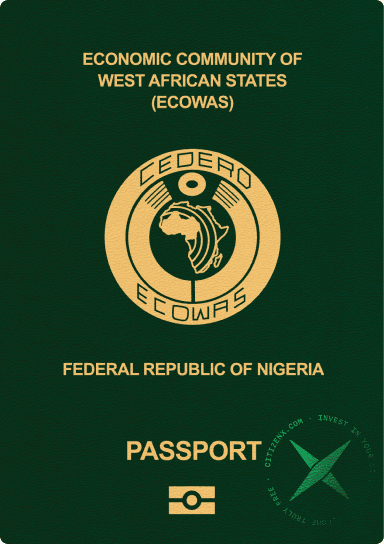
Start with the document itself. The Nigerian passport gets you into roughly 45 destinations without a visa, and the list is mostly ECOWAS neighbors and a scattering of visa-on-arrival countries. No Schengen. No UK. No US. No UAE without paperwork. Nearly everywhere a Nigerian businessperson actually needs to go requires an application, an interview, or both.
And Nigerian applicants face some of the world's highest visa rejection rates. You know the ritual: the bank statements, the letters, the fees that don't come back when the answer is no. It's a tax on being Nigerian, charged in time and indignity, and it doesn't care how successful you are.
Then there's the money layer. Anyone who held naira through the 2023-2024 float watched the official rate go from the mid-400s to past 1,500 per dollar. Yes, things have improved since. The reforms brought in dollars, reserves crossed 43 billion, and Nigeria exited the FATF grey list in October 2025, which was overdue good news. I'm not writing a collapse story here, because that's not what this is. It's a volatility story. The same decade contained fuel subsidy chaos, FX rationing where banks couldn't give you your own dollars, and two currency regimes. A wealthy Nigerian who plans around the assumption that the next decade will be calmer than the last one is making a bet, not a plan.
A second passport doesn't fix Nigeria. It fixes your exposure to the parts of Nigeria you can't control: the visa regimes, the currency cycles, and the possibility that the good reform years are followed by something else.
The good news: Nigeria makes this easy
Here's where Nigerians have a real advantage over half the nationalities I write for. Nigeria allows dual citizenship for citizens by birth. Section 28 of the constitution is clear: if you're Nigerian by birth, you can acquire another citizenship and keep your green passport. No permission letters, no ministry approvals, no legal gray zone.
Compare that to China, Myanmar, or Mongolia, where acquiring a foreign passport can cost you your original one. Nigerians get to skip that entire headache. The only people who need to be careful are naturalized Nigerians, since the same protection doesn't extend to them.
So the legal path is clean. The practical work is the file: CBI programs will look hard at source of funds, and Nigerian applicants historically got more questions than most. The FATF grey list exit helps here too, since a chunk of the automatic suspicion attached to Nigerian banking paperwork just lost its official justification. Wealth from documented businesses, real estate, or professional income papers fine. Start assembling the records early and work with agents who have run Nigerian files before.
How citizenship by investment works
Citizenship by investment, or CBI, is straightforward. You make a qualifying contribution to a country, usually a government fund donation or a real estate purchase, and you receive citizenship and a passport in return. The process typically takes three to eight months.
These aren't gray-market documents. CBI programs are run by sovereign governments, vetted by international compliance firms, and recognized worldwide. You go through due diligence, background checks, and, at the Caribbean programs, an interview. Pass, and you're a citizen with full rights.
Nigerians are accepted at every major program. Investment amounts in 2026 run from about 90,000 USD at the entry level to 250,000 USD and up for the premium Caribbean options, plus fees.
Sao Tome and Principe: the affordable African option
Sao Tome and Principe is a small island nation in the Gulf of Guinea, which makes it Nigeria's maritime neighbor. Its CBI program launched in August 2025, with donations starting around 90,000 USD for a single applicant. Nothing else credible comes close on price.
The passport covers roughly 70 destinations, so it's a modest travel document, though still notably better than the Nigerian one. What you're really buying is a second legal identity from a quiet, neutral country an hour's flight from the Nigerian coast, with Lusophone ties that reach from Lisbon to Luanda to Brazil. For a Lagos family that wants the insurance in place without Caribbean pricing, this is the natural first look.
One caveat: the program is young, and its first year of processing ran slower than advertised. Early adopters get the price; they also get the teething problems.
Vanuatu: the fastest option
Vanuatu has run its Development Support Program since 2017. All-in costs for a single applicant start around 130,000 to 135,000 USD, and approvals can come through in one to two months. Nobody else is close on speed.
Be clear about what you're getting. Vanuatu lost its EU visa waiver for good in December 2024, and the UK withdrew its waiver earlier, so this passport won't fix your Schengen problem. It's for the person who wants a second citizenship in hand this quarter, from a country with no income tax, no wealth tax, and no capital gains tax, and who'll handle the travel question separately.
St Kitts and Nevis: the full upgrade
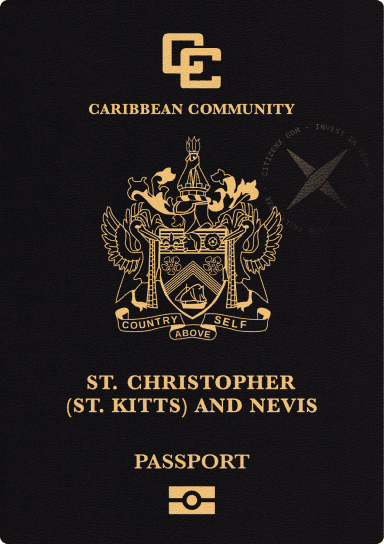
St Kitts and Nevis invented this industry in 1984 and has run its program continuously ever since. The main route is the Sustainable Island State Contribution at 250,000 USD for a single applicant, with real estate from 325,000 USD.
For a Nigerian, this is the passport that changes your life logistics. Roughly 150 to 160 destinations visa-free: the UK, the whole Schengen area, Singapore, Hong Kong. The embassy queue, the rejection risk, the two-month lead time before every trip, gone. I've watched Nigerian clients receive this passport and describe it as the first time in their adult lives that travel felt like a decision instead of a petition.
Processing takes four to six months, and the due diligence is the industry's most established. It's the premium product at the premium price.
Other Caribbean options worth considering
Dominica starts at 200,000 USD after the 2024 region-wide price floor. About 140 visa-free destinations, including Schengen, and a decade-long record of taking program integrity seriously. This is usually where I point Nigerians who want the travel transformation at the best available price.
Grenada starts at 235,000 USD. It adds visa-free China and the US E-2 treaty investor route, which matters because Nigeria has no E-2 treaty of its own. For Nigerians with genuine US business ambitions, Grenada is the only realistic path to E-2, with one big caveat: US rules now require three years of domicile in Grenada before an investment-acquired citizenship supports an E-2 application. Get current US immigration advice before you pay the premium for that story.
Antigua and Barbuda starts at 230,000 USD and usually wins on price for large families, which makes it popular with Nigerian applicants. About 150 visa-free destinations, with a five-day visit required sometime in the first five years.
El Salvador: the million-dollar outlier
Since late 2023, El Salvador has offered its Freedom Passport: citizenship for a 1 million USD contribution, payable in Bitcoin or USDT, with processing in six to eight weeks and a cap of 1,000 applicants a year. The passport is decent, around 135 destinations including Schengen and the UK.
At four times the price of St Kitts for a weaker document, this isn't a value play, and I don't pitch it as one. It exists for a specific person: someone whose wealth already sits in crypto and who'd rather convert holdings directly into a fast citizenship than route through banks. A few Nigerian crypto entrepreneurs fit that description exactly. If that's you, it's worth a conversation. If it's not, the Caribbean gives you more passport for a quarter of the money.
The strategic framework: how to think about this
Start with what hurts most.
If it's the visa humiliation, and for most successful Nigerians it is, buy the travel fix directly: Dominica at 200,000 USD is the value route, St Kitts at 250,000 is the benchmark, Antigua often wins for a family of five or six.
If it's currency and banking exposure, remember the passport is one layer. Pair it with proper offshore accounts and assets held outside the naira system. A Caribbean passport makes that easier in practice, because international banks treat a St Kitts-documented client differently than one whose entire identity runs through Nigerian paperwork. That's unfair to Nigeria, and it's also just true.
If it's US ambitions, Grenada, with eyes open about the three-year domicile rule.
If it's simply having the option at the lowest cost, Sao Tome.
And since Nigerian law is on your side, there's no reason to stage this the way Chinese or Burmese clients must. You can go straight to the strongest passport your budget allows, keep your Nigerian citizenship untouched, and hold both openly.
What the process actually looks like
First, choose the program. Everything above should narrow it to one or two.
Second, build the file. Clean criminal record, documented source of funds. This is where Nigerian applications succeed or stall, so front-load it: company records, tax filings, property documents, bank statements with a coherent story. A well-papered Nigerian application clears due diligence routinely. A vague one invites every stereotype you've spent your career outrunning.
Third, the application itself: forms, medical, photos, funds, all through an authorized agent, with an interview at the Caribbean programs. Processing runs from about six weeks for Vanuatu to six months or more for the Caribbean and Sao Tome.
Beyond the investment, budget for due diligence fees (5,000 to 10,000 USD per applicant), agent fees, government processing, and legal costs. For a family, add 20,000 to 50,000 USD on top of the headline number.
What I'd do if I were a wealthy Nigerian
I'll be specific, because vague advice is useless.
If I were Nigerian with a net worth above 2 million dollars, here's my next 90 days.
Start a Dominica or St Kitts application for the whole family now. The law permits it, the programs welcome it, and the only thing delay buys is more months of embassy queues.
Build the source-of-funds file like it's a business project, because it is. This determines whether the application takes six months or eighteen.
Move a serious portion of liquid wealth out of naira exposure and into hard-currency assets held offshore, through the legal channels that the reform era has actually made more workable.
If the US is in my plans, get a real opinion on Grenada and E-2 before committing either way.
And I'd do all of it during the current calm. The naira is stabler, the grey list is behind us, and the paperwork moves faster when nothing is on fire. Crisis pricing applies to everything, including patience at CBI units.
The bottom line
Nigeria produces more globally successful people than almost any country in Africa, and hands them a passport that treats each one as a suspect at every border. That mismatch has a fix, it's legal, and it costs less than a Lagos duplex.
Cash is king. But passport is queen. Nigerians have spent a generation mastering the first half of that sentence. The second half is now openly for sale.
Don't wait for the next devaluation cycle or the next visa-policy insult to sort this out. The best applications are filed in the quiet years. This is one.
This article is for informational purposes only and does not constitute legal, tax, or immigration advice. Dual citizenship protections under Nigerian law apply to citizens by birth; naturalized Nigerians should seek specific advice. Consult qualified professionals for your situation.
CitizenX helps high-net-worth individuals secure second citizenships and build sovereign lifestyles. Contact us to discuss your Plan B.