Best Second Passports for Turkmenistan Citizens in 2026
Best Second Passports for Turkmenistan Citizens in 2026
In Turkmenistan, leaving the country is a privilege the state grants and revokes at will. This post breaks down the best citizenship by investment options for Turkmen citizens in 2026, why each one makes sense, and what they actually cost.
In Turkmenistan, leaving the country is a privilege the state grants and revokes at will. This post breaks down the best second passport options for Turkmen citizens in 2026, why each one makes sense, and what they actually cost.
Most of what I write about is insurance against things that might happen. Germans buying protection against a conscription law that might someday be enforced. South Africans hedging a currency that might keep sliding. Turkmenistan is different. Everything I warn other nationalities about is already standard practice there.
Citizens pulled off flights at Ashgabat airport with no explanation. Indefinite travel bans imposed on journalists and on the relatives of activists, as retaliation. Passports confiscated over outstanding bank loans. Citizens abroad refused passport renewals at consulates, forced to fly home to renew, and then blocked from leaving again. Human Rights Watch and Central Asia researchers have documented all of this, repeatedly, through 2025.
I've been saying this for years. Cash is king. But passport is queen.
Most people think about financial sovereignty and stop there. But what's the point of protecting your wealth if you can't protect your ability to move? A mobility freeze is a cash seizure by another name. In Turkmenistan, the mobility freeze isn't a hypothetical scenario. It's the operating system.
If you're a Turkmen national with assets, a business abroad, or family working overseas, the case for a second citizenship isn't a thought experiment. It's the most direct solution to the defining constraint of your life.
Why Turkmen citizens need a Plan B passport
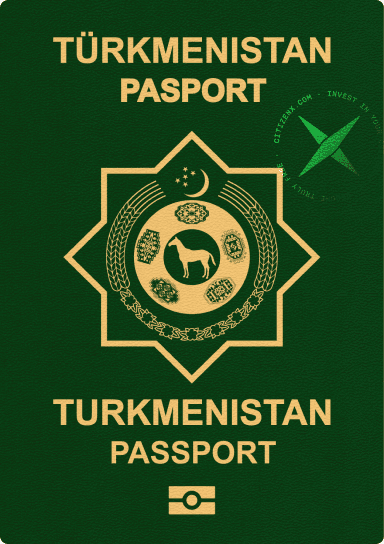
Start with the document itself. The Turkmen passport reaches roughly 45 destinations visa-free, one of the weakest travel documents on earth. No Schengen, no UK, no US, and visas required almost everywhere that matters for business.
But the passport's weakness is the small problem. The big problem is that using it at all depends on the state's permission.
Turkmenistan runs an informal but effective exit-control regime. There's no published blacklist and no formal procedure to challenge a ban. People discover they can't leave at the border, at check-in, or at the top of the aircraft stairs. Grounds include politics, family connections, debts, or nothing anyone will explain. Courts have ordered the migration service to justify bans and been ignored.
For the diaspora it gets worse. Turkmen consulates have refused to renew passports abroad, forcing citizens working in Türkiye or elsewhere to return home for renewal. Some who returned found themselves trapped for a year or more before being allowed out again. That's not a bureaucratic accident. It's leverage.
Layer on the economics: a two-year military conscription obligation for young men, an economy dependent on gas exports through infrastructure the state controls absolutely, and a currency with an official exchange rate that has diverged from the street rate by multiples for years. Converting manat wealth into anything internationally useful is its own project.
A second passport is the clean break in this chain. It's a travel document the Turkmen state didn't issue, can't revoke, and doesn't know about unless you tell it. For a Turkmen family, that's not a luxury purchase. It's the difference between negotiating with the state and being owned by it.
The dual citizenship problem, and how to think about it
I'll be straight with you: Turkmenistan does not recognize dual citizenship. The state spent years pressuring holders of old Russian-Turkmen dual citizenship to choose one, and acquiring a foreign nationality as a Turkmen citizen carries real legal risk at home.
So how should a Turkmen think about CBI?
First, location matters. Realistically, this path is for Turkmen nationals who are already outside the country or who can base themselves outside: business owners in Dubai or Istanbul, families with established lives abroad, students who stayed. If you live in Ashgabat and plan to keep living there, a foreign passport in your drawer is a risk, not an asset. Get specific legal advice before doing anything.
Second, understand what the second citizenship actually does for the diaspora. It ends the consulate trap. A Turkmen with a second passport never again has to choose between an expired document and a flight home they might not return from. It provides a legal identity for banking, company formation, and residency applications that doesn't depend on Ashgabat's paperwork. And if the home state cancels your passport remotely, as it has effectively done to critics abroad, you remain a documented person.
Third, a hard truth about timing: this is a door that can close. Programs tighten nationality rules, and home states tighten emigration rules. Every year you wait, both trends work against you.
How citizenship by investment works
Citizenship by investment, or CBI, is straightforward. You make a qualifying financial contribution to a country, usually through a government fund donation or a real estate purchase, and in return you receive citizenship and a passport. The process typically takes three to eight months.
These aren't fake passports or gray-market documents. CBI programs are run by sovereign governments, regulated by international compliance firms, and recognized worldwide. You go through due diligence, background checks, and, at the Caribbean programs, a mandatory interview. If you pass, you become a citizen with full rights.
Turkmenistan does not appear on the formal banned-nationality lists of the major programs, which currently target countries like Afghanistan, Iran, North Korea, Russia, and Belarus. But expect enhanced scrutiny. Applicants from opaque economies get more questions, not fewer, and the entire application rises or falls on source-of-funds documentation. If your wealth runs through cash, informal exchange channels, or structures you can't paper, fix that first with proper advisors. A rejected CBI application follows you to every other program.
Investment amounts in 2026 range from roughly 90,000 USD to 250,000 USD and up, plus fees.
Sao Tome and Principe: the value play
Sao Tome and Principe is a small island nation in the Gulf of Guinea. Its CBI program launched in August 2025, with pricing starting around 90,000 USD for a single applicant through the government donation route. That's the most accessible credible program on the market.
The passport is modest, roughly 70 destinations, but notice what that means for you specifically: it's still a substantially better travel document than the Turkmen one, from a neutral country with no political relationship to Ashgabat, at the lowest price in the industry. For a Turkmen family working abroad, this is the realistic entry point to a documented life the home state doesn't control.
It's a young program with slower-than-advertised processing in its first year. You're an early adopter. Price that in.
Vanuatu: the fastest passport on the market
Vanuatu's CBI program has been around since 2017. The Development Support Program is the main route, with all-in costs for a single applicant starting around 130,000 to 135,000 USD.
What makes Vanuatu stand out is speed. Approvals can come through in one to two months. When your concern is that a window might close, on your side or theirs, speed has its own value.
Know the trade-off: Vanuatu lost its EU visa waiver permanently in December 2024, and the UK pulled its waiver earlier. It won't open Europe. It will make you a citizen of a peaceful Pacific nation with no income tax, no wealth tax, no inheritance tax, and no capital gains tax, in about six weeks. For someone whose priority is simply to stop being documentarily dependent on Ashgabat as fast as possible, that's the pitch.
St Kitts and Nevis: the original and still the benchmark
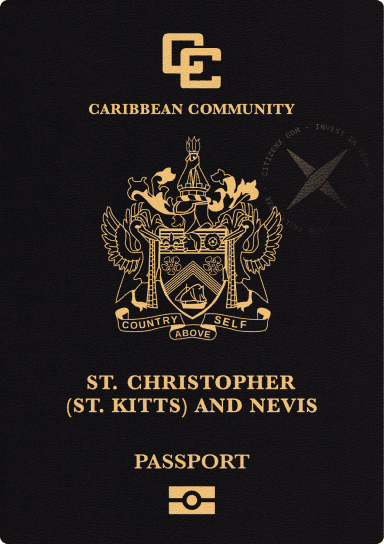
St Kitts and Nevis launched the world's first CBI program in 1984. Over 40 years of continuous operation.
The main route is the Sustainable Island State Contribution starting at 250,000 USD for a single applicant, with real estate alternatives from 325,000 USD.
For a Turkmen national, this is the maximum possible upgrade: from one of the world's weakest passports to one of the strongest available for investment, roughly 150 to 160 destinations visa-free including the UK, the entire Schengen area, Singapore, and Hong Kong. The distance between a Turkmen passport and a St Kitts passport is the largest mobility jump money can legally buy.
Processing runs four to six months with thorough due diligence, and for applicants from high-scrutiny jurisdictions, the strength of your documentation decides everything.
Other Caribbean options worth considering
Dominica starts at 200,000 USD for a single applicant. Roughly 140 visa-free destinations including the Schengen area, with a decade-long reputation for integrity. The value entry to visa-free Europe.
Grenada starts at 235,000 USD. Differentiators: visa-free access to China and Russia, relevant for Central Asian trade lives, and the US E-2 treaty route, with the caveat that US rules now require three years of domicile in Grenada before an investment-acquired citizenship supports an E-2 application.
Antigua and Barbuda starts at 230,000 USD and is often the best value for families, with roughly 150 visa-free destinations and a five-day visit requirement in the first five years.
The strategic framework: how to think about this
For Turkmen clients I compress the framework to three questions.
Where are you? If you're already abroad with your assets substantially outside Turkmenistan, you're a viable applicant for any program on this list. If you're inside, the first project is getting yourself and your capital to a workable jurisdiction, usually the UAE or Türkiye, before any citizenship conversation.
Can you document your money? This is the gating factor, more than budget. A smaller application with bulletproof documentation beats a bigger one with gaps. Spend on advisors before you spend on governments.
What does the passport need to do? If the answer is "exist, and not be Turkmen," Sao Tome and Vanuatu solve that for the least money and time. If the answer is "carry my family's entire international life," the Caribbean programs, Dominica for value, St Kitts for maximum strength, are worth the premium.
One more thing: pair the passport with residency somewhere real. A Caribbean citizenship plus UAE residency is a complete, self-sufficient setup that owes nothing to Ashgabat.
Bitcoin and passports: the sovereign individual toolkit
I keep coming back to this pairing because they solve the same problem from different angles.
Bitcoin in self-custody protects your wealth from seizure, from confiscatory exchange rates, and from banking systems used as leverage. A second passport protects your physical freedom from exit bans and document traps. Together, they make you much harder to coerce.
Turkmenistan is the cleanest illustration of this thesis anywhere in the world. The state controls the exchange rate, the banks, the borders, and the passports, and uses each one as an instrument of control. Notice that the confiscated-passport cases documented in 2024 were tied to bank loans: the money system and the movement system working as one machine. Sovereignty means exiting both at once.
Governments have two primary leverage points over citizens: their money and their movement. Address both and the power dynamic shifts. Nowhere does it shift more than here.
What the process actually looks like
The first step is choosing your program based on where you are, what you can document, and your budget.
Next comes due diligence preparation, and for Turkmen applicants this is the heart of the process. Clean criminal record. Source of funds documented end to end: contracts, invoices, bank statements, sale agreements, tax records where they exist. Work with advisors who have experience with Central Asian applicants; the difference shows.
The application involves forms, supporting documents, photos, medical clearance, and the investment or donation funds, handled through an authorized agent. Processing runs from one to two months for Vanuatu to six months or more for the Caribbean and Sao Tome. Expect an interview.
Costs beyond the investment include due diligence fees (typically 5,000 to 10,000 USD per applicant), agent fees, government processing fees, and legal fees. Budget an additional 20,000 to 50,000 USD on top of the investment for a family application, and treat specialist legal advice on your Turkmen citizenship exposure as a mandatory line item, not an optional one.
What I'd do if I were a wealthy Turkmen national
I'll be specific because I think vague advice is useless.
If I were a Turkmen national with meaningful assets and I were already outside the country, here's what I'd do in the next 90 days.
Stabilize my residency where I am. UAE residency through a company or property is the standard move and takes weeks.
Start assembling the source-of-funds file immediately. This is the long pole in the tent, and it's entirely under my control.
Apply for Vanuatu now for speed, or Dominica if the extra months are acceptable and Europe matters. If budget allows, both: Vanuatu as the immediate document, a Caribbean application in parallel for the long-term one.
Never again enter Turkmenistan on a renewal errand until my second citizenship is in hand. The consulate trap is real and documented.
Move a meaningful portion of liquid wealth into Bitcoin self-custody. For a Turkmen, this needs no explanation. You've watched what an official exchange rate can do to a family's savings.
If I were still inside Turkmenistan, my honest advice is different: the first and only project is establishing a lawful base abroad. Everything else follows from that.
The bottom line
Every other nationality I write about is buying insurance against a future that might arrive. Turkmen citizens live in that future already. The exit bans, the passport traps, the currency confiscation by exchange rate: this is the present tense.
Cash is king. But passport is queen. And when the state treats your passport as its property rather than yours, the only real answer is a second one it has no claim on.
The people who get out of systems like this are, without exception, the ones who moved before they had to. Be one of them.
This article is for informational purposes only and does not constitute legal, tax, or immigration advice. Turkmenistan does not recognize dual citizenship, and acquiring a foreign nationality carries specific legal risks for Turkmen citizens. Consult qualified professionals for advice specific to your situation.
CitizenX helps high-net-worth individuals secure second citizenships and build sovereign lifestyles. Contact us to discuss your Plan B.