Best Second Passports for Ukrainian Citizens in 2026
Best Second Passports for Ukrainian Citizens in 2026
Ukraine legalized multiple citizenship in January 2026. For the millions of Ukrainians rebuilding their lives at home and abroad, the rules of the game just changed. This post breaks down the best citizenship by investment options for Ukrainians in 2026.
Ukraine legalized multiple citizenship in January 2026. For the millions of Ukrainians rebuilding their lives at home and abroad, the rules of the game just changed. This post breaks down the best second passport options for Ukrainians in 2026, why each one makes sense, and what they actually cost.
For its entire independent history, Ukraine operated on a single-citizenship principle. Acquiring a foreign passport meant legal ambiguity at best. That era ended on January 16, 2026, when Law No. 4502-IX on multiple citizenship came into force. Ukrainians can now legally hold second citizenships.
Nobody needs to explain to a Ukrainian why that matters. Your country has spent four years demonstrating, in the most brutal way possible, every argument I've ever made about sovereignty. Borders can close overnight. Banks can be cut off. Cities can become unreachable. Documents, mobility, and assets held in more than one jurisdiction stopped being an eccentric hobby of the paranoid rich in February 2022. They became the difference between families that could act and families that could only wait.
I've been saying this for years. Cash is king. But passport is queen.
If you're a Ukrainian with means, at home or among the millions abroad, the legal door is now open. Here's how to think about walking through it.
First, the honest part
I write for a lot of nationalities, and I promise every one of them directness. So here it is.
If you are a man aged 18 to 60 inside Ukraine, a second passport will not get you across the border. Martial law restricts exit for men in that bracket regardless of what other citizenships they hold, and Ukraine's new multiple citizenship framework is explicit that dual nationals on Ukrainian territory are treated as Ukrainian only. The rule was even tightened for dual citizens who previously used residence-abroad exceptions. The exception introduced in August 2025 for men aged 18 to 22 is the one meaningful opening, and it exists precisely because the state chose to grant it.
Anyone selling you a CBI passport as a way around mobilization rules is selling you a lie, and an expensive one. That's not what this is for.
What a second citizenship is for, right now, is everything else: Ukrainians abroad securing their families' status for the long term. Women and men outside the restricted bracket building international lives. Business owners who need banking, company structures, and travel documents that don't depend on wartime administrative capacity. Families thinking a decade ahead, about where their children will study, work, and hold rights, whatever the war's outcome. And everyone who has learned that the time to build redundancy is before you need it.
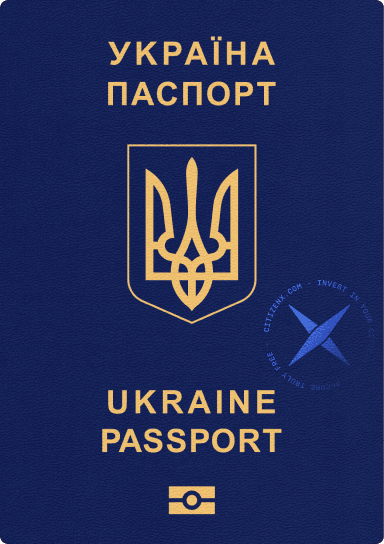
The Ukrainian passport itself is better than most people assume: roughly 140 destinations visa-free, including the entire Schengen area since 2017. For travel, it's a solid document.
The case for a second citizenship rests on other things.
Legal redundancy. Four years of war have shown what happens when a state's administrative systems come under strain: passport renewals abroad get complicated, consular queues stretch, documents expire at the worst moments. A second citizenship means your family's legal existence never routes through a single overloaded system.
Status certainty abroad. Millions of Ukrainians live in the EU under temporary protection frameworks that have been extended repeatedly but are, by definition, temporary. Naturalization tracks in host countries take years and often demand renunciation negotiations that the new Ukrainian law now simplifies. A CBI citizenship is a status no host-country policy change can touch.
Banking and business. Wartime compliance treatment of Ukrainian-documented clients by foreign banks has been inconsistent, sometimes unfairly so. A second passport, legitimately disclosed, often smooths account opening, company formation, and investment access.
The long game. Whatever the war's trajectory, the next decade of Ukrainian life will involve reconstruction, political uncertainty, and, for many families, permanently international lives. Optionality compounds. The families who hold it will navigate that decade differently from those who don't.
The multiple citizenship reform: what actually changed
Law No. 4502-IX took effect on January 16, 2026. For the first time since independence, Ukrainian citizens can acquire foreign citizenships without the old legal cloud, and foreigners from designated states can naturalize in Ukraine without renouncing.
Know the framework's edges. The government has moved in stages, with an initial list of preferred partner states for simplified treatment, and the mechanisms are still being fleshed out in practice. Russian citizenship is categorically excluded from any recognition path. And as covered above, multiple citizenship changes nothing about martial-law obligations inside Ukraine: on Ukrainian soil, you are Ukrainian, full stop.
But the strategic meaning is clear. Before this law, my conversations with Ukrainian clients always carried an asterisk about legal risk at home. That asterisk is gone or going. Ukraine has joined the growing list of countries, Germany in 2024, South Africa by court ruling in 2025, that recognize what their own diasporas have long known: in this century, single citizenship is a vulnerability, not a virtue.
How citizenship by investment works
Citizenship by investment, or CBI, is straightforward. You make a qualifying financial contribution to a country, usually through a government fund donation or a real estate purchase, and in return you receive citizenship and a passport. The process typically takes three to eight months.
These aren't fake passports or gray-market documents. CBI programs are run by sovereign governments, regulated by international compliance firms, and recognized worldwide. You go through due diligence, background checks, and, at the Caribbean programs, a mandatory interview. If you pass, you become a citizen with full rights.
Ukrainians are accepted at every major program. The nationality bans that hit Russians and Belarusians after 2022 do not apply to Ukrainians. Expect standard due diligence, with extra attention to source-of-funds documentation, which for Ukrainian applicants can be complicated by wartime asset moves. Assemble the paper trail early.
Investment amounts in 2026 range from roughly 90,000 USD to 250,000 USD and up, plus fees.
Sao Tome and Principe: the value play
Sao Tome and Principe is a small island nation in the Gulf of Guinea. Its CBI program launched in August 2025, with pricing starting around 90,000 USD for a single applicant through the government donation route. The most accessible credible program on the market.
The passport is modest, roughly 70 destinations, and since your Ukrainian passport already covers Europe, you're not buying travel here. You're buying the core product: a second, permanent legal status from a neutral country with no stake in the war, at the lowest price point in the industry. For a Ukrainian family whose budget was reshaped by four years of war, this is the realistic entry to citizenship-level insurance.
Young program, slower-than-advertised first-year processing. You're an early adopter. Price that in.
Vanuatu: the fastest passport on the market
Vanuatu's CBI program has been around since 2017. The Development Support Program is the main route, with all-in costs for a single applicant starting around 130,000 to 135,000 USD.
What makes Vanuatu stand out is speed. Approvals can come through in one to two months. Nobody else is close.
Know the trade-off: Vanuatu lost its EU visa waiver permanently in December 2024, and the UK pulled its waiver earlier. For a Ukrainian this matters less than for most, because Schengen is already covered by your own passport. What Vanuatu offers is the fastest possible second citizenship, from a neutral Pacific nation with no income tax, no wealth tax, no inheritance tax, and no capital gains tax. For Ukrainians restructuring internationally after years of forced improvisation, that's a clean building block.
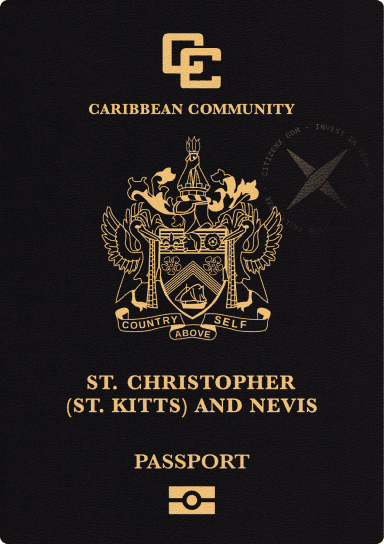
St Kitts and Nevis: the original and still the benchmark
St Kitts and Nevis launched the world's first CBI program in 1984. Over 40 years of continuous operation, through every kind of global turmoil. That track record is the product.
The main route is the Sustainable Island State Contribution starting at 250,000 USD for a single applicant, with real estate alternatives from 325,000 USD.
The St Kitts passport reaches roughly 150 to 160 destinations, including the UK, which the Ukrainian passport still requires a visa for, plus the entire Schengen area, Singapore, and Hong Kong. It's the strongest standalone document on the CBI market: a passport your family could, if it ever came to that, live entire international lives on, independent of anything happening in Eastern Europe.
Processing runs four to six months with thorough due diligence.
Other Caribbean options worth considering
Dominica starts at 200,000 USD for a single applicant. Roughly 140 visa-free destinations including Schengen and a decade-long reputation for program integrity. The value entry among the Caribbean heavyweights.
Grenada starts at 235,000 USD. Its differentiator is the US E-2 treaty investor route, which Ukraine also has: Ukraine is itself an E-2 treaty country, so Ukrainians can pursue E-2 on their own citizenship. That makes Grenada's E-2 premium unnecessary for most Ukrainians, unless the added passport strength and China access appeal on their own.
Antigua and Barbuda starts at 230,000 USD and is often the best value for families, with roughly 150 visa-free destinations and a five-day visit requirement within the first five years.
The strategic framework: how to think about this
Start with where you are and who the application covers.
If you're a Ukrainian abroad, in the EU, UK, or North America, you're the ideal candidate: legally able to complete every step, including biometrics and interviews, without touching martial-law constraints. For you the question is only budget and purpose. Sao Tome for minimum-cost insurance. Dominica or St Kitts if you want the document to carry real weight, especially UK access.
If you're a woman or outside the 18-to-60 bracket inside Ukraine, the full menu is equally open, and there's a family logic to the woman of the household anchoring the application with dependents included.
If you're a man inside Ukraine in the restricted bracket, be realistic about what this does now versus later: you can lawfully hold the citizenship, structure family applications, and build the foundation, but it changes nothing at the border today. It's a long-term asset, not a wartime exit.
And for everyone: E-2 access through Ukraine's own treaty, the new legality of multiple citizenship, and a strong home passport mean Ukrainians should buy CBI for redundancy and permanence, not for travel scores.
Bitcoin and passports: the sovereign individual toolkit
I keep coming back to this pairing because they solve the same problem from different angles.
Bitcoin in self-custody protects your wealth from seizure, banking outages, and capital controls. A second passport protects your legal existence from depending on a single state's systems. Together, they make you much harder to break.
Ukrainians wrote the modern case study. In the first weeks of the invasion, when ATMs ran dry and banking hours were rationed, Bitcoin moved across borders in memorized seed phrases. Ukraine's own government raised crypto donations when correspondent banking was too slow. Nobody in Kyiv needs the theory explained. The passport is the same principle in document form: value and identity that travel with you, not permissions that depend on infrastructure surviving.
Governments, including the ones defending you, have two primary leverage points over citizens: their money and their movement. War has a way of making every state reach for both. Hold some of each beyond any single state's reach.
What the process actually looks like
The first step is choosing your program based on who's applying, from where, and with what budget.
Next comes due diligence preparation. Clean criminal record, legitimate source of funds, documentation for both. For Ukrainian applicants the wartime complication is practical: records in occupied or damaged territories, assets moved quickly in 2022, banking history scattered across host countries. None of this is disqualifying, but it takes longer to paper. Start early and work with agents experienced with Ukrainian files.
The application involves forms, supporting documents, photos, medical clearance, and the investment or donation funds, handled through an authorized agent. Processing runs from one to two months for Vanuatu to six months or more for the Caribbean and Sao Tome.
Costs beyond the investment include due diligence fees (typically 5,000 to 10,000 USD per applicant), agent fees, government processing fees, and legal fees. Budget an additional 20,000 to 50,000 USD on top of the investment for a family application, and add Ukrainian legal advice on the new multiple-citizenship framework's requirements, which are still settling in practice.
What I'd do if I were a wealthy Ukrainian
I'll be specific because I think vague advice is useless.
If I were a Ukrainian with a net worth above 2 million dollars, living abroad, here's what I'd do in the next 90 days.
Start a Caribbean application covering the whole family now. Dominica for value, St Kitts if the budget carries it. Processing takes half a year; the clock should already be running.
Regularize my status under the new Ukrainian law properly, with counsel, not forum advice. The framework is new and doing it correctly once beats fixing it later.
Keep my host-country naturalization track alive in parallel. The new law means an EU passport no longer costs you your Ukrainian one. Run both. Citizenships are not mutually exclusive anymore; that's the whole point of the reform.
Hold a meaningful portion of liquid wealth in Bitcoin self-custody, a lesson four years of war already taught most of us.
If I were inside Ukraine, same plan minus the illusions: family first on the application, my own file structured for the long term, and no money wasted on anyone promising border miracles.
The bottom line
Ukraine's multiple citizenship law opened a door that was locked for thirty-four years. The war supplied thirty-four years' worth of reasons to walk through it.
Cash is king. But passport is queen. Ukrainians understand the board better than any nation in Europe right now, because you've been playing it for real while everyone else theorizes.
The rebuilding decade ahead will belong to families with options. Build yours now, legally, deliberately, and before the next emergency, not after it.
This article is for informational purposes only and does not constitute legal, tax, or immigration advice. Martial-law exit restrictions apply to Ukrainian citizens regardless of other citizenships held; no second passport alters those obligations. Consult qualified professionals for advice specific to your situation.
CitizenX helps high-net-worth individuals secure second citizenships and build sovereign lifestyles. Contact us to discuss your Plan B.