Best Second Passports for Lebanese Citizens in 2026
Best Second Passports for Lebanese Citizens in 2026
Lebanon taught the world what happens when you keep your money, your home, and your only citizenship in the same fragile place. The best second passport options for Lebanese citizens in 2026, and why this purchase needs no explaining in Beirut.
Lebanon taught the world what happens when you keep your money, your home, and your only citizenship in the same fragile place. The best second passport options for Lebanese citizens in 2026, and why this purchase needs no explaining in Beirut.
I write a version of this article for many nationalities, and I usually spend the first thousand words convincing readers that the risk is real. For Lebanese readers I can skip all of it. You watched the banks lock the doors in 2019. You watched life savings become "lollars," withdrawable in drips at invented exchange rates, if at all. You watched the lira lose more than 95 percent of its value, the port explode, the state hollow out, and the war of 2024 land on top of everything else. Seven years on, most deposits are still trapped and the reckoning over who eats the losses is still being negotiated.
Nobody on earth needs the case for a Plan B made to them less than a Lebanese person. What you might need is the current map: which programs work for Lebanese applicants, what they cost in 2026, and how to think about the choice.
I've been saying this for years. Cash is king. But passport is queen. Lebanon is the country that proved the first half of the sentence can fail you too, when the cash is inside a banking system that stops honoring it. Which makes the queen matter even more.
Why Lebanese citizens need a Plan B passport
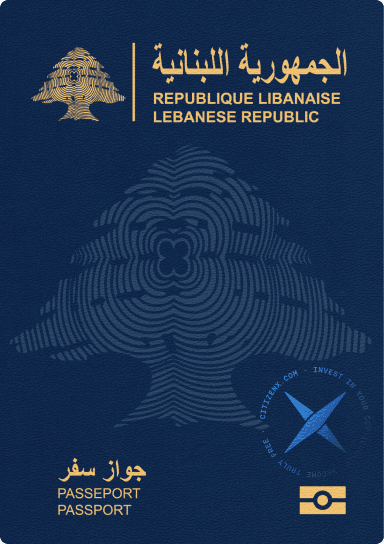
The Lebanese passport reaches roughly 40 destinations without a visa, and the list thins every time regional politics get worse. No Schengen, no UK, no US, and Gulf access that shifts with diplomatic weather. For a nation whose greatest export has always been its own people, the travel document is a daily handicap.
And the deeper problem is the one you already know. Lebanon has no functioning deposit insurance, no restored banking system, and no political settlement on the crisis losses. The state's institutional capacity, passports included, has had stretches where even printing travel documents stalled. When your only citizenship is issued by a state in that condition, every layer of your life inherits its fragility.
Here's the thing though. Lebanese families understood distributed living generations before anyone coined a term for it. There are more people of Lebanese descent abroad than in Lebanon, several times over. The cousin in São Paulo, the uncle in Dearborn, the brother in Abidjan, the daughter in Paris. Lebanon practically invented the global family as a survival technology.
A second citizenship is that tradition, formalized. And unlike your grandfather's generation, you don't need to emigrate for decades to get one. You can buy it, legally, in months.
One genuine advantage: Lebanon permits dual citizenship. No permission requirements, no legal gray zone, no risk to your Lebanese nationality. The law, for once, is not the obstacle.
What the crisis actually taught
Let me put the lesson in one sentence, because it's the thesis of everything I write: the failures come correlated.
In October 2019 the banks froze withdrawals, informally, without any legal framework, and the courts provided no remedy. The currency collapsed alongside the deposits. The state's services decayed alongside the currency. Then when families decided to leave or send children abroad, they discovered the passport was weak, the visa queues were long, and half the world's consulates treated Lebanese applications as presumptively suspect. Money, mobility, and legal status all failed together, because they were all drawing on the same failing source.
The families who came through best had already spread the load: a French or Canadian passport from an earlier emigration, accounts in Geneva or Dubai opened years before, property abroad. They didn't predict the crisis. They were just structured so that no single failure could take everything.
That structure is purchasable. That's the entire point of citizenship by investment.
How citizenship by investment works
The mechanics are simple. You make a qualifying contribution to a country, usually a government fund donation or a real estate purchase, and receive citizenship and a passport in return. The programs are run by sovereign governments, vetted by international compliance firms, and recognized worldwide. Due diligence, background checks, an interview at the Caribbean programs, and three to eight months later you're a citizen.
Lebanese applicants are accepted at every major program; Lebanon isn't on the banned lists, which target countries like Russia, Iran, and North Korea. The practical hurdle is the one the crisis created: source-of-funds documentation. Wealth that lived through the Lebanese banking collapse often has a complicated paper trail, transfers pulled out in 2019, cash held outside banks since, assets moved through Dubai. None of that is disqualifying, but it needs to be reconstructed into a story a compliance officer can verify. Budget real time for this.
Investment amounts in 2026 run from about 90,000 USD to 250,000 USD and up, plus fees. Fund from offshore assets; that part needs no elaboration in Lebanon.
Sao Tome and Principe: the value play
Sao Tome and Principe is a small island nation in the Gulf of Guinea whose program launched in August 2025, with donations from about 90,000 USD for a single applicant. The lowest credible price in the industry.
The passport covers roughly 70 destinations, not a powerhouse, but nearly double the Lebanese baseline, from a quiet, neutral country. There's even a familiar cultural note: Sao Tome is Lusophone, and no diaspora on earth navigates the Portuguese-speaking world better than the Lebanese, from Brazil to West Africa. For families rebuilding after the crisis years who want the second citizenship established without Caribbean pricing, this is the entry point. Young program, slower early processing, price accordingly.
Vanuatu: the fastest option
Vanuatu has run its program since 2017. All-in costs start around 130,000 to 135,000 USD, and approvals can arrive in one to two months.
It lost EU and UK visa-free access, so it won't fix your Schengen problem. What it is: the fastest legal second citizenship in the world, from a country with no income, wealth, inheritance, or capital gains tax. For someone who watched windows slam shut in 2019 and never wants to depend on a window again, six weeks to a second nationality is the pitch, complete in itself.
St Kitts and Nevis: the benchmark
St Kitts and Nevis has run the world's original CBI program since 1984, through every global crisis since. The Sustainable Island State Contribution starts at 250,000 USD single applicant, real estate from 325,000 USD.
For a Lebanese national, the upgrade is enormous: roughly 150 to 160 destinations visa-free, including the UK, all of Schengen, Singapore, and Hong Kong. Paris without the consulate queue. London without the paperwork. For the diaspora's traders and professionals, this is the document that matches how the family actually lives. Four to six months of processing, the industry's most established due diligence.
Other Caribbean options worth considering
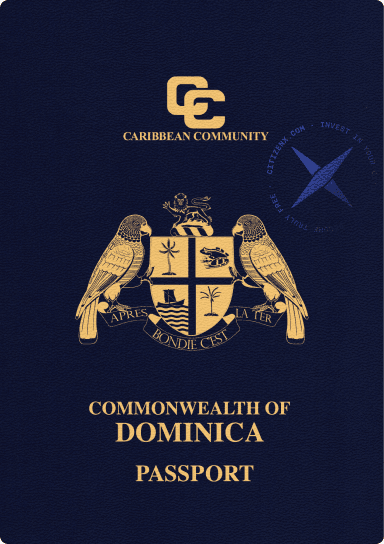
Dominica starts at 200,000 USD. Around 140 visa-free destinations including Schengen, from one of the region's best-run programs. The value route to visa-free Europe, and where I'd start most Lebanese conversations.
Grenada starts at 235,000 USD and carries the US E-2 treaty investor route. Here's the detail most agents miss: Lebanese citizens don't need it. Lebanon has its own E-2 treaty with the United States, one of the few real perks of the Lebanese passport. So pay Grenada's premium only if the stronger passport and China access appeal on their own merits.
Antigua and Barbuda starts at 230,000 USD and usually wins on per-person cost for larger families, which, for Lebanese households, is worth running the numbers on. About 150 destinations, five days of presence required within five years.
El Salvador: the million-dollar outlier
Since late 2023, El Salvador has offered citizenship for a 1 million USD contribution paid in Bitcoin or USDT, processed in six to eight weeks, capped at 1,000 applicants a year. The passport reaches about 135 destinations including Schengen and the UK.
For most Lebanese buyers, St Kitts delivers a stronger document at a quarter of the price, and that ends the analysis. The exception is the Lebanese crypto holder, and the crisis created plenty, people who moved wealth into digital assets precisely because the banks proved untrustworthy, and who might prefer converting holdings directly into a fast citizenship. If that describes you, it's a legitimate route. Otherwise, file it under interesting.
The strategic framework: how to think about this
For Lebanese clients I frame it around one question: which failure are you insuring against next?
If it's mobility, the daily visa grind and the shrinking welcome for Lebanese documents, buy the travel fix: Dominica for value, St Kitts for the benchmark, Antigua for the big family.
If it's another institutional collapse, the priority is existence, not strength: the fastest or cheapest second citizenship you can hold. Vanuatu or Sao Tome, with an upgrade path later.
If it's the next generation, remember citizenship is heritable. The 90,000 dollars that feels optional today becomes, in your grandchildren's hands, the inheritance that outlasts any bank account. Lebanese families think in generations; this purchase rewards exactly that.
And skip Grenada's E-2 premium unless you want the passport itself, because your Lebanese citizenship already carries the treaty.
Whatever you pick, pair it with residency somewhere operational, Dubai being the obvious Lebanese answer, and with banking that no single country's crisis can freeze. The lesson of 2019 wasn't "leave Lebanon." Plenty of my Lebanese clients never will. The lesson was: never again let one state hold every key.
What the process actually looks like
Choose the program, then build the file. For Lebanese applicants, the source-of-funds reconstruction is the long pole: bank records from before and during the crisis, transfer documentation, property sales, business accounts, assembled into a verifiable narrative. Agents experienced with Lebanese files know how to present crisis-era wealth movements; use one who does.
The application goes through an authorized agent: forms, documents, medical, photos, funds, then due diligence and an interview at the Caribbean programs. Processing runs from about six weeks at Vanuatu to six months or more elsewhere.
Beyond the investment, budget due diligence fees (5,000 to 10,000 USD per applicant), agent fees, government processing, and legal costs. For a family, add 20,000 to 50,000 USD to the headline number.
What I'd do if I were a wealthy Lebanese national
Specifics, because vague advice is useless.
If I were Lebanese with meaningful assets, in Beirut or in the diaspora, here's my next 90 days.
Start the source-of-funds reconstruction immediately, because it gates everything and only I can do it.
File for Dominica or St Kitts for the whole family, funded from offshore assets. If the budget is tighter after the crisis years, and for many families it honestly is, Sao Tome now with an upgrade in mind later beats waiting for the perfect moment.
Make sure every family member's Lebanese documents are current while the state is functioning well enough to issue them. Redundancy includes the original passport.
Put the second citizenship's paperwork, and copies of everything, physically outside Lebanon.
And I'd stop treating the 2019 losses as a reason to delay. I've heard it many times: "I'll do it when I recover what the banks took." The banks' timeline is not your family's timeline. Insure what remains.
The bottom line
Lebanon is the world's cautionary tale about correlated failure, and Lebanese families are the world's most experienced practitioners of the solution. A second citizenship is the modern, purchasable version of what your diaspora has always built the slow way.
Cash is king. But passport is queen. Beirut learned in 2019 that even the king can be taken hostage. The queen, held in another kingdom entirely, is how you make sure no one ever holds your whole family's future again.
You already believe this. The only question left is which program and when, and "when" has one honest answer.
This article is for informational purposes only and does not constitute legal, tax, or immigration advice. Consult qualified professionals for advice specific to your situation.
CitizenX helps high-net-worth individuals secure second citizenships and build sovereign lifestyles. Contact us to discuss your Plan B.