Africa's Plan B Passports: Comparing the 3 Best Citizenship by Investment Programs in 2026
Africa's Plan B Passports: Comparing the 3 Best Citizenship by Investment Programs in 2026
São Tomé, Sierra Leone, Egypt, and Botswana compared. Real all-in costs, timelines, and risks of Africa's citizenship by investment programs in 2026.
Reading time: 25 minJul 19, 2026 • 10:51 AM
Share
The citizenship by investment market used to have a floor. For years, that floor was Vanuatu at around $130,000, then the Caribbean programs at $200,000 and up. In 2025, Africa broke it.
São Tomé and Príncipe launched at $90,000. Sierra Leone opened its GO-FOR-GOLD program at $140,000, with a $100,000 route for applicants of African descent. Egypt kept running the continent's most established program, where your money buys an actual asset instead of disappearing into a donation. And in December 2025, Botswana's Parliament passed legislation for a $75,000 program that would undercut every other option on earth, backed by a country with investment-grade credit ratings and 60 years of uninterrupted multiparty democracy.
That's four programs. This article ranks the three best you can actually apply to right now, and explains why the fourth, Botswana, isn't on the podium yet despite the lowest sticker price. We work with these programs daily at CitizenX, so the numbers below are the real all-in figures, not the brochure prices that quietly exclude $15,000 to $30,000 in fees.
One thing to get straight before the comparison: none of these passports will replace a strong primary travel document. The Santomean passport reaches about 60 destinations without a prior visa. Sierra Leone's reaches roughly 68. Egypt's, around 50. These are Plan B passports. You buy one so that if your primary citizenship ever becomes a liability, through war, sanctions, political persecution, or a government that simply stops renewing your documents, you still have a valid travel document, a consulate that will serve you, and a country that must let you in.
If that's the problem you're solving, Africa currently offers the cheapest legitimate solutions in the world. Here's how they stack up.
Now the detail, because the detail is where these programs stop looking interchangeable.
Why a Plan B passport, and why Africa
The case for a second citizenship is insurance logic. You don't buy fire coverage because you expect your house to burn down. You buy it because the downside of not having it is unbounded.
The people who buy these passports mostly fall into a few groups. Citizens of sanctioned or high-risk countries, including many Russians, Belarusians, and Ukrainians, who face real obstacles renewing documents or opening bank accounts. Entrepreneurs from countries with weak passports who are tired of visa applications ruling their calendars. Americans and Europeans who watched border closures during Covid and understood, some for the first time, that a single government controls whether they can move. And members of the African diaspora for whom a passport is a homecoming as much as a hedge.
Why Africa specifically? Price, mostly, and honesty about what price buys. A Caribbean passport costs $200,000 to $250,000 after the 2024 price harmonization and gets you Schengen access, for now. The EU has been threatening that access for years, and if it goes, the premium you paid evaporates. African programs never priced in Schengen, so there's nothing to lose. You pay $90,000 to $150,000 for the core function of a second citizenship: a travel document and a legal nationality that no one can take from you for political reasons.
There are also perks the Caribbean can't offer. Sierra Leone comes with settlement rights across West Africa's ECOWAS bloc. São Tomé belongs to the Community of Portuguese Language Countries, which smooths residency paths in Portugal and Brazil. Egypt is a BRICS member whose citizens qualify for the US E-2 investor visa. None of that shows up in a visa-free count, and all of it matters more than the count for the right buyer.
1. São Tomé and Príncipe: the cheapest passport in the world
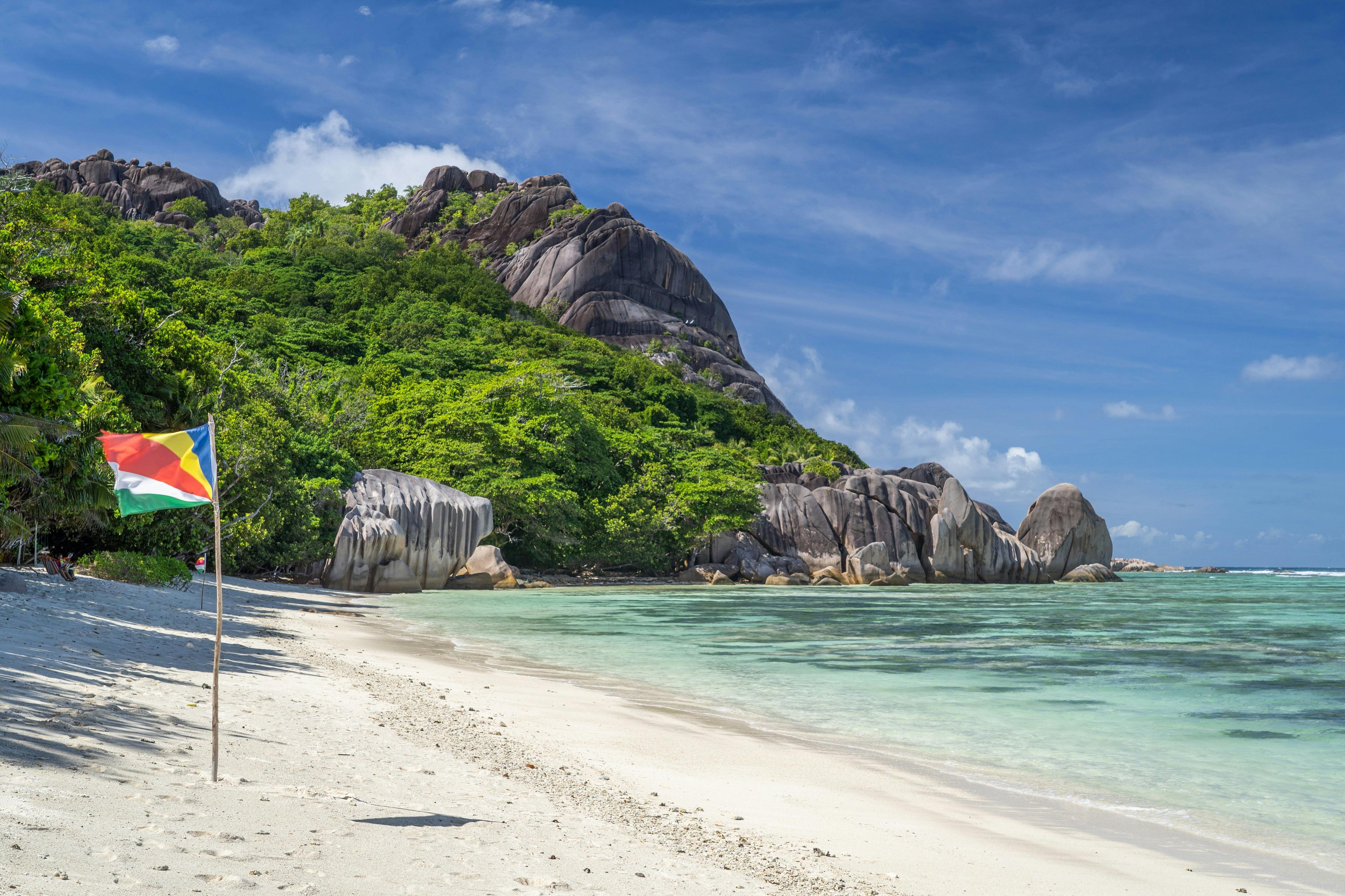
São Tomé and Príncipe is a two-island nation of about 230,000 people in the Gulf of Guinea, roughly 300 km off the coast of Central Africa. It's a former Portuguese colony, politically stable by regional standards, and poor. Cocoa and foreign aid carry the economy. In August 2025 it launched a citizenship by investment program, and within months it had taken the title Vanuatu held for a decade: the cheapest legitimate passport on the market.
What it costs, actually
The published contribution is $90,000 to the National Transformation Fund for a single applicant. Families of two to four pay $95,000, which is the single most aggressive family price in the industry. Five thousand dollars to add three dependents is not a typo.
Then come the numbers most marketing pages skip. A $5,000 submission fee. About $750 in document fees for the citizenship certificate, passport, and national ID. Additional dependents beyond three cost $5,000 each in extra donation. Add professional fees for the licensed agent who must file your application, plus due diligence charges, and a realistic all-in figure for a single applicant lands between $96,000 and $110,000. A family of four should budget $105,000 to $125,000 all-in.
That is still cheaper, per person, than anything else on earth. A family of four in Dominica would spend roughly $250,000. In São Tomé they'll spend around half of that, for the whole family.
What you get
A passport with visa-free, e-visa, or visa-on-arrival access to about 60 destinations. South Africa, Singapore, and Hong Kong are the standouts. No Schengen, no UK, no US.
The quieter benefit is CPLP membership. As a Community of Portuguese Language Countries passport holder, you have a streamlined path to residency and work permits in Portugal, Brazil, Angola, Mozambique, and the other Lusophone states. This is not EU citizenship and nobody should sell it to you as one. But CPLP nationals can access Portugal's residence regime with far less friction than other third-country nationals, and Portuguese residency leads to EU citizenship eligibility after five years. For a patient investor, a $90,000 Santomean passport can be the first move in a sequence that ends with an EU passport. That sequence has more steps and more uncertainty than agents like to admit, and Portuguese policy can change. It's an option, not a promise.
The process runs fully remote through licensed agents, with the program's citizenship unit operating out of Dubai. No visit, no interview, no residency requirement, no language test. Dual citizenship is permitted.
The honest caveats
Advertised processing is 30 to 60 days to approval in principle, and some early applicants did see approvals that fast. Real-world timelines have stretched since. Some files submitted in late 2025 and early 2026 have taken six months or more as application volume outran the young program's capacity. If a promoter guarantees you a passport in 30 days, treat that as a red flag, not a selling point.
The other caveat is the country itself. São Tomé is not a lifestyle destination. GDP per capita sits under $5,000, tourism infrastructure is thin, and essentially nobody buying this passport plans to live there. You are buying a legal status and a travel document from a small state that behaves responsibly, not a new home. Judged as exactly that, it's the best value in the market.
Choose São Tomé if: you want the cheapest credible Plan B passport in the world, you're covering a family, or you want a long-game angle on the Lusophone world.
2. Sierra Leone: the family program with a continent attached
Sierra Leone launched its GO-FOR-GOLD citizenship program in January 2025, and it's the most inventive CBI framework to appear in years. On paper it's more expensive than São Tomé. Do the math for a large or complicated family and the ranking can flip.
What it costs, actually
The standard contribution is $140,000 for a single applicant. Applicants who can demonstrate African ancestry through DNA testing qualify for the Heritage route at $100,000. This is the only program anywhere that formally prices in the diaspora's return, and for African-Americans, Afro-Caribbeans, and Afro-Brazilians it has proven to be the emotional core of the program, not just a discount.
Dependent pricing is where Sierra Leone breaks the industry mold. Spouses, children under 18, parents, and grandparents cost $10,000 each. A special dependent class at $20,000 covers adult children, siblings under 30, and even the spouses of those siblings. You can add multiple legal spouses. You can add a non-related business partner for $30,000. No other program lets you assemble a group like this on one application. For a three-generation family, or two families applying together, the per-person cost drops below anything the Caribbean has ever offered.
All-in for a single standard applicant, after agent fees and due diligence, budget $150,000 to $165,000. The program also accepts payment in USDT, which matters to a meaningful slice of its actual client base.
What you get
A passport reaching roughly 68 destinations, plus the real prize: ECOWAS. Sierra Leone belongs to the Economic Community of West African States, whose treaty grants citizens of member states the right to enter, reside, and establish businesses across the bloc. After Mali, Burkina Faso, and Niger completed their withdrawal in 2025, ECOWAS counts 12 members, so a Sierra Leonean citizen holds settlement rights in 11 other countries. That list includes Nigeria, Africa's largest economy at over 220 million people, plus Ghana, Senegal, and Côte d'Ivoire.
Think about what that means for a moment. A single naturalization gives you the legal right to live and do business across a market of over 400 million people. It is the closest thing on earth to buying an EU-style regional citizenship, and it costs $140,000. If your interests point toward West African markets, fintech, logistics, agriculture, energy, there is no comparable product.
The government has also built investor infrastructure around the program: local bank accounts for CBI participants, company registration support, and a National Investment Board that actually returns calls. Sierra Leone currently sits outside the Common Reporting Standard, which some applicants consider a feature. We'd tell you to be careful with that reasoning. Banking privacy rules change, and building a plan around a poor country staying outside CRS forever is not a plan.
Processing runs about 90 days for standard applicants and 60 for Heritage applicants, all remote, no visit required. The program even permits a legal name change during naturalization, with fewer restrictions than any comparable program. Useful for some, eyebrow-raising for others; due diligence standards are what keep a provision like that from becoming a liability, which makes the strength of Sierra Leone's vetting a question worth asking your advisor directly.
The honest caveats
Sierra Leone is one of the poorest countries in the world, with GDP per capita under $1,000. The passport is a Plan B document, not a mobility upgrade. The program is young, run by a government that needs the revenue, and its long-term pricing and rules will evolve. The name-change provision and non-CRS banking pitch attract exactly the kind of attention from Western regulators that has hurt other programs before. None of this is disqualifying. All of it belongs in your risk assessment.
Choose Sierra Leone if: you're bringing an extended family, you qualify for the Heritage route, or ECOWAS settlement rights have real business value to you.
3. Egypt: the only one where your money buys an asset
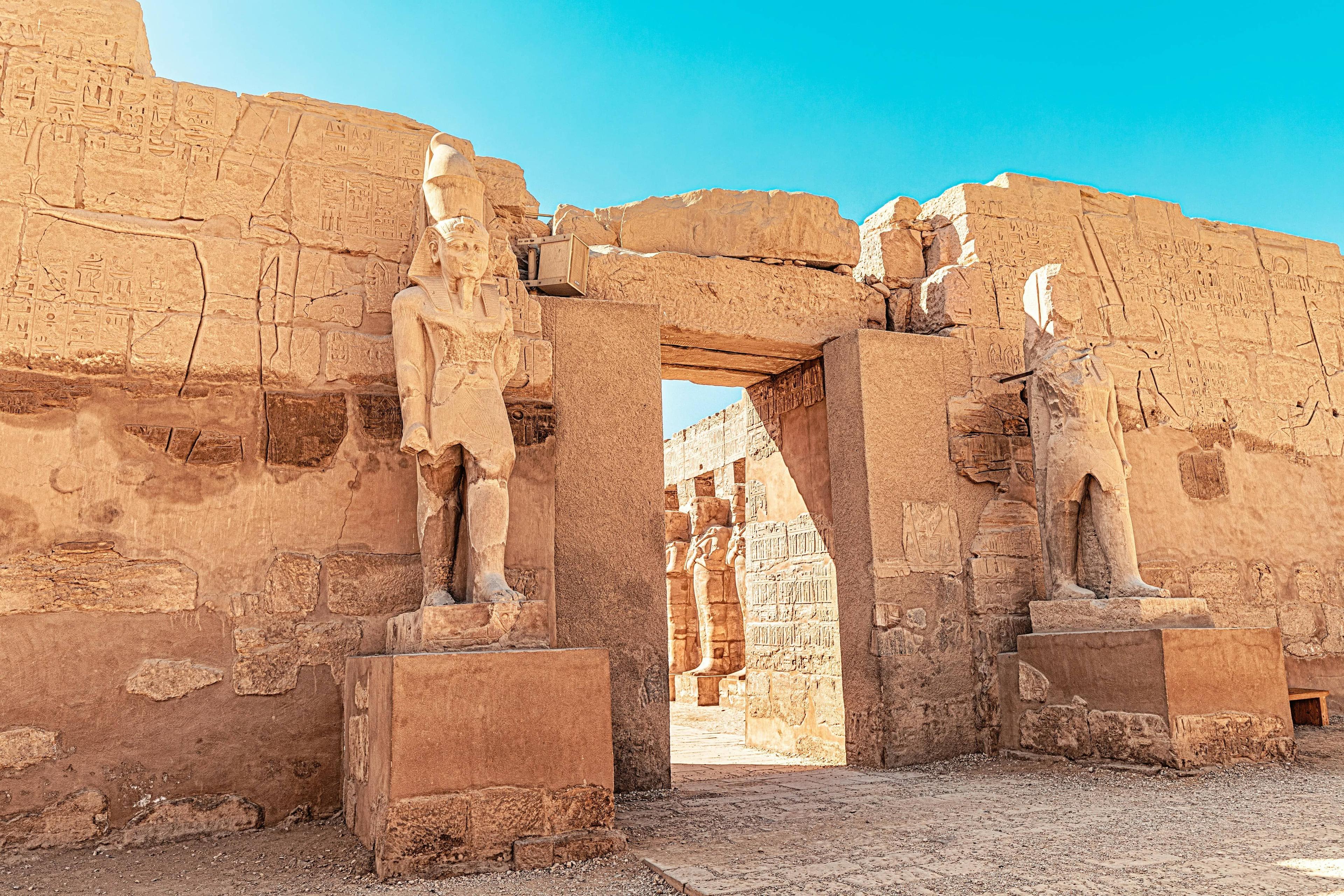
Egypt runs the continent's oldest formal CBI program, operating since 2019 and refined several times since. It's the most expensive of the three, the slowest, and the only one that requires you to show up in person. It's also the only one where you can get your capital back.
What it costs, actually
Four routes, per the framework set by Prime Ministerial Decree 876 of 2023:
A $250,000 non-refundable donation to the state treasury. The simplest path and the cheapest sticker price.
A $300,000 real estate purchase, held for at least five years. Since the 2023 reforms this includes private developer property, not just government stock, and amendments in October 2024 allowed joint investments where each participant's share exceeds $300,000, required funds to flow through an Egyptian bank account in US dollars, and mandated building permit verification for every property in an application. Those rules exist because earlier applicants got burned on paperwork, so take them seriously.
A $350,000 business investment plus a $100,000 donation.
A $500,000 deposit with the Central Bank of Egypt, returned after three years in Egyptian pounds at the official rate. Read that last clause twice. The pound has lost most of its value against the dollar over the past decade, and a refund in EGP after three years of currency risk is not the safe option it sounds like.
For most applicants the real choice is donation versus real estate. The donation is $50,000 cheaper and cleaner. The real estate route costs more upfront but leaves you owning a rentable asset on the Red Sea or in Cairo, in a country of 118 million people with chronic housing demand. Rental yields in tourist corridors can run high single digits in dollar terms. After the five-year hold, you can sell. Whether you'll recover your basis depends on the market and the pound, but "possibly recoverable" beats "definitely gone."
All-in, expect $265,000 to $280,000 on the donation route and $330,000 or more on real estate once fees, taxes, and the required trip are counted.
What you get
A passport with visa-free or visa-on-arrival access to about 50 countries, the weakest count of the three. What the count misses:
Egypt has been a BRICS member since January 2024, and an Egyptian passport increasingly functions as a neutral flag for people doing business across a fragmenting world. Egyptians qualify for the US E-2 treaty investor visa, a renewable long-term American residence status that citizens of most CBI countries, and notably not most Caribbean ones you'd assume, can access. Egypt is a G20-scale economy in all but formal membership, with real banks, real hospitals, real international schools, and cities where a foreign family can actually live. The program allows a primary applicant to include up to four spouses and all minor children at no additional contribution, which no other program on earth matches.
And unlike a microstate document, an Egyptian passport doesn't invite the question "where is that?" at a border or a bank. Financial institutions treat a populous country's passport differently. That is worth something.
The honest caveats
You must travel to Egypt to complete the process, typically staying around four weeks, and total processing runs six to nine months, sometimes longer. Egypt is a conservative country with a heavy security state, and the same geopolitical weight that makes the passport interesting means your citizenship rides on Cairo's relationships with the world. The bureaucracy is real. Nobody has ever described the Egyptian civil service as fast.
Choose Egypt if: you want an investment rather than a donation, you value E-2 eligibility or BRICS positioning, or you have a large immediate family and might actually spend time in the country.
Botswana: the $75,000 program that isn't open yet
Now the fourth country, and the reason this ranking has an asterisk.
In December 2025, Botswana's Parliament passed a Citizenship Amendment Bill creating economic citizenship under a new Section 15A of its Citizenship Act. The announced terms: a $75,000 to $90,000 contribution for the main applicant, $10,000 per spouse or child, $5,000 per adult dependent, roughly $5,000 per adult in due diligence, and a 60-day processing target. The program, branded the Botswana Impact Citizenship Program, is being built with Arton Capital, the firm behind programs in Antigua and Jordan. We covered the full details in our Botswana citizenship guide.
On paper, this beats everything above. The price undercuts São Tomé. The passport reaches about 88 destinations, fourth-best in Africa. And the country is a different class of counterparty: nearly 60 years of unbroken multiparty democracy, the best sovereign credit ratings on the continent, a territorial tax system that ignores your foreign income, no participation in automatic CRS data exchange, and a peaceful transfer of power in 2024 after the ruling party's 58-year run ended at the ballot box. No existing CBI country offers governance anywhere near this.
So why isn't Botswana ranked first? Because as of mid-2026 you cannot actually get the passport. Pre-registration attracted more than 1,000 investors from over 77 countries in its first weeks, but the full regulatory framework, fee schedules, due diligence standards, revocation rules, is still being finalized, and formal applications had not opened at the time of writing. New programs slip. Jordan's, built by the same advisory firm, launched slower than advertised. Botswana's fiscal urgency is real, its diamond economy contracted 3% in 2024 and both S&P and Moody's issued downgrades in late 2025, which cuts both ways: the government is motivated to launch, and motivated governments sometimes launch before their processes are ready.
Our advice is simple. If you need a second passport this year, apply to one of the three programs above. If you can wait, pre-register interest in Botswana and watch it closely, because the day it opens with a published framework, this ranking gets rewritten. Some clients are doing both: a São Tomé application now for immediate coverage, Botswana later for the stronger document. At these prices, a two-passport strategy costs less than one Caribbean citizenship did in 2020.
How the application process actually works
The three open programs follow the same basic sequence, with Egypt adding a trip. Here's what the six months around an application really look like.
Step 1: Choose a licensed agent. None of these programs accepts direct applications from individuals. São Tomé, Sierra Leone, and Egypt all route files through government-licensed agents, and Botswana has announced the same model. This is where most expensive mistakes happen, before any money reaches a government. Verify the license with the program's citizenship unit, not just the agent's website. Ask how many files they've completed, not signed.
Step 2: Gather documents. Passport copies, birth and marriage certificates, police clearance certificates from every country where you've lived six months or more in the past decade, bank statements and source-of-funds evidence, medical certificates for some programs, photographs to exacting specifications. Certificates usually need apostilles, and anything not in English or Portuguese needs certified translation. Applicants with simple histories finish in three or four weeks. Anyone with multiple residences, a company structure, or crypto-origin wealth should budget two to three months. Crypto wealth is not a problem in itself, Sierra Leone even takes payment in USDT, but you'll need exchange records that trace the funds back to their origin.
Step 3: Submit and pay initial fees. Due diligence and processing fees are payable upfront and are not refundable if you're rejected. The donation itself typically waits until approval.
Step 4: Due diligence. The quiet phase. Background checks run through international databases and security agencies, and you'll hear nothing for weeks. Sierra Leone has generally kept to its 60-to-90-day commitments here. São Tomé's queue has been less predictable. Egypt's security clearance is the slowest of the three, and it happens while you plan your required stay in the country.
Step 5: Approval, payment, and documents. After approval in principle, you wire the contribution or complete the investment, then receive your naturalization certificate, and then apply for the passport itself. For remote programs, passports can be issued abroad or collected through the citizenship unit. Add a few weeks between "approved" and "passport in hand" to whatever timeline you were quoted.
One practical note on what happens after: a passport is a document that needs renewing, usually every five or ten years. Before choosing a program, ask where its nearest embassy or consulate is relative to where you live. São Tomé maintains a thin diplomatic network, and its CIU's Dubai base does real work here. Egypt has embassies almost everywhere. This mundane detail is the whole point of a Plan B passport, so weigh it like it matters.
African programs vs. the Caribbean: an honest comparison
Most people researching these programs are also looking at St. Kitts, Dominica, Antigua, St. Lucia, and Grenada, so let's put the comparison on the table rather than pretend the Caribbean doesn't exist.
The Caribbean sells better passports. Around 140 to 155 visa-free destinations against Africa's 50 to 88, including Schengen across the board and, for Grenada, a China visa waiver plus E-2 eligibility. Caribbean programs are also older, with decades of processing history and established secondary infrastructure of banks, advisors, and case law.
The Caribbean also costs more and carries a specific risk Africa doesn't. Since the 2024 memorandum of understanding among the Eastern Caribbean states set a $200,000 price floor, a single applicant pays $200,000 to $250,000 all-in, and a family of four rarely escapes under $250,000. Nearly all of that premium buys one thing: Schengen access. The EU has repeatedly threatened to suspend visa-free travel for CBI jurisdictions and has already done it to Vanuatu. If Brussels follows through, a Caribbean passport becomes an expensive version of what Africa sells for half price.
African programs price in none of that fragility because they never had the access to lose. Ninety thousand dollars buys the irreducible core, a second nationality and travel document, plus regional benefits the Caribbean structurally cannot offer. No Caribbean passport lets you settle in Nigeria or Ghana. None comes with a CPLP pathway toward Portugal. None makes you a citizen of a BRICS economy of 118 million people.
The clean way to think about it: buy the Caribbean if your problem is visa-free travel today. Buy Africa if your problem is having a second nationality at all, or if the regional access happens to match your life. And if your budget covers it, the two aren't competitors. A Dominica passport for mobility plus a São Tomé passport for redundancy still costs less than St. Kitts alone did at its 2022 prices.
Head to head: how to actually choose
Strip away the marketing and the decision usually comes down to five questions.
How much can you spend? Under $110,000 all-in: São Tomé, or Sierra Leone's Heritage route if you qualify. Between $150,000 and $200,000: Sierra Leone standard. Above $265,000: Egypt enters the picture, and the donation-versus-asset question becomes the real decision.
Who's coming with you? Nuclear family of up to four: São Tomé's $95,000 family price is untouchable. Parents, grandparents, adult children, siblings, a business partner: only Sierra Leone will take them all. Multiple spouses and many minor children: Egypt includes them free; Sierra Leone charges per head but accepts more categories.
Do you need the passport soon? Sierra Leone has been the most consistent on speed at 60 to 90 days. São Tomé advertises faster but has been erratic. Egypt takes six to nine months and a trip. Botswana takes however long "not open yet" lasts.
Does regional access matter to you? West Africa: Sierra Leone, no contest. The Portuguese-speaking world and a possible EU angle: São Tomé. The Middle East, North Africa, and BRICS orbit: Egypt. Southern Africa: wait for Botswana.
Can you tolerate a donation you'll never see again? If the answer is no, Egypt is your only option among the three open programs, via real estate. Everyone else is selling a service, not an investment, whatever the industry's name for itself suggests.
On taxes, one clarification that saves people from expensive mistakes: none of these citizenships changes your tax residence by itself. Egypt, Sierra Leone, and São Tomé won't tax your worldwide income just because you hold their passport, and Botswana's territorial system only becomes relevant if you actually move there. Your tax life follows where you live, not what documents you hold. Anyone selling you a passport as a tax plan is selling you a problem. Talk to a cross-border tax advisor before you wire anything.
Due diligence, and the risks nobody puts in the brochure
Every serious program vets applicants, and all four here run background checks through security agencies with international cooperation. Expect to produce police clearances from every country you've lived in, source-of-funds documentation going back years, and detailed personal history. Budget three to six months of document gathering before you even file. Clean applicants have nothing to fear from this; the vetting is what protects your passport's reputation after you hold it.
The risks worth weighing are structural, and they're shared across all young programs. These are poor countries selling citizenship because they need revenue, which means program terms can change, prices can move, and a future government could wind a program down, as has happened elsewhere. Passports issued under a defunct program have historically remained valid, but renewals and consular service quality depend on the issuing state's continued goodwill. Visa-free lists are also loans, not property: any destination country can cancel access if it loses confidence in a program's vetting, which is exactly what happened to Vanuatu with the EU. The cheaper and newer the program, the more this risk deserves your attention. Diversification is the only real answer, and it's why the serious money in this industry increasingly holds more than one Plan B.
Frequently asked questions
What is the cheapest citizenship by investment program in the world in 2026?
São Tomé and Príncipe, at $90,000 for a single applicant and $95,000 for a family of up to four, before fees. Botswana's announced $75,000 program would be cheaper once it formally opens, but it was not accepting applications as of mid-2026.
Can I get an African passport without visiting the country?
Yes, for two of the three open programs. São Tomé and Sierra Leone run fully remote processes. Egypt requires an in-person stay, typically around four weeks.
Do these countries allow dual citizenship?
All four permit it. Botswana changed its law in 2024 and 2025 specifically to allow multiple citizenship ahead of its program launch. Whether you can hold a second passport also depends on your home country's rules, so check both sides.
Is a Plan B passport worth it if it doesn't improve my visa-free travel?
That depends on your exposure. If your primary passport is strong and your government is stable, it's insurance you'll probably never use. If you hold a sanctioned or fragile nationality, it can be the difference between mobility and being stuck. Most buyers of these programs are paying for the guarantee of a renewable travel document, not for new destinations.
How does the Sierra Leone heritage discount work?
Applicants who prove African ancestry, through a DNA test, qualify for a reduced $100,000 contribution and a faster 60-day track. It's the only formal diaspora pricing in the industry.
Which program has the strongest passport?
Among the open three, Sierra Leone's document reaches the most destinations, around 68, and adds ECOWAS settlement rights. Botswana's passport, at roughly 88 destinations, would lead once its program opens. For raw mobility, though, none of these competes with Caribbean or European options; that isn't what they're for.
Are these programs legal and legitimate?
Yes. All three open programs operate under national legislation and process applications through licensed agents with formal due diligence. That said, quality varies among promoters. Verify that anyone handling your application holds a government license, and be suspicious of guaranteed timelines.
The bottom line
Ranked on what you can hold in your hand today: São Tomé and Príncipe wins on price and family value, Sierra Leone wins on flexibility and regional rights, and Egypt wins for anyone who wants an asset and a heavyweight flag instead of a donation receipt. Botswana, at $75,000 with the best governance in the group, is the one to watch, and possibly the one to wait for.
The broader story is bigger than any single program. Africa went from a footnote in the citizenship industry to its price-setter in under two years, and with the African Continental Free Trade Area slowly knitting the continent's markets together, the value of holding an African citizenship is more likely to rise than fall over the coming decade. The Caribbean sold proximity to Schengen. Africa is selling a stake in where the growth is going to be.
If you're weighing these programs against each other, or against a Caribbean alternative, talk to our team. We'll tell you which one fits your situation, including when the answer is none of them.
CitizenX is a technology service providing information and access to self-service tools. We are not a law firm and do not provide legal, tax, or accounting advice. Program details change; verify current requirements with official sources before applying.