Best Second Passports for Mongolian Citizens in 2026
Best Second Passports for Mongolian Citizens in 2026
This post breaks down the best citizenship by investment options for Mongolian citizens in 2026. Landlocked between two superpowers, with a commodity-dependent economy and a passport that opens few doors, Mongolians have some of the clearest reasons on earth to hold a Plan B.
Landlocked between two superpowers, with a commodity-dependent economy and a passport that opens few doors, Mongolians have some of the clearest reasons on earth to hold a Plan B. This post breaks down the best second passport options for Mongolian citizens in 2026, why each one makes sense, and what they actually cost.
Look at a map. Mongolia has exactly two neighbors: Russia and China. Every liter of fuel, most of the electricity in winter, and nearly every export ton of coal and copper crosses one of those two borders. When Moscow or Beijing sneezes, Ulaanbaatar catches pneumonia. That's not a political statement. It's geography.
I've been saying this for years. Cash is king. But passport is queen.
Most people think about financial sovereignty and stop there. Bitcoin in self-custody, offshore accounts, maybe some hard assets. All good. But what's the point of protecting your wealth if you can't protect your ability to move? A mobility freeze is a cash seizure by another name. And when your country's entire physical connection to the world runs through two authoritarian giants, mobility is never fully in your own hands.
We saw dry runs of this during COVID. Borders closed for months. Mongolians abroad couldn't get home; Mongolians at home couldn't leave. People with second residencies and passports had options. Everyone else waited for permission.
If you've built real wealth in Mongolia's mining boom, in trade, in tech, or in real estate, the window to act is now. Not after the next crisis. Now.
Why Mongolians need a Plan B passport
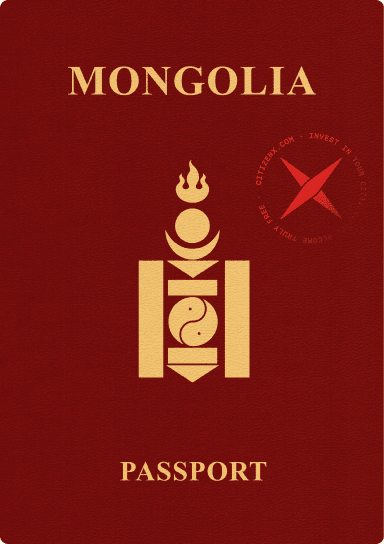
The Mongolian passport is not a strong travel document. It reaches roughly 60 destinations visa-free, and the list is missing almost everything that matters for international business: no Schengen area, no UK, no US, no Canada, no Japan. A Mongolian entrepreneur flying to a mining conference in London or a supplier meeting in Frankfurt needs a visa appointment, an itinerary, bank statements, and weeks of lead time. Every single trip.
That's the daily-life problem. The structural problem is bigger.
Mongolia's economy moves with commodity prices and with the moods of its two neighbors. The tugrik has lost value in waves for two decades. Banking access for international transactions is thin. When copper and coal are up, Ulaanbaatar booms. When China slows its imports or Russia squeezes fuel supplies, the entire country feels it within weeks. None of this is in your control, no matter how well you run your business.
And there's conscription. Mongolia maintains mandatory military service for young men, with a paid exemption option that has fluctuated with politics. It's not the German-style mobilization scare I've written about elsewhere, but it's a standing reminder of the principle: the state decides what it can demand from your body, not just your wallet, and the rules can change with one vote in the State Great Khural.
A second passport solves the travel problem and the structural problem at once. It's a legal status in another sovereign territory, independent of anything that happens between Moscow, Beijing, and Ulaanbaatar.
The dual citizenship problem, and how to think about it
Here's the complication, and I won't sugarcoat it: Mongolia does not allow dual citizenship. Under current law, a Mongolian citizen who voluntarily acquires another citizenship can forfeit their Mongolian one.
So how should a Mongolian think about CBI?
First, understand what the law actually targets and how it's applied. Loss of citizenship is not necessarily automatic in practice; it involves the state acting on information. Plenty of countries with formal single-citizenship rules have large populations of quiet dual citizens. I'm not advising you to hide anything. I'm advising you to get specific advice from Mongolian counsel before you apply, because the details of your situation matter and the enforcement picture changes.
Second, know that dual citizenship reform is a live political conversation in Mongolia, driven by the huge diaspora in South Korea, the US, and Europe. Laws change. Germany banned dual citizenship for half a century, then opened it in 2024 and triggered a wave of second-passport applications. If Mongolia reforms, the people who already hold a second citizenship will be ahead of everyone.
Third, remember the alternative: residency. Permanent residency abroad touches nothing in Mongolian law. For clients who can't accept any citizenship risk, a strong residency in a stable jurisdiction is the conservative first layer, with citizenship as a later decision.
How citizenship by investment works
Citizenship by investment, or CBI, is straightforward. You make a qualifying financial contribution to a country, usually through a government fund donation or a real estate purchase, and in return you receive citizenship and a passport. The process typically takes three to eight months, sometimes less.
These aren't fake passports or gray-market documents. CBI programs are run by sovereign governments, regulated by international compliance firms, and recognized worldwide. You go through due diligence, background checks, and, at the Caribbean programs, a mandatory interview. If you pass, you become a citizen with full rights.
Investment amounts in 2026 range from roughly 90,000 USD on the lower end to 250,000 USD and up for the premium Caribbean programs. Mongolian nationals are accepted at every major program; Mongolia doesn't appear on any restricted-nationality list.
For Mongolians, unlike for the Europeans I usually write about, the travel score of the CBI country matters enormously. You're not just buying an insurance policy. You're buying visa-free Europe.
Sao Tome and Principe: the value play
Sao Tome and Principe is a small island nation in the Gulf of Guinea, off the west coast of Central Africa. Its CBI program launched in August 2025, with pricing starting around 90,000 USD for a single applicant through the government donation route. That makes it the most accessible credible program on the market.
The passport itself is modest, roughly 70 destinations, so it won't transform your travel life. What it gives you is the core product: a second legal status from a neutral, low-profile country, at the lowest price point available. For a Mongolian who wants the insurance policy first and the travel upgrade later, or who plans to pair it with residency elsewhere, Sao Tome is the entry point.
It's also a young program, and processing in the first year has run slower than advertised. You're an early adopter. Price that in.
Vanuatu: the fastest passport on the market
Vanuatu's CBI program has been around since 2017 and has processed thousands of applications. The Development Support Program is the main route, with all-in costs for a single applicant starting around 130,000 to 135,000 USD.
What makes Vanuatu stand out is speed. Approvals can come through in one to two months. Nobody else is close.
Know the trade-off: Vanuatu lost its EU visa waiver in December 2024, permanently, and the UK pulled its waiver earlier. So Vanuatu is not the European travel document it once was. Its visa-free list still covers Singapore, Hong Kong, and much of Asia-Pacific, which is Mongolia's natural business zone. And Vanuatu has no income tax, no wealth tax, no inheritance tax, and no capital gains tax, which matters if you're restructuring your tax life around international business.
For a Mongolian whose priority is having a second citizenship in hand this quarter, Vanuatu is the speed play. For Europe, look to the Caribbean.
St Kitts and Nevis: the premium travel upgrade
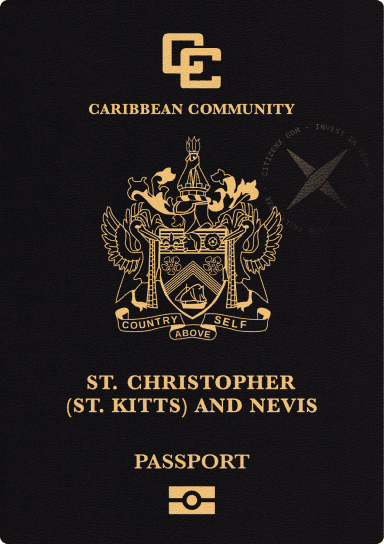
St Kitts and Nevis launched the world's first CBI program in 1984. Over 40 years of continuous operation, which matters in an industry where programs come under international pressure.
The main route is the Sustainable Island State Contribution starting at 250,000 USD for a single applicant, with real estate alternatives from 325,000 USD.
For a Mongolian, this is a different passport life. St Kitts reaches roughly 150 to 160 destinations visa-free: the UK, the entire Schengen area, Singapore, Hong Kong, and most of Latin America. Next to a Mongolian passport's 60 destinations, that's not an upgrade, it's a transformation. Business trips to Europe stop being visa projects and become plane tickets.
Processing runs four to six months with thorough due diligence. It's the benchmark program, priced accordingly.
Other Caribbean options worth considering
Dominica starts at 200,000 USD for a single applicant after the 2024 region-wide price agreement. Roughly 140 visa-free destinations including the Schengen area. A decade-long reputation for program integrity. If you want Caribbean CBI with visa-free Europe at the lowest current entry point, this is usually where I point people first.
Grenada starts at 235,000 USD through the National Transformation Fund. Its differentiators: visa-free access to China, which for a Mongolian doing cross-border business is directly useful, and the US E-2 treaty investor route, with the caveat that US rules now require three years of domicile in Grenada before an investment-acquired citizenship supports an E-2 application. Get current US immigration advice before paying the Grenada premium for the E-2 story.
Antigua and Barbuda starts at 230,000 USD and is often the best value for families. It requires five days of physical presence in the country during the first five years. Roughly 150 visa-free destinations.
The strategic framework: how to think about this
Start with why.
If your primary concern is mobility insurance against regional instability, you want speed and sovereignty: Vanuatu for speed, Sao Tome for value and low profile.
If your daily pain is travel friction, and for most Mongolian business people it is, the Caribbean programs are the answer. Dominica at 200,000 USD is the value entry to visa-free Europe. St Kitts is the premium version. This is where the Mongolian calculation differs most from my German clients: they already have a top-five passport and buy CBI purely as insurance. You're buying insurance and a dramatically better travel document in the same transaction. The value per dollar is arguably higher for you than for them.
If you do business with both China and the West, Grenada's China access is a unique feature no other program offers.
And run the dual-citizenship question through Mongolian counsel first. For some clients the answer will be citizenship now; for others, residency now and citizenship when the law or their circumstances change.
Bitcoin and passports: the sovereign individual toolkit
I keep coming back to this pairing because they solve the same problem from different angles.
Bitcoin in self-custody protects your wealth from currency depreciation, banking bottlenecks, and capital controls. A second passport protects your physical freedom from border closures and geopolitical squeezes. Together, they make you much harder to coerce.
For Mongolians, the currency half of this argument barely needs making. Anyone who has held tugrik through the last two decades understands monetary debasement in their bones. The mobility half is the same logic applied to your feet instead of your savings: don't leave your ability to move at the discretion of a single state, especially one whose borders are controlled by the two most sanctioned-and-sanctioning powers on earth.
Governments have two primary leverage points over citizens: their money and their movement. Address both and the power dynamic shifts.
What the process actually looks like
The first step is choosing your program based on priorities, budget, and timeline.
Next comes due diligence preparation. You'll need a clean criminal record, a legitimate source of funds, and documentation to prove both. For Mongolian applicants, source-of-funds documentation deserves early attention: mining-sector wealth, trading income, and real estate gains are all perfectly acceptable, but the paper trail needs to be clean and complete. Start assembling it before you apply, not during.
The application involves forms, supporting documents, photos, medical clearance, and the investment or donation funds, handled through an authorized agent. Processing runs from one to two months for Vanuatu to six months or more for the Caribbean and Sao Tome.
Costs beyond the investment include due diligence fees (typically 5,000 to 10,000 USD per applicant), agent fees, government processing fees, and legal fees. Budget an additional 20,000 to 50,000 USD on top of the investment for a family application. And add Mongolian legal advice on the citizenship question as its own line item.
What I'd do if I were a wealthy Mongolian
I'll be specific because I think vague advice is useless.
If I were a Mongolian national with a net worth above 2 billion tugrik, here's what I'd do in the next 90 days.
Get advice from Mongolian counsel on the dual citizenship exposure. This shapes everything else.
If the citizenship risk is acceptable to me, apply for Dominica or St Kitts. The combination of insurance plus visa-free Europe is the highest-value move available, and processing takes half a year, so the clock should start now.
If the citizenship risk isn't acceptable yet, secure a strong residency abroad instead, in the UAE, in Southeast Asia, or in Europe through an investment residency, and revisit citizenship when Mongolian law reforms or my center of life shifts.
Move a meaningful portion of liquid wealth out of tugrik and into hard assets, including Bitcoin in self-custody. Enough that a banking freeze or a sharp devaluation doesn't change my family's options.
Build the source-of-funds file now, while records are fresh and accessible.
All of this is legal. You're diversifying your personal sovereignty the same way you'd diversify an investment portfolio.
The bottom line
Mongolia's position on the map isn't changing. The two borders, the commodity cycle, the thin passport: these are permanent features, not passing problems. What can change is how exposed you personally are to them.
Cash is king. But passport is queen. And when your country's every physical link to the world runs through Moscow or Beijing, the queen is not a luxury. She's the difference between having options and hoping for the best.
Don't wait for the next border closure or currency shock to figure this out. By then it'll be too late, and you'll be standing in line with everyone else who thought they had more time.
This article is for informational purposes only and does not constitute legal, tax, or immigration advice. Mongolian law does not currently permit dual citizenship; consult qualified Mongolian counsel before acquiring a foreign nationality.
CitizenX helps high-net-worth individuals secure second citizenships and build sovereign lifestyles. Contact us to discuss your Plan B.