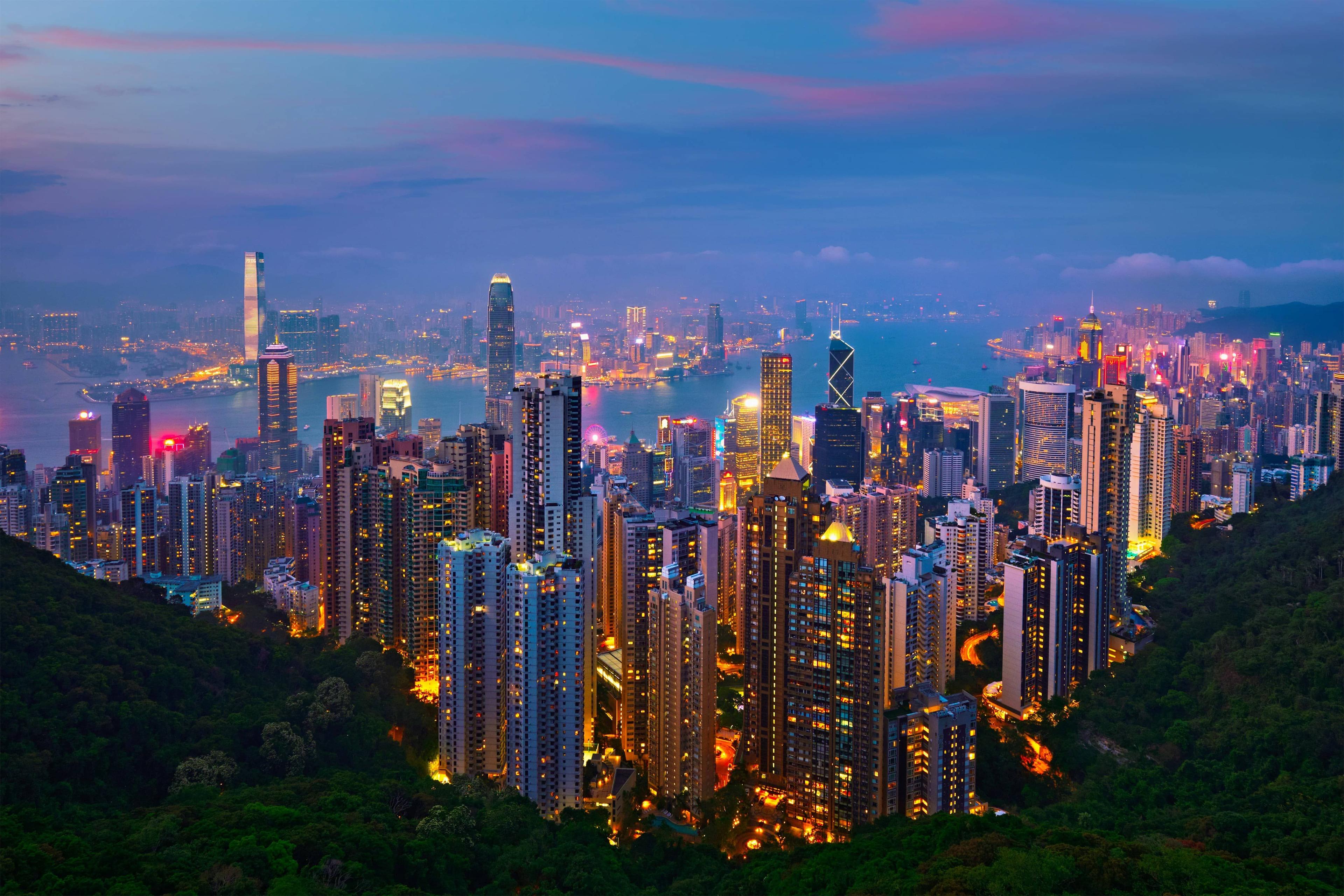
For Asian citizens, these rankings shape business, education, and family life. For the global mobility industry, Asia is the demand side of the entire market: Chinese, Indian, Vietnamese, and Pakistani nationals are the world's largest buyers of second citizenships, for reasons this article's rankings make obvious.
Asia is home to the strongest passport on the planet – and to several of the weakest. A Singaporean can enter more countries without a visa than the citizen of any other nation on earth, the United States included. An Afghan, six hours' flight away, holds the world's most restricted document. No other continent contains both ends of the global mobility spectrum, and nowhere else does the gap between neighbors run so deep.
The middle of the table is where Asia gets really interesting. Malaysia, a middle-income country, out-travels the United States on some counts. The UAE turned one of the world's weaker passports into a top-ten document in under two decades – the fastest rise ever recorded. Brunei, a sultanate of 450,000 people, holds a privilege that Japan and Singapore don't. And China, the region's superpower, carries a passport that ranks below Honduras's.
For Asian citizens, these rankings shape business, education, and family life. For the global mobility industry, Asia is the demand side of the entire market: Chinese, Indian, Vietnamese, and Pakistani nationals are the world's largest buyers of second citizenships, for reasons this article's rankings make obvious.
As always in this series, a note on method: we compile our own assessment from official visa-policy sources – government announcements, destination-country immigration rules, treaty texts. We don't cite or rely on any third-party passport index. Whether a Japanese citizen can enter Germany visa-free is a public fact, not proprietary data.
How We Rank Passport Strength
Access to high-demand destinations. The Schengen Area, the UK, the US, Japan, and the major hubs weigh more than raw counts. A document that opens Europe and North America beats one that opens the same number of smaller states.
Total visa-free and visa-on-arrival access, compiled from official sources and reported approximately – these numbers shift monthly, and precision without a date is fiction.
Special privileges. The US Visa Waiver Program has exactly three Asian members, and membership is worth more than twenty ordinary destinations. Treaty quirks and regional arrangements get weighed, not just counted.
Stability and trajectory. Some documents on this list have been strong for fifty years; one entered the top tier within the last decade; a couple carry geopolitical risk to their access. Direction matters.
Counts are our own compilation from official visa-policy sources as of early 2026. *Brunei's US access comes via Visa Waiver Program membership.
1. Singapore: The World Champion
Singapore doesn't just hold Asia's strongest passport; it holds the strongest passport in the world, with visa-free or visa-on-arrival access to roughly 190-plus destinations – essentially everywhere except a short list of hard cases. Schengen, the UK, the US (via the Visa Waiver Program), Japan, China, India (e-visa), Brazil: the red booklet opens all of it.
The reasons compound each other. Singapore's diplomacy is deliberately friendless-and-enemyless, trading with everyone and antagonizing no one, which lets it sign access agreements the aligned powers can't. Its documents are among the world's most secure, its citizens' overstay rates negligible, its economy the region's financial anchor – a status we covered in our ranking of Asia's richest cities, where Singapore also features near the top.
China is the emblematic case: Singaporeans enter visa-free, a privilege Beijing extends to few and which no Western passport enjoys on the same terms. Only Singapore's neutral positioning makes that possible alongside full US and EU access.
Singaporean citizenship, for the curious: jus sanguinis, long residence through permanent residency, male military service, and no dual citizenship for adults. The world's best passport demands more commitment than almost any other. By now that pattern – the strongest documents are the hardest to acquire – should feel familiar from every regional ranking we've published.
2. Japan: The Perennial
Japan's passport has sat in the global top tier for decades – roughly 190 destinations, with Schengen, the UK, US Visa Waiver membership, and one of the deepest visa-free networks in the Americas and Southeast Asia. In most years the difference between Japan and Singapore comes down to a handful of destinations and the details of China access (Japanese citizens' visa-free entry to China, suspended during the pandemic, was restored in late 2024 – the kind of single policy change that reshuffles the very top of world rankings).
Japan's strength rests on the same actuarial foundations as Singapore's – secure documents, negligible migration risk, universal diplomatic relations – plus seventy years of accumulated goodwill as a trading power. What it doesn't rest on is usage: surveys regularly find that fewer than a quarter of Japanese citizens hold a passport at all. The world's second-most-capable travel document spends most of its life in drawers, which says something about how mobility value and mobility demand are entirely different things.
For holders, there's little to add: the document has no meaningful gaps. Citizenship, as in Singapore, is strict – long residence, no dual nationality for adults – and Japan runs no investment route to it whatsoever.
3. South Korea: The Third Heavyweight
South Korea completes Asia's global top three with roughly 185-190 destinations: Schengen, the UK, US Visa Waiver membership, and near-universal coverage of the Americas and Southeast Asia. On any given month's count it trades places with Japan and European leaders near the summit of the world table.
Korea's rise tracked its economy: a mid-tier document in the 1980s became elite as the country did, with each trade agreement and each clean decade of migration statistics adding access. The remaining gaps are geopolitical trivia – China grants Koreans visa-free entry to Hainan and select regions but not the mainland generally, and the North is closed for reasons requiring no footnote.
The practical footnote worth knowing: Korea, like Japan and Singapore, restricts dual citizenship for adults (with narrow exceptions), and naturalization requires years of residence plus language and culture testing. Asia's top three passports are all guarded by some of the world's most restrictive citizenship laws. The correlation is not a coincidence; it's the mechanism.
4. United Arab Emirates: The Fastest Riser Ever
The UAE passport is the great outlier of global mobility: a document that reached roughly 180 destinations after starting the 2000s below 40. No passport in history has climbed faster, and the climb was policy, not accident – a deliberate, decade-long campaign by the Emirati foreign ministry to sign visa waivers at a pace no one had attempted.
The breakthrough was the EU's 2015 Schengen waiver – the first and still the only one granted to an Arab state – followed by the UK, China, Japan, and a run of Latin American and African agreements signed almost monthly through the late 2010s. The US remains the notable gap: Emiratis still queue for B1/B2 visas, though Washington has periodically discussed Visa Waiver candidacy.
The asterisk is demographic: the UAE's passport serves its 1 million citizens, not the 9 million expatriate residents who make up most of the country – including the relocated wealth we documented in our Middle East cities ranking, where Dubai leads the region. Emirati citizenship itself remains among the world's most closed, granted by descent and rare nomination. The strongest passport in the Arab world is also, effectively, the least attainable.
5. Malaysia: The Middle-Income Overachiever
Malaysia holds the strongest passport of any middle-income country on earth – roughly 180 destinations, including Schengen, the UK, Japan, Korea, and most of the Americas. On raw counts, Malaysians out-travel Canadians in some months and trail Americans by single digits, from a country with a fifth of the US's per-capita income.
The explanations stack up: Commonwealth heritage and clean UK-era migration statistics; ASEAN's full regional mobility; deliberate non-alignment that keeps doors open in both Beijing (visa-free since 2023's reciprocal opening) and the West; and decades of unremarkable-in-the-best-way document security. Malaysia is the Botswana of Asia, if Botswana had also industrialized.
The US requires a visa – the one conspicuous absence – and there's no realistic path to changing that soon. For Malaysians the practical map is nonetheless enviable, and the passport's strength is a periodic source of national trivia-night pride. Citizenship is jus sanguinis with restrictive naturalization and no dual citizenship, completing the pattern this list keeps drawing.
6. Brunei: The Sultanate With the Golden Ticket
Brunei's passport covers roughly 165 destinations, which alone wouldn't earn sixth place. What does is a single privilege: Brunei is a member of the US Visa Waiver Program – the only Muslim-majority country in it, one of only three Asian states (with Japan, Korea, Singapore, and Taiwan's special arrangement rounding out the region's US-visa-free club), and by a wide margin the smallest economy ever admitted.
The membership dates to 1993, an artifact of oil-era diplomacy and a national migration profile rounding to zero – 450,000 citizens, comfortable at home on hydrocarbon wealth, producing overstay statistics too small to measure. Add Schengen, the UK, ASEAN mobility, and China access, and the sultanate's citizens hold one of the most frictionless travel documents anywhere.
Brunei is this ranking's purest demonstration of the actuarial principle: not power, not size, not even governance model – the US waiver coexists with an absolute monarchy – but simply decades of statistical harmlessness, compounding quietly.
7. Hong Kong SAR: Strong, With Its Own Asterisk
The Hong Kong Special Administrative Region passport reaches roughly 170 destinations, including Schengen, the UK, Japan, and most of the rich world except the United States, which has always required visas of HKSAR holders.
It's a strange and strong document: issued by a city, backed by China's sovereignty, yet carrying vastly more access than China's own passport – a gap of some 85 destinations between two documents issued under one flag. That gap is the residue of Hong Kong's separate customs, legal, and migration identity, and its durability is the open question. So far, the major waivers have held through the political turbulence since 2020, though individual policies (Taiwan's treatment of HKSAR travelers, for instance) have tightened.
Many Hong Kongers hedge the question directly: the British National (Overseas) status held by millions offers a UK residence route, and emigration since 2020 has been substantial. The passport remains excellent; the asterisk is whether the conditions that produced it persist. For a document, as for a city, that's the kind of question that doesn't need answering until suddenly it does.
8. Israel: Strong Access, Volatile Context
Israel's passport covers roughly 160-165 destinations, including Schengen, the UK, and – since 2023 – US Visa Waiver membership, making it the region's second entry in that club. On paper, that's a top-twenty global document.
The asterisk is unlike any other on this list: roughly two dozen states, mostly in the Muslim world, refuse the passport entirely, and the regional wars since 2023 have made parts of its map situationally unusable regardless of formal policy. The Abraham Accords opened the UAE and Bahrain in 2020; subsequent events have tested, though not formally reversed, those openings. No other strong passport's practical value moves so much with the news cycle.
Israeli citizenship, via the Law of Return, is also more accessible than any other document in this ranking's top tier – the mirror image of the Singapore-Japan-Korea pattern, and the reason the passport's holder base spans the globe.
9. Taiwan: The Recognition Paradox
Taiwan's passport reaches roughly 145 destinations – Schengen (waiver since 2011), the UK, Japan, Korea, and US Visa Waiver membership – despite the Republic of China maintaining formal diplomatic relations with barely a dozen states.
That's the paradox worth savoring: a passport most of the world's governments officially don't recognize as belonging to a country outperforms the documents of two-thirds of the UN's membership. Visa policy, once again, is actuarial rather than diplomatic – Taiwanese travelers present zero migration risk and carry chip-secured documents, so border agencies wave them through while foreign ministries maintain the fiction.
The gaps are China-shaped: the mainland requires Taiwanese citizens to travel on a special permit rather than the passport, and a handful of Beijing-aligned states impose restrictions. Everywhere else, the green booklet works like the first-world document it statistically is.
10. Macau SAR: The Quiet Sibling
Macau's SAR passport closes the list at roughly 140 destinations, including Schengen (waiver alongside Hong Kong's arrangements), the UK, and Japan – another city-issued document dramatically out-traveling the sovereign one, though trailing Hong Kong's count by a couple dozen destinations and lacking any US arrangement.
Its profile matches its holder base: 700,000 residents of the world's densest gambling economy (a story we told in our China cities ranking, where Macau's per-capita numbers lead the country). The document is strong, stable, and rarely discussed – there are simply too few holders to generate news. It earns the last spot over Gulf contenders like Qatar and Kuwait (both ~95-100, both lacking Schengen waivers despite long negotiation) and comfortably over every remaining passport in South and Southeast Asia.
The China Question
The largest absence from this top ten is the region's superpower. China's passport reaches roughly 85 destinations – below Belarus, below Honduras, below every entry above by a wide margin. For the world's second economy, with the world's largest outbound tourism spend, that's a standing anomaly worth explaining.
The standard mechanism applies: destination countries price migration risk, and China's combination of scale (any waiver admits 1.4 billion people), historical overstay patterns, and geopolitical friction has kept the rich world's doors closed. No Schengen waiver, no UK, no US, no Japan.
What's changed – and why the China question is suddenly interesting – is Beijing's response. Since 2023, China has been unilaterally granting visa-free entry to dozens of countries (France, Germany, Malaysia, Australia, and a lengthening list) explicitly to invite reciprocity. It's the Kenya strategy from our Africa passport ranking, executed by a superpower: open your own doors and wait. A few partners have reciprocated; most haven't yet. If the strategy works over a decade, the biggest single re-rating in passport history follows. If it doesn't, a billion and a half people continue to hold the weakest strong-economy document on earth – and continue to drive the global demand for second citizenships.
What This Means for Investors and Global Citizens
Asia's rankings explain the world's citizenship market from the demand side. The holders of the region's weaker documents – Chinese, Indian, Vietnamese, Pakistani, Bangladeshi nationals – are the largest client groups for every major second-citizenship and residency program on earth, because the gap between their economic reach and their travel documents is the widest anywhere.
The standard solutions live outside Asia, since the region's top passports are guarded by its strictest citizenship laws. The Caribbean programs from our companion ranking deliver Schengen- and UK-grade mobility in months – with Grenada carrying particular weight for Asian applicants, since its US E-2 treaty opens an American residence route that no Asian passport short of the top tier provides. St. Kitts and Nevis leads on raw passport strength. Beyond the Caribbean, Argentina and El Salvador offer different trade-offs for families building multi-continent optionality.
The other direction matters too: for holders of strong Western documents, Asia's top jurisdictions offer residence, not citizenship – Singapore's and the UAE's doors are open to capital and talent, firmly closed to naturalization at scale. Plan accordingly.
Frequently Asked Questions
What is the strongest passport in Asia in 2026?
Singapore's – which is also, by our compilation of official visa policies, the strongest in the world at roughly 190-plus visa-free destinations, including the US, the Schengen Area, the UK, and China.
Which Asian passports can enter the US without a visa?
Visa Waiver Program members: Singapore, Japan, South Korea, Brunei, Israel, and Taiwan (under its special arrangement). Every other Asian nationality, including the UAE's and Malaysia's otherwise elite documents, requires a US visa.
Why is China's passport so weak?
Scale and statistics. A visa waiver for China admits 1.4 billion potential travelers, and destination countries have priced that risk conservatively for decades. Beijing's post-2023 strategy of unilateral visa-free openings is an explicit attempt to earn reciprocity; the results so far are partial.
Can foreigners obtain any of Asia's top passports?
Realistically, no. Singapore, Japan, and Korea require long residence and (mostly) renunciation of other citizenships; the UAE grants citizenship only by descent or rare nomination; Brunei is effectively closed. This is precisely why Asian demand dominates the global citizenship-by-investment market, which operates elsewhere.
Is the Hong Kong passport still strong?
Yes – roughly 170 destinations including Schengen and the UK, far above mainland China's document. Its long-term trajectory depends on Hong Kong's continued separate migration identity, which is a political question more than a consular one.
Final Thoughts
Asia's passport table is the world's in miniature, stretched to its extremes: the global champion and the global floor, separated by a few flight hours; city documents that outperform their sovereign's by eighty destinations; a superpower out-traveled by micro-states it could buy with a quarter's trade surplus. The through-line, here as in every region we've ranked, is that mobility follows trust statistics – documents, overstay rates, scale – and almost nothing else. Not GDP, not armies, not recognition itself, as Taiwan proves annually.
The next decade has two live experiments. Whether China's unilateral openings can buy back reciprocity for the world's most consequential weak passport, and whether the UAE's manufactured ascent – the proof that a state can engineer its way up the table – gets repeated by the Gulf neighbors already trying. Either outcome redraws this list. What won't change is the pattern at the top: the best passports belong to the countries that need them least and guard them hardest.