Compare second passports for Muslims: Turkey, Egypt, São Tomé, and other citizenship by investment options, with costs, halal finance considerations, family guidance, and FAQs.
The best second passport for a Muslim family should give you more control over where you can live and build. If you plan to relocate, it should also support the ordinary things that make a place feel like home: a mosque, a school that understands your family, and food you can buy without a separate investigation.
Those priorities can point to different countries.
Turkey and Egypt deserve the first look if a Muslim-majority environment is central to the decision. São Tomé and Príncipe may suit someone who wants another citizenship while remaining in their current community. Argentina and Caribbean programs belong in the comparison when their legal rights and practical benefits match the household’s needs.
There is no single Muslim experience to optimize for. A Sunni family in London, a Shia business owner in Dubai, an Indonesian entrepreneur, and an interfaith couple can have different requirements despite sharing some religious practices.
At CitizenX, we start with the passport’s job. Do you need a permanent alternative home, easier access to customers, or more choices for your children? Once that is clear, the program comparison becomes useful.
The quick answer
Turkey: First to examine if you want qualifying property and would consider living in a Muslim-majority country.
Egypt: Worth comparing for an Arabic-speaking environment and a donation route with a lower published minimum than Turkey’s property route.
São Tomé and Príncipe: A lower-cost citizenship option without a physical residence requirement. It is predominantly Christian, with a small Muslim community.
Argentina: A prospective option with documented Muslim institutions; confirm that its announced program is operational before relying on it.
Antigua and Barbuda, Grenada, and Nauru: Alternatives for citizenship diversification, especially when your residence and religious community will remain elsewhere.
Your religion does not establish eligibility. Your nationality, background, documents, family composition, and lawful funding still need individual assessment.
Reviewed November 6, 2026. Program figures are published minimum donations or qualifying investments, not all-in quotes. Eligibility and availability require individual confirmation. Community descriptions are starting points for verification, not safety guarantees.
All figures are in US dollars. Licensed agent fees, additional government charges, due diligence, passports, dependents, and transaction expenses are excluded unless expressly stated.
Country
Published minimum
Presence or process consideration
Turkey
$400,000 qualifying real estate
No ordinary multiyear residence qualification; formalities remain
Egypt
$250,000 donation
Confirm route-specific application and family procedures
São Tomé and Príncipe
$90,000 single; $95,000 family of two to four
Published terms require no physical residence
Argentina
$350,000 donation or $800,000 special public bond
Announced investment route; confirm final procedures
Antigua and Barbuda
$230,000 National Development Fund donation
Generally five days in the first five years
Grenada
$235,000 National Transformation Fund donation
Regional residence implementation deferred; verify current guidance
The sections below link to the relevant program sources. Country order reflects the priorities discussed in this article; it is not a ranking of religious freedom or personal safety.
What Muslim families should look for in a second citizenship
Decide whether you want a passport or a new home
If you are settled near a mosque, your children have friends, and your business works well where you live, you may want an additional citizenship without moving. In that situation, the program’s residence requirements and the rights the passport adds may matter more than the destination’s religious demographics.
If you plan to move, evaluate the neighborhood. Ask how far the mosque is, whether there is suitable religious instruction for children, and what language the congregation uses. A famous mosque in a city center may have little to do with your weekly routine.
A useful Plan B includes a place you can actually use. That means understanding housing, healthcare, schools, and the cost of living alongside nationality law.
Examine your own tradition’s experience
A Muslim-majority country may make some aspects of daily life easier, but it does not establish equal conditions for every interpretation of Islam. Look at your own community’s experience, including the position of converts, minority traditions, and relatives who practice differently.
For a family with a non-Muslim spouse, check marriage recognition, children’s legal status, and inheritance before choosing a destination. The right questions are specific to the household, not answered by a general statement that a country is Muslim-friendly.
Government rules and social practices can differ. Speak with local counsel about legal issues and local families about everyday life. Both perspectives are useful.
Check halal access and schools directly
Ask what halal certification you rely on and whether local suppliers meet it. A restaurant’s marketing description may not answer your question. If you travel frequently, also consider how meals work during school, hospital stays, and business events.
For schools, ask about prayer, Ramadan, religious dress, meals, and religious instruction. A school willing to discuss concrete arrangements is more useful than one offering a vague assurance of inclusivity.
You may prefer an Islamic school, a secular school, or an international curriculum. None of those preferences should be assumed from your religion. Find the institution that works for your children.
Review the transaction if Sharia compliance matters
A citizenship donation, a property purchase, an interest-bearing financial product, and a government bond raise different questions. Have a qualified Islamic finance adviser review the actual arrangement if that is important to you.
Do not assume that a program is Sharia-compliant because the country is Muslim-majority. Equally, a transaction in a country where Muslims are a minority is not automatically unsuitable. The terms and structure matter.
Citizenship costs should also be budgeted separately from religious obligations. Whether a particular payment has any religious significance is a question for your own qualified adviser; a passport program should not sell a government donation as a religious contribution.
Keep nationality and religion separate
A Muslim applicant may hold a passport from any number of countries. The ability to retain that citizenship after naturalizing abroad follows nationality law.
Check the consequences for your current residence, property, business, and family before submitting. A country that permits multiple nationalities cannot override restrictions imposed by the country whose passport you already hold.
The best passport programs to consider
1. Turkey
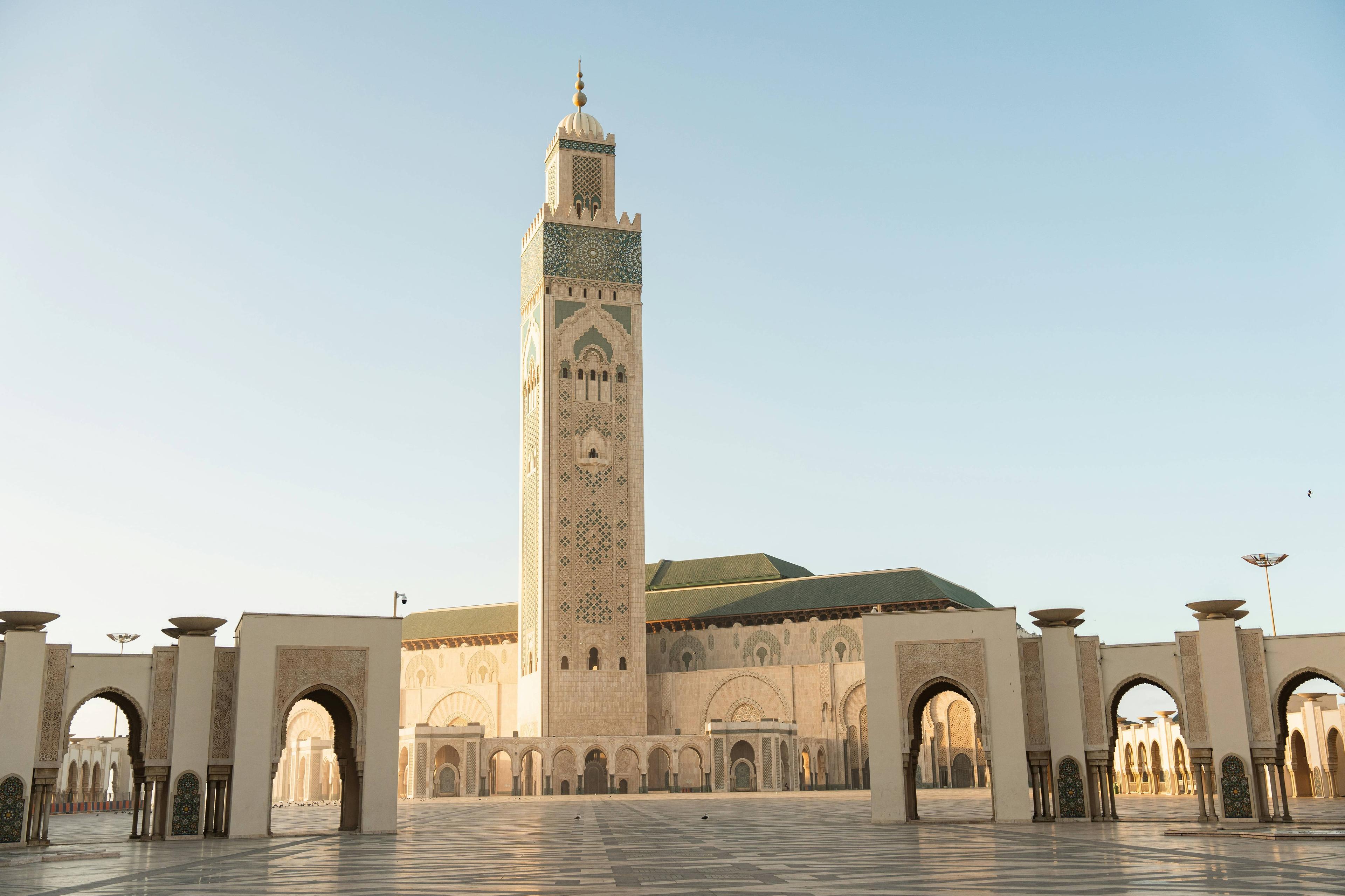
Turkey has the clearest residential rationale in this shortlist for a family seeking a Muslim-majority setting. Its constitution defines a secular state, and the State Department’s report documents both the religious landscape and concerns affecting particular communities.
Evaluate the city and congregation that fit your household. Turkish language, school choice, and your own religious tradition can matter as much as access to mosques. USCIRF’s Turkey materials are another source for the legal and religious-freedom assessment.
Turkey offers a route connected to an asset rather than a donation. Under official investment guidance, at least $400,000 in qualifying real estate can support an application, generally with a three-year holding restriction.
The property must meet the applicable rules. Citizenship eligibility is not proof that the purchase is a good investment. Review title, valuation, location, construction, transaction costs, management, and resale prospects independently.
The route does not require the ordinary multiyear residence qualification. Residence permit and application formalities still need to be completed. Confirm what requires attendance and which documents each family member must provide.
If you might live in the property, evaluate the neighborhood during an ordinary week. Visit schools, consider transport and healthcare, and speak with people who share your practical needs. A property brochure cannot answer those questions.
Keep currency and liquidity risks in the calculation. Selling after the minimum holding period is not the same as recovering the original investment immediately or in full. Your family should retain enough accessible capital for living costs and unexpected changes.
2. Egypt
Egypt may appeal to Muslim families seeking an Arabic-speaking home and established Islamic institutions. Its majority religious culture should still be assessed against your particular needs.
USCIRF’s 2026 reporting describes restrictions affecting minority beliefs and practices. Families from minority Muslim traditions and interfaith households should review those issues directly before treating Egypt as a suitable residential destination.
Egypt offers several financial routes, allowing an applicant to compare a donation with other qualifying assets. The official government program lists a $250,000 nonrefundable donation, alongside property, business, and deposit alternatives.
The published investment schedule describes property of at least $300,000, a business route involving $350,000 plus a $100,000 donation, and a $500,000 deposit for three years. Each option has specific conditions; these are not interchangeable cash prices for the same transaction.
The deposit is repayable in Egyptian pounds under the published rules. Do not treat it as a risk-free dollar account. Property and business routes also require a careful review of holding conditions and the consequences of an early disposal.
For a family application, ask precisely who can qualify, when citizenship is acquired by each person, and what documents are needed. Do not assume every spouse or adult child receives citizenship on the principal applicant’s timetable.
Consider Egypt as a country as well as a program. Language, family law, school choices, business arrangements, and intended residence should be reviewed before selecting a financial route.
3. São Tomé and Príncipe
São Tomé is included for the citizenship program, not because it is Muslim-majority. Its religious-freedom report describes a predominantly Christian population, a small Muslim community, and legal protections for worship.
For someone remaining in an established community abroad, that may be compatible with the objective. For someone moving to the island, confirm mosque access, halal supplies, and religious education rather than assuming a large Muslim infrastructure exists.
São Tomé and Príncipe offers a comparatively accessible donation route. Its National Transformation Fund schedule lists $90,000 for one applicant and $95,000 for a family of two to four, before submission, document, and other applicable costs.
The published terms state that physical residence is not required during or after the process. That can suit a household that wants another citizenship while keeping its existing home and community.
Confirm eligibility for every dependent. A family-price category does not mean any four relatives can apply together. Adult children, parents, partners, and other relationships require specific confirmation under the rules applied to your submission.
Ask for a realistic time-to-passport. Approval, completion of the donation, citizenship documentation, and passport issuance are distinct stages. The shortest advertised decision time should not become the date around which you arrange a move.
If you want to relocate, investigate the island’s practical services directly. A small country may fit your lifestyle well, but you should know how schooling, specialist healthcare, transport, and religious community life would work. A low donation threshold does not answer those questions.
4. Argentina
Argentina has documented Muslim organizations and places of worship, discussed in the country’s religious-freedom report. That gives a relocating family institutions to investigate.
It remains a minority-community choice. Ask about the particular mosque, school, language, and food arrangements that would support your everyday life. A community’s existence is a starting point, not evidence that every neighborhood offers the services you need.
Argentina deserves attention if you want a citizenship connected to a country where you might actually build a life. The relevant questions include language, schools, work, healthcare, and the community you would join.
The government’s October 2026 announcement describes a $350,000 nonrefundable donation or an $800,000 special public bond. It targets applications during the fourth quarter of 2026. The announcement alone does not establish that an operational submission channel is open.
The announced additions include $100,000 for a spouse, $25,000 for a minor child, and $100,000 for a qualifying unmarried child aged 18–25 without children. A couple with two minor children would therefore have a $500,000 donation before other charges.
Confirm the final documentation, government costs, travel requirements, and authorized submission arrangements. For the bond, obtain the actual instrument terms, including holding conditions, repayment provisions, and risks. An announced investment route is not a guaranteed completion date.
Argentina’s nationality and tax consequences also need separate review. A route without an ordinary residence-duration qualification should not be interpreted as an assurance that naturalization has no tax implications.
5. Antigua and Barbuda
Antigua and Barbuda belongs in the comparison if you want another citizenship while maintaining your present home. If relocation is part of the plan, verify Muslim community services directly.
The required visit is a useful opportunity to test practical needs. Arrange meetings before traveling and assess ordinary food shopping, school options, and worship arrangements alongside the immigration formalities.
Antigua and Barbuda is worth assessing through a household quote. The National Development Fund route has a $230,000 minimum donation, with additional charges depending on the application.
The official passport guidance generally requires five days in the country within the first five years for renewal consideration. Confirm how the obligation and any exemptions apply to each family member.
Five days is a modest presence requirement, but the full commitment includes flights, transit permissions, accommodation, and time away from work or school. Include that in your calendar and budget before choosing the program.
A visit can also help you understand the country behind the passport. If you might eventually move, use the time to investigate neighborhoods, healthcare, education, and the community you would join.
Family eligibility deserves close attention. An adult child or elderly parent may change both the cost and the documents required. Compare your actual household across programs rather than comparing one country’s single-applicant figure with another country’s family package.
Citizenship gives you a legal connection to Antigua and Barbuda. It does not automatically settle the immigration requirements of another country where you prefer to live.
6. Grenada
Grenada should be assessed for the rights and flexibility it adds to your passport portfolio. Do not infer the size of a Muslim community from the wider Caribbean region.
If a mosque or faith-based school is essential to a move, confirm what is currently operating in the exact area you are considering. A suitable program and a suitable home need separate evidence.
Grenada’s National Transformation Fund route has a $235,000 minimum donation before additional costs. It belongs on a family shortlist where its benefits match the household’s needs.
Residence policy is developing. An August 2026 circular deferred implementation of regional residence requirements pending the specified regulatory and regional arrangements. Obtain current guidance before submission.
Do not select Grenada only because an old brochure described an entirely remote process. Understand the requirements that will apply to your own application and any continuing obligations afterward.
If the United States is part of your objective, obtain a separate assessment of E-2 eligibility. Treaty nationality is only one requirement; the rules for investment-acquired nationality can include a prior continuous domicile condition. A passport alone does not establish a complete US immigration strategy.
For a possible move to Grenada, compare housing, education, healthcare, and the everyday community your family would rely on. Current visitor facilities may help with a visit but should not be assumed sufficient for a permanent home.
7. Nauru
Nauru is an option for Muslim applicants who are primarily seeking another nationality. It should not be presented as a Muslim-majority place to settle.
If you intend to remain in another country, check that your lawful residence there can continue after naturalization. If you might live in Nauru, establish whether its religious and everyday services fit your household before applying.
Nauru is worth comparing when the goal is an additional citizenship without establishing a qualifying residence. Its official FAQ states that there is no residence requirement and explains the applicable procedural formalities.
The published contribution schedule offers a temporary $90,000 principal-applicant donation for qualifying applications filed before December 31, 2026. Application, due diligence, bank, passport, and dependent charges are additional. Confirm the deadline conditions rather than assuming that starting an application secures the promotional amount.
Nauru’s suitability depends on the job the passport would do. Compare your actual destinations and future needs. Avoid assuming that another nationality automatically supplies residence or work rights in a third country.
For families, verify dependent eligibility and the treatment of a sponsor if someone else is funding the application. A legitimate financial arrangement should be disclosed and documented from the beginning.
If living in Nauru is part of the plan, conduct a separate assessment of housing, transport, healthcare, and community services. Citizenship without relocation and a workable long-term island home are different propositions.
Citizenship, residence, and community: make all three work
A second passport is most useful when it solves a defined problem. You might want a permanent place to live, fewer visa applications for business, or more options for your children. Choose the program against that objective.
If you are happy in your current community, a low-residence passport program may let you add a nationality without reorganizing daily life. Your existing residence permission still needs to remain valid, and a change of nationality may require updates to local records.
If you intend to move to the country granting citizenship, assess it as a home. Legal permission to settle matters, but so do schools, healthcare, language, and the people you will see each week. Neither decision should be left to a passport ranking.
A new passport does not generally confer residence rights in an unrelated third country. If that is where you want to live, identify the separate visa or residence route and test whether your new nationality materially helps.
Look beyond the first passport
Ask how you will renew the document, register a child born later, obtain replacement civil records, and maintain any continuing obligations. Citizenship transmission depends on the country’s law and your family’s circumstances. Do not assume unlimited transmission without registration or other conditions.
For parents and adult children, compare dependent definitions before selecting a program. Age, financial dependency, marital status, and the relationship to the principal applicant can change eligibility. A family that looks straightforward at home may not fit a program’s definition of one application.
Can you keep your current citizenship?
That question follows your nationality, not your religion. The destination may permit multiple citizenships while your current country restricts them.
Before naturalizing, obtain advice on whether you retain your present nationality, what reporting is required, and how the change affects rights at home. Property, business interests, voting, public employment, and the right to return may need separate attention.
Do not assume that an unexpired passport proves continued entitlement after nationality has been lost. Equally, do not renounce an existing citizenship prematurely because an application for another one has been submitted. The sequence needs legal review.
Tax residence is also separate. A passport does not automatically end existing tax obligations or establish a new tax residence. Your actual residence, income, work, and business arrangements require their own analysis.
Compare the full household cost
The donation or qualifying investment is the entry point to a financial comparison, not the final invoice. Ask for one household quote that identifies government charges, due diligence, passports, documentation, travel, and licensed agent fees.
Translations, certification, and civil records can be significant when a family has lived in several countries. Ask which expenses are included, when payments are due, and what is nonrefundable if the application does not proceed.
A donation is money you should expect not to recover. Property, bonds, and deposits require a different assessment: holding conditions, currency exposure, liquidity, and repayment or resale risk. An asset linked to citizenship is still an asset whose quality must be evaluated.
Preserve enough accessible funds for the life you intend to build after approval. A citizenship budget should leave room for housing, school fees, healthcare, travel to relatives, and unexpected changes in plans.
Make the financial history easy to understand
Governments and receiving banks can ask how you built your wealth and where the application funds came from. Those are related but distinct questions.
Business ownership records may explain your wealth, while a dividend resolution and bank statements explain the payment. A property sale or inheritance needs its own chain of evidence. If a relative is funding the application, disclose the arrangement and confirm the sponsor rules before transferring money.
Digital-asset payment, where accepted, does not remove these requirements. Use the authorized payment process and keep records that connect the assets to their lawful origin.
Plan around time-to-passport
Ask for an estimate covering preparation, submission, government review, any interview, completion of the investment or donation, citizenship formalities, and passport issuance.
An approval estimate is not necessarily a passport delivery estimate. Additional questions, document expiry, banking checks, and appointment availability can change the schedule.
An announced program needs particular care. Confirm that submissions are actually being accepted and that the procedure is established before relying on a completion date.
If a family needs immediate relocation or protection, address that separately through available lawful options. A pending citizenship application does not create a travel document, an evacuation entitlement, or permission to enter another country.
How to apply with a clear plan
Define the passport’s job. Identify the travel, residence, and family rights you need.
Review existing entitlements. Ancestry or family connections may provide another citizenship route worth examining.
Check nationality consequences. Resolve the effect of foreign naturalization on your current citizenship and rights at home.
Confirm program eligibility. Assess every intended family member, current nationality restrictions, residence history, and funding arrangements.
Obtain a complete quote and timeline. Understand the full cost, payment sequence, and realistic time-to-passport.
Verify community needs where you may live. Speak directly with relevant institutions and families.
Prepare and submit accurate records. Complete the required checks, interviews, and other formalities.
Plan for the years after approval. Track renewals, dependent additions, reporting, and any continuing obligations.
The strongest application is one whose legal and financial history can be explained consistently. The strongest citizenship plan is one that still works after the passport arrives.
Frequently asked questions
What is the best second passport for Muslims?
Turkey is a strong starting point for a family considering residence in a Muslim-majority country and qualifying property. Egypt offers a donation alternative. São Tomé and other low-residence programs can fit applicants who mainly want another citizenship. The best choice follows your household’s objectives.
Can Muslims apply to Christian-majority countries?
Religion and nationality are different questions. Assess the program’s actual legal requirements, including any nationality restrictions. A Christian-majority population does not by itself establish a religious condition for investment citizenship.
Is São Tomé a Muslim country?
It is predominantly Christian, with a small Muslim community. Its relevance here is the citizenship program and its legal religious-freedom framework, not a claim that Muslim services are widely available everywhere.
Are the investment routes automatically Sharia-compliant?
No such assumption should be made. Ask a qualified adviser to review the specific donation, purchase, financing, bond, or deposit terms against the standards you follow.
Do I have to move to acquire citizenship?
Requirements vary. São Tomé and Nauru publish no physical residence qualification, while other programs involve visits or developing presence rules. Confirm both initial formalities and ongoing obligations.
Can my non-Muslim spouse apply with me?
The answer depends on the program’s family rules, recognized relationship, documents, and individual eligibility. Also assess family law in any country where you intend to live. Do not assume that an application’s family definition resolves every residence or personal-status issue.
Will a second passport eliminate travel discrimination?
It may change the entry rules applicable to your nationality, but cannot guarantee how you will be treated or remove lawful disclosure requirements. Prior nationality, birthplace, and travel history may still be relevant to an application.
Build a passport portfolio around your family’s needs
The best second passport for Muslims is the one that does a useful job without creating problems you have not considered. Turkey and Egypt offer a possible connection between citizenship and a Muslim-majority home. São Tomé, Argentina, and the other programs serve different combinations of cost, community, and flexibility.
Talk to CitizenX to compare suitable options and request an all-in household quote showing government costs and all-inclusive licensed agent fees, with no additional CitizenX charges during the application. Argentina estimates remain indicative until operational requirements and costs are confirmed.
Choose the rights you need. Then build a life that makes those rights useful.
General information only; not individualized legal, immigration, financial, investment, tax, or security advice. Program terms, travel access, and religious conditions can change. CitizenX is not a law firm. Obtain qualified advice before naturalizing or committing funds.
Nauru
$90,000 temporary principal-applicant donation
No residence requirement; interview and oath formalities apply