Best Second Passports for Taiwanese Citizens in 2026
Best Second Passports for Taiwanese Citizens in 2026
Taiwanese families have quietly become some of the most methodical contingency planners on earth. The best second passport options for Taiwanese citizens in 2026.
Taiwan has a strong passport, a world-class economy, and a neighbor that publicly rehearses invading it. Taiwanese families have quietly become some of the most methodical contingency planners on earth. The best second passport options for Taiwanese citizens in 2026.
There's a conversation happening at dinner tables in Taipei that doesn't happen anywhere else in the developed world. It's not about whether the family should have a plan for the worst case. That part is settled, and has been for a while. It's about how complete the plan is: which assets sit outside the island, where the kids' schools would be, which family member holds which document.
Foreigners sometimes read this as fatalism. It's the opposite. Taiwanese business culture has always planned for scenarios others prefer not to name, and then gone right on building. The island runs the world's most important semiconductor industry from inside the world's most analyzed flashpoint. Compartmentalizing risk is a national skill.
I've been saying this for years. Cash is king. But passport is queen. Taiwanese families did the cash part long ago: the US accounts, the Singapore holdings, the properties in Vancouver and Tokyo. The passport layer is the piece this article is about.
Why Taiwanese citizens need a Plan B passport
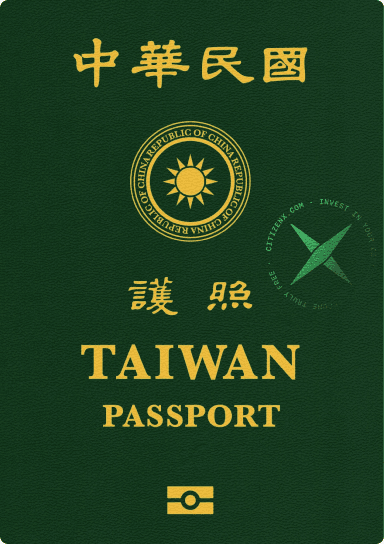
Not for travel. The Taiwanese passport is excellent, roughly 140 destinations without a visa, including the Schengen area, the UK, Japan, and the US under the visa waiver program. Day to day, it's a top-tier document.
The reasons are structural, and you know them better than I do.
The obvious one. Beijing claims the island, drills blockade scenarios around it, and has told its military to be ready within this decade. Serious people disagree about probabilities. Nobody serious puts them at zero. And a blockade scenario, even a short or partial one, is precisely the situation where the value of a legal identity outside the island goes from theoretical to absolute: flights rerouted, insurance repriced, banking chokepoints, and every foreign government triaging whom to help by the documents they carry.
The diplomatic oddity. Taiwan's passport works well in practice, but it's issued by a state most of the world doesn't formally recognize, and its holders' treatment abroad depends on arrangements that can shift with politics. A second citizenship from a universally recognized state removes a fragility most nationalities never have to think about.
The service obligation. Taiwan restored one-year conscription starting in 2024 for young men, and males who haven't completed service face passport and travel restrictions. Families with teenage sons are already planning around this, and it's one more reason the family's documentation strategy deserves adult attention.
Here's the good news that makes Taiwan different from its neighbors: Taiwanese law permits dual nationality for its own citizens. A Taiwanese national can acquire a foreign citizenship and keep the ROC passport, no permission needed, with the main restrictions falling on holders of public office. Compare that with Korea, Japan, or China, and Taiwan is the friendliest legal environment for this strategy in East Asia. The door is simply open.
How citizenship by investment works
The mechanics are simple. You make a qualifying contribution to a country, usually a government fund donation or a real estate purchase, and receive citizenship and a passport in return. The programs are run by sovereign governments, vetted by international compliance firms, and recognized worldwide. Due diligence, background checks, an interview at the Caribbean programs, and three to eight months later you're a citizen.
Taiwanese applicants are accepted at every major program, and Taiwanese files, backed by the island's meticulous corporate and banking records, clear due diligence smoothly. Investment amounts in 2026 run from about 90,000 USD to 250,000 USD and up, plus fees.
Since your travel is already covered, you're buying insurance features: recognition, neutrality, permanence, and a place your family's legal existence continues no matter what happens in the strait.
St Kitts and Nevis: the benchmark
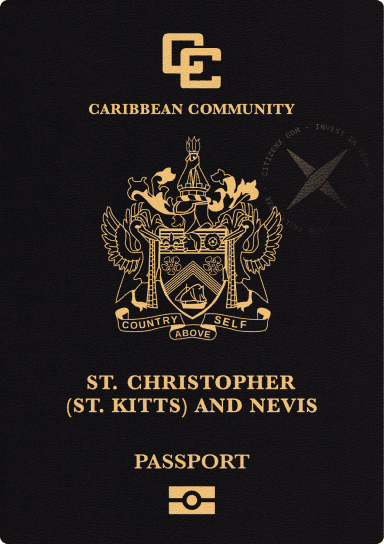
St Kitts and Nevis has run the world's original CBI program since 1984. The Sustainable Island State Contribution starts at 250,000 USD for a single applicant, real estate from 325,000 USD.
For a Taiwanese buyer the appeal isn't the travel list, though at roughly 150 to 160 destinations it's strong. It's what the document is: citizenship in a stable, universally recognized Commonwealth state, half a world away from the Pacific, with four decades of program history and banking infrastructure built for international clients. If the purpose of the exercise is a legal identity that continues regardless of cross-strait events, this is the blue-chip version.
Other Caribbean options worth considering
Dominica starts at 200,000 USD, with about 140 visa-free destinations and one of the region's best-run programs. The value version of the same insurance logic.
Grenada starts at 235,000 USD. Its US E-2 treaty route is the headline for many nationalities, and here Taiwan is lucky twice over: Taiwan already holds E-2 access, so you don't need Grenada for that. What Grenada does add is visa-free China. I'll let each reader decide, given their own family history and business needs, whether that's a feature. For some Taiwanese trading families it genuinely is.
Antigua and Barbuda starts at 230,000 USD and wins on per-person cost for larger families, with about 150 destinations and a five-day visit requirement within five years.
Sao Tome and Principe, launched August 2025, starts around 90,000 USD, the lowest entry price in the industry. Around 70 destinations. As a pure second-identity layer at minimum cost, it works; just weigh the youth of the program against its price.
Vanuatu, from about 130,000 to 135,000 USD all-in, delivers citizenship in one to two months, the fastest available. It lost EU and UK visa-free access, which matters little to a Taiwanese holder whose own passport covers both. Speed is the product. For a family that wants the second citizenship settled this quarter rather than this year, it's the answer.
El Salvador: the million-dollar outlier
Since late 2023, El Salvador has offered citizenship for a 1 million USD contribution paid in Bitcoin or USDT, processed in six to eight weeks, capped at 1,000 applicants a year. The passport reaches about 135 destinations including Schengen and the UK.
For most Taiwanese buyers the Caribbean does more for a quarter of the price. The El Salvador case is the crypto-wealthy applicant who wants maximum speed and prefers paying from digital holdings. Taiwan's tech economy produces such people; if you're one of them, it's a legitimate route. Otherwise, file it under interesting.
The strategic framework: how to think about this
For Taiwanese clients I frame the decision around one question: what does the plan need the document to do?
If the answer is "exist, so the family's contingency plan is complete," speed and cost dominate: Vanuatu for the former, Sao Tome for the latter. The document goes in the safe, the plan gets its missing piece, and life in Taipei continues exactly as before.
If the answer is "anchor a genuine second base," the Caribbean majors make more sense: St Kitts or Dominica as the citizenship layer, paired with residency wherever the family actually spends time, Japan, Singapore, the US, Portugal. Citizenship plus a working base is the complete product; either alone is half of one.
If the household includes sons approaching conscription age, get Taiwanese legal advice on how service obligations interact with any change in the boys' status, and plan timing accordingly. This is well-mapped territory for Taiwanese counsel; use it.
And a point about discretion. Taiwanese law doesn't require you to trumpet a second citizenship, and this market has always preferred quiet arrangements. A CBI passport is a private document. Most of my Taiwanese clients tell almost no one, which is precisely how insurance should live: paid for, filed away, never discussed at those dinner tables until it's needed.
What the process actually looks like
Choose the program, then build the file: clean criminal record, documented source of funds. Taiwanese applicants rarely struggle here; the island's records culture is a compliance officer's dream. Applications run through an authorized agent, with due diligence, an interview at the Caribbean programs, and processing from about six weeks at Vanuatu to six months or more elsewhere.
Beyond the investment, budget due diligence fees (5,000 to 10,000 USD per applicant), agent fees, government processing, and legal costs. For a family, add 20,000 to 50,000 USD to the headline figure.
What I'd do if I were a wealthy Taiwanese national
Specifics, because vague advice is useless.
If I were Taiwanese with a net worth above 100 million NTD, here's my next 90 days.
Complete the family's citizenship layer now, St Kitts or Dominica for a family that wants the established name, Vanuatu if I want it done by autumn. The law permits it, my Taiwanese passport is untouched, and the plan stops having a hole in it.
Pair it with a residency the family would actually use, and make sure some assets already live under that roof.
Handle the sons' timing with counsel before their conscription window, not during it.
Then go back to work and stop thinking about it. That's the entire point of insurance: buy it well once, so it never occupies your mind again.
The bottom line
Taiwan's genius has always been building world-class things inside a risk everyone else finds unthinkable. The families who do it best don't ignore the risk or obsess over it. They structure around it and move on.
Cash is king. But passport is queen. Your cash is already diversified across three continents. The queen costs 200,000 dollars, takes half a year, and is fully legal to hold beside the green passport.
Finish the plan. Quietly, properly, this year.
This article is for informational purposes only and does not constitute legal, tax, or immigration advice. Taiwanese males with unfulfilled military service obligations face specific passport and travel restrictions; consult qualified Taiwanese counsel on timing and family circumstances.
CitizenX helps high-net-worth individuals secure second citizenships and build sovereign lifestyles. Contact us to discuss your Plan B.