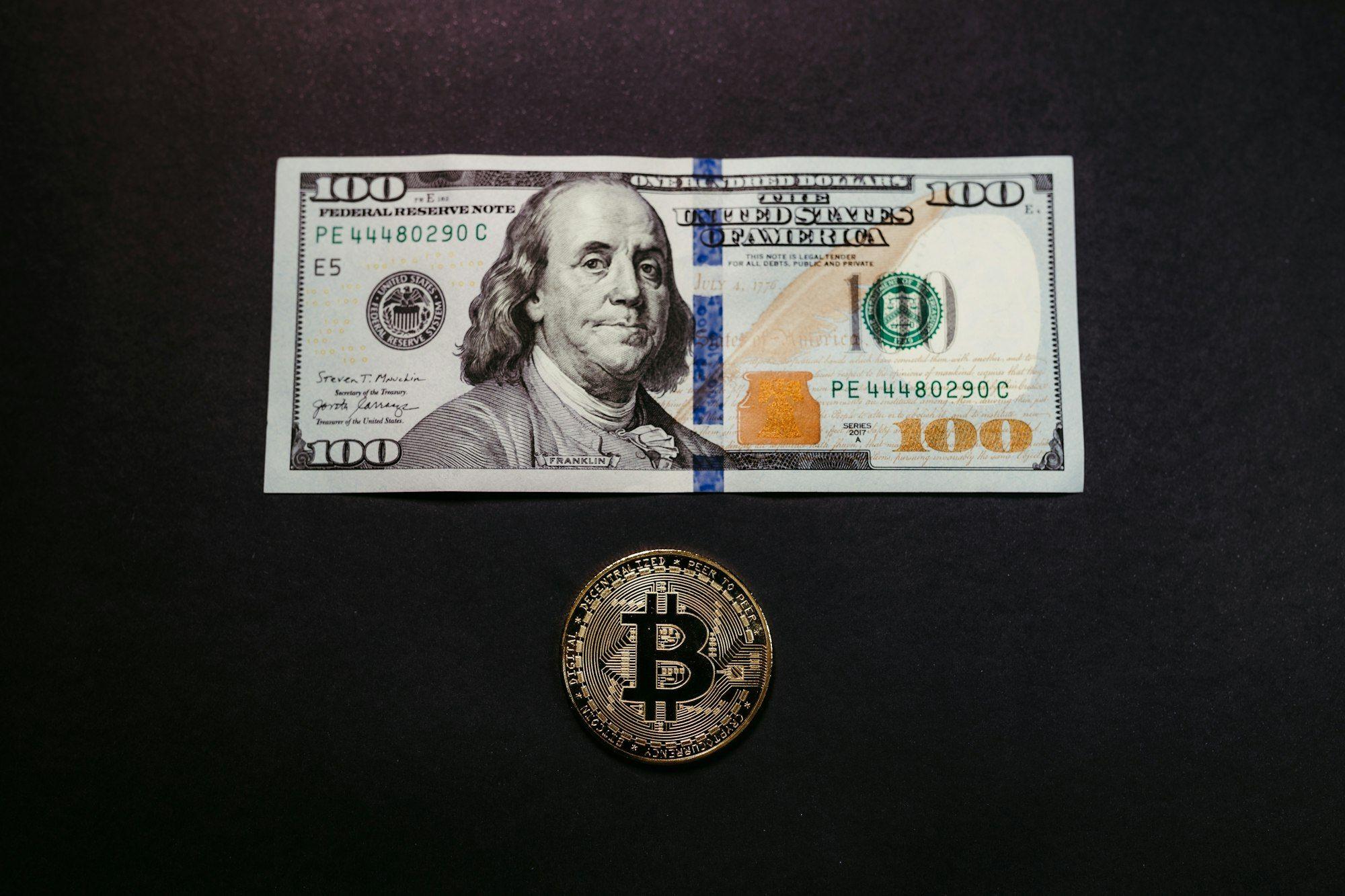
Crypto Citizenship: How to Buy a Second Passport With Bitcoin

You may be able to fund a second citizenship with Bitcoin or other cryptocurrency, but the program must accept your financial profile and the payment must follow an approved route. Crypto citizenship does not create a separate citizenship category or remove identity checks.
AR
Co-founder & CEO
Reading time: 17 minNov 22, 2026 • 8:15 PM
Yes, you may be able to fund a second citizenship with Bitcoin or other cryptocurrency, but the program must accept your financial profile and the payment must follow an approved route. Crypto citizenship usually means using crypto-derived wealth to meet an ordinary citizenship program's financial requirements. It does not create a separate citizenship category or remove identity checks. Before moving assets, confirm whether you can pay in crypto, whether conversion is required, and what evidence will establish ownership and the lawful origin of your funds.
If you have held Bitcoin for years, the problem may be practical. You can afford another citizenship. Most of your liquid wealth sits in digital assets. The quote arrives in dollars, and you want to know how to turn that financial position into a complete application.
That deserves a useful answer. Which records do you need? Who can receive the payment? When should you arrange liquidity? What happens if the asset price changes between the quote and the transfer?
I would resolve those questions before choosing a program on the strength of a “crypto accepted” label. The objective is a citizenship your family can use, supported by a funding process you understand.
What crypto citizenship can mean in practice
There are several ways cryptocurrency can enter the process. Establish which arrangement your adviser is discussing.
| Arrangement | What happens | What needs confirmation |
|---|---|---|
| You sell crypto and pay in conventional currency | A permitted sale produces the money used for the application | Source evidence, conversion records, bank acceptance and the approved payer |
| You pay an adviser or processor in crypto | An intermediary receives an approved asset and settles the relevant obligation | Recipient, asset, network, conversion terms and proof of settlement |
| The program specifies a digital-asset payment route | The published process permits designated assets through a particular mechanism | Current instructions, eligible applicant, required amount and payment stage |
A service provider can accept Bitcoin while the government receives dollars. That arrangement can be workable, but it needs to be explained accurately.
Similarly, acceptance of crypto as evidence of wealth does not automatically establish permission to transfer it directly to a government wallet. Financial review and payment execution are separate steps.
Ask the adviser to describe the complete route in one sentence: which assets you will use, who receives them, whether conversion occurs, and how the application payment is recorded. If the explanation stops at “we take crypto,” there are still practical questions to answer.
Find your second passport
Create an account to compare programs and see your all-in cost, including government fees and due diligence.
Create accountWhich citizenship programs accept cryptocurrency?
Look for an answer tied to the current program rules and your circumstances. Published examples show why a universal list can be misleading.
El Salvador publishes a Bitcoin and USDt route
El Salvador's National Bitcoin Office describes the Freedom Visa pathway as involving a contribution of US$1 million or more in bitcoin or USDt to a government development fund. This is an example of an official program description that expressly names digital assets.
It does not mean every cryptocurrency, stablecoin or network is supported. Obtain the current application instructions, payment stage, recipient and settlement requirements before acting. Payment and naturalization also remain distinct milestones. A successful transfer is not proof that citizenship has been granted.
St. Kitts distinguishes crypto wealth from other wealth
The St. Kitts and Nevis citizenship unit's application guidance accepts cryptocurrency as a partial source of wealth, requires separate evidence of wealth not derived from crypto, and provides for additional due diligence fees.
That distinction can determine whether the program fits your financial profile. Selling Bitcoin for dollars does not change the fact that the proceeds came from crypto. Read the separate wealth requirement as written and have your circumstances assessed against it.
Program availability needs its own check too. Review the unit's current program-transition statement and any later official instructions before building an application timetable around the route.
For other programs, get a specific assessment
A dollar-denominated fee schedule does not prove that crypto wealth is unacceptable. It also does not prove that a crypto payment is allowed.
Ask the authorized agent to distinguish the program's source-of-wealth policy from the payment services available for your case. A useful response identifies any conditions, additional evidence, extra review costs and remaining uncertainty.
Choose the citizenship for its suitability to your family, then establish a compliant way to fund it. Payment convenience is one part of that decision.
Source of wealth and source of funds answer different questions
Your source of wealth explains how you built your financial position. Your source of funds explains the particular assets being used for this application.
For example, you might have bought Bitcoin using employment income, held it for several years, and now intend to sell part of the holding to fund a contribution. The explanation should connect the original income, the purchase, the holding history, the sale and the final payment.
An active trader has a different documentary history. Someone paid in digital assets for professional work has another. “I own Bitcoin” is a description of an asset, not the complete explanation of how it became yours.
Dominica's official due diligence overview includes review of financial background, wealth and funds. Its document checklist also illustrates the broader financial records a citizenship file can require. Your actual checklist must come from the program handling your application.
Start with a short chronology in ordinary language. Identify the original source, major transactions, current location of the assets and intended payment route. That gives the reviewer a map before they examine supporting statements and transaction records.
Build a crypto source-of-funds file someone else can understand
A displayed wallet balance is a starting point. The reviewer still needs to establish ownership, control, lawful origin and the funds available for the application.
The best preparation is an organized explanation supported by original records. Avoid beginning with hundreds of screenshots and expecting someone else to reconstruct the story.
| Part of your history | Evidence to discuss with the reviewer |
|---|---|
| Original purchase | Records showing the money used and the purchase itself |
| Exchange activity | Account ownership, statements, deposits, trades and withdrawals |
| Transfers between your wallets | Address history and records connecting the movements |
| Income received in crypto | Contracts, invoices, payment records and relevant tax reporting |
| Mining or staking rewards | Activity records and an explanation of how the rewards arose |
| Gifts or inheritance | Evidence of the transfer, its legal basis and any required donor or estate information |
| Sale for the application | Conversion details, settlement records and receipt into the paying account |
| Final payment | Approved instructions, transaction confirmation and the recipient's receipt |
This is a preparation framework. It is not a claim that every program requires or accepts every item.
For important transactions, make the amounts reconcile. If an exchange withdrawal is smaller than the sale proceeds because of fees, show the relationship. If you moved assets between accounts you control, label the movement so it is not mistaken for unexplained income.
Use a summary spreadsheet to organize the evidence, while retaining the underlying records. Include the period covered by each statement and explain any gaps. The reviewer should be able to follow the important steps without guessing what a file name means.
Self-custody: prove the history without giving away control
Holding your own keys changes how you document the assets. It does not make the history impossible to explain.
Begin with the records linking you to the acquisition and subsequent transfers. Ask the reviewer which method they accept for demonstrating your connection to the relevant addresses. A public transaction record can help establish movement, while other evidence may be needed to connect the addresses and transactions to you.
Agree the verification method before attempting it. You should never provide a seed phrase or private key as evidence of financial capacity. Review any request involving a wallet signature carefully so you understand exactly what it authorizes.
Keep the ownership question separate from availability. Assets can appear in an account while being committed to another arrangement or subject to withdrawal conditions. Explain the actual amount available for the application and the steps needed to make it usable.
A precise account of the assets is more valuable than a large number on a dashboard.
What if you bought years ago and some records are missing?
This is a question to raise early. An exchange account may have closed, a bank statement may be archived, or an early purchase may have occurred through a service that no longer operates.
List what you have, what can be requested and what cannot currently be recovered. Ask the relevant exchange, bank or record custodian about historical exports before assuming the information is lost.
Then agree with the reviewer which gaps matter to the proposed application and what alternative evidence could be considered. A written explanation can help, but it does not compel an authority or payment provider to accept an incomplete history.
Do not manufacture a cleaner-looking record by moving the assets through extra accounts. That creates more transactions to explain. Keep the real history intact and focus on evidence that supports it.
The same approach applies to complex activity involving multiple exchanges, swaps or protocols. Describe what happened, identify the important periods, and ask whether specialist accounting or tracing work is necessary. Get the scope and price of that work before commissioning it.
An unresolved documentary issue can change the program choice or timetable. It is better to know that while you still have flexibility.
Selling crypto before payment or using an approved crypto payment route
The useful comparison is the full transaction, including the evidence and costs on both sides.
If you sell first, establish which service can handle the sale and whether the receiving bank will accept the proceeds under its procedures. Keep the records connecting the digital assets to the money that arrives in the account.
If an intermediary receives crypto, clarify whether it converts the assets, how the exchange rate is set, and when the underlying citizenship obligation is considered paid. The payment recipient and the citizenship authority may be different parties.
The FATF's virtual-asset standards include customer due diligence and record keeping for relevant service providers. In practice, more than one institution may need to review a transaction under its own rules. Agreement from your citizenship adviser does not necessarily complete the bank's or processor's review.
Ask who coordinates those questions. A manageable funding route is one where the people involved understand the proposed transfer before it becomes urgent.
What payment instructions should contain
Before sending assets, obtain instructions for the specific invoice and stage of your application.
They should identify the legal recipient, purpose of the payment, accepted asset, network, required amount, applicable fees, quote expiry and evidence of settlement. Ask how underpayments or excess amounts are handled.
A token name alone is incomplete. The network and destination must be correct for the recipient's process. Confirm any change to instructions through an established channel.
CitizenX's published payment terms provide for cryptocurrency funding subject to supported assets and networks. Your actual invoice and instructions should establish the permitted route, charges and settlement requirements for your payment. A general acceptance policy should not be used to improvise a transfer.
After sending, retain the transaction record and obtain acknowledgment that the intended invoice has been settled. If a processor converts the assets, keep the conversion or settlement statement where provided.
The transaction is part of your application file. You should be able to connect the amount sent, the amount received and the obligation it satisfied.
Plan liquidity around the payment deadline
The value of your holdings today and the amount available when a contribution becomes due are different planning figures.
Begin with the written payment schedule. Identify what is due during preparation, at submission and after the relevant approval milestone. Our guide to citizenship by investment fees and payment stages explains how to organize those amounts.
Then consider the time required to make the assets usable. Account review, withdrawal arrangements, conversion and bank settlement can be separate steps. Ask the parties involved which dependencies apply to your route.
If the obligation is denominated in dollars, establish how the crypto amount will be calculated and how long a quoted rate remains valid. Decide with appropriate financial advice how you will meet that obligation if prices change before payment is due.
A stablecoin can simplify one part of the calculation, but it does not answer the questions about accepted networks, transfer charges, redemption or settlement terms. Confirm the amount that must reach the recipient, rather than assuming the token balance alone settles the invoice.
Keep enough flexibility to respond to the actual payment date. An optimistic citizenship processing estimate is not a reliable substitute for a funding plan.
Include tax consequences and conversion costs in the budget
A crypto payment can have consequences beyond the amount of the invoice. Understand those before choosing how to fund the application.
For US taxpayers, the IRS's digital-asset guidance explains the records needed for transactions and the treatment of dispositions. Its digital-asset FAQ specifically addresses gain or loss when digital assets are used to pay for services. Paying directly in crypto should not be assumed to avoid a taxable disposal.
Other jurisdictions apply their own rules. Have your tax adviser assess the transaction using your actual residence, asset history and legal position. Acquiring another citizenship does not itself rewrite the tax treatment of the payment used to obtain it.
Separate the citizenship charges, payment costs and any tax reserve in your budget. Ask about exchange spreads, processing charges, network fees and the possibility of additional due diligence costs.
The useful number is what you need available to complete the application while meeting the other obligations created by the transaction. A wallet's headline market value does not answer that by itself.
Refund terms deserve attention before the transfer
Ask what happens if a payment needs to be returned or the application stops.
Government charges, professional fees and contributions can have different refund rules. A payment processor can also have separate terms for conversion, errors or returns. Read the conditions for the particular payment instead of assuming every amount follows the same policy.
For a crypto-funded payment, clarify the currency of any permitted refund, the valuation date, applicable deductions and the approved return route. Do not assume that receiving crypto means a provider will return the same number of coins or support a withdrawal to any wallet.
Put the answer beside the payment schedule. That makes it easier to compare the real terms before you commit assets.
Protect privacy while providing the required evidence
Citizenship applications require identity and background information. Cryptocurrency does not create an anonymous application channel.
Ask what is needed for preliminary screening and what belongs in the fuller file after engagement. Establish who receives financial records, which external reviewers are involved and how documents should be submitted.
Provide the information needed to assess your case through the agreed secure process. Keep your own organized record of what was supplied so later questions can be answered consistently.
Sanctions rules also remain relevant. OFAC's guidance states that applicable obligations extend to digital currency as well as conventional currency. The assessment depends on the people, institutions and jurisdictions involved; a payment method does not determine nationality eligibility or remove a legal restriction.
The practical objective is controlled disclosure of accurate information to the parties responsible for the application and transaction.
An illustrative example: an early Bitcoin holder preparing an application
Consider an applicant who bought Bitcoin using earned income, later moved the holding into self-custody, and now wants to fund a family citizenship application. This is a hypothetical planning example, not a client result.
The first task is to identify a suitable citizenship route and confirm that its financial criteria can accommodate the applicant's profile. A program requiring separate non-crypto wealth may present a different question from a program prepared to assess the whole documented history.
Next comes the evidence: the original income, purchase records, withdrawal from the exchange, subsequent transfers and current ownership. The applicant identifies any missing records before choosing a final payment date.
Only then is the settlement route arranged. The adviser explains the payment stages, the processor confirms its requirements, and the applicant's tax adviser evaluates the proposed disposal. The resulting plan shows what will be paid, from where, when and with what supporting records.
That is what a useful assessment should produce. The wallet balance helps define the budget. The documented history and accepted payment route make the budget usable.
A practical sequence for your application
You can organize the work without deciding every technical detail on the first call.
- Describe the citizenship objective. Identify the family members, intended use, available budget and timing.
- Explain the crypto position. Outline how the assets were acquired, where they are held and which records exist.
- Check program fit. Resolve any crypto-wealth restrictions and identify the review required for your profile.
- Agree the evidence package. Establish what to collect, how to address gaps and which professional work is included.
- Assess tax and liquidity. Calculate what can be used after relevant costs and obligations.
- Confirm payment mechanics. Identify the approved recipient, asset, network, conversion terms and deadline.
- Complete the payment and retain evidence. Obtain the receipt linking settlement to the relevant obligation.
Ask for a clear owner for each task. The citizenship team, accountant, exchange and payment provider may each handle different parts. The plan should show how their work fits together.
If the assets belong to a company, the ownership and authorization questions need a separate assessment. Our guide to company funds for citizenship by investment covers that decision.
Frequently asked questions about crypto citizenship
Can I buy citizenship with Bitcoin?
Bitcoin may be usable to fund a qualifying citizenship application through an accepted payment route. You must still satisfy the program's eligibility, documentation and contribution or investment requirements. Confirm the financial review and payment mechanics before moving assets.
Does the government have to accept Bitcoin directly?
Not necessarily. A permitted intermediary may receive cryptocurrency and settle the relevant obligation in another currency. Establish who receives your payment, whether conversion takes place and how the government payment is documented.
Can all my wealth be in cryptocurrency?
That depends on the program. Some impose additional conditions concerning the origin or composition of wealth. St. Kitts, for example, requires separate non-crypto wealth evidence alongside its partial acceptance of crypto wealth. Assess that condition before selecting the route.
Does selling crypto for cash remove source-of-funds questions?
No. Conversion changes the form of the asset while leaving its history relevant. Keep the evidence connecting the acquisition, later activity, sale, receiving account and final application payment.
Can I use USDT, USDC or another stablecoin?
Only if the recipient approves that particular asset, network and payment arrangement. Acceptance of one stablecoin does not establish acceptance of another. Obtain instructions for your invoice and confirm what constitutes full settlement.
Is a wallet screenshot enough to prove my funds?
Treat it as preliminary information. The reviewer may also need evidence of ownership, acquisition, transfers and availability. Ask for the actual requirements and retain the original supporting records.
Can I borrow against Bitcoin instead of selling it?
That introduces a financing decision and a separate source-of-funds assessment. Confirm whether the program accepts the proposed borrowed funds, what evidence the lender and application reviewer require, and whether you can meet the loan's costs and repayment conditions. A citizenship application should not depend on an unexplained loan balance.
Does crypto make the application faster?
A supported payment method may suit your circumstances, but it does not remove document preparation, financial checks or the citizenship authority's review. Build the timetable around the complete process and the actual state of your records.
Will a crypto-funded application be anonymous?
No. The citizenship authority and relevant service providers still require the applicable identity and background information. Discuss privacy in terms of access, secure submission and retention of records, while providing the evidence required for a lawful application.
Turn your crypto position into a workable citizenship plan
If cryptocurrency is how you built your wealth, say so at the beginning. The useful next step is an assessment of your eligibility, financial history and payment options.
At CitizenX, you can start an eligibility assessment and explain the assets you intend to use. Ask for a clear answer on program suitability, the evidence required, the cost of additional review and the payment route available for your case.
You should finish that conversation knowing what needs to happen next, who will handle it and which questions remain to be resolved before a contribution is made.
Related articles