Best Second Passports for South Korean Citizens in 2026

Koreans hold a top-three passport, and on December 3, 2024 they watched martial law declared on live television. The case for a Plan B doesn't get clearer. The best second passport options for South Korean citizens in 2026, including the legal catch you must plan around.
SM
Head of Private Clients
Reading time: 11 minSep 29, 2026 • 2:44 PM
Koreans hold a top-three passport, and on December 3, 2024 they watched martial law declared on live television. The case for a Plan B doesn't get clearer. The best second passport options for South Korean citizens in 2026, including the legal catch you must plan around.
For years, when I told wealthy Koreans they should think about a second citizenship, I got the same polite skepticism I get from Germans and Singaporeans. Our passport is one of the best on earth. Our institutions work. What exactly are we insuring against?
Then, on a Tuesday night in December 2024, the president of South Korea declared emergency martial law, troops moved on the National Assembly, and for about six hours the world's tenth-largest economy did not know what it was waking up to. The decree collapsed, impeachment followed, and by mid-2025 there was a new president. The institutions held. That's the optimistic reading, and it's a fair one.
Here's the other reading. Every assumption underneath "what exactly are we insuring against?" got tested in a single evening, in one of the most developed democracies in Asia, with an armed and unpredictable neighbor a 40-minute drive from the capital. The system passed the test. You now know the test can arrive without warning.
I've been saying this for years. Cash is king. But passport is queen. And the best time to buy insurance is when everyone around you still thinks you don't need it.
Why Koreans need a Plan B passport
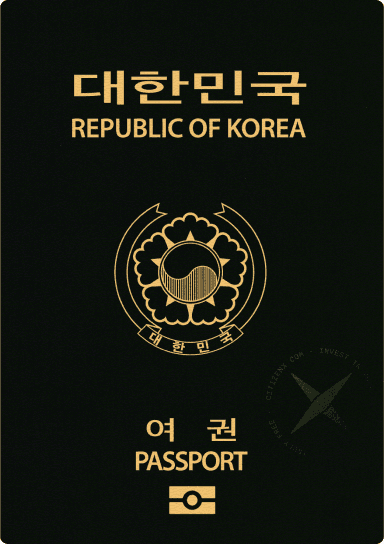
Not for travel. Let's be clear about that upfront. The Korean passport reaches around 188 destinations, perennially in the global top three. No CBI passport improves your travel life, and anyone who pitches you one on visa-free counts is reading from the wrong script.
What Koreans are actually exposed to is concentration, of a specifically Korean kind.
Geography. Seoul sits within conventional artillery range of North Korea. This is the world's most normalized existential risk; Koreans price it at approximately zero because living otherwise would be exhausting. But hedges are exactly for the risks you've stopped seeing. A family with a second citizenship and assets abroad holds an option that requires no prediction about Pyongyang, only the humility to admit nobody can predict it.
Politics. December 2024 needs no elaboration. Add the longer pattern, nearly every Korean president for decades has ended his term impeached, imprisoned, or worse, and you have a political system that works, but violently, with the state's investigative machinery swinging hard at whoever just lost power. Wealthy Koreans near politics, and in Korea's chaebol economy that's most serious wealth, understand this exposure personally.
The state's reach. Korea taxes worldwide income, runs one of the developed world's heavier inheritance-tax regimes, at rates that have forced the sale of entire companies, and maintains exit-tax rules for departing shareholders. None of this is illegitimate. All of it is one legislative session away from getting heavier, and the wealthy family that plans internationally has options the purely domestic one doesn't.
Sons. Every Korean man owes roughly 18 months of military service, and Korea enforces it with a seriousness that's earned global fame. Which brings us directly to the legal catch.
The catch: Korean law does not allow you to collect passports
I give every nationality the honest version, and Korea's is stricter than most.
South Korea's Nationality Act strips Korean citizenship automatically from an adult who voluntarily acquires a foreign nationality. Not as a penalty someone must remember to impose; by operation of law, from the moment you naturalize elsewhere. The limited dual-citizenship openings Korea introduced in 2010 cover other cases, marriage immigrants, returning elderly diaspora, certain talents, children of mixed marriages who file the right declarations at the right ages. A Korean adult buying a Caribbean passport is not among them.
And for men, there's a second wall: you cannot use foreign naturalization to shed service obligations on a schedule of your choosing, and Korea has shown, in the famous case of the singer it barred from the country for two decades over exactly this, how it treats what it sees as service evasion via citizenship.
So what does this mean for a wealthy Korean reading an article about second passports?
It means the product you're evaluating is different from the one a Turk or Brazilian evaluates. Your realistic menu: hold a second citizenship and accept losing the Korean one, a real choice some emigrating Koreans make deliberately, with the F-4 overseas-Korean visa easing the practical sting for those of Korean ethnicity; structure for the next generation, since children born abroad or into the right circumstances can hold statuses adults can't simply buy; or build the Plan B out of residencies rather than citizenships, permanent residency abroad touches nothing in Korean law and delivers most of the insurance value.
This is why my Korean engagements look different: less "which passport," more "which architecture." But CBI still has a place in it, so let's look at the programs with clear eyes.
How citizenship by investment works
The mechanics are simple. A qualifying contribution to a country, usually a government donation or real estate purchase, in exchange for citizenship. Sovereign programs, international compliance vetting, worldwide recognition. Due diligence, background checks, an interview at the Caribbean programs, three to eight months end to end.
Koreans are accepted at every program with no nationality restrictions, and Korean files, with the country's pristine documentation culture, clear due diligence as smoothly as any on earth. Investment amounts in 2026 run from about 90,000 USD to 250,000 USD and up, plus fees.
Remember the frame: for a Korean, acquiring one of these voluntarily as an adult means Korean law treats your Korean citizenship as gone. Every option below sits inside that reality.
St Kitts and Nevis: the benchmark, and the honest comparison
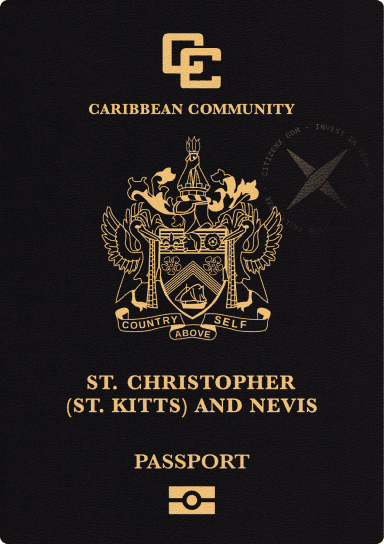
St Kitts and Nevis has run the world's original CBI program since 1984. The Sustainable Island State Contribution starts at 250,000 USD single applicant, real estate from 325,000 USD. The passport reaches roughly 150 to 160 destinations, including the UK and all of Schengen.
For the Korean weighing a deliberate citizenship swap, emigration with no intention of returning to Korean nationality, this is the strongest pure document on the CBI market: excellent travel, a stable Commonwealth jurisdiction, banking infrastructure built for international clients, and no tax on worldwide income, which puts Korea's inheritance-tax arithmetic in a new light for some families. It's a real downgrade from 188 destinations, and an honest advisor says so. It's also a citizenship no Korean political cycle, prosecutor, or legislature can ever touch.
Grenada: the US angle
Grenada starts at 235,000 USD and holds the E-2 investor treaty with the United States, which Korea also holds. So the usual Grenada pitch is redundant for Koreans, with one exception worth knowing: a Korean who deliberately gives up Korean nationality in a swap needs the E-2 access to come from somewhere, and Grenada supplies it, subject to the US rule requiring three years of domicile in Grenada first for investment-acquired citizens. Niche, but real for emigrating families with American plans. About 145 to 150 destinations, plus visa-free China.
The value and speed options
Dominica, from 200,000 USD, about 140 destinations, one of the region's best-run programs. The value version of the St Kitts logic.
Vanuatu, from about 130,000 to 135,000 USD all-in, approvals in one to two months, though without EU or UK access. Zero income, wealth, inheritance, and capital gains tax. Speed and tax profile, not travel.
Antigua and Barbuda, from 230,000 USD, the family-math winner, with five days of presence required within five years.
Sao Tome and Principe, from about 90,000 USD, the industry's lowest entry price, launched August 2025. Around 70 destinations. For Koreans this is mostly relevant as the cheapest way to hold a second citizenship inside a deliberate restructuring, not as a document you'd travel on by choice.
El Salvador: the million-dollar outlier
Since late 2023, El Salvador has offered citizenship for a 1 million USD contribution paid in Bitcoin or USDT, six to eight weeks of processing, capped at 1,000 applicants a year, with a passport reaching about 135 destinations including Schengen and the UK.
For Koreans the analysis is short: it's the fastest program and the most expensive, it carries the same Korean nationality-law consequence as every other, and it appeals to a specific crypto-wealthy buyer who values speed and the payment rails. Korea has plenty of crypto wealth, so the buyer exists. Most families get more for less in the Caribbean.
The strategic framework: how to think about this
For Korean clients I draw the architecture in three layers.
Layer one, residencies, no citizenship consequences. Permanent residency in Singapore, the US (green card), Canada, Australia, or a golden-visa jurisdiction gives the family a legal landing spot, keeps every Korean citizenship right intact, and solves most of the insurance problem. For many wealthy Korean families, this layer alone is the right answer, and I tell them so.
Layer two, the next generation. Children's statuses are where Korean law offers flexibility adults don't have: birthplace planning, education abroad leading to foreign naturalization at ages where the choices are theirs, careful handling of the declaration deadlines Korean law sets for dual nationals. This is specialist Korean-counsel territory, and it's where families with long horizons put their effort.
Layer three, the deliberate swap. For the family member who is genuinely emigrating, often the retiring founder ahead of an inheritance event, or the branch of the family relocating for good, a purchased citizenship plus planned loss of Korean nationality is a coherent, legal strategy with real tax and optionality logic. St Kitts or Dominica for the document, professional advice on both sides of the swap, and the F-4 visa keeping Korea accessible afterward.
What I steer Koreans away from is the middle path some agents quietly suggest: buying a passport and simply not mentioning it to Seoul. Korean law is explicit, Korean enforcement is capable, and a strategy that requires a developed state to never notice is not a strategy. Do it properly or do layer one instead.
What the process actually looks like
For layer one, the residency programs each have their own tracks, and that's its own article.
For a citizenship application: choose the program, build the file, clean criminal record, documented source of funds, which for Korean applicants is usually the easy part, then the agent-managed application, due diligence, interview, and three to eight months of processing. Beyond the investment, budget due diligence fees (5,000 to 10,000 USD per applicant), agent fees, government processing, and legal costs, plus, for Koreans above all, fees for serious Korean counsel on the nationality and tax consequences, sequenced before anything is signed.
What I'd do if I were a wealthy Korean
Specifics, because vague advice is useless.
If I were Korean with a net worth above 30 billion won, here's my next 90 days.
Build layer one now: a permanent residency the family can activate without notice, chosen for where we'd actually want to be, Singapore for business, the US or Canada for the kids, Portugal or the UAE for flexibility. December 2024 was the reminder; the option should exist before the next reminder.
Put the children's citizenship architecture in front of a Korean nationality lawyer this quarter. The deadlines in Korean dual-nationality law don't wait for family consensus.
If an inheritance event or permanent emigration is on a five-year horizon, model the deliberate swap seriously, Caribbean citizenship, exit tax planning, F-4 for continued access, because the math sometimes surprises people, in both directions.
And whatever the architecture, move a portion of assets into custody and jurisdictions outside Korea while everything is calm. Calm is when this work is cheap.
The bottom line
Korea gives its citizens a magnificent passport and one of the strictest single-citizenship regimes in the developed world, and for most of your life the deal feels obviously good. Then one December evening reminds everyone that institutional quality is a probability, not a guarantee.
Cash is king. But passport is queen. For Koreans the queen comes with rules the rest of the world doesn't face, which is precisely why the families who plan around those rules, residencies first, children's options preserved, the deliberate swap when it's truly time, end up so far ahead of the ones who assumed planning was for other countries.
The system held last time. Build the option before anyone has to find out about next time.
This article is for informational purposes only and does not constitute legal, tax, or immigration advice. Under South Korea's Nationality Act, voluntary acquisition of a foreign nationality by an adult generally results in automatic loss of Korean citizenship, and military service obligations carry additional restrictions; consult qualified Korean counsel before any acquisition.
CitizenX helps high-net-worth individuals secure second citizenships and build sovereign lifestyles. Contact us to discuss your Plan B.