The 10 Richest Cities in Canada in 2026
Here are Canada's ten richest cities in 2026, what makes each of them wealthy, and where the statistics mislead.
SM
Head of Private Clients
Reading time: 14 minJul 07, 2026 • 9:10 PM
Canada's richest city depends entirely on what you mean by rich. By household income, it's a remote oil town in northern Alberta that most Canadians have never visited. By household net worth, it's a suburb of 44,000 people clinging to a mountainside across the water from Vancouver. And by sheer economic weight, it's Toronto, which manages to be the country's financial capital while ranking surprisingly far down the income tables.
That three-way split tells you something real about how money works in Canada. Incomes cluster around resources and government. Net worth clusters around real estate. And economic power clusters around Bay Street. The cities that win on one measure often lose badly on another.
For anyone considering a move to Canada, an investment in Canadian property, or a closer look at North America's second-largest economy, the differences matter. A six-figure salary goes a long way in Calgary and nowhere at all in Vancouver. A house that makes you a millionaire on paper in West Vancouver would cost a third as much in Ottawa, where the actual paychecks are bigger.
Wealthy Canadians have noticed the same thing about geography that this article describes, which is partly why more of them are diversifying beyond Canada entirely. Second-citizenship options like Citizenship by Investment in Argentina and low-friction residency routes like Paraguay have found a growing Canadian audience looking for tax flexibility and a hedge against policy changes at home.
Here are Canada's ten richest cities in 2026, what makes each of them wealthy, and where the statistics mislead.
How We Define "Richest"
Canada makes a single ranking genuinely difficult, so we've combined several measures:
Median household income, from Statistics Canada's census program, shows what a typical family earns. This is where the resource towns dominate: Wood Buffalo's median household income of roughly C$182,000 is nearly double any major city's.
Household net worth captures accumulated wealth, most of it in real estate. Studies of Canadian net worth consistently put enclaves like West Vancouver (average household net worth above C$4.5 million) and Montreal's Mont-Royal far ahead of any big city.
Economic weight counts too. Toronto's metro economy is larger than most Canadian provinces', and no ranking that ignores that would mean much.
Property values show where demand and capital concentrate. Greater Vancouver's benchmark home price has hovered around C$1.2 million for years, the highest in the country.
Wealthy residents, tracked through the Forbes billionaire list, are headlined by the Thomson family (Toronto, media), the Westons (Toronto, retail), Jim Pattison (Vancouver), the Saputos (Montreal), and Shopify's Tobi Lütke (Ottawa).
As with our rankings for Germany and Europe, we've blended these factors rather than sorting by a single column. Otherwise this would be a list of oil towns and view lots.
The Top 10 Richest Cities in Canada (2026)
- Toronto (Ontario) – Canada's financial capital and largest concentration of private wealth
- Calgary (Alberta) – The highest big-city incomes and more head offices per capita than anywhere else in Canada
- Vancouver (British Columbia) – Property wealth without the paychecks: Canada's most expensive city
- Ottawa (Ontario) – Government stability plus a genuine tech boom
- Wood Buffalo / Fort McMurray (Alberta) – The income champion, built on oil sands
- West Vancouver (British Columbia) – The net-worth champion, built on view lots
- Oakville (Ontario) – The Greater Toronto Area's wealthiest large suburb
- Edmonton (Alberta) – Underrated incomes in Alberta's capital
- Westmount & Mont-Royal (Quebec) – Montreal's old-money enclaves
- Victoria (British Columbia) – Where Canadian wealth goes to retire
You'll notice Montreal proper is missing. There's a section on that below.
1. Toronto: The Financial Capital
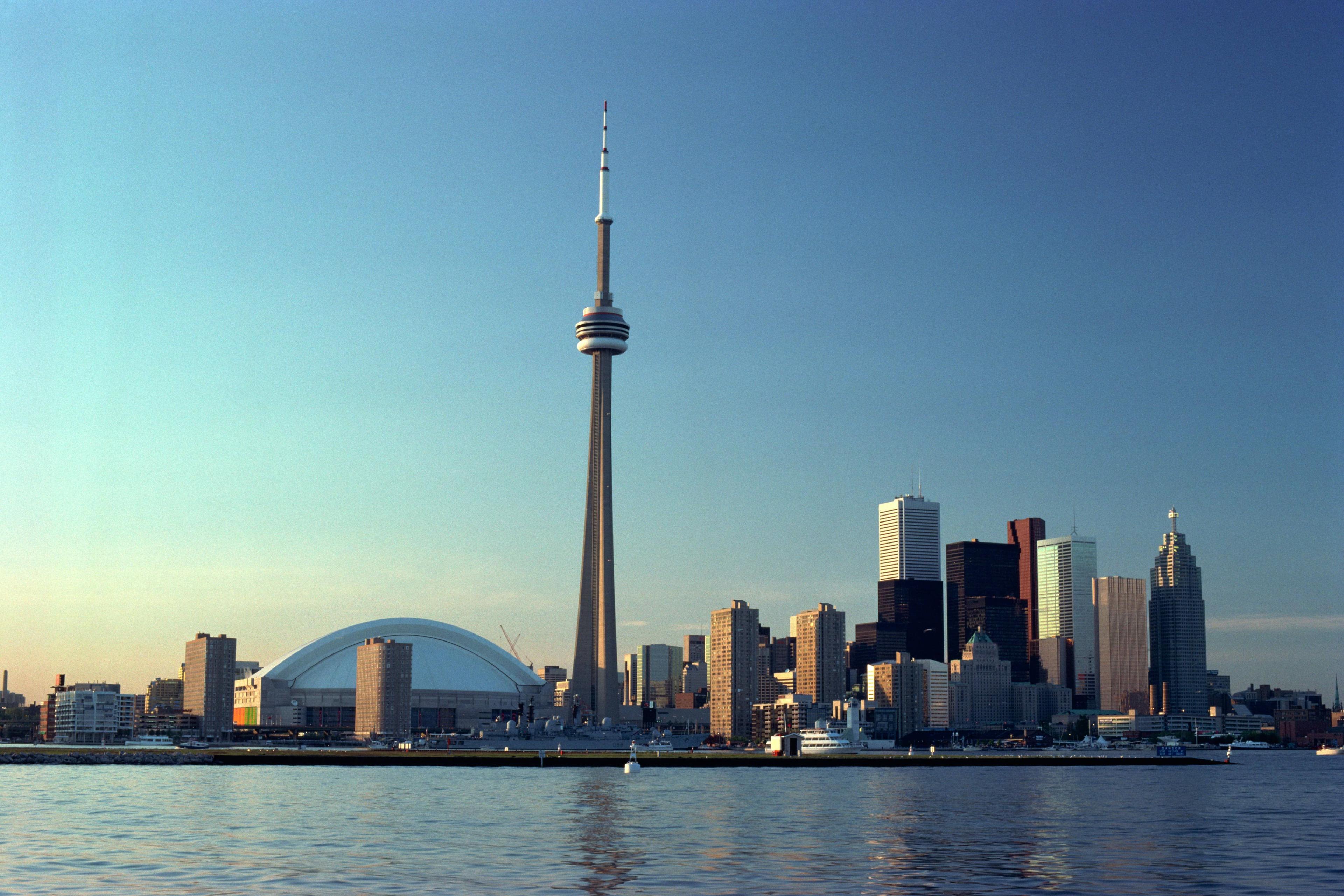
Toronto is where Canadian money lives, even if it isn't where Canadian incomes peak. The metro area of 6.5 million produces roughly a fifth of national GDP, hosts the Toronto Stock Exchange and the headquarters of all five big banks, and ranks as one of North America's top financial centres in the Global Financial Centres Index.
The private wealth is on a different scale from the rest of the country. The Thomson family, controlling shareholders of Thomson Reuters, are Canada's richest family on the Forbes list by a wide margin, and the Westons, Rogers, and a long roster of finance and real estate fortunes are Toronto-based. Neighborhoods like the Bridle Path, Forest Hill, and Rosedale hold estates that trade for C$20-50 million.
Here's the part that surprises people: Toronto's median household income, around C$97,000, is unremarkable. It trails Calgary and Ottawa, and once you subtract the country's second-highest housing costs, the typical Toronto household keeps less than its counterparts in half a dozen smaller cities. Toronto's wealth is real, but it belongs disproportionately to people who bought property before 2010 or work in a handful of high-paying towers downtown.
For newcomers, the calculation is the same one Londoners and New Yorkers make. Toronto has the deepest job market, the most corporate headquarters, and the widest range of industries in Canada – finance, tech, media, law, life sciences. You pay for that access in rent.
2. Calgary: Head Offices and High Salaries
Calgary is Canada's best answer to the question "where do ordinary workers actually earn the most?" Median household income runs around C$100,000, the highest of any major Canadian city, and Calgary has led that table for most of two decades. The city also has more corporate head offices per capita than anywhere else in the country, most of them tied to energy: Suncor, Canadian Natural Resources, Cenovus, TC Energy.
Oil explains the paychecks, but it no longer explains everything. After the brutal 2015-2020 downturn, Calgary has diversified into tech, logistics, and finance faster than skeptics expected, and Alberta's tax setup does the rest: no provincial sales tax, the lowest provincial income tax rates for high earners, and housing that costs roughly half of Toronto or Vancouver.
That last comparison is the whole pitch. A senior engineer or finance professional in Calgary earns close to Toronto money, pays materially less tax, and can buy a detached house for the price of a Toronto condo. The trade-offs are a boom-bust economy that still moves with oil prices and winters that require conviction.
3. Vancouver: Rich in Everything Except Income
Vancouver is Canada's strangest wealth story. The metro area has the country's most expensive housing – benchmark prices around C$1.2 million, with detached homes on the west side far beyond that – and some of its most modest big-city incomes, with median household income near C$90,000. People with ordinary jobs live in million-dollar homes they could never afford to buy today.
The explanation is thirty years of capital inflows. Vancouver's position as Canada's Pacific gateway made it the preferred destination for wealth from Hong Kong, mainland China, and elsewhere in Asia, and that capital went overwhelmingly into property. The result is a city where net worth is enormous, paper wealth is everywhere, and the income statistics look like they belong to a different place.
There's real economic substance too: the port (Canada's largest), a film industry that ranks among North America's biggest production centres, mining finance, and a tech scene anchored by Amazon and Microsoft offices. Jim Pattison, the province's richest man, built his conglomerate here. But the gap between what Vancouver costs and what Vancouver pays remains the widest in Canada, and it shapes everything about who can live there.
4. Ottawa: The Stable One
Ottawa never shows up in glamorous wealth coverage, and its numbers quietly embarrass the cities that do. Median household income in Ottawa-Gatineau runs around C$98,000, essentially tied with Calgary and ahead of Toronto and Vancouver, on housing costs that are dramatically lower than either.
The foundation is the federal government, which employs a large, layoff-resistant, well-pensioned workforce. On top of that, Ottawa built a genuine tech economy: Shopify, founded and headquartered in the city, made founder Tobi Lütke one of Canada's richest people on the Forbes list, and the Kanata technology park hosts hundreds of firms in telecom, software, and defence.
Ottawa's wealth is middle-class prosperity at scale rather than concentrated fortunes. For families choosing where a professional salary buys the best life – housing, schools, commutes, stability – it's arguably the best deal among Canada's large cities, provided you can make peace with the winters and a certain civic quietness.
5. Wood Buffalo: The Income Champion
Every country on this series has one: the statistical outlier that tops the tables without being anyone's idea of a rich city. Germany has Wolfsburg. Canada has Wood Buffalo, the municipality containing Fort McMurray, where the median household earns roughly C$182,000 – almost double Calgary.
The oil sands explain it. Extraction jobs pay six figures with overtime, the workforce skews young and employed, and there's little of the low-wage service economy that pulls down medians elsewhere. Households routinely bank incomes that would put them in the top few percent nationally.
What Wood Buffalo lacks is everything the money is usually for. It's remote, expensive to fly out of, hit by a devastating wildfire in 2016, and tied to a single industry facing a long, uncertain energy transition. Most workers treat it as a wealth-accumulation phase, not a destination – earn hard for a decade, then take the savings somewhere warmer. As a case study in how Canada actually generates high incomes, though, nothing else comes close.
6. West Vancouver: The Net-Worth Champion
If Wood Buffalo is Canada's income outlier, West Vancouver is its wealth outlier. This district of about 44,000 people across the Lions Gate Bridge from Vancouver has an average household net worth above C$4.5 million, the highest in Canada by most published studies.
Almost all of it is real estate. West Vancouver's housing stock consists largely of view properties on the slopes between the mountains and Burrard Inlet, and decades of appreciation turned the families who bought them into multimillionaires. The British Properties, developed by the Guinness family in the 1930s (they also built the Lions Gate Bridge to reach it), remains one of Canada's most expensive neighborhoods.
The population skews older and established – executives, retirees, inheritors – and the local economy is essentially residential. Like Atherton in our California ranking, West Vancouver is less a city than a balance sheet with a view.
7. Oakville: The GTA's Wealth Suburb
Halfway between Toronto and Hamilton on Lake Ontario, Oakville is where Greater Toronto's money raises its kids. The town of about 230,000 consistently posts the highest average household incomes of any large GTA municipality, and its lakefront streets in Old Oakville and Morrison trade at prices that match Toronto's best neighborhoods.
The residents are a mix of Bay Street commuters, executives at the corporate offices along the QEW corridor (Ford Canada is headquartered here), and business owners who prefer harbourfront and golf-club life to the city. Oakville's schools rank among Ontario's best, which does as much as anything to keep demand and prices high.
It's the least surprising entry on this list – every big city has its Oakville – but the numbers earn the spot.
8. Edmonton: Alberta's Quiet Second
Edmonton lives in Calgary's shadow and shouldn't. Median household incomes in the C$90,000s put it ahead of Toronto and Vancouver, the provincial government and University of Alberta provide the stable employment base, and the energy-services and refining industries provide the upside.
Housing is the cheapest of any city on this list – detached homes commonly sell below C$500,000 – which means Edmonton households convert good incomes into home ownership and savings more easily than almost anyone else in the country. Alberta's no-sales-tax, low-income-tax regime applies here too.
What Edmonton lacks is concentrated wealth and, frankly, glamour. There are few large fortunes and little luxury economy. But on the measure that matters most to a working family – what's left over at the end of the month – it belongs in Canada's top tier.
9. Westmount and Mont-Royal: Montreal's Old Money
Montreal's wealth hides in two small independent cities surrounded by the larger one. Westmount, on the western slope of Mount Royal, has been the home of Anglo-Montreal's establishment for well over a century: stone mansions, private clubs, and one of Canada's highest concentrations of inherited wealth. Mont-Royal (TMR), a planned garden city to the north, posts average household net worth around C$2.4 million, among the highest figures in the country.
The families here built and still hold much of corporate Quebec – the Desmarais family (Power Corporation) and the Saputos (dairy, and the Forbes list) are the most prominent names in a deep bench. Property in upper Westmount trades at Toronto prices in a metro area where housing otherwise costs half as much.
These enclaves are the exception that proves the rule about Montreal, which brings us to the question this list keeps dodging.
10. Victoria: Retirement Wealth
Victoria closes the list as Canada's great wealth importer. British Columbia's capital produces relatively little of its affluence locally – government and tourism anchor the economy – but it attracts retirees who arrive with the proceeds of sold Vancouver, Calgary, and Toronto homes, plus a growing remote-work professional class drawn by the mildest climate in Canada.
The result is high household net worth, expensive housing (Victoria consistently ranks just behind Vancouver and Toronto), and neighborhoods like Oak Bay and Uplands that feel like West Vancouver at three-quarter scale. Incomes are moderate; wealth is not. For a certain kind of affluent Canadian, Victoria is the endgame, and the property market prices it accordingly.
The Montreal Question
Montreal is Canada's second-largest metro, its cultural capital, and home to more corporate history than anywhere except Toronto. It's not in our top ten, and the reasons say a lot about how wealth works in Canada.
Median household incomes in Montreal run well below Toronto, Calgary, and Ottawa. Quebec's income taxes are the highest in North America. And the city spent decades losing head offices to Toronto after the 1970s, when political uncertainty sent Anglo capital down Highway 401 – a migration Westmount's older residents can describe firsthand.
The other side of the ledger: Montreal's housing costs roughly half of Toronto's, so its residents often live better than the income tables imply. The city has built real strength in aerospace (Bombardier, CAE), AI research (Mila, the world's largest academic deep-learning institute), gaming, and effects. And fortunes like the Saputos' and Desmarais' show the wealth never entirely left – it just concentrated in a few postal codes.
Montreal is Canada's best city to live well on a modest income. It just isn't one of its richest, and the gap between those two things is the most French thing about it.
What Canada's Wealth Map Means for You
A few practical readings of this list.
If you're choosing a city for earnings, Calgary and Ottawa offer the country's best salary-to-cost ratios among big cities, for entirely different reasons – energy in one case, government-plus-tech in the other. Toronto pays comparably and charges much more for the privilege; you go there for career ceiling, not monthly surplus.
If you're investing in property, Toronto and Vancouver are the liquid, globally traded markets, with valuations and political risk (foreign-buyer taxes, vacancy taxes) to match. Alberta's cities offer cash flow instead of appreciation glamour. The enclaves – West Vancouver, Westmount, Oakville – hold value the way blue-chip stocks do, if you can afford the ticket.
If you're thinking about taxes, the Alberta-versus-Quebec spread is large enough to change life plans: the same C$300,000 income keeps dramatically more of itself in Calgary than in Montreal. And for high-net-worth Canadians, the planning increasingly extends past provincial borders. Canada taxes deemed capital gains at death and charges a departure tax on those who leave, which is exactly why more wealthy Canadians build optionality early – a second residency, a second passport, assets structured across borders. Programs like El Salvador Citizenship by Investment and the Latin American routes mentioned earlier tend to enter these conversations well before any actual move does.
Final Thoughts
Canada's wealth map has three different capitals: Toronto for money, Wood Buffalo for income, West Vancouver for net worth. Almost nobody lives in all three worlds at once, and the distance between them – between a Fort McMurray paycheck, a Bay Street bonus, and a British Properties land title – is the real story of how prosperity is distributed in the country.
Our guess about the next decade: the income map stays put, because oil and government don't move, but the net-worth map keeps drifting. Calgary and Edmonton are pulling in priced-out young families from Ontario and BC at a pace that shows up in every interprovincial migration report, and wealth eventually follows people. The enclaves will stay rich. The interesting question is which mid-sized city becomes the next Oakville, and our money is on something in Alberta.