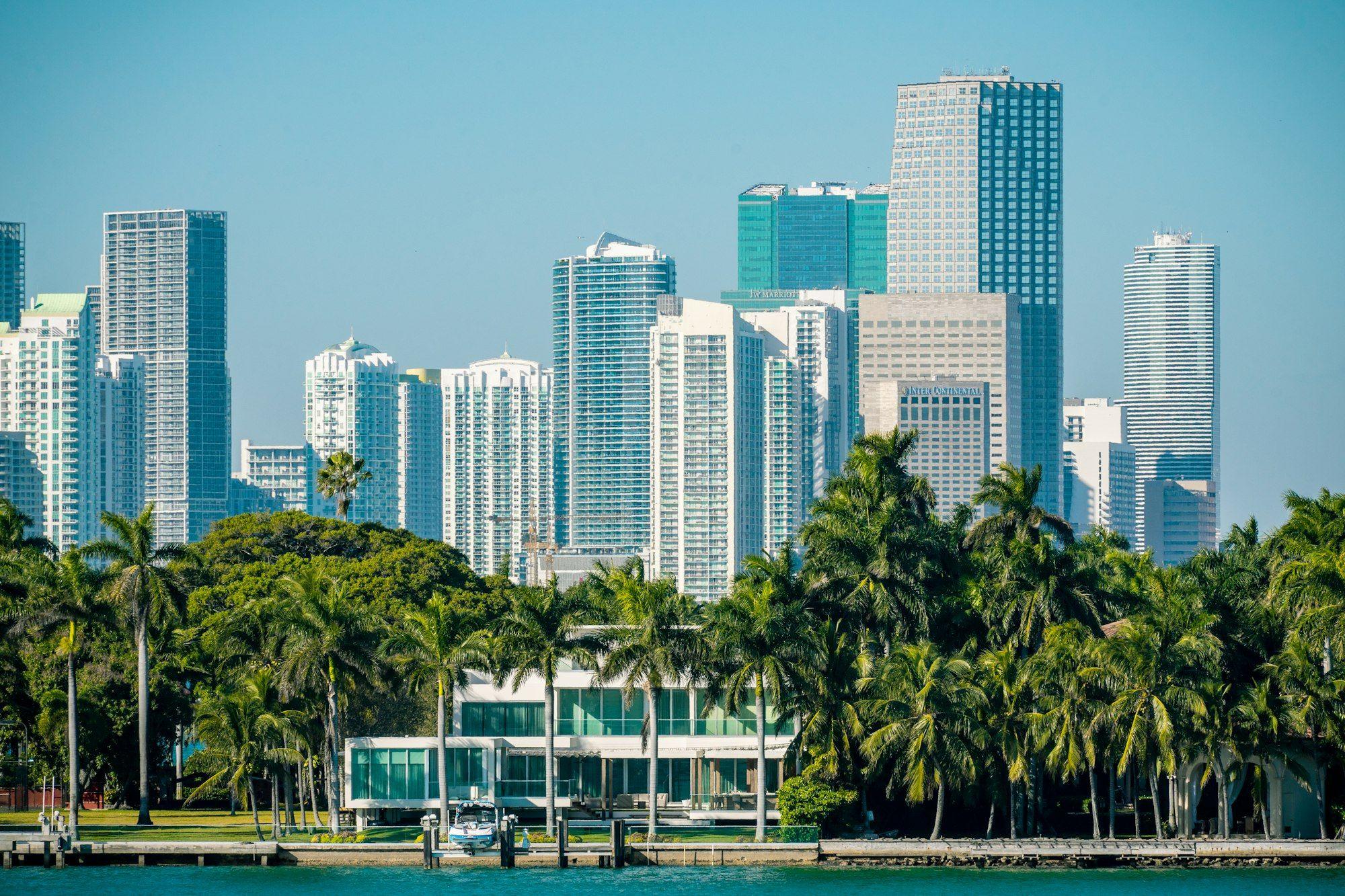
The 10 Richest Cities in Colorado in 2026
For anyone weighing a Colorado move or investment, the split is the actual decision. Are you buying into the Front Range's earning economy or the high country's asset economy? The prices, the neighbors, and the risks differ completely.
SM
Head of Private Clients
Reading time: 11 minJul 08, 2026 • 3:10 PM
Colorado has two entirely different kinds of rich city, and they barely acknowledge each other's existence. Down on the Front Range, a ring of quiet Denver suburbs – Cherry Hills Village above all – posts some of the highest household incomes in America, earned by executives who commute twenty minutes to the Denver Tech Center. Up in the mountains, Aspen holds some of the most expensive residential real estate on the planet, owned by billionaires whose income arrives from everywhere except Colorado.
Income wealth and imported wealth: every state has some of both, but nowhere is the split as clean as here. Cherry Hills Village and Aspen are both, by different definitions, the richest city in Colorado, and they have almost nothing else in common – not their economies, not their politics, not even their seasons, since half of Aspen's owners are elsewhere by April.
For anyone weighing a Colorado move or investment, the split is the actual decision. Are you buying into the Front Range's earning economy or the high country's asset economy? The prices, the neighbors, and the risks differ completely.
Here are the ten richest cities in Colorado in 2026, both kinds counted.
How We Define "Richest"
The usual method from our state series (California, Florida, Texas): median household income from the Census Bureau's American Community Survey, per capita income, home values from market data, and the governance structures that keep enclaves exclusive. Colorado forces one addition: in resort towns, income statistics are nearly meaningless – Aspen's median income is ordinary because its owners are taxed elsewhere – so for the mountain entries we weight property values and wealth concentration instead. Both definitions are real; we say which one each entry wins on.
The Top 10 Richest Cities in Colorado (2026)
- Cherry Hills Village – The income champion, Denver's answer to Atherton
- Aspen – The asset champion, with America's most expensive mountain real estate
- Columbine Valley – The tiny enclave nobody outside Denver knows
- Greenwood Village – Where the Tech Center's paychecks sleep
- Castle Pines – Gated golf-course prosperity south of the city
- Boulder – Tech wealth with a PhD
- Vail – The other resort fortune
- Telluride – Remote, and priced like it
- Lone Tree – The new-money suburb still compounding
- Genesee & the foothills belt – Denver wealth at altitude
1. Cherry Hills Village: The Income Champion
Cherry Hills Village is Colorado's Atherton: about 6,600 residents on large lots ten minutes south of downtown Denver, with median household income above the Census Bureau's $250,000 reporting ceiling and average household income estimated well past $500,000. Home values average $3 million and climb steeply from there along the bridle paths of Old Cherry Hills.
The residents run Denver: energy and telecom executives, private equity and real estate principals, the owners of the region's sports franchises (John Elway is the town's eternal shorthand), and the medical and legal apex of a two-ring metro. Zoning is the familiar enclave recipe – one-house-per-acre in the core, no commercial anything – and the Cherry Creek school district plus a cluster of private schools complete the package.
Cherry Hills has topped Colorado's income tables for as long as they've been kept, and there's no mechanism in sight for that to change. It's the state's clearest case of wealth as a municipal design choice.
2. Aspen: The Asset Champion
By income statistics, Aspen is a modestly prosperous mountain town. By any other measure, it's one of the wealthiest places on earth. Single-family homes average $10 million-plus – the most expensive residential market in the United States by several measures – with trophy properties in Red Mountain's "Billionaire Mountain" trading between $50 million and north of $100 million. The town's roster of part-time residents reads like a Forbes-list sampler: hedge fund founders, industrial dynasties, tech billionaires, Gulf royalty.
Almost none of that appears in Census income data, because almost none of it is earned, or taxed, in Pitkin County. Aspen is the purest wealth importer in our entire state series – the Los Cabos, Palma, or Balneário Camboriú of the Rockies, with better restaurants. The actual local economy is hospitality and construction; the actual local crisis is that no one earning local wages can live within forty miles.
For buyers, Aspen functions as a global asset class with a ski pass attached: scarce land, forty years of relentless appreciation, and demand that deepens with every liquidity event in every industry. Just don't call it an income story. It's the opposite.
3. Columbine Valley: The Hidden Enclave
Columbine Valley is the entry even most Coloradans miss: roughly 1,500 residents in a pocket of country-club land along the Platte southwest of Denver, with median income above the Census ceiling and a housing stock of estates wrapped around the Columbine Country Club. It regularly appears at or near the top of the state's per-capita tables, right beside Cherry Hills, at a tenth of the name recognition.
The profile is Cherry Hills at smaller scale: business owners, executives, retired athletes, multigenerational Denver money. The town's governance is barely-there by design – minimal staff, contracted services, no commercial district – which is the same "municipality as HOA" pattern we found in Rolling Hills and Belleair Shore in the California and Florida rankings.
Places like Columbine Valley are why "richest cities" lists reward actual research: the loudest zip codes are rarely the top ones.
4. Greenwood Village: Where the Paychecks Sleep
Greenwood Village is the income engine's dormitory: about 15,000 residents wrapped around the Denver Tech Center, the southern business district where much of Colorado's corporate employment concentrates. Median household income runs in the $150,000-200,000s with the western estate sections far higher; homes average north of $1.2 million.
The distinguishing feature is proximity arbitrage – executives here commute five minutes – plus a municipal budget fattened by the Tech Center's commercial tax base, which funds services and parks most suburbs can't match while keeping residential taxes low. It's the same trick Westlake plays in Texas with Fidelity and Schwab: let the office towers pay for the town.
Greenwood Village is less exclusive than Cherry Hills by design, and bigger for the same reason. Think of it as the professional-class entrance to the same golden quarter of the metro.
5. Castle Pines: Gated Golf Prosperity
Castle Pines – the city and the older gated Village at Castle Pines beside it – extends the wealth corridor south into Douglas County: roughly 11,000 residents among pines and fairways, median household incomes around $200,000-250,000, and homes averaging $1-1.5 million with estate sections well beyond.
Douglas County context matters: it consistently ranks among the five or so richest counties in America by median income, a fact that surprises everyone who assumes Colorado's wealth is all mountains and Boulder. The residents are the newer edition of Denver prosperity – corporate management, healthcare executives, the region's booming aerospace sector (Lockheed's campus is nearby) – buying space and golf that inner suburbs can't offer.
Castle Pines is the growth end of the Front Range wealth belt, and its trajectory over the next decade is the safest bet on this list.
6. Boulder: Tech Wealth With a PhD
Boulder's median household income – roughly $90,000-100,000, dragged by 30,000 students – wildly understates a town where the average single-family home costs $1.5 million and the hills hold a startup-and-science upper class three decades in the making. Boulder has, by various measures, one of America's highest densities of startup founders per capita; it also hosts federal labs (NIST, NCAR, NOAA), the University of Colorado's research complex, and the outdoor-industry corporate cluster.
The wealth here is Californian in flavor – equity events, not salaries – and the town's famously strict growth limits (a height cap, a greenbelt that ended sprawl decades ago) converted every liquidity event into housing appreciation. Boulder is what happens when Berkeley's politics meet Aspen's supply curve.
It's the least enclave-like entry on this list and the most economically productive: the one Colorado spot where the money is actually made rather than parked or commuted.
7. Vail: The Other Resort Fortune
Vail is Aspen's institutional sibling: a purpose-built resort town (founded 1962, styled after the Alps) whose real estate now averages $3-5 million, with Vail Village and Beaver Creek trophy properties far higher. The wealth is imported, as in Aspen, but the flavor differs – more corporate, more Front Range and Texan, more likely to be a fifth home than a statement piece.
The Eagle County economy underneath is the standard resort duality: a service workforce priced into distant down-valley towns, and an owner class present forty days a year. Vail Resorts' transformation of the ski industry into a subscription business (the Epic Pass) industrialized demand for the whole valley and shows up directly in the property market's floor.
As an asset market, Vail trades liquidity for Aspen's prestige: more inventory, more turnover, less mythology, same mountains.
8. Telluride: Remote, and Priced Like It
Telluride is the connoisseur's entry: a Victorian mining town in a box canyon six hours from Denver, where remoteness itself became the luxury good. Home prices average $3-4 million between the historic town and the Mountain Village, and the owner roster skews toward media, entertainment, and finance names who chose the anti-Aspen on purpose.
Income statistics are as meaningless here as in the other resort entries – the box canyon holds perhaps 2,500 year-round residents, most of them working the tourist economy – but the asset numbers rank Telluride among America's most expensive small towns, decade after decade. Supply is the whole story: the canyon walls are the growth boundary, and no pass or policy changes geology.
9. Lone Tree: The Compounding Suburb
Lone Tree is the newest money on the list: a master-planned Douglas County city of about 14,000 with median household incomes in the $130,000-160,000 range, million-dollar averages in its newer sections, and a commercial engine – Charles Schwab's enormous campus, Sky Ridge's medical complex, Park Meadows' retail taxes – that funds city services in the Greenwood Village style.
It ranks here on trajectory as much as level. Lone Tree barely existed in 1995; it now anchors the southern end of the same corridor that runs from the Tech Center through Castle Pines, and every corporate relocation along the I-25 spine compounds it. If this article gets rewritten in 2036, Lone Tree moves up.
10. Genesee and the Foothills Belt
The last entry is a belt rather than a city: the foothills communities west of Denver – Genesee, Lookout Mountain, parts of Evergreen and Morrison – where the metro's wealth buys altitude, acreage, and views back across the skyline. Genesee, a gated mountain community off I-70, posts per-capita incomes that rival the inner enclaves; Evergreen's lake-and-forest sections carry seven-figure averages.
The profile is Front Range money that wanted the mountain lifestyle without the resort-town commute: executives on flexible schedules, retired founders, the occasional athlete. It's the hinge between Colorado's two wealth systems – earned like Cherry Hills, scenic like Vail – and the closest the state comes to merging them.
The Aspen Question
Every ranking in this series gets one, and Colorado's writes itself: is Aspen actually the state's richest city?
By concentration of wealth per square foot, nothing in Colorado – arguably nothing between Manhattan and Malibu – comes close. The assembled net worth on Red Mountain on a Christmas week likely exceeds the market capitalization of most S&P 500 companies. By every measure this series uses for lived prosperity – household income, local earnings, the economy residents actually participate in – Aspen is a mid-income mountain county with a service economy and a housing emergency.
Both facts are true, and the gap between them is the widest in America. We gave the top spot to Cherry Hills Village because this series ranks cities as places people live and earn, not as vaults. But if you're reading this as an investor rather than a resident, reverse the order: Aspen's scarcity has outperformed the Front Range's salaries for fifty years, and the canyon walls and growth boundaries aren't moving. Wealth that arrives by jet is fickle about many things; it has never once been fickle about Aspen.
For families running this kind of income-versus-asset arithmetic across borders rather than counties – residence, tax exposure, and mobility as one portfolio – the same logic scales up to jurisdictions, which is where options like citizenship by investment in Argentina enter the conversation.
Final Thoughts
Colorado's wealth map is a one-sentence story: the Front Range earns it, and the mountains store it. Cherry Hills, Columbine Valley, and the Douglas County corridor are what high incomes look like when they organize themselves into municipalities; Aspen, Vail, and Telluride are what liquidity looks like when it goes looking for scarcity at 8,000 feet.
The interesting movement is at the seams. Remote work blurred the old line – the foothills belt and the resort towns both filled with people who used to need the Tech Center commute – and every year the asset map claims a little more territory from the income map. Watch the Roaring Fork Valley towns below Aspen and the I-25 corridor south of Lone Tree: that's where the next edition of this list gets written.