The Top 10 Richest Cities in the Middle East in 2026
UAE citizenship is rare, but ultra-wealthy individuals can gain it through the Golden Visa, as there's no direct investment program.
AR
Co-founder & CEO
Reading time: 10 minOct 18, 2026 • 9:33 AM
The Middle East is home to some of the world's most internationally connected financial centers, as well as energy-rich capitals and fast-growing technology ecosystems. But calling a city “rich” can mean very different things: a large economy, high incomes, concentrated public investment, productive businesses, or internationally active capital markets.
Dubai, Abu Dhabi, Riyadh, Doha, Tel Aviv, Kuwait City, Istanbul, Jeddah, Manama, and Muscat illustrate different versions of prosperity. The region's strength cannot be explained by a single ranking of private fortunes. More useful measures are those that readers can trace to governments, exchanges, financial regulators, and national statistical agencies.
This guide compares ten major urban economies by their economic roles, productive industries, financial infrastructure, and investment environment. The sequence is an editorial guide, not a ranking of cities by resident millionaires or total private wealth.
How we compare Middle Eastern wealth centers
Our comparison uses publicly available indicators where geographic definitions are comparable:
- Economic output and diversification: GDP and sector data from national or emirate-level statistical authorities.
- Financial infrastructure: Stock exchanges, banking ecosystems, financial-center registrations, and regulated activity.
- Business creation: Operating companies, trade networks, investment activity, and industry clusters.
- Resources and public capital: The economic role of energy exports and public investment, without treating sovereign fund assets as household wealth.
- Conditions for residents: Employment opportunities, housing, mobility, residence options, and the practical costs of living.
There are limits. City-level statistics are not standardized across the region. In several cases, official GDP is available for a country, governorate, or emirate rather than the urban area alone. For that reason, we do not give a misleading regional league table of per-capita fortunes.
Find your second passport
Create an account to compare programs and see your all-in cost, including government fees and due diligence.
Create account1. Dubai, United Arab Emirates: trade and international finance
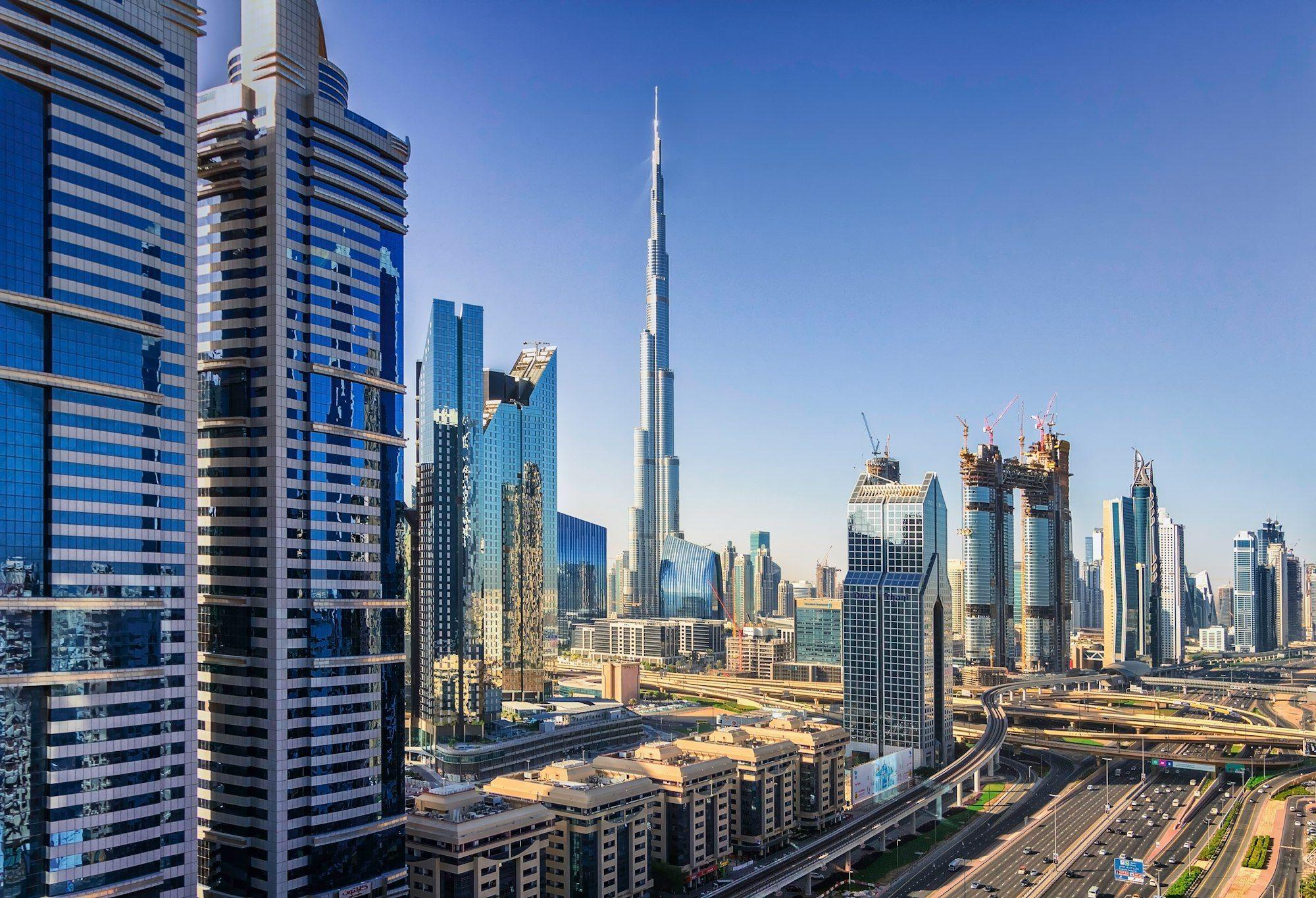
Dubai's economy is anchored in commerce, logistics, aviation, tourism, real estate, and financial services. Jebel Ali Port and the emirate's airports connect manufacturers, distributors, and service companies across Europe, Asia, and Africa. The city's free zones and professional-services clusters have also made it a popular operating base for international businesses.
Dubai's wealth-management expansion can be assessed with official rather than inferred measures. The Dubai International Financial Centre reported 8,844 active companies, 1,052 regulated firms, and more than 500 wealth and asset-management companies in its 2025 annual results, published in February 2026. DIFC also reported growth in its innovation and family-business ecosystem. These figures describe an operating financial center; they do not purport to count wealthy residents.
Dubai has no general personal income tax on salaries, but the UAE has VAT and corporate tax rules. Qualifying free-zone treatment comes with conditions. For people considering residence, the UAE Golden Visa provides a long-term immigration pathway for eligible applicants, not automatic UAE citizenship.
2. Abu Dhabi, United Arab Emirates: capital backed by energy and investment
Abu Dhabi combines a major hydrocarbons economy with finance, logistics, aviation, education, and advanced manufacturing. ADNOC and related energy activity remain important, but the emirate has also invested in infrastructure and businesses intended to broaden its economic base.
Abu Dhabi Global Market (ADGM) provides a financial regulatory and commercial framework that attracts investment firms and international businesses. The size and composition of ADGM's licensed ecosystem are more useful indicators of Abu Dhabi's development as a financial center than estimates of individual fortunes.
The emirate's public investment institutions manage major pools of capital. Those assets are institutionally managed and should not be equated with money personally owned by residents. For founders and investors, Abu Dhabi offers a distinct proposition: proximity to public and institutional capital, large-scale projects, and a developing professional-services ecosystem.
3. Riyadh, Saudi Arabia: the headquarters economy
Riyadh is Saudi Arabia's political and administrative center, with substantial banking, consulting, construction, technology, and government-related activity. The Saudi Exchange, the Capital Market Authority, and a growing headquarters ecosystem are concrete measures of its importance to national capital markets.
Saudi Arabia's Vision 2030 agenda has directed substantial investment toward new sectors, including tourism, entertainment, logistics, digital services, and industry. The resulting opportunities are significant but do not remove project, execution, or market risks.
International professionals may consider the country's Premium Residency system, where eligibility and benefits vary by product. Residence should not be confused with Saudi citizenship, and applicants should review current official conditions rather than relying on historic fee or investment thresholds.
4. Tel Aviv, Israel: technology and venture capital
Tel Aviv is a business and innovation hub within Israel's high-technology economy. Its strengths lie in software, cybersecurity, semiconductors, life sciences, venture capital, and globally oriented startups. The Tel Aviv Stock Exchange and the country's innovation institutions provide public information about capital formation and listed businesses.
Technology company valuations are volatile and should not be treated as equivalent to the realized wealth of founders or employees. Equally, Tel Aviv's economic significance does not require an estimate of how many millionaires live within a poorly defined city boundary.
Investors should account for Israel's security environment, economic exposure to the technology cycle, and the country's tax and immigration frameworks. These factors may weigh as heavily as business opportunity in a decision about where to establish residence.
5. Doha, Qatar: energy revenues and international services
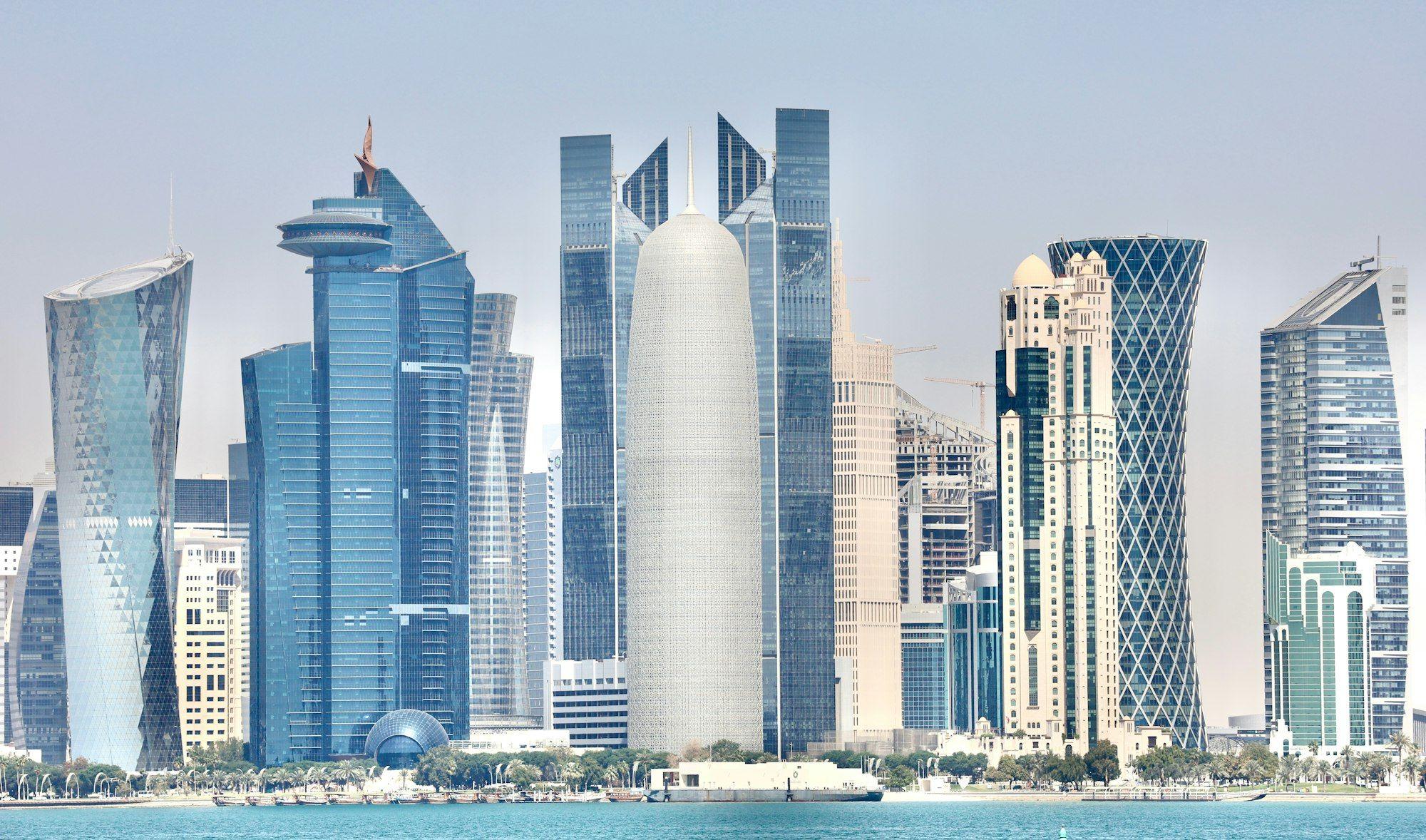
Doha's economy benefits from Qatar's large natural-gas industry, particularly the export infrastructure built around liquefied natural gas. The capital also hosts aviation, banking, media, education, and professional services. Investment in transport and urban infrastructure has expanded its capacity to operate as a regional business center.
Qatar's national output per person can be high, but this is a country-level production statistic, not a count or density of wealthy Doha residents. Nor should the assets of Qatar's state investment institutions be described as private household net worth.
Property-related residence and other immigration options require careful checking against current Qatari rules. For some families, Doha's draw is employment and regional connectivity; for others it is access to specific sectors or partnerships.
6. Kuwait City, Kuwait: finance and established domestic capital
Kuwait City's economic institutions grew from a long-established oil economy and commercial sector. Banks, investment firms, family-owned trading groups, and public institutions are important features of the capital's economy.
Kuwait's sovereign investment assets should be understood as public institutional capital, not as an allocation to each resident. Likewise, an estimate of dollar-millionaire households at the national level cannot automatically be converted into a count for Kuwait City. This guide deliberately avoids such calculations.
For international businesses, Kuwait City may offer opportunities in banking, infrastructure, government procurement, and domestic consumer markets, alongside regulations that differ materially from neighboring Gulf states.
7. Istanbul, Türkiye: a diversified metropolitan giant
Istanbul is one of the region's largest and most diversified commercial centers. Manufacturing, logistics, wholesale trade, tourism, finance, media, and technology all play meaningful roles. Borsa Istanbul and the city's extensive banking network provide direct evidence of its market infrastructure.
Istanbul's economic scale is a different kind of wealth from the high national income often associated with smaller Gulf economies. Currency volatility and inflation can alter dollar-denominated comparisons dramatically, even where firms continue expanding in local terms.
For international investors, currency risk, inflation, financing conditions, and business exposure are essential. The country's investment-linked citizenship provisions are separate from Istanbul's status as a business center and should be assessed under current nationality law.
8. Jeddah, Saudi Arabia: maritime commerce and services
Jeddah has longstanding strengths in Red Sea commerce and services. The Port of Jeddah links Saudi businesses to major shipping routes; wholesale trade, logistics, hospitality, and consumer goods have created a substantial private-sector base.
The city's role as a gateway for travelers to Mecca also supports transport, accommodation, and other services. Jeddah's opportunities differ from Riyadh's: it is more directly tied to port infrastructure, trade, western Saudi Arabia, and associated supply chains.
Plans for real-estate and tourism development should be evaluated as individual projects, not assumed to translate into a particular growth rate of wealthy residents.
9. Manama, Bahrain: banking and financial regulation
Manama has longstanding experience in banking, insurance, and financial services, including Islamic finance. The Central Bank of Bahrain publishes regulatory material, licensing information, and financial-sector data. The Bahrain Bourse offers a further window into capital-market activity.
The country has also encouraged fintech and digital financial services through a regulatory environment designed to support supervised innovation. Actual licensed firms and operating businesses provide better evidence of economic progress than unverified luxury or millionaire-density claims.
International professionals should compare tax treatment, residence pathways, housing, and access to the broader Gulf market. Bahrain's strengths can be attractive even though its economy is smaller than those of several neighbors.
10. Muscat, Oman: logistics, tourism, and diversification
Muscat functions as Oman's administrative and commercial center. Hydrocarbons remain important nationally, but Oman Vision 2040 emphasizes diversification through logistics, tourism, manufacturing, and services. Muscat's financial institutions and transport connectivity support these sectors.
Oman's ports, including facilities outside the capital, are part of a national logistics network. Readers should not assume that every port-related investment is located within Muscat's city limits. The capital itself is relevant as a headquarters, services, and residence center for firms engaged in activity across Oman.
Potential investors should examine business licensing, employment rules, residence eligibility, and sector-level growth rather than treating broad national development objectives as guaranteed returns.
Four economic models, not one wealth ranking
Energy and state investment
Abu Dhabi, Doha, Kuwait City, and parts of Saudi Arabia have access to substantial energy-linked revenues. Public investment has supported infrastructure, industry, and business services. But economic diversification is a process, not an accomplished fact, and energy-market developments remain important.
International trade and finance
Dubai, Manama, and Istanbul illustrate the importance of financial-market institutions, logistics, and business services. They compete in different segments and at different scales. Counts of registered or regulated firms, when defined consistently, offer observable evidence of commercial activity.
Technology-led enterprise
Tel Aviv and growing innovation clusters in Dubai, Abu Dhabi, and Riyadh show how digital services and venture-backed companies can complement established sectors. Startup funding and company creation are useful metrics, but valuations fluctuate and do not equal liquid household wealth.
Urban infrastructure and employment
Riyadh, Jeddah, Muscat, and Doha illustrate how public and private investment affects employment, transport, housing, and local services. A wealthy city should ultimately be assessed on more than the assets owned by a small number of institutions.
How residence and citizenship fit into the picture
The Middle East offers several residence options for eligible investors, entrepreneurs, employees, and specialist professionals. The UAE Golden Visa and Saudi Premium Residency are prominent examples, but each has its own eligibility conditions, renewal requirements, and legal rights.
Residence and citizenship are different. Long-term residence in Dubai or Abu Dhabi does not guarantee UAE nationality. Similarly, investor residence elsewhere in the region is not automatically a path to a passport. Families should also assess whether a residence permit grants dependent rights, work authorization, or a realistic long-term base.
An additional citizenship can complement a Middle East residence strategy by diversifying the family's legal rights and travel options. CitizenX can help evaluate second-citizenship opportunities separately from any business or property investment.
Final thoughts
The Middle East's major wealth centers operate on different economic foundations: Dubai's international business infrastructure, Abu Dhabi's institutional investment and energy base, Riyadh's corporate and administrative scale, Tel Aviv's technology sector, Doha's gas economy, and the trading or financial specializations of Kuwait City, Istanbul, Jeddah, Manama, and Muscat.
The useful comparison is not an unsupported claim that one city contains more millionaires than another. It is an examination of productive activity, institutional depth, economic risks, and the rights available to individuals who choose to live and work there.
Sources and methodology
- Dubai International Financial Centre — Official 2025 Results
- Abu Dhabi Global Market
- Saudi General Authority for Statistics
- Saudi Exchange
- Central Bank of Bahrain
- Qatar Planning and Statistics Authority
- Borsa Istanbul
- International Monetary Fund — Data
- World Bank — Data
Methodology note: This article is an editorial selection of ten economically important cities, not a numerical ranking of personal net worth. National, emirate, and city data have different geographic boundaries. Investment and immigration rules may change; verify current eligibility before taking action. CitizenX does not provide individualized legal or tax advice.