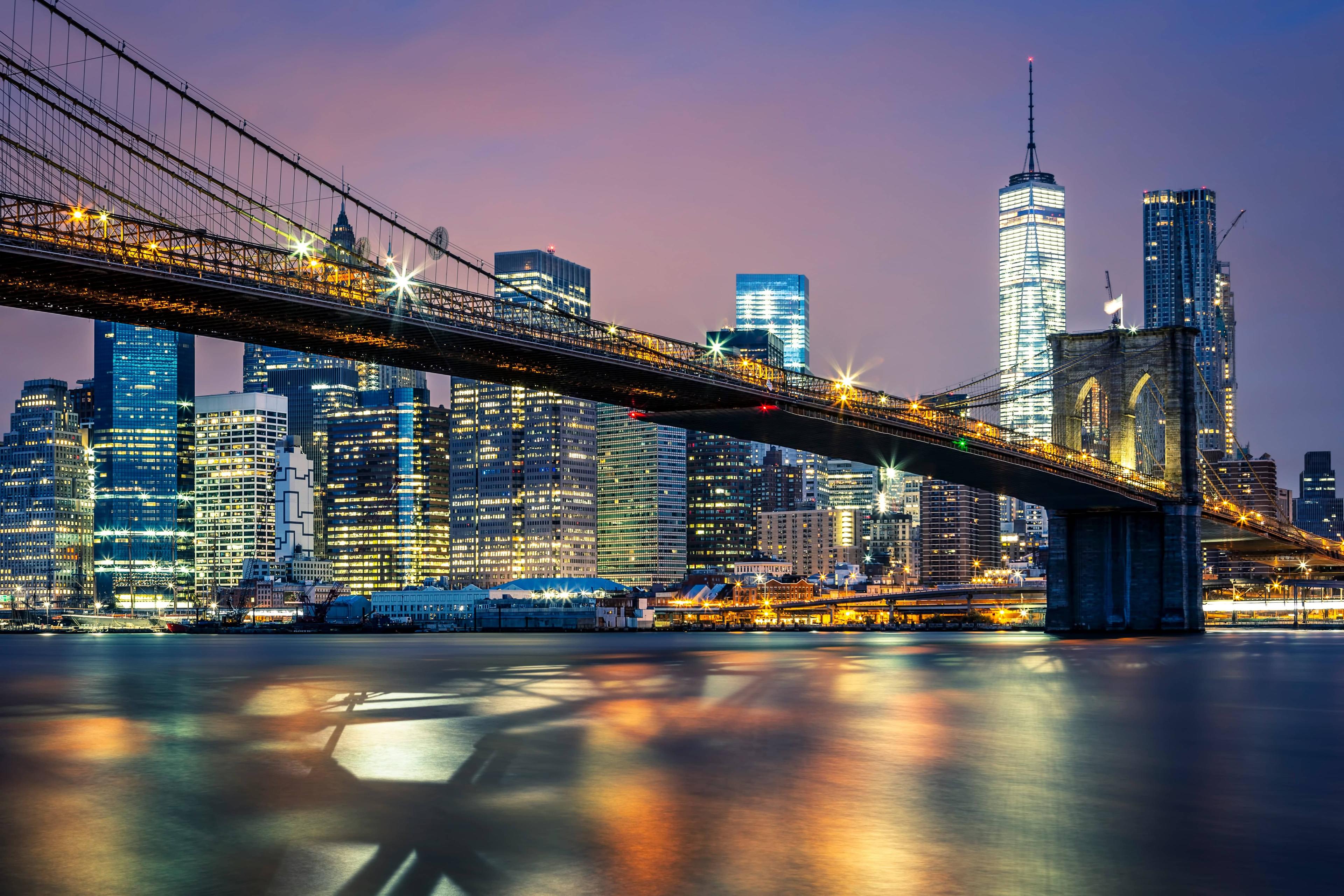
The richest city in New York is not New York City. It isn't close, actually. New York City's median household income sits around $80,000 – a fraction of what a dozen villages within an hour of Grand Central post year after year.
The richest city in New York is not New York City. It isn't close, actually. New York City's median household income sits around $80,000 – a fraction of what a dozen villages within an hour of Grand Central post year after year. The city holds more billionaires than any other city on earth, the deepest pool of private wealth in the hemisphere, and a median resident who would be priced out of every entry on this list.
That's the New York paradox in one sentence: the city makes the money, and the villages keep it. The wealth generated on Wall Street, in Midtown law towers, and across the tech and media economy sorts itself nightly onto Metro-North and the LIRR, and it gets off at stations – Scarsdale, Bronxville, Manhasset – whose names function as net-worth statements. New York State's richest municipalities are a constellation of suburbs so wealthy, so old, and so deliberately preserved that several have been synonyms for affluence since the Gatsby era, which was set among them.
Here are the ten richest cities in New York in 2026 – the villages that bank the city's output, and the city itself, which gets the section it has always demanded.
How We Define "Richest"
Standard method for our state series (California, Florida, Texas, and the rest): median household income from the Census Bureau's American Community Survey – most of this list clears or crowds the $250,000 reporting ceiling – plus per capita income, home values, and the governance machinery (village incorporation, school districts, zoning) that built these enclaves and keeps them intact. New York's wrinkle is its village system: dozens of tiny incorporated municipalities inside larger towns, which lets wealth self-govern at a scale even Texas's enclave cities can't match.
The Top 10 Richest Cities in New York (2026)
Scarsdale – The standard-bearer of American suburban wealth
Sands Point – Gatsby's East Egg, still in character
Old Westbury – Estate country, surviving on purpose
Bronxville – One square mile of Westchester money
Kings Point – The other Egg, quietly compounding
Rye – The hedge-fund harbor
Muttontown & Brookville – Long Island's horse-country belt
Larchmont – The commuter classic
Garden City – The planned original
Southampton Village – The imported fortune, at the beach
1. Scarsdale: The Standard-Bearer
Scarsdale is the reference point – the town other rich towns get compared to. A village of about 18,000 in central Westchester, it posts median household income above the Census's $250,000 ceiling, average household income estimated in the $450,000-plus range, and home values averaging $1.5-2 million with the Murray Hill and Heathcote estate sections far beyond.
The machine has three parts, refined over a century: a school district that has ranked among America's best for generations and functions as the village's true currency; zoning that has kept the housing stock overwhelmingly single-family on generous lots since the 1920s; and the 38-minute express to Grand Central that lets the highest-earning professional class in the country – finance, law, medicine at their apex – live here without leaving the arena. Scarsdale doesn't have old-money glamour or new-money spectacle. It has the highest sustained concentration of earned professional income in America, which is why every other entry on this list is, in some sense, a variation on it.
2. Sands Point: East Egg, Still in Character
Fitzgerald set Gatsby's East Egg here, and a century later Sands Point is still playing the role: a gated-feeling village of 2,900 at the tip of the Port Washington peninsula, median income above the Census ceiling, and waterfront estates on two-acre minimum lots averaging $3-5 million, with Long Island Sound frontage well past that.
The Gold Coast dynasties – Guggenheims, Astors, Goulds – built the original compounds, several of which survive as museums and preserves. Today's owners are the modern equivalent: financial principals, real estate families, and a notable concentration of successful physicians and entrepreneurs from the peninsula's communities. The village's governance is enclave standard – no commercial district, minimal government, maximum lot size – and its distance from the LIRR keeps it a touch more private than the commuter classics.
Sands Point is what happens when a stage set for a novel about wealth simply keeps being true.
3. Old Westbury: Estate Country, on Purpose
Old Westbury is the largest surviving fragment of the Gold Coast's estate belt: a village of 4,600 on Long Island's spine where the zoning minimum is measured in acres and the Whitney, Phipps, and du Pont estates set the original template. Median income exceeds the Census ceiling; properties average $3 million-plus, and the true compounds – horse farms, walled parcels off Wheatley Road – trade privately at multiples of that.
What distinguishes Old Westbury is deliberateness. When the estates began breaking up mid-century, the village chose preservation over subdivision, holding minimum lots at two to four acres and absorbing institutions (universities, gardens, country clubs) rather than tract housing. The result is a landscape that functions as a private greenbelt twenty miles from Manhattan – and a residence roster of financiers, developers, and international wealth that prizes exactly that.
4. Bronxville: One Square Mile of Money
Bronxville is Westchester wealth at espresso concentration: one square mile, 6,500 residents, median income above the Census ceiling, and a housing stock of storybook Tudors and Georgians averaging $2-3 million. The village's planned origins (a turn-of-the-century arts-colony-turned-banker-colony) left it with a walkable center, its own top-tier school district, and a 28-minute ride to Grand Central – the shortest commute of any entry here.
The residents are Manhattan's professional summit in miniature: banking and private equity partners, media executives, the medical elite of the city's hospital systems. Scarcity does the rest; one square mile never grows. Bronxville is the list's best answer to the question "what does maximum income per acre look like when it's pretty?"
5. Kings Point: The Other Egg
Kings Point – Fitzgerald's West Egg, the "new money" shore – occupies the Great Neck peninsula's tip: 5,000 residents, median income over the ceiling, waterfront and near-waterfront homes averaging $2.5-4 million. The new-money label stuck in ways the novel didn't predict: the village has renewed itself through successive waves of ascendant communities – most prominently, in recent decades, Persian-Jewish and other immigrant business families whose success stories are the modern Gatsby arc played straight.
The wealth is entrepreneurial more than institutional – real estate, trade, diamonds, medicine – and the village's estate sections along the Sound hold some of Long Island's most spectacular contemporary builds. A century on, the two Eggs still frame the same lesson: East Egg's names change never, King Point's change constantly, and the property values of both only move one direction.
6. Rye: The Hedge-Fund Harbor
Rye is the sound-shore city – actual city, one of Westchester's few – where the fund economy lives: 16,000 residents, median income at or above the ceiling, and home values averaging $1.8-2.5 million from Milton Point's waterfront to the Jay Heritage district. Greenwich sits directly across the state line, and Rye functions as its New York twin: same industry (hedge funds, private equity, asset management), same harbor-and-country-club texture, slightly different tax return.
The commuter fundamentals are Scarsdale-grade – express trains, top schools, beach and boat clubs layered on top – and the buyer profile is the youngest of the Westchester entries: finance families upgrading out of the city in their late thirties, at price points that make the village's 1660s founding stock smile from their historic plaques.
7. Muttontown and Brookville: The Horse-Country Belt
Inland from the Gold Coast shore runs Long Island's horse-country belt – Muttontown, Brookville, Old Brookville, Upper Brookville – a cluster of villages with two-acre zoning, median incomes above the ceiling, and estates averaging $2-4 million behind miles of white fencing and old walls. Muttontown's 3,600 residents and Brookville's 3,500 make even these the larger examples; some neighbors incorporate barely a few hundred people.
The belt is the institutional memory of the estate era, kept functional: equestrian facilities, nature preserves on former compounds, country clubs at the density other regions reserve for gas stations. Owners skew toward healthcare magnates, real estate and construction dynasties, and international buyers who wanted acreage within thirty miles of Midtown. It's the least famous entry on this list and among the most expensive per household – hidden wealth in the Florida ranking's sense, hiding behind hedges instead of gates.
8. Larchmont: The Commuter Classic
Larchmont is the Westchester formula at its most charming: a one-square-mile sound-shore village of 6,500, median income above the ceiling, Victorians and center-hall colonials averaging $1.5-2 million, and a Manor district whose waterfront lawns have hosted the same yacht club since 1880. The texture is Bronxville-by-the-sea – walkable, trained, schooled – with a media-and-law flavor to go with the finance.
There's little to analyze and nothing to fix, which is the point. Larchmont is what a hundred years of steady professional-class demand does to a fixed supply of pretty streets: the quiet compounding that this entire series keeps finding underneath the flashier entries.
9. Garden City: The Planned Original
Garden City is the deep cut with the deepest roots: founded in 1869 by retail millionaire A.T. Stewart as one of America's first planned communities, and still running on his blueprint – cathedral, hotel site, broad malls of lawn down the avenues. Its 23,000 residents post median incomes in the $200,000s, with homes averaging $1-1.5 million; the wealth is Nassau County's professional establishment – law, medicine, finance middle-to-upper management – rather than estate money.
It ranks here as the volume entry: more six-figure households than the villages above it combined, organized around schools, clubs, and a downtown that actually functions. If Scarsdale is the ceiling of the commuter formula, Garden City is its broadest successful application.
10. Southampton Village: The Imported Fortune
The list closes at the beach, with the entry income statistics can't see. Southampton Village's year-round census numbers are modest; its estate sections – Gin Lane, Meadow Lane, the oceanfront strip between pond and Atlantic – hold one of the densest collections of nine-figure residential property on earth. Meadow Lane alone ("Billionaire Lane," inevitably) has housed industrialists, fund founders, and media owners at valuations from $50 million to a quarter billion.
Southampton is New York's Aspen, from our Colorado ranking: pure imported wealth, present forty summer days a year, taxed elsewhere, and utterly dominant in the asset statistics. The village's incorporated government, historic district, and hedgerow-zoning keep the product scarce. Manhattan makes the fortunes; the East End is where they take off their shoes.
The New York City Question
And so, the city itself. New York City is simultaneously the wealthiest city on the planet and nowhere near the richest city in New York, and both halves deserve their numbers.
The wealth: more billionaires than any city on earth by every count, Forbes's most of all; the headquarters of American finance; a luxury property market – Billionaires' Row, 220 Central Park South, the townhouse belt – that functions as a global reserve asset; and a concentration of high earners without parallel, with entire zip codes on the Upper East Side and in Tribeca posting average incomes that would top this list.
The median: roughly $80,000 per household across 8.3 million people – below the national figure for its cost of living, with poverty rates the suburbs on this list couldn't imagine. The city contains multitudes at a scale that makes its averages meaningless; it is Scarsdale and its opposite, block by block, borough by borough.
That's why this series ranks it here rather than first. New York City is the engine – the place the money on this entire list is made, managed, or traded. The villages are the reservoir. Neither works without the other, and the 5:42 out of Grand Central is the pipe between them. It has run in one direction, carrying the same cargo, for a hundred and twenty years.
For the internationally mobile wealthy, the city poses the same question it always has, now with a global answer sheet: New York taxes its residents like the product it knows it is, which is why the planning conversations that start on Park Avenue increasingly end in Florida domiciles, foreign residences, and second citizenships – Argentina's investment route among the options – that keep the city as an asset rather than an address.
Final Thoughts
New York's wealth map is the oldest in America and the most stable: the same villages that housed the Gilded Age's fortunes house today's, with only the industries rotating underneath – rail money to oil money to fund money to whatever's next. Scarsdale has been Scarsdale for a century. The Eggs still face each other across Manhasset Bay. The Hamptons still fill every June.
That stability is the finding. In our other state rankings, the interesting story is usually change – Texas's relocations, Arizona's fabs, Colorado's remote workers. New York's story is that nothing moves: the enclaves absorbed the automobile, the income tax, the crash of '29 and '08, the pandemic, and remote work, and emerged each time with higher property values and the same names on the train platforms. Wealth here isn't a wave to catch. It's a seat that occasionally comes open – and there's a waiting list for the waiting list.