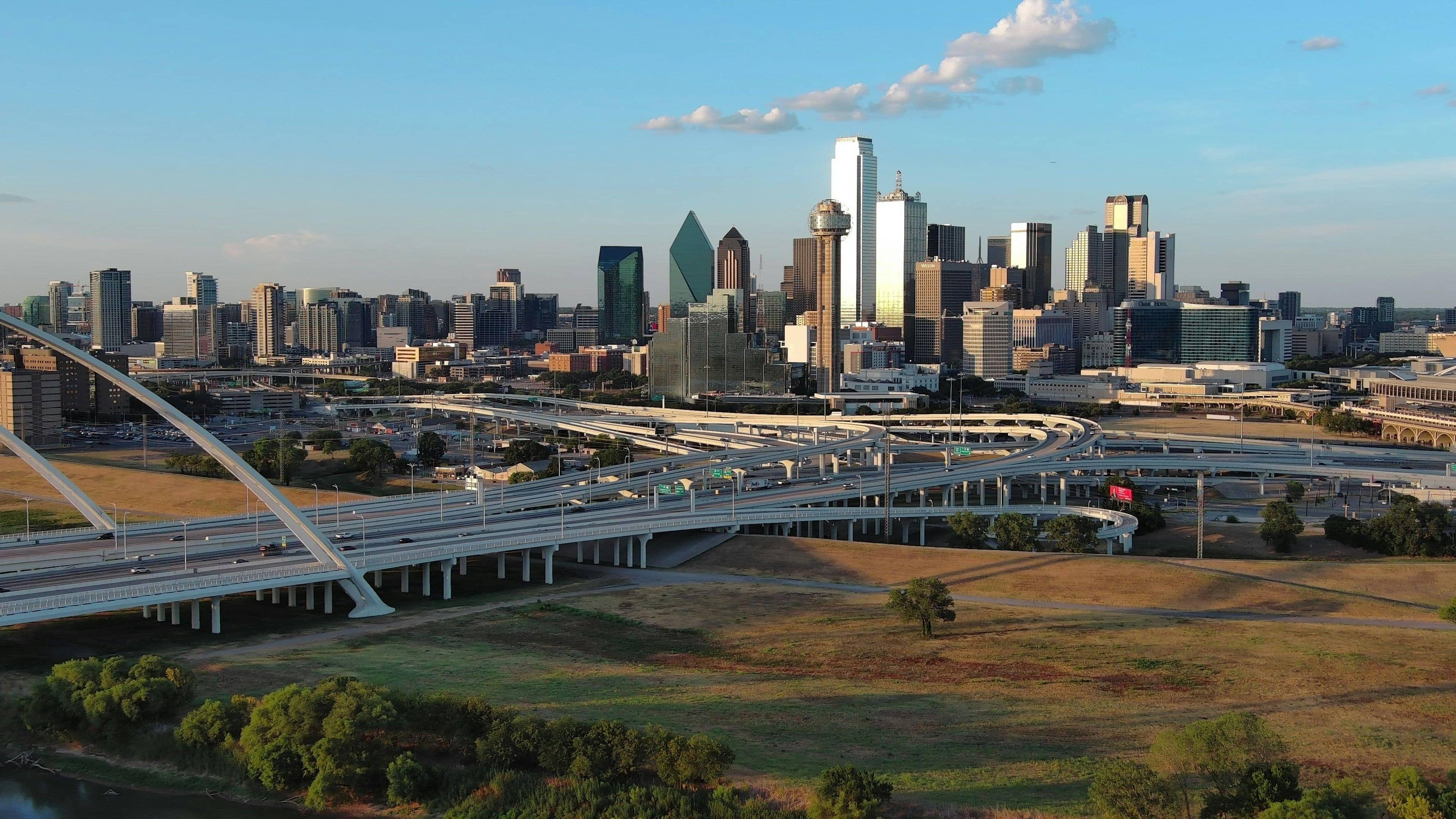
The richest city in Texas has about 1,700 residents, no downtown to speak of, and a name most Texans couldn't place on a map. Westlake, a scatter of gated estates and corporate campuses between Fort Worth and Dallas, regularly posts the highest household incomes not just in Texas but in the entire United States – a distinction it trades back and forth with a handful of coastal enclaves from our California ranking.
That's the recurring joke of Texas wealth: the state's money is famous for being loud, and its richest addresses are almost perfectly silent. The oil fortunes, the tech relocations, the no-income-tax refugees from California and New York – they don't live in Dallas or Houston proper. They live in a ring of small incorporated towns and villages that most outsiders have never heard of, each engineered, through zoning and school districts, to stay exactly what it is.
Texas has also become America's great wealth importer. No state income tax, no state capital gains tax, and no estate tax have pulled billionaires (Elon Musk to Austin most famously), corporate headquarters, and family offices south at a pace that reshaped the state's wealth map in a single decade.
Here are the ten richest cities in Texas in 2026 – by the numbers, and by what the numbers can't quite say.
How We Define "Richest"
Same method as our other state rankings: median household income from the US Census Bureau's American Community Survey as the anchor (most of this list exceeds the $250,000 ceiling the Census tracks), per capita income to catch household-size effects, home values from market data as the wealth stock, and governance – zoning, school districts, tax structure – as the machinery that keeps these places what they are. Where a town tops out the Census scale, average household income estimates separate the merely rich from the extraordinary.
The Top 10 Richest Cities in Texas (2026)
Westlake – America's income champion, some years literally
Highland Park – Old Dallas money behind the hedges
West University Place – Houston's inner-loop enclave
West Lake Hills – Austin money in the hills
Terrell Hills – San Antonio's old guard
Colleyville – DFW's spread-out prosperity
Bellaire – The city inside the city
1. Westlake: The Income Champion
Westlake's numbers barely look real. Median household income far above the Census's $250,000 reporting ceiling, average household income estimated well into the $400,000s, and typical home values in the $2-4 million range – across a town of roughly 1,700 people occupying some of the most valuable dirt in the DFW metroplex.
The formula is corporate campuses plus estate zoning. Fidelity Investments and Charles Schwab built massive regional headquarters on Westlake's land (Schwab's arrival from San Francisco was one of the signature corporate relocations of the Texas wealth wave), which pays for pristine services with almost no residential tax burden. The homes sit in gated communities like Vaquero, built around a Tom Fazio golf course, housing executives, athletes, and the kind of wealth that prefers a Fort Worth area code to a Dallas spotlight.
Like Atherton in California, Westlake is less a town than a filter. There's little to do there, which is the point – residents bought the absence.
2. Highland Park: Old Dallas, Behind the Hedges
If Westlake is Texas wealth's new construction, Highland Park is its founding document. Platted in the early 1900s as a planned enclave north of downtown Dallas – the developers hired the designer of Beverly Hills – it remains the state's most storied address: median income above the Census ceiling, average household income in the $350,000-450,000 range, and home values averaging over $2 million, with estates along Beverly Drive and Lakeside Drive trading far higher.
Highland Park and neighboring University Park form the "Park Cities," an island of independent municipalities completely surrounded by Dallas, with their own police, their own famously excellent school district, and property values that the surrounding city's taxes and politics cannot touch. Oil money built it; banking, law, real estate, and the Dallas Cowboys' ownership orbit sustain it.
It's the entry on this list that requires no explanation to any Texan – shorthand for wealth the way River Oaks is in Houston, which brings us to Houston's actual champion.
3. Piney Point Village: Houston's Quiet Apex
Ask outsiders for Houston's richest neighborhood and they'll say River Oaks. But River Oaks is part of Houston proper; the fortunes that wanted their own government moved a few miles west into the Memorial Villages – six independent enclaves wrapped in Houston's geography – and the richest of them is Piney Point Village. Roughly 3,200 residents, median income above the Census ceiling, per capita income among the highest in the state, and wooded lots holding estates that rarely list publicly.
The money is Houston money in its classic proportions: energy above all – executives and owners from the oil and gas complex that still runs through the city's economy – leavened by Texas Medical Center physicians and the professionals who serve both. The Villages contract for services, run their own ultra-responsive police force jointly, and zone for nothing but large-lot houses.
Piney Point is the Texas entry that most resembles the hidden-wealth pattern from our California and Florida rankings: maximum affluence, minimum visibility, by design.
4. University Park: The Park Cities, Continued
University Park is Highland Park's larger sibling – about 25,000 residents around the campus of Southern Methodist University – with median household income likewise above the Census ceiling and home values averaging around $1.5-2 million. Functionally, the two Park Cities are one wealth zone: same school district (Highland Park ISD, the state's most famous), same island-in-Dallas independence, same compounding effect of a century of high-income families bidding on a fixed number of lots.
What University Park adds is scale and a slightly younger profile – more families buying in for the schools, more teardown-rebuild economics as $1 million lots become $4 million houses. SMU's presence gives it a college-town texture Highland Park lacks, and George W. Bush's post-presidential residence gave it its most cited resident.
For relocating executives, the Park Cities are the default Dallas answer, and the price of the default has roughly doubled in a decade.
5. Southlake: The Executive-Family Capital
Southlake is what happens when corporate DFW's upper management all wants the same thing at the same time. The city of about 31,000 sits between the airport and the Fort Worth-Dallas axis, posts median household income around the $250,000 ceiling, and built its identity on two assets: the Carroll Independent School District – whose Dragons are a statewide brand – and Town Square, the master-planned downtown that every suburb in America now imitates.
The residents are the executive class of the relocation boom: airline management (DFW and American's headquarters are minutes away), finance transplants, energy professionals, and a notable cohort of professional athletes. Homes average $1-1.5 million with estate sections well above.
Southlake is the least exotic entry on this list and the most representative: not dynastic wealth, just thousands of $400,000-a-year households sorted into one zip code by schools and commute math.
6. West University Place: The Inner-Loop Enclave
West University Place – "West U" to Houston – packs about 14,000 people into two square miles of leafy grid inside Loop 610, minutes from the Texas Medical Center, Rice University, and downtown. Median income sits above $250,000; homes average around $1 million-plus with new construction far higher.
The profile is Houston's professional apex rather than its ownership class: physicians and hospital executives from the world's largest medical complex, energy traders, law partners, Rice faculty who bought early. Its own police and fire departments, top-rated schools, and the simple arithmetic of location have kept demand permanent through every oil cycle.
West U is the walkable, urban counterpoint to Piney Point's estates – same tax bracket, different theory of the good life.
7. West Lake Hills: Austin Money in the Hills
Austin's wealth lives west of the city, in the hills above Lake Austin, and West Lake Hills is its capital: roughly 3,400 residents, median income above the Census ceiling, and homes averaging $1.5-2.5 million with view estates beyond that. The Eanes school district, perennially ranked at the state's top, does for Westlake Hills what Highland Park ISD does for the Park Cities.
The money is newer here and more famous: tech founders and early employees from Austin's boom, the Dell orbit (Michael Dell's compound is nearby), music and film wealth, and the California arrivals who made "Silicon Hills" a real-estate phenomenon. Austin's decade as America's favorite corporate relocation – Tesla, Oracle, and the venture ecosystem that followed – priced the whole west side accordingly.
If Texas wealth has a growth stock, it's this hillside.
8. Terrell Hills: San Antonio's Old Guard
San Antonio, a working city in a way Dallas and Austin no longer quite are, keeps its wealth in two small enclaves northeast of downtown: Alamo Heights and, richer still, Terrell Hills. About 5,000 residents, median household income in the $200,000s, and a housing stock of 1920s-1950s estates that almost never turns over.
The names on the deeds are San Antonio's founding commercial families – banking, ranching, energy, beer (the Pearl and Lone Star fortunes shaped the city) – plus the military brass and medical leadership of a city built on both. It's the most old-fashioned entry on this list: wealth as continuity rather than arrival.
Terrell Hills won't top any growth chart. It also hasn't needed to for a hundred years.
9. Colleyville: DFW's Spread-Out Prosperity
Colleyville is Southlake's quieter neighbor – about 26,000 people on one-acre lots in the same airport-adjacent corridor, with median household income around $200,000-250,000 and homes averaging near $1 million. The profile matches: corporate management, pilots and airline executives, small-business owners who sold well.
What Colleyville sells is space. The lots are bigger than Southlake's, the pace slower, the branding nonexistent – a deliberate low-key alternative for households with the same incomes and less appetite for Town Square's scene. In the perpetual DFW suburb rankings, the two trade places; in the Census tables, they're nearly twins.
10. Bellaire: The City Inside the City
Bellaire closes the list as Houston's other municipal island – about 17,000 residents entirely surrounded by Houston and West U, with median incomes around $200,000-plus and a housing market defined by teardowns: modest mid-century houses giving way, lot by lot, to $1.5 million new builds.
The residents are the Medical Center-energy-professional mix of West U at a modest discount, drawn by independent city services and location. Bellaire is Texas wealth in its most ordinary form – no gates, no golf course, no famous names – which is exactly what makes it a useful bookend. The state's richest addresses aren't spectacles. They're school districts with police departments attached.
The No-Income-Tax Question
Every entry above sits inside a single policy fact: Texas taxes no income, no capital gains, and no estates. For a Californian or New Yorker at the top bracket, moving to Texas is roughly a 10-13% raise on every dollar earned and a larger one on every dollar realized – which is why the 2018-2023 relocation wave (Tesla, Oracle, Schwab, hundreds of funds and family offices) reshaped this list's property values in real time.
The catch is the other side of the ledger: Texas funds itself through property taxes that rank among America's highest. On a $2 million Highland Park or Westlake home, the annual bill can exceed $40,000 – a wealth tax by another name, levied on exactly the houses this article ranks. The arithmetic still favors high earners decisively, but it favors earners specifically: for retirees sitting on appreciated homes rather than incomes, the Texas deal is far less generous than the slogan.
That's the honest shape of the Texas pitch, and it's also why the state's wealthy enclaves guard their appraisal districts as fiercely as their zoning. For internationally mobile families running the same arithmetic across borders rather than states – weighing residence, tax exposure, and a second passport as one decision – options like citizenship by investment in Argentina or El Salvador sit in the same planning conversation, one jurisdiction level up.
Final Thoughts
Texas wealth has two maps. The famous one shows Houston's energy towers, Dallas's banks, and Austin's tech campuses – the places where the money is made. The real one, the one this article ranks, shows a dozen small municipalities clinging to those cities like remoras: incorporated, zoned, schooled, and policed precisely so that the fortunes made next door have somewhere to compound undisturbed.
The decade ahead will test the newer map. Austin's hillsides are betting tech valuations hold; Westlake is betting the corporate relocations keep coming; the Park Cities are betting on the only thing that's never failed them, which is scarcity. Our money's on scarcity. It usually is.