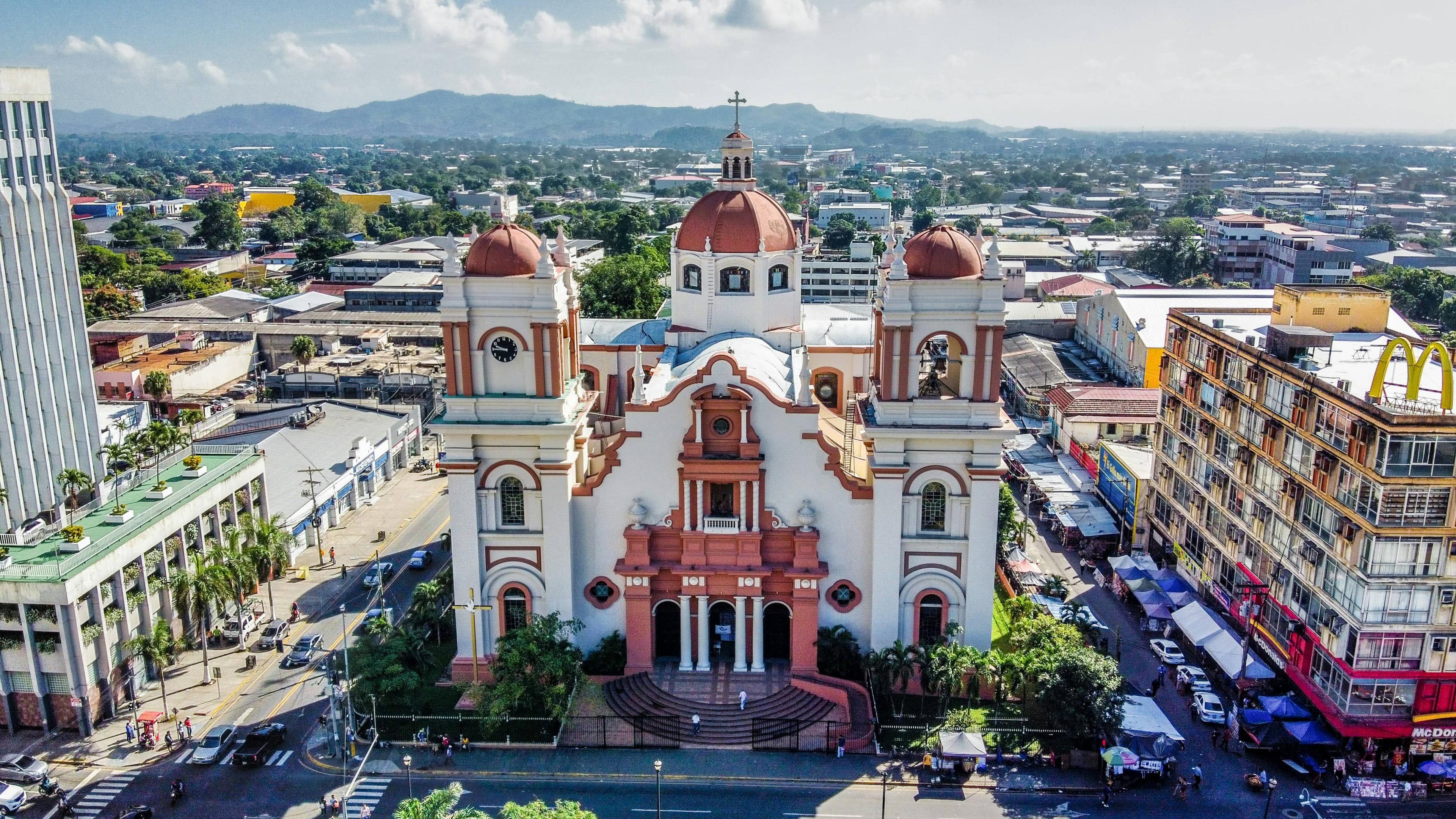
Ten years ago, an article ranking Central America's safest countries would have had one job: explain Costa Rica, then apologize for the region. In 2015, El Salvador recorded the highest homicide rate on the planet – over 100 per 100,000 people. Honduras had held the same title a few years earlier.
Ten years ago, an article ranking Central America's safest countries would have had one job: explain Costa Rica, then apologize for the region. In 2015, El Salvador recorded the highest homicide rate on the planet – over 100 per 100,000 people. Honduras had held the same title a few years earlier.
The 2026 version of this article has a different problem: explaining the most dramatic security transformation in modern hemisphere history. El Salvador's homicide rate has fallen below 2 per 100,000 – lower than Costa Rica's, lower than several US states, a roughly 98% decline in under a decade. Meanwhile Costa Rica, the region's eternal safe haven, has watched its own rate climb to record highs as trafficking routes shifted. The region's safety map hasn't just changed. It has partially inverted.
For wealthy families and investors, Central America now offers something it never has in the modern era: choices. Here are the safest countries in Central America in 2026 – all seven, ranked honestly, with the transformation story told straight.
How We Measure Safety
Public sources: UNODC and national homicide statistics (Central America's are closely tracked and published), the Global Peace Index, World Bank governance indicators, and Gallup's lived-experience polling – where El Salvador now posts some of the hemisphere's highest "feel safe" scores, a data point nobody would have believed a decade ago. The HNWI screen: extortion and kidnap exposure (historically the region's defining risk), institutional durability, property rights, and the family layer of healthcare, schools, and daily texture.
Figures compiled from UNODC and national statistics as of early 2026.
1. El Salvador: The Transformation
The numbers are simply unprecedented. From over 100 homicides per 100,000 in 2015 to under 2 in the mid-2020s; from the world's murder capital to the hemisphere's lowest rate outside Canada; extortion – the crime that most defined Salvadoran life for a generation – collapsed alongside. Gallup now measures Salvadorans among the hemisphere's most likely to feel safe walking at night. Whole neighborhoods, and the diaspora itself, are experiencing ordinary evenings for the first time in living memory.
The mechanism is no mystery and no secret: a state of exception since 2022, mass incarceration on a world-record per-capita scale, and a security policy that human-rights organizations document exhaustively and Salvadoran voters have ratified overwhelmingly. In this series' vocabulary, it is administrative safety at maximum intensity – real, measurable, and resting on a concentrated political project rather than deep institutions.
For investors and relocators, the practical picture: San Salvador's business districts and beach corridors (El Tunco through El Zonte's "Bitcoin Beach") now host a genuine arrival wave, property markets are repricing from a very low base, and the government actively courts foreign capital and residents – including through the El Salvador Freedom Passport program, the region's only direct citizenship-by-investment route. The bet, stated plainly: that today's administrative safety consolidates into tomorrow's institutional kind. Early movers are being paid, in prices and in access, for underwriting that question.
2. Costa Rica: The Institutional Standard, Under Strain
Costa Rica keeps first place, and the ranking needs its reasoning shown. The country's homicide rate has risen to roughly 15-17 per 100,000 – record territory, driven by trafficking-route competition on the Caribbean coast – and now sits multiples above El Salvador's. On raw current statistics, Costa Rica no longer leads the region.
It leads anyway, on the measure this series weights most: institutional depth. Seventy-five years without an army, the region's only long-run democracy, courts that function, property rights with decades of expat case history behind them, and the healthcare-education-environment package that made it Latin America's original lifestyle haven. Crucially for our audience, the rise in violence is narco-on-narco and geographically specific (Limón province above all); the Central Valley's expat belts and Guanacaste's resort coast remain statistically and experientially far calmer, and the extortion economies that plague the region's north never took root here.
The honest framing: Costa Rica is an institutionally safe country having a street-crime problem – the reverse of its new rival below, and this article's entire analytical question in one border.
3. Panama: The Business Haven
Panama holds third with the region's most complete package for wealth: homicide around 11 per 100,000 (concentrated in Colón and specific San Miguelito districts, far from expat life), the hemisphere's premier offshore-services infrastructure, a dollarized economy, and Panama City's first-world skyline of banking, healthcare, and international schools – the region's only true metropolis for the internationally mobile.
Daily life in the districts our readers would inhabit – Punta Pacífica, Costa del Este, Coronado's beach belt, Boquete's highland retiree haven – runs on standard urban prudence rather than fear; kidnap and extortion economies are absent. Institutions are mid-grade (corruption is the perennial file), but stability is real, the canal guarantees the world's attention to keeping it so, and the Friendly Nations and pensionado residence routes remain among the hemisphere's most used.
For families weighing the region, Panama is the compromise pick between Costa Rica's institutions and the Gulf-style comforts of a capital that works.
4. Belize: Two Countries in One
Belize's national homicide rate (20+ per 100,000) is the region's most misleading statistic, because it's overwhelmingly produced by a few gang-affected wards of Belize City that no visitor or resident of the expat economy has reason to enter. The Belize most readers would live in – Ambergris Caye and the islands, Placencia's peninsula, the Cayo highlands around San Ignacio – runs at a fraction of that, on tourism-economy vigilance rather than fear.
The attractions are practical: English as the official language (the region's only), common-law property rights, the hemisphere's second barrier reef, and the QRP retiree program's easy residence. The limits are equally practical: thin institutions, thin healthcare (serious cases fly to Mexico or Miami), and petty-crime discipline required in a way the entries above don't demand. Belize is an enclave proposition, honestly priced as one.
5. Nicaragua: Calm Streets, Loud Asterisk
Nicaragua's street-safety numbers have long been the region's quiet anomaly: homicide around 6-7 per 100,000 – historically the lowest in Central America before El Salvador's transformation – no extortion culture, and colonial cities (Granada, León) plus the San Juan del Sur coast that hosted a thriving expat economy through the 2010s.
The asterisk is everything else. Since 2018, the government has closed civic space comprehensively – opposition, press, NGOs, universities – and property confiscations touching political targets have reminded investors what unchecked authority means for asset security. Street safety persists; structural safety has deteriorated to the region's floor. In this series' terms, Nicaragua is the purest regional case of the streets-versus-institutions divergence, and for that reason a place this ranking describes rather than recommends. The surf remains world-class; hold assets accordingly.
6. Guatemala: The Antigua Exception
Guatemala's national statistics (homicide around 16-17 per 100,000, improving slowly for a decade) coexist with the region's most beloved enclave: Antigua, the colonial capital under the volcanoes, whose cobblestone core of language schools, boutique hotels, and foreign residents runs decades of safe-enclave track record. Lake Atitlán's villages and Guatemala City's zones 10 and 14-16 extend the archipelago.
Outside it, the risks are the region's classic set – extortion economies in the capital's periphery, highway crime, thin rule of law – and the political cycle swings between reform hopes and institutional backsliding. Guatemala earns sixth as the region's most enclave-dependent proposition: extraordinary within the archipelago's borders, unranked outside them.
7. Honduras: Improving From the Bottom
Honduras closes the list, still carrying the region's heaviest statistics (homicide around 25-30 per 100,000, down by more than half from its early-2010s catastrophe) and its own geography of exception: the Bay Islands. Roatán and Utila – dive-economy islands with large foreign communities – run at a fraction of mainland rates and constitute essentially all of the country's relevance to this article's audience.
The mainland's trajectory is genuinely better – El Salvador-inspired crackdowns have cut rates year over year – but from a base, and with institutions, that keep it in watch-and-wait territory. For now: the islands are a real, modestly priced Caribbean option; the mainland is not yet a family proposition by this series' standards.
The El Salvador Question
The region's defining question deserves its own section, because readers will rightly ask it: is El Salvador's transformation real, and will it last?
Real: yes, beyond serious statistical dispute. Homicide and extortion collapsed by any measure – government, morgue counts, victimization surveys, Gallup polling, diaspora behavior (Salvadorans abroad are returning to visit and invest at record levels, the most honest indicator in existence). The lived change is the largest positive safety event in the hemisphere this century.
Lasting: that's the underwriting question. The gains rest on a security regime of extraordinary intensity and a leader of extraordinary concentration of power – administrative safety, in this series' framework, awaiting conversion into the institutional kind. The optimistic precedent is that broken extortion economies and dismantled gang structures don't reassemble easily; the cautious one is that the region has seen crackdown-driven gains decay before, though never from gains this deep.
This series' framework doesn't require resolving the question – it requires structuring around it, which is what the actual capital flows are doing: real positions in Salvadoran property and residence, taken early and priced for the uncertainty, held alongside the diversified optionality (a second passport, a Southern Cone base from our South America ranking) that this series recommends everywhere. The families getting El Salvador right aren't the believers or the skeptics. They're the ones sized correctly for both outcomes.
Frequently Asked Questions
What is the safest country in Central America in 2026?
By institutions and overall package: Costa Rica. By current homicide statistics: El Salvador, whose rate (under 2 per 100,000) is now the hemisphere's lowest and multiples below Costa Rica's. Panama leads for business infrastructure.
Is El Salvador really safe now?
Statistically, yes – the transformation from world murder capital to hemisphere-lowest homicide rate is real and independently corroborated. The open question is durability, since the gains rest on an intense security regime rather than long-run institutions. Investors are participating with position sizes that respect both facts.
Where do wealthy expats actually live in Central America?
Costa Rica's Central Valley and Guanacaste; Panama City's Punta Pacífica and Costa del Este, plus Boquete; El Salvador's beach corridor and San Salvador's business districts (the newest wave); Belize's islands; Antigua in Guatemala; Roatán in Honduras. The region is enclave-structured everywhere except its top two.
Which Central American countries offer residence or citizenship programs?
Panama (Friendly Nations, pensionado) and Costa Rica (rentista, inversionista) lead on residence. El Salvador offers the region's only direct citizenship-by-investment route via its Freedom Passport program, alongside standard residence options.
Final Thoughts
Central America is this series' live experiment. Every framework we've used across six regions – street safety versus institutional safety, enclaves versus ambient conditions, administrative order awaiting institutional conversion – is being tested right now, in real time, on one small isthmus: Costa Rica running the institutions-first model through a street-crime stress test, El Salvador running the order-first model toward an institutional question mark, Nicaragua demonstrating the failure mode, and five million annual visitors voting with their itineraries.
Our read: the region has never offered wealthy families more genuine options, and has never demanded more precision in choosing among them. The lazy version of Central America – "Costa Rica, and be careful everywhere else" – is a decade out of date. The accurate version is a portfolio decision, and for the first time in modern history, El Salvador is legitimately in it.