You can register a Seychelles foundation, a real legal entity with no owners, private beneficiaries, and full title to whatever you put inside it, for less than the price of a MacBook Pro. The statutory minimum endowment is one US dollar. Formation runs a few days through a registered agent, and the annual bill afterward is often under US$1,500. No other jurisdiction we cover in this series gets a functioning asset-holding structure off the ground for less.
That price buys something real, and it also leaves things out. Seychelles has thinner case law than any of its competitors, a banking sector most clients route around entirely, a compliance history that includes two stints on the EU blacklist, and creditor protections that are decent on paper but untested against the kind of determined US plaintiff that Cook Islands trustees have been repelling for forty years. The honest pitch for Seychelles is not "the strongest." It is "remarkably capable for the money, if you know what you are buying."
This guide covers both of the island nation's wealth structures in one place: the Seychelles trust under the Trusts Act 2021 and the Seychelles foundation under the Foundations Act 2009, plus the famously cheap international business company (IBC) that so often sits underneath them. We will go through registration and privacy, creditor protection, taxation, real costs against Panama, Belize, and Liechtenstein, setup steps, and the drawbacks that provider websites skip.
Before we start: CitizenX is a citizenship and residency platform, not a law firm or tax advisory. Nothing here is legal or tax advice. Seychelles structures interact with your home country's tax and reporting rules in ways that depend entirely on your facts, so engage qualified counsel in both jurisdictions before you move anything.
Seychelles as an offshore center
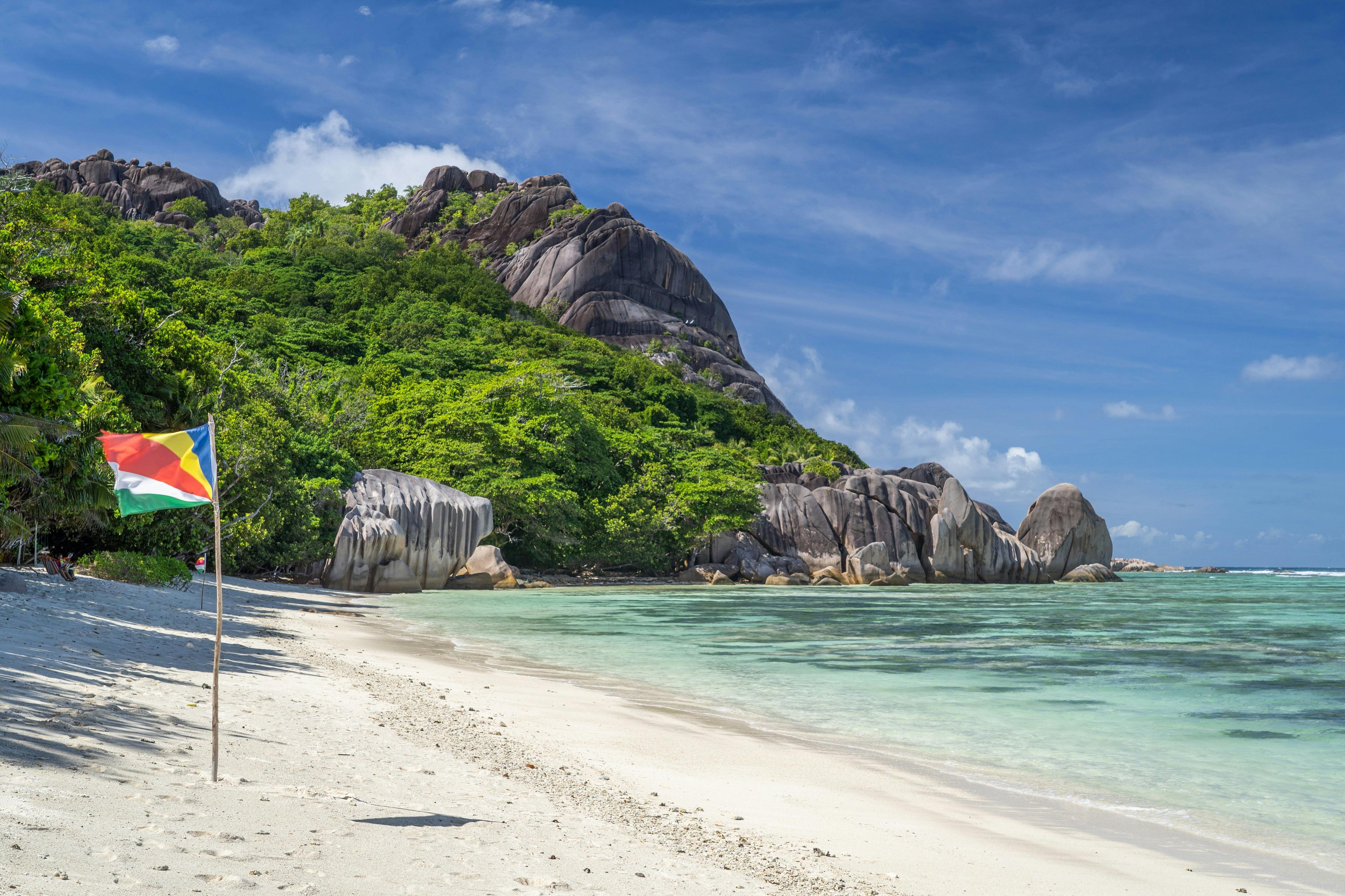
Seychelles is an archipelago of 115 islands in the western Indian Ocean, about 1,600 kilometers east of the African coast. Independent from Britain since 1976, home to roughly 100,000 people, and running the highest GDP per capita in Africa on the strength of tourism, tuna, and financial services. The legal system is a hybrid: civil law inherited from the French colonial period, layered with English common law in commercial matters. That mix explains why Seychelles offers both a common-law trust and a civil-law foundation with equal comfort, which few jurisdictions manage.
The offshore industry dates to the International Business Companies Act 1994, a statute that copied the BVI playbook and undercut it on price. It worked. Seychelles has registered over 200,000 IBCs since, competing on cost against BVI, Belize, and the Marshall Islands and usually winning. Trust legislation arrived the same year, and the Foundations Act followed in 2009, modeled on the same civil-law technology as Panama and Liechtenstein. The result is unusual: one small jurisdiction, one registered agent relationship, and all three structure types available under one roof at the lowest mainstream prices in the market.
The reputation arc needs telling straight, because it shapes how banks treat Seychelles paper today. The jurisdiction's cheap, fast, ask-few-questions incorporation model made it a heavy presence in the Panama Papers in 2016 and the Pandora Papers in 2021. The EU put Seychelles on its blacklist of non-cooperative tax jurisdictions (Annex I) in February 2020, moved it to the grey list in late 2021, blacklisted it again in October 2023 over information-exchange failures, and moved it back to the grey list in February 2024. The response from Victoria was a genuine rebuild: the Beneficial Ownership Act 2020 created a centralized register of who stands behind every entity, the IBC Act was amended in 2021 to require accounting records to be kept with registered agents, the Trusts Act 2021 replaced the 1994 trust law wholesale, and the Global Forum eventually gave Seychelles a positive rating on exchange of information. In February 2026 the EU removed Seychelles from both annexes entirely. For the first time in six years, the jurisdiction is clean on the EU's books.
That history cuts both ways. The reforms are real, and the entity you form in 2026 sits inside a far more credible framework than the 2015 version. But compliance officers have long memories, and "Seychelles" on a bank application still triggers more questions than "Jersey" does. Price this in before you commit.
Seychelles trusts under the 2021 Act
A Seychelles trust is a common-law trust governed by the Trusts Act 2021 (Act 34 of 2021), which came into force on 6 August 2021 and repealed the International Trusts Act 1994. The mechanics are conventional: a settlor transfers assets to a trustee, who holds legal title for beneficiaries under the terms of a trust deed. At least one trustee must be a Seychelles-licensed trust service provider regulated by the Financial Services Authority (FSA). Trusts registered under the old 1994 Act were deemed automatically re-registered under the new law, so no migration paperwork was required for existing structures.
The 2021 Act modernized the product in several concrete ways:
Duration. The 1994 Act capped trusts at 100 years. The 2021 Act removed the limit; a Seychelles trust may now continue indefinitely, which matters for dynastic planning.
Domestic access. The old regime walled international trusts off from Seychelles residents. The new Act unified the framework, so residency restrictions on settlors and beneficiaries loosened considerably.
Reserved powers. The settlor can reserve powers in the trust deed, or grant them to a protector, without invalidating the trust: the power to appoint and remove trustees, amend the deed, direct investments, veto distributions. The usual caveat applies here as everywhere. Powers you retain are threads a foreign court can pull when deciding whether you ever really parted with the assets.
Forced heirship exclusion. Transfers to a Seychelles trust cannot be unwound by foreign forced heirship rules. For settlors from civil-law countries where children inherit fixed shares by law, this is a genuine feature, and the same protection appears in the Foundations Act.
Registration and privacy: what actually gets disclosed
Every Seychelles trust must be registered with the FSA, which assigns a registration number. This is new discipline compared to the 1994 era, and it is where some of the post-2020 compliance friction lives. The saving grace is what stays out of view: the trust deed itself is not filed with the FSA or any other government body, and there is no public register of trusts. Details of settlors, beneficiaries, and protectors are collected under Seychelles' beneficial ownership framework and are available to domestic authorities such as the Financial Intelligence Unit, but not to the public. Disclosure of trust information to anyone else is prohibited by statute except under a Seychelles Supreme Court order in criminal matters such as money laundering or trafficking investigations.
So the privacy position is the modern offshore standard: your structure is invisible to casual searchers, plaintiffs' lawyers running asset sweeps, and data brokers, while remaining fully visible to regulators and, through CRS, to your home tax authority. Anyone promising more than that in 2026 is describing a felony, not a feature.
How it compares for asset protection
Here is the section that matters if litigation defense is your goal, and we will be blunt.
The 2021 Act contains respectable creditor provisions. A creditor seeking to set aside a transfer into a Seychelles trust must prove intent to defraud, must prove it beyond reasonable doubt rather than on the balance of probabilities, and must bring the claim within two years of the transfer. The Act does not recognize foreign forced heirship claims, and Seychelles courts will not simply rubber-stamp foreign judgments against trust assets. On paper, that package resembles the Cook Islands framework.
On paper is the operative phrase. The Cook Islands pairs nearly identical statutory language with four decades of litigated precedent, including US federal cases where trustees refused repatriation orders from the FTC and SEC and the assets stayed put. Nevis adds a procedural weapon Seychelles lacks: creditors must post a bond of roughly US$100,000 before they can even file. Belize goes further still and abolishes the fraudulent conveyance claim outright. Seychelles has none of those extras and, more importantly, no meaningful record of its trust statute surviving a determined, well-funded foreign creditor in court. Its trust industry is small, its judiciary has decided few high-stakes trust disputes, and the bench of experienced trust litigators is thin.
The fair conclusion: a Seychelles trust is a competent vehicle for holding assets, organizing succession, avoiding probate across borders, and keeping wealth out of public view, at a price well below the fortress jurisdictions. It is not the tool a US surgeon facing malpractice exposure or a founder staring down securities litigation should pick. If defeating hostile creditors is the primary job, pay the premium for the Cook Islands or Nevis. If the job is structure, succession, and privacy on a budget, Seychelles does it for a fraction of the cost.
Seychelles foundations under the 2009 Act
The foundation is the stronger of the two Seychelles products, and the one with the more distinctive legal features. Created under the Foundations Act 2009, it is a civil-law entity in the same family as the Panama private interest foundation and the Liechtenstein Stiftung, with the UAE's newer foundation regimes as the family's Gulf branch. Like its relatives, it is a legal person that owns assets in its own name and has no shareholders, no members, and no owners.
Where Seychelles stands out is the entry price and one piece of statutory drafting.
The entry price first. The minimum initial assets of a Seychelles foundation are US$1. Not a typo. Panama requires a nominal endowment of US$10,000, Liechtenstein a real minimum capital of CHF 30,000. Seychelles asks for a dollar, and even that can be endowed after registration. The number is symbolic, but it removes a formality that occasionally complicates formation elsewhere, and it signals the jurisdiction's whole approach: strip cost and friction out of the civil-law foundation and sell it at volume.
Now the drafting. Section 71 of the Foundations Act provides that assets transferred to the foundation become the foundation's property with full legal and beneficial title, cease to be assets of the founder, and do not become assets of any beneficiary unless and until actually distributed under the charter or regulations. The Act elsewhere confirms that beneficiaries hold no legal or beneficial interest in foundation assets before distribution. That sentence does more work than it appears to. In many disputes, the attack route against a foundation or trust is to argue that a beneficiary holds an interest that a creditor, divorcing spouse, or bankruptcy trustee can seize. Seychelles closes that door by statute: until money actually moves, there is nothing in the beneficiary's hands to take. Practitioners regularly cite this as the sharpest single feature in the Seychelles toolkit, and it is a cleaner formulation than Panama's equivalent.
The cast will look familiar if you have read our Panama guide. A founder creates the foundation by signing the charter and endowing the initial assets; the founder can be an individual or a company of any nationality, and nominee founders are common. A foundation council administers the entity, in the role a trustee plays for a trust; a single councillor suffices, corporate councillors are permitted, and none of them needs to be Seychelles-resident. A protector is optional but usual: the charter or regulations can grant a protector veto rights over council decisions, the power to hire and fire councillors, and control over distributions. The founder can serve as protector, and can be a beneficiary, though the founder cannot be the sole beneficiary. Every foundation must have a Seychelles registered agent licensed by the FSA.
The privacy architecture splits public from private the same way Panama does. The charter is filed with the FSA and registered: name, purpose, initial assets, registered agent, councillors. The regulations (the by-laws) are a private document, never filed anywhere, and that is where beneficiaries are named and distribution rules live. A stranger can confirm your foundation exists; they cannot learn who benefits from it. Your registered agent and any bank the foundation touches will know exactly who stands behind it, because the Beneficial Ownership Act 2020 requires it, and that information reaches Seychelles authorities but not the public record.
Annual obligations to the state are modest: a government renewal fee in the low hundreds of dollars (the FSA's published schedule puts foundation fees around US$200), plus the registered agent relationship and, since the 2021 amendments, the duty to keep accounting records lodged with that agent. A foundation cannot conduct habitual commercial business directly, but it can own companies that do, which brings us to the structure most clients actually build.
The classic combo: a foundation holding a Seychelles IBC
Search for "seychelles offshore company" and you will find the product that made the jurisdiction's name: the Seychelles IBC, governed by the International Business Companies Act 2016. It is probably the cheapest mainstream offshore company on earth. The government charges a flat US$150 to incorporate, regardless of capital, and about the same to renew each year. All-in formation through a provider commonly lands between US$500 and US$1,000, with annual renewals in the same band. Incorporation takes a day or two. There is no minimum capital, no audit requirement, no annual return, and no Seychelles tax on foreign-source income.
The classic architecture places an IBC underneath a foundation. The IBC holds the working assets: brokerage accounts, crypto, invoicing for a location-independent business, shares in operating companies. The foundation owns 100 percent of the IBC. Because the foundation has no owners, the chain of ownership terminates at an entity nobody holds, with succession instructions already written into the private regulations. The founder or a family member typically directs the IBC as director, keeping day-to-day control while the ownership layer sits beyond their personal estate. It is the same logic as the trust-plus-LLC structure in our Belize guide, executed in civil-law parts at perhaps a third of the running cost.
Two post-reform realities temper the old brochure version of this structure. First, compliance is no longer optional or nominal. Since the 2021 amendments to the IBC Act, every Seychelles company must keep accounting records and lodge them with its registered agent in Seychelles twice a year, with a seven-year retention requirement; larger companies must also prepare an annual financial summary. Beneficial owners must be declared to the registered agent and recorded in the centralized register, which authorities can access but the public cannot. None of this is onerous compared to a real onshore company, but the era of the write-only Seychelles IBC is over, and providers who imply otherwise are describing 2015.
Second, banking is the hard part. Seychelles' own domestic banks are small and largely uninterested in non-resident IBC business, so in practice a Seychelles structure banks elsewhere: EMIs and fintechs for operating flows, Mauritius, Singapore, Switzerland, or the UAE for substance. Expect some institutions to decline Seychelles entities on jurisdiction alone, and expect the ones that accept them to ask for the full ownership chain, the accounting records, and the story behind the structure. A foundation-plus-IBC stack with clean documentation gets banked; a bare IBC with a vague purpose increasingly does not. Our guide to picking an offshore trust company covers the provider due diligence side, which matters doubly in a budget jurisdiction where formation mills are common.
Taxation: territorial, tax-neutral, and reported
Seychelles moved to a territorial tax system with the Business Tax (Amendment) Act 2018, effective 2019. The principle carries through cleanly for offshore structures: income sourced outside Seychelles is not taxed in Seychelles. A foundation holding foreign investments, a trust with non-resident beneficiaries and no Seychelles-source income, and an IBC earning abroad all pay Seychelles nothing beyond their flat annual fees. There is no Seychelles capital gains tax, no withholding on distributions to non-residents from foreign income, no wealth tax, and no estate tax on these structures.
Read that the way we always insist: tax-neutral is not tax-free. Seychelles stepping aside leaves the entire tax question with your home country, and your home country will take it. Seychelles has participated in the Common Reporting Standard since 2017, so financial accounts held by your foundation, trust, or IBC are reported automatically to the tax authority of the controlling persons' residence country. Controlled foreign company rules, trust attribution rules, and foundation look-through rules in the EU, UK, Canada, Australia, and elsewhere generally tax the structure's income as yours. The February 2026 removal from the EU's tax list helps with defensive measures (extra withholding, denied deductions, mandatory reporting that applied while Seychelles sat on the annexes), but it changes nothing about your personal obligations at home.
US persons get the usual blunt paragraph. The IRS has no category called "foundation" and will classify a Seychelles foundation on substance as either a foreign trust or a foreign corporation; a Seychelles trust settled by a US person who retains powers or benefits is almost always a grantor trust. Either path lands on your personal return in full, with the reporting stack on top: Forms 3520 and 3520-A for trusts, Form 5471 and possibly GILTI for corporations, FBAR and Form 8938 in all events. Penalties for missed filings start at US$10,000 and scale with the amounts involved. People have paid six figures for late paperwork on structures that owed zero tax. If you are a US person, the structure must be designed around US rules from day one, and the annual CPA bill of US$2,000 to US$5,000 will often exceed everything you pay Seychelles.
What it costs
The reason this article exists. Numbers from current provider pricing as of early 2026, with the usual spread between formation mills and full-service firms:
Foundation formation: US$1,000 to US$3,500 all-in. That includes drafting the charter and regulations, the US$200 government registration fee, the first year's registered agent, and basic nominee services at the top of the range. Budget providers advertise packages near the bottom.
Foundation annual maintenance: US$1,000 to US$2,000. Government renewal around US$200, registered agent typically US$500 to US$1,200, plus nominee councillor or protector services if used.
Trust setup: US$1,500 to US$4,000, covering deed drafting, FSA registration, and licensed trustee onboarding. Annual trustee and agent fees: roughly US$1,000 to US$2,500 for straightforward holding trusts, more where the trustee actively administers significant assets.
IBC: US$500 to US$1,000 to form, similar to renew. A foundation-plus-IBC stack therefore runs about US$1,500 to US$4,500 to build and US$1,500 to US$3,000 a year to keep.
Against the competition: a Panama foundation costs roughly US$1,500 to US$5,000 to form and US$1,000 to US$2,500 a year. A Belize trust runs US$5,000 to US$15,000 up front and US$2,000 to US$5,000 annually. A Cook Islands trust starts around US$12,000 with annual fees of US$3,000 to US$6,000 or more, and a Liechtenstein foundation plays in a different bracket entirely, with CHF 30,000 minimum capital and Swiss-tier professional fees. Seychelles undercuts all of them, usually by 20 to 50 percent against Panama and by multiples against the premium trust jurisdictions. Our full offshore trust cost breakdown puts these numbers side by side across every jurisdiction we cover.
The standing warning applies with extra force at these prices. The cheapest quote in a cheap jurisdiction is where template documents, absentee councillors, and unreachable agents live. The few hundred dollars saved on formation are the most expensive savings in offshore planning, because the structure's value is only ever tested at the worst possible moment. Spend at the top of the Seychelles range and you are still paying half of Panama.
Who Seychelles is for, and who it is not for
The honest segmentation, based on what the structures actually deliver:
A good fit. Cost-sensitive holding structures: a foundation owning an IBC that holds investments or crypto, built for succession and privacy, for someone whose realistic threat model is probate chaos, forced heirship, public visibility, or garden-variety commercial disputes rather than nine-figure US litigation. Founders from civil-law countries who want forced heirship excluded by statute. Location-independent entrepreneurs who need a clean, cheap corporate wrapper and already bank through EMIs or Asian and Gulf institutions. People building a first offshore layer who want real legal machinery without a five-figure entry ticket.
A poor fit. Anyone whose primary goal is defending assets against determined US creditors; that job belongs to the Cook Islands or Nevis, where the statutes have battle records and the trustees have practice saying no to federal judges. Families needing EU-facing substance, treaty access, or private-bank prestige; Liechtenstein and Jersey exist for them, at Liechtenstein and Jersey prices. Anyone whose plan depends on opacity from their own tax authority, which no jurisdiction offers anymore, least of all a CRS participant with a centralized beneficial ownership register. And US persons unwilling to fund the annual compliance stack, for whom the cheap structure becomes an expensive penalty generator.
How to set up a Seychelles trust or foundation
The registered agent model keeps the process short. Foundations and IBCs form in days; trusts take slightly longer because a licensed trustee must onboard you. The sequence:
Get home-country advice first. A cross-border tax advisor before anything is signed, and litigation counsel if asset protection is part of the goal. Structure follows tax residence, not the other way around.
Choose the structure. Foundation for civil-law comfort, succession, and holding; trust where common-law treatment or specific trustee arrangements matter; either one over an IBC if there are working assets underneath.
Select the provider. A Seychelles registered agent or trustee licensed by the FSA. Check the FSA's public register of licensees, ask how many structures they administer, who owns the firm, and how they handle document requests and banking introductions. This decision outweighs every other.
Clear KYC. Certified passports, proof of address, source-of-funds and source-of-wealth documentation for every connected person. Post-2020 Seychelles is thorough; treat a provider who is not as a warning.
Draft and register. For a foundation: charter filed with the FSA, private regulations drafted alongside, entity live in one to three business days. For a trust: deed settled between counsel and trustee, then FSA registration and a registration number. For an IBC: same-week incorporation.
Fund it. Endow the foundation beyond its symbolic dollar, transfer assets to the trustee, capitalize the IBC. Document every transfer, because the two-year creditor clock on trusts runs from each one, and an unfunded structure protects nothing.
Open banking. Expect this to take longer than formation. Plan the banking jurisdiction before you form, not after.
Maintain and report. Pay the annual government and agent fees, lodge accounting records with the registered agent on schedule, keep the beneficial ownership file current, and file everything your home country requires, every year, permanently.
Honest drawbacks
The thinnest case law in this series. Belize at least has decades of marketing scrutiny; the Cook Islands has federal courtroom wins; Panama has 100,000 registered foundations and thirty years of practice. Seychelles' modern trust statute is from 2021 and its foundation law from 2009, and neither has a meaningful record of surviving sophisticated attack. You are relying on statutory text almost alone.
Banking friction. Domestic banking is close to unavailable for non-resident structures, and a Seychelles entity name triggers enhanced due diligence at many foreign institutions. Workable, with planning and clean paperwork, but slower and narrower than BVI or Singapore equivalents.
Reputational residue. Two EU blacklistings inside four years, heavy leak exposure in 2016 and 2021, and a volume-incorporation history all live in compliance databases. The February 2026 delisting is genuine progress; it is not amnesia.
More compliance than the price implies. Bi-annual accounting lodgment, beneficial ownership declarations, FSA registration for trusts. Reasonable rules, but they erase the old zero-friction pitch, and cut-rate agents administer them badly.
A shallow professional bench. Few licensed trustees, fewer trust litigators, and limited institutional depth if a provider relationship fails or a dispute needs local counsel.
The universal rule. No Seychelles statute rescues assets moved after a claim has arisen, and no structure anywhere hides income from a tax authority that receives your CRS data automatically.
Where this fits in a Plan B
Structures answer the asset question: who owns what, who can take it, and what happens when you die. They answer nothing about you personally: where you can live, which passports you hold, which governments can tax or ground you. A complete Plan B works both sides.
For most people the personal side comes first, because it takes longest and determines everything else. Your tax residence decides how a Seychelles foundation is treated, so a second citizenship or a deliberate residence move belongs upstream of the structuring decision, and citizenship by investment is the fastest personal layer for those who qualify. Crypto holders tend to assemble the familiar three-part stack: a position in one of the crypto-friendly countries for the personal tax treatment, a foundation or trust holding the assets with key succession written into the regulations, and banking spread across two or three jurisdictions. Seychelles' role in that stack is the economical holding layer: rarely the crown jewel, frequently the workhorse, and cheap enough that it does not compete for budget with the citizenship piece that actually protects you.
Frequently asked questions
What is a Seychelles trust?
A common-law trust governed by the Seychelles Trusts Act 2021, under which a settlor transfers assets to a licensed Seychelles trustee to hold for beneficiaries. It must be registered with the Financial Services Authority, can last indefinitely, permits broad reserved powers, excludes foreign forced heirship claims, and pays no Seychelles tax when beneficiaries are non-resident and income is foreign-source. The trust deed and beneficiary details are not public.
What is a Seychelles foundation?
A civil-law legal entity formed under the Foundations Act 2009, in the same family as Panama and Liechtenstein foundations. It owns its assets outright, has no shareholders, and requires initial assets of just US$1. A founder creates it, a council administers it, an optional protector supervises, and beneficiaries, named only in the private regulations, hold no legal or beneficial interest in foundation assets until a distribution is actually made.
How much does a Seychelles foundation cost?
Roughly US$1,000 to US$3,500 to form through a licensed registered agent, and US$1,000 to US$2,000 a year to maintain, including the government fee of about US$200 and the agent relationship. A stack with an underlying IBC adds US$500 to US$1,000 per year. US persons should budget a further US$2,000 to US$5,000 annually for tax compliance, which often exceeds the Seychelles costs themselves.
Is Seychelles a good offshore jurisdiction?
Good for cost, speed, and structural variety: trusts, foundations, and the cheapest mainstream IBC available, all through one registered agent, with territorial taxation and no public registers of beneficiaries. Weaker on case law, banking access, and reputation, with two EU blacklistings before its removal from the EU tax lists in February 2026. It suits budget-conscious holding and succession structures; it does not suit hardcore litigation defense or prestige-sensitive European planning.
Seychelles vs Panama foundation: which is better?
They are near-identical legal technology at different prices. Panama has the deeper track record, a larger professional industry, and a US$10,000 nominal endowment; Seychelles has a US$1 minimum, lower formation and annual costs, and the notably clean Section 71 rule that beneficiaries hold no interest in assets before distribution. Panama carries its own list history and Papers legacy; Seychelles carries a thinner bench and harder banking. Families wanting the established product pick Panama; buyers optimizing purely for cost pick Seychelles. Our Panama foundation guide covers the other side in full.
Do Seychelles trusts have to be registered?
Yes. Under the Trusts Act 2021, every Seychelles trust must be registered with the FSA and receives a registration number. The register is not public: the trust deed is not filed, and settlor, beneficiary, and protector details go to Seychelles authorities rather than into any searchable record. Trusts registered under the former 1994 Act were automatically treated as re-registered when the new law commenced in August 2021.
The bottom line
Seychelles is the value play of the offshore world: a real foundation for the price of a laptop, a perpetual trust with modern reserved-powers drafting, and the cheapest credible IBC anywhere, all under a regulator that has spent five years earning its way off the EU's lists. The trade-offs are equally concrete: the thinnest case law of any jurisdiction in this series, banking that must be arranged elsewhere, and a name that still slows down compliance departments. Buy it for economical holding, succession, and privacy. Do not buy it expecting Cook Islands armor at one-tenth of the price, because that product does not exist.
And remember which half of the plan this is. A foundation protects what you own; it does nothing about where you can go or who taxes you. The personal layer, citizenship and residence, has the longest lead time and the fewest substitutes. Create a free CitizenX account to map the citizenship and residence options that belong alongside whatever structure your advisors build.
CitizenX is not a law firm or tax advisor. This article is general information, not legal, tax, or investment advice. Rules change and individual circumstances differ; consult qualified professionals in Seychelles and in your country of residence before establishing any structure.