For Africans, passport strength is a daily economic fact: it decides whether a business trip to Europe takes an afternoon of booking or six weeks of consular queues
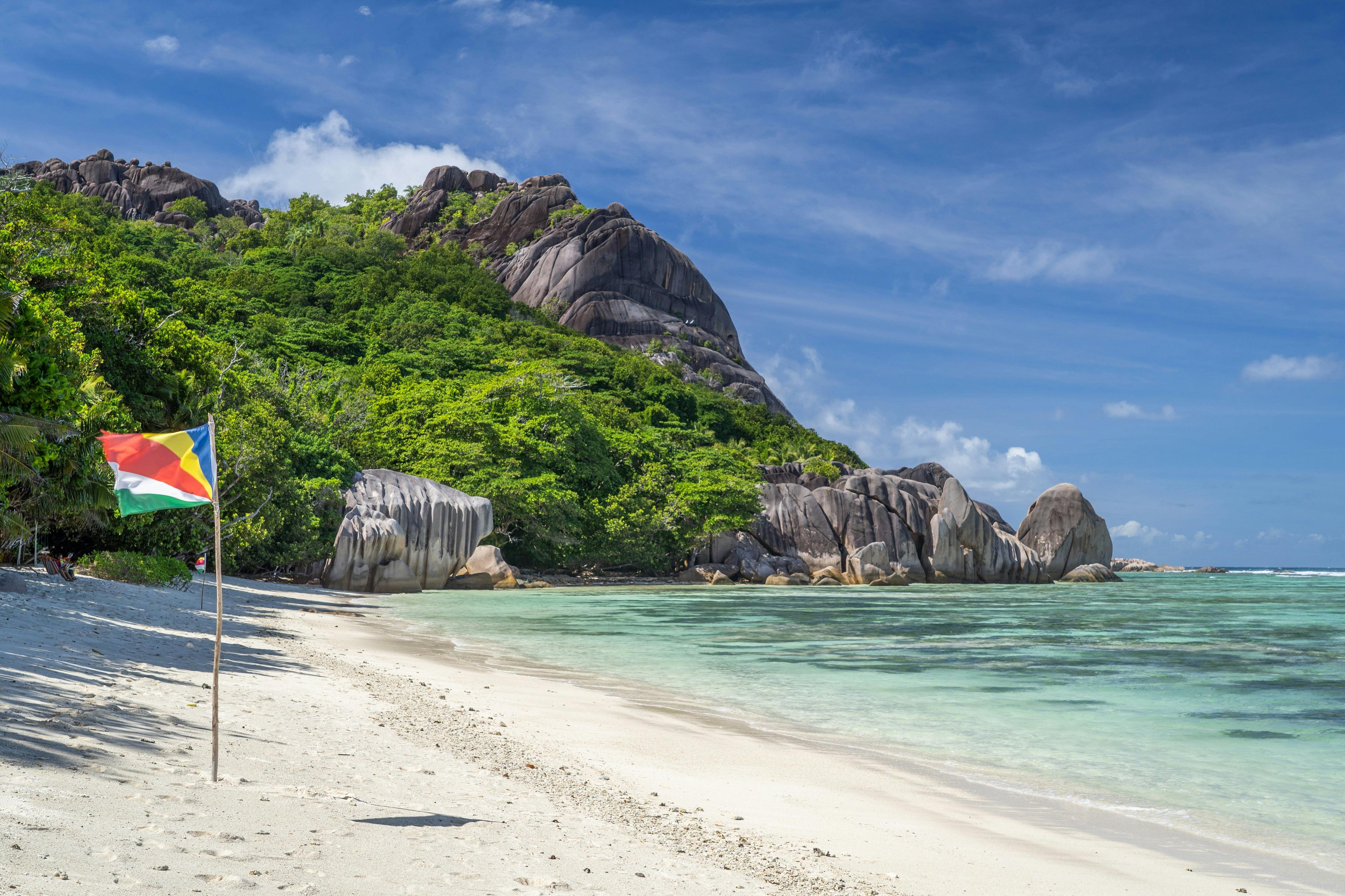
The strongest passport in Africa doesn't belong to the continent's largest economy, its most populous nation, or its diplomatic heavyweight. It belongs to Seychelles, an island nation of 100,000 people – fewer than a single Lagos neighborhood – whose citizens can fly to Paris, London, or Singapore without applying for a visa. Nigeria's 220 million people, by contrast, hold one of the weakest travel documents in the world.
That gap runs through everything about African mobility. The continent's two strongest passports belong to small island states in the Indian Ocean; its continental giants – Nigeria, Egypt, Ethiopia, the DR Congo – sit near the bottom of global tables. And in between lies a southern African cluster whose passports are far stronger than most of their holders realize.
For Africans, passport strength is a daily economic fact: it decides whether a business trip to Europe takes an afternoon of booking or six weeks of consular queues. For investors and globally mobile families, the African rankings hold a lesson we've seen before in our Caribbean passport ranking: small, stable, well-governed states can build travel documents that outclass superpowers.
A note on method before the list: we compile our own assessment from official visa-policy sources – government announcements, destination-country immigration rules, and treaty texts. We don't reference or rely on any third-party passport index. Visa policies are public facts, and anyone can verify that a Seychellois enters the Schengen Area freely while a South African cannot.
How We Rank Passport Strength
Four factors, weighted in this order:
Access to high-demand destinations. The Schengen Area, the United Kingdom, and the major Asian hubs count for far more in our ranking than an equivalent number of small states. Only two African passports open Europe without a visa, and that fact alone shapes the top of this list.
Total visa-free and visa-on-arrival access. The headline count, compiled from official sources and reported as approximate figures – these numbers move constantly as agreements are signed, suspended, and renegotiated, and any precise number without a date attached is already wrong.
Intra-African mobility. For African passport holders, access across the continent matters enormously and is changing fast – Kenya and Rwanda have moved to open their borders to all Africans, and the African Union keeps pushing its free-movement protocol. We weight regional access more heavily here than we would elsewhere.
Stability of access. Privileges can vanish. Namibia lost UK visa-free access in 2023; South Africa lost it in 2009 and never got it back. A passport's trajectory matters as much as its snapshot.
The Top 10 at a Glance
Rank
Passport
Approx. Visa-Free Access
Schengen
UK
Notes
1
Seychelles
~150 destinations
Yes
Yes
Africa's only top-tier global passport
2
Mauritius
~145
Yes
Yes
Schengen + UK + strong Asia access
3
South Africa
~100-105
No
No
The continent's fallen leader
4
Botswana
~85-90
No
Yes
Counts are our own compilation from official visa-policy sources as of early 2026; treat them as close estimates.
1. Seychelles: Africa's Passport Superpower
Seychelles holds the strongest passport in Africa by a comfortable margin – roughly 150 visa-free or visa-on-arrival destinations, including the two that matter most: the full Schengen Area and the United Kingdom. No other African passport except Mauritius's opens either.
The Schengen access rests on a specific legal foundation: the European Union's 2009 round of short-stay visa-waiver agreements with small island states – the same treaties that power the Caribbean's top passports. Seychelles qualified for the same reasons the eastern Caribbean did: tiny population, negligible overstay risk, functioning documents, and a tourism relationship Europe wanted to keep frictionless.
The rest of the map follows from good standing patiently maintained. Seychelles reaches the UK, much of Asia including Hong Kong and Singapore, and nearly all of Africa without visas. Its own borders are open too – Seychelles requires visas of no one, one of the few countries on earth that can say so.
There's no citizenship by investment here and no reliable shortcut: Seychellois citizenship requires long residence or descent. Which is, as the Caribbean's rankings also taught, part of why the passport is what it is. The strongest documents belong to countries that never turned them into products.
2. Mauritius: The Indian Ocean's Other Winner
Mauritius runs Seychelles close, with roughly 145 visa-free destinations including – again – both Schengen and the UK, plus an Asia network reflecting the island's trading history: Hong Kong, Singapore, Japan, and China are all accessible without advance visas.
Mauritius's document rests on the same 2009 EU waiver treaty and on the strongest institutional reputation in Africa: decades of unbroken democracy, the continent's top spots in governance rankings, and a diversified economy of finance, tourism, and services that we covered in our ranking of Africa's richest cities, where Port Louis and Grand Baie both feature.
Unlike Seychelles, Mauritius actively courts foreign residents – property-linked residence permits from $375,000, retirement and remote-work routes – but residency is not citizenship, and Mauritius guards the latter carefully. Naturalization requires years of genuine residence. The passport isn't for sale, and its strength is the dividend of that policy.
For wealthy Africans, Mauritius plays the role Singapore plays for Asia: the regional safe haven whose own passport happens to be the neighborhood's best, or nearly so.
3. South Africa: The Fallen Leader
South Africa's passport is the strongest on the African mainland – roughly 100-105 destinations, with excellent coverage of South America, Southeast Asia, and the continent itself. It's also the continent's clearest story of decline, which is why "South African passport ranking" searches so often come paired with the word "drop."
The turning point was 2009, when the United Kingdom – citing document fraud in the passport issuance system – imposed visa requirements on South African citizens. Ireland followed. New Zealand later did the same. The Schengen Area has never offered a waiver. Each loss compounded: a passport that opened most of the rich world in the 1990s now requires visas for essentially all of it, and periodic diplomatic efforts to reverse the UK decision have gone nowhere in sixteen years.
What remains is still substantial. Visa-free access to Brazil, Argentina, and most of South America; to Singapore, Malaysia, Thailand, and the Philippines; to nearly all of Africa; plus Russia, Türkiye, and much of the Caribbean – including the CBI countries from our Caribbean ranking. For travel within the Global South, the green mamba, as South Africans call it, works well. For Europe and North America, it means queues – which is exactly why South Africans have become one of the largest client nationalities in the global second-citizenship industry.
4. Botswana: The Quiet Overachiever
Botswana's passport reaches roughly 85-90 destinations, and one of them is the United Kingdom – making Botswana one of only a handful of mainland African states whose citizens enter Britain without a visa (now with the UK's electronic travel authorization, like everyone else).
The why is familiar by now: Botswana has been the continent's steadiest democracy since independence in 1966, managed its diamond wealth without the usual resource curse, and never gave consular risk analysts a reason to reconsider. The result is a document that out-travels those of countries five times richer in absolute terms and fifty times larger.
Beyond the UK, Botswana's map covers nearly all of southern and eastern Africa, much of the Caribbean and Southeast Asia, plus Russia and Türkiye. Schengen remains closed – no mainland African state has a waiver – and the US requires a visa, as it does of every country on this list.
Botswana citizenship requires long residence and renouncing other nationalities, so the passport stays where it was born. As with Barbados in the Caribbean, the strongest documents in each region tend to belong to the countries hardest to join.
5. Namibia: The Cautionary Tale
Namibia's passport covers roughly 80 destinations – solid regional and Commonwealth access – and carries the continent's freshest warning about how quickly privileges can vanish. In July 2023, the United Kingdom imposed visa requirements on Namibian citizens, citing a rise in asylum claims, in the same policy round that hit Dominica in our Caribbean ranking.
The loss dropped Namibia below Botswana and reshuffled southern Africa's passport order overnight. It also demonstrated the mechanism that governs every ranking on this page: visa-free access is granted and withdrawn unilaterally, on the destination country's reading of its own statistics, with no appeal.
What Namibia retains is respectable – most of Africa, much of the Caribbean, parts of Southeast Asia, Russia, Türkiye – and the country's underlying fundamentals (stable governance, small population, growing economy that features in our Africa wealth coverage via Windhoek) argue for eventual recovery. But "eventual" is doing heavy work in that sentence. South Africa has been waiting since 2009.
6. Lesotho: Small Kingdom, Solid Document
Lesotho, the mountain kingdom encircled by South Africa, holds a passport that reaches roughly 75-80 destinations – including, still, the United Kingdom. For a country of two million with one of Africa's smaller economies, that's a striking outcome, and it follows the pattern this list keeps confirming: small Commonwealth states with low migration-risk profiles keep privileges that larger neighbors lose.
The Basotho passport also covers nearly all of southern and eastern Africa, a good slice of the Caribbean and Southeast Asia, and the usual Commonwealth-adjacent set. Its weaknesses mirror the region's: no Schengen, no North America, and vulnerability to exactly the kind of unilateral review that hit Namibia – asylum-claim statistics are the metric to watch.
Few outside southern Africa think about Lesotho's passport at all, which is part of why it works. Documents attract restrictions when they attract attention.
7. Eswatini: The Cluster Continues
Eswatini (formerly Swaziland) completes the southern African trio with roughly 75 destinations, UK access included. Africa's last absolute monarchy is not anyone's governance model, but visa policy is actuarial rather than moral: a tiny population, low overstay numbers, and Commonwealth continuity keep the document strong.
The map looks like Lesotho's – regional Africa in full, Caribbean and Southeast Asian coverage, Türkiye and Russia – and the same caveats apply. What Eswatini adds to this article is mostly evidence: three consecutive entries now from small southern African monarchies and republics whose passports outperform Ghana's, Kenya's, and Nigeria's, in defiance of every intuition about economic weight and diplomatic presence.
Passport strength, in Africa more than anywhere, is a small-country sport.
8. Kenya: East Africa's Leader, Opening Its Own Doors
Kenya's passport reaches roughly 75 destinations – the best in East Africa – with strong African coverage, Southeast Asian access, and the Commonwealth-adjacent set, but no Schengen and no UK (Kenya lost British visa-free access decades ago).
What earns Kenya its place here as much as its count is what it's doing on the other side of the border post. In 2024 Kenya abolished visa requirements for all African nationals, replacing them with a simple electronic travel authorization – the highest-profile move yet in the African Union's long campaign for continental free movement, alongside Rwanda's similar opening. The bet, explicitly stated by Nairobi, is that reciprocity will follow: open your doors and others open theirs.
It's slow, but it's working at the regional level – East African Community citizens already move freely – and it's the trend most likely to lift the entire middle of this ranking over the next decade. If Africa's passports converge upward, the process will have started in places like Nairobi and Kigali, not in Brussels.
9. Tanzania: Regional Strength
Tanzania's passport covers roughly 70-75 destinations, built on the now-familiar frame: full East African Community mobility, broad African access, Commonwealth-linked reach into the Caribbean and Southeast Asia, plus Russia, Türkiye, and the Gulf's visa-on-arrival tier.
Its trajectory is quietly positive. Tanzania's economy has been among Africa's steadiest growers (Dar es Salaam features in our Africa wealth ranking), its diplomacy is uncontroversial, and its migration profile has kept it clear of the review cycles that hit its southern neighbors. No single privilege stands out; nothing has been lost lately. In this ranking, that counts as a compliment.
The realistic ceiling, for now, is the same one capping every mainland entry: Europe. Until the EU extends a waiver to a mainland African state – something it has never done – the gap between ranks two and three on this list stays a chasm.
10. Morocco: North Africa's Strongest
Morocco closes the top ten with roughly 70 destinations – the strongest document in North Africa, ahead of Tunisia's by a nose and Egypt's by a distance. The map tilts differently from the sub-Saharan entries: strong West African access (Morocco has spent two decades building ties with ECOWAS states), the Gulf's visa-on-arrival tier, Türkiye, Brazil, and much of Southeast Asia.
Europe, despite everything – geography, trade, a diaspora in the millions, and the deepest EU relationship of any African state – requires a visa. That fact, unchanged for decades and unlikely to change soon, is the single best illustration of how visa policy actually works: it follows migration statistics, not economic integration. Morocco sends Europe too many people for Brussels to open the door, however close the two shores sit.
For Moroccans, as for most of the continent, the practical consequence is a two-speed travel life: easy across Africa and the Global South, bureaucratic everywhere north of Gibraltar.
The Island Watchlist: Cape Verde and São Tomé and Príncipe
Two more island states deserve their own section – not because their passports rank in today's top ten, but because both hold cards the mainland doesn't, and one of them is this article's most likely future climber.
Cape Verde holds a passport of roughly 65-70 destinations – full ECOWAS mobility, solid South American and Asian visa-on-arrival access – which understates everything interesting about it. The archipelago has the deepest EU relationship of any African state: a formal Special Partnership since 2007, a visa-facilitation agreement already in force, a currency pegged to the euro, and governance rankings that sit alongside Mauritius and Botswana at the continent's top. Its diaspora in Europe and America outnumbers the resident population. If the EU ever extends a Schengen waiver to an African state beyond Seychelles and Mauritius – and the treaty architecture for a candidate is already half-built in exactly one place – it's Praia that gets the call. A Cape Verdean waiver would be the biggest single re-rating in African passport history, and unlike most such speculation, this one has paperwork behind it.
São Tomé and Príncipe carries a similar count – roughly 65-70 destinations, with Portuguese-speaking Africa, ECOWAS-adjacent access, and growing visa-on-arrival coverage – and a different strategic profile. As a CPLP member, its citizens benefit from the lusophone mobility framework Portugal implemented in 2022, which gives them a facilitated residence route into Portugal itself: a legal on-ramp toward Europe that most stronger African passports entirely lack. São Tomé is also the continent's notable citizenship by investment jurisdiction, and its applicant pool tells you how the market reads it – Germans, holders of one of the world's strongest passports, rank among its largest nationality groups. Nobody buys São Toméan citizenship for the visa-free count. They buy the island-state trajectory this article keeps documenting, the Portuguese connection, and the optionality of an uncrowded jurisdiction – the same logic, at an earlier stage, that Seychelles and Mauritius now cash monthly at Europe's borders.
Both countries fit the thesis of this entire ranking: in Africa, the passports worth watching belong to small, stable island states with European treaties in the drawer. The top two spots prove it retrospectively. These two might prove it prospectively.
Why Africa's Map Looks Like This
Three patterns explain nearly everything above.
The island exception. Africa's only Schengen-grade passports belong to Seychelles and Mauritius, for the same reason the Caribbean's small islands hold that region's crown: the EU's 2009-2015 waiver treaties went to micro-states with negligible migration risk. No mainland African country has ever been offered one.
The Commonwealth residue. UK access survives where colonial-era goodwill met consistently low asylum and overstay statistics: Botswana, Lesotho, Eswatini, Mauritius, Seychelles. It vanished where those statistics moved: South Africa in 2009, Namibia in 2023. The pattern is actuarial, not political, and it can reverse in either direction.
The integration project. The African Union's free-movement protocol, AfCFTA's economic logic, and unilateral openings by Kenya and Rwanda are slowly building the continental layer. Most African passports are weak globally but strengthening regionally – and for actual African travelers, the second trend may matter more than the first.
What This Means for Investors and Global Citizens
For African families with means, the rankings above explain a booming industry. South African, Nigerian, Egyptian, and Kenyan nationals are among the largest client groups for second citizenships precisely because their home documents tax every trip. The Caribbean programs from our companion ranking – led by St. Kitts and Nevis and Grenada – solve the Schengen and UK problem in four to twelve months, which is why Lagos and Johannesburg feature so prominently in those programs' application statistics.
Africa also has its own emerging entry in the citizenship-by-investment world: São Tomé and Príncipe, covered in the island watchlist above – an early-stage position in exactly the jurisdiction profile this ranking rewards. Latin American routes like Argentina round out the usual shortlist for African families building a portfolio of options.
For non-African readers, the takeaway is simpler: Mauritius and Seychelles offer residence in jurisdictions whose passports, institutions, and tax systems all rank at the continent's top – though citizenship in either is a long game by design.
Frequently Asked Questions
What is the strongest passport in Africa in 2026?
Seychelles, by our compilation of official visa policies – roughly 150 visa-free destinations including the Schengen Area and the UK. Mauritius follows closely. They are the only African passports with visa-free access to Europe.
Why did South Africa's passport get weaker?
The decisive blow was the UK's 2009 imposition of visa requirements, citing passport fraud, followed by Ireland and New Zealand. No Schengen waiver has ever been on offer. The document remains the mainland's strongest, but its rich-world access never recovered.
Which African passports can enter the UK without a visa?
Seychelles, Mauritius, Botswana, Lesotho, and Eswatini, among this list – all now subject to the UK's electronic travel authorization. Namibia lost its UK access in July 2023; South Africa lost it in 2009.
Can Africans get a stronger second passport?
Yes – that demand drives much of the global citizenship-by-investment market. Caribbean programs deliver Schengen- and UK-grade passports in four to twelve months from around $200,000-250,000. There is no African program offering comparable access; São Tomé and Príncipe operates the continent's notable citizenship program, valued more for optionality than raw mobility.
Will African passports get stronger?
Regionally, yes – Kenya's and Rwanda's openings and the AU's free-movement agenda are lifting intra-African access year by year. Globally, the ceiling is Europe, and the EU has never extended a visa waiver to a mainland African state. The island exceptions look set to keep their monopoly for now.
Final Thoughts
Africa's passport rankings are the world's clearest demonstration that mobility follows trust statistics, not power. The continent's giants sit at the bottom of the global tables while a 100,000-person archipelago holds a document that embarrasses the BRICS. The middle of the list is a story of Commonwealth goodwill kept or squandered, and the bottom – where a dozen countries we didn't rank offer their citizens fewer than 60 destinations – is the sharpest passport inequality anywhere on earth.
Two things are worth watching from here. Whether the EU ever breaks its mainland embargo – Cape Verde, another small island state, is the likeliest first candidate – and whether the Kenya-Rwanda model of unilateral openness spreads fast enough to make the continental layer matter more than the European one. The first would change a country's ranking. The second would change what the rankings mean.