Best Second Passports for Brazilian Citizens in 2026
Best Second Passports for Brazilian Citizens in 2026
Brazilians hold one of the best passports in the emerging world, and wealthy Brazilians are still buying second ones. They're right. Here's the logic, the best options for Brazilian citizens in 2026, and what each one costs.
title: "Best Second Passports for Brazilian Citizens in 2026"
slug: "best-second-passport-brazilian"
author: "Alex Recouso"
published: 2026-08-06
description: "Brazilians hold one of the best passports in the emerging world, and wealthy Brazilians are still buying second ones. They're right. Here's the logic, the best options for Brazilian citizens in 2026, and what each one costs."
Brazilians hold one of the best passports in the emerging world, and wealthy Brazilians are still buying second ones. They're right. Here's the logic, the best options for Brazilian citizens in 2026, and what each one costs.
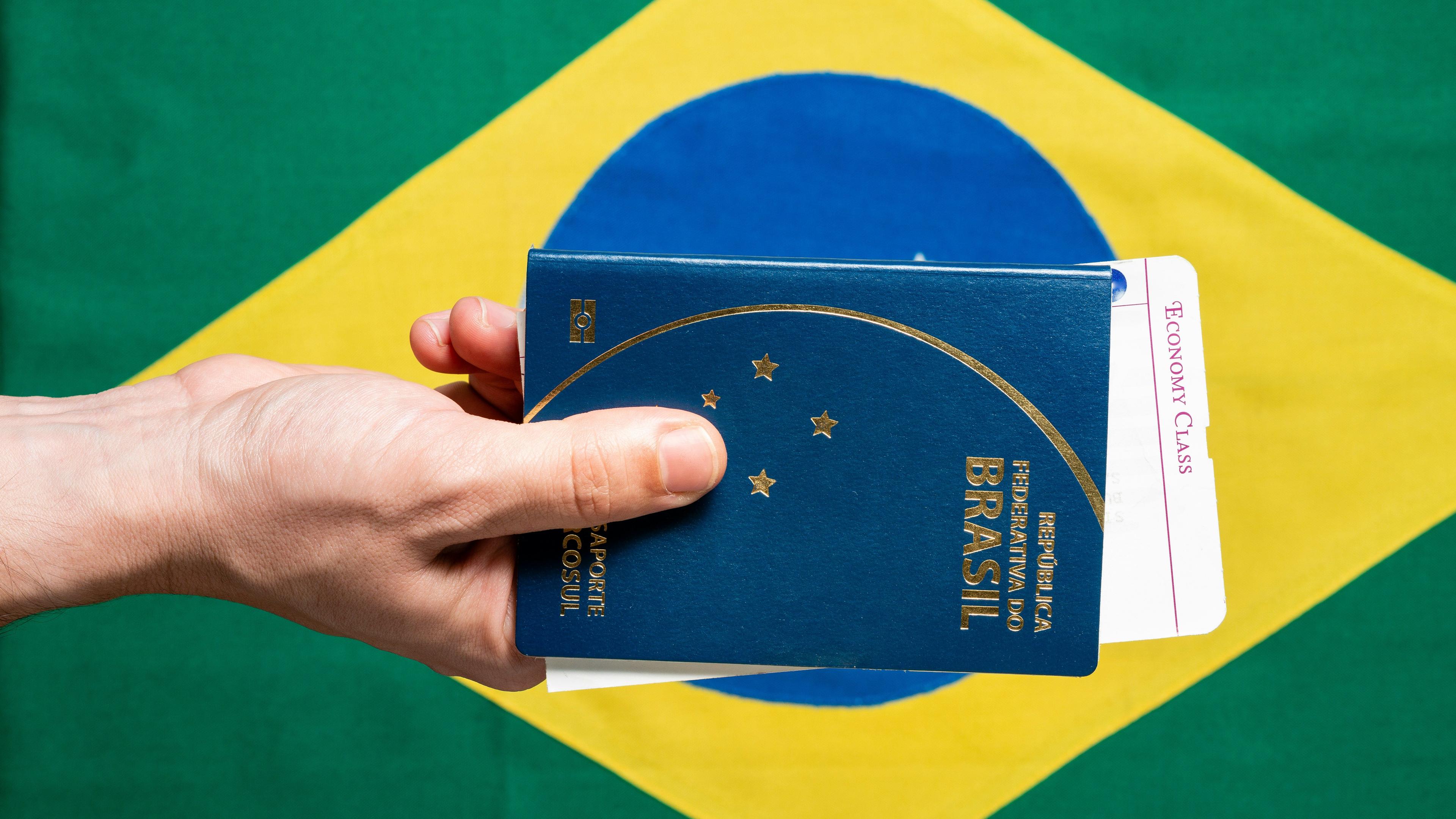
The Brazilian passport is a genuinely good document. Around 170 destinations without a visa, including all of Schengen, the UK, and Japan. On paper, a wealthy Brazilian has less reason to read this article than almost anyone I write for.
And yet Brazilians are among the most active buyers of golden visas and second citizenships anywhere. Portugal's program ran substantially on Brazilian money for a decade. Miami real estate, Lisbon apartments, Uruguayan residencies: the pattern is decades old and it accelerated through the last two political cycles.
Wealthy Brazilians aren't confused. They've simply understood something that takes other nationalities a crisis to learn: the passport's travel score is only one of the things a citizenship does for you. The others are what this article is about.
I've been saying this for years. Cash is king. But passport is queen. In Brazil's case, you already hold a decent queen. What you're shopping for is insurance on the whole board.
Let me name what actually drives Brazilian demand, because it isn't visa-free travel.
Security. This one comes first because it's personal before it's financial. Wealthy Brazilian families live with a level of kidnapping, extortion, and violent crime risk that would be front-page news anywhere in Europe. Armored cars, security details, children driven to school along varied routes. Many of my Brazilian clients aren't buying mobility. They're buying the standing option for the family to be somewhere else, permanently and on a day's notice, if the risk calculus ever demands it.
Political and fiscal whiplash. Brazil doesn't do quiet decades. The last ten years alone produced an impeachment, a jailed-then-reelected president, an insurrection in the capital, and swings in economic policy to match. Each cycle revives the same conversations: wealth taxes, dividend taxation, capital controls of the softer kinds. Nothing catastrophic has happened to private wealth, and it may never. But the tail risk never prices to zero, and Brazilians know their own history with frozen savings. Ask your parents about the Collor Plan, when the government locked most of the country's bank deposits overnight. That memory is why the Faria Lima crowd keeps offshore structures as a default.
The US gap. The one glaring hole in the Brazilian passport: no visa-free access to the United States, and no E-2 investor treaty either. For business families whose customers, investments, or children's universities are American, this is the single sharpest pain point, and there's a specific fix for it below.
The real one-liner is concentration. Your business, your properties, your family, and your citizenship all sit inside one volatile jurisdiction. No one runs a portfolio that way on purpose.
The easy part: Brazilian law is on your side
Brazil recognizes dual citizenship. The constitution allows Brazilians to hold foreign nationalities acquired by naturalization abroad without losing their Brazilian one, and millions already do, through Italian and Portuguese ancestry above all. No permissions, no gray zones.
Speaking of which: before you spend six figures on any program below, check your family tree. Brazil holds the world's largest reservoir of Italian-descent citizens, and Italian citizenship by descent, if you qualify, is an EU passport for filing fees and patience. Portuguese, Spanish, German, and Japanese ancestry can open similar doors, though rules have been tightening across Europe. Ancestry routes are slow, often two to five years. If you qualify and can wait, do both: the ancestry application for the EU document, and, if your needs are nearer-term, a purchased citizenship meanwhile. If you don't qualify, CBI is the path.
How citizenship by investment works
The mechanics are simple. You make a qualifying contribution to a country, usually a government fund donation or a real estate purchase, and receive citizenship and a passport in return. Programs are run by sovereign governments, vetted by international compliance firms, and recognized worldwide. Due diligence, background checks, an interview at the Caribbean programs, and three to eight months later you're a citizen.
Brazilians are accepted everywhere, with no nationality restrictions, and Brazilian files, with the country's formal banking and tax records, tend to clear due diligence smoothly. Investment amounts in 2026 run from about 90,000 USD to 250,000 USD and up, plus fees.
Since your travel needs are already covered, the selection logic flips from the usual: you're not buying destinations, you're buying features. Which makes one program the obvious protagonist.
Grenada: the E-2 play
For Brazilians, I'll break my usual order and start here, because Grenada solves the specific problem the Brazilian passport actually has.
Grenada holds an E-2 investor treaty with the United States. Brazil doesn't. A Brazilian who becomes a Grenadian citizen can, through a qualifying US business investment, pursue the E-2 visa: a renewable route to living and operating in the US, spouse and children included, without the EB-5 price tag or the green card queue.
The big caveat, and I give it to everyone: US rules now require E-2 applicants who acquired their treaty citizenship through investment to have been domiciled in that country for three continuous years first. The fast Grenada-to-Miami pipeline of the 2010s is gone. Today it's a medium-term play that needs real planning and current US immigration advice. For families with genuine American ambitions, it can still be worth every dollar. For everyone else, it's not worth the premium over Dominica.
The program starts at 235,000 USD through the National Transformation Fund. The passport itself is strong, roughly 145 to 150 destinations, and adds visa-free China, which Brazil's doesn't have. Agribusiness exporters, take note.
St Kitts and Nevis: the benchmark
St Kitts and Nevis has run the world's original CBI program since 1984. The Sustainable Island State Contribution starts at 250,000 USD single applicant, real estate from 325,000 USD.
The travel overlap with your Brazilian passport is heavy, so you're buying this one for what it is rather than where it goes: the industry's longest track record, its most established due diligence brand, and a second citizenship in a stable, English-speaking Commonwealth country three hours from Miami, with a legal and banking infrastructure built for international clients. For premium buyers who want the blue-chip version of this asset, it remains the benchmark.
Other Caribbean options worth considering
Dominica starts at 200,000 USD, the value entry among the majors. For a Brazilian the honest pitch is simple: the cheapest well-run route to a permanent second citizenship in a neutral jurisdiction, from a program with a decade-long integrity record.
Antigua and Barbuda starts at 230,000 USD and wins on per-person math for larger families. Five days of presence required within five years, which, given it's Antigua, is not a hardship.
Sao Tome and Principe deserves a special word for Brazilians. It's the newest program, launched August 2025, and the cheapest at around 90,000 USD, and it's Lusophone. A Portuguese-speaking second citizenship, with cultural and historical ties across the Portuguese Atlantic that Brazilians navigate natively. The passport is modest, roughly 70 destinations, but as a low-cost insurance layer with a familiar language and legal culture, it fits Brazilian buyers unusually well. Young program, early processing delays, price it in.
Vanuatu, from about 130,000 to 135,000 USD all-in, is the speed play: citizenship in one to two months. It lost EU and UK visa-free access, which matters little to you since your Brazilian passport covers both. Buy it if having the second nationality settled this quarter is the priority, or for its zero-tax profile within a broader restructuring.
El Salvador: the million-dollar outlier
Since late 2023, El Salvador has offered citizenship for a 1 million USD contribution paid in Bitcoin or USDT, processed in six to eight weeks, capped at 1,000 applicants a year. The passport reaches about 135 destinations.
For a Brazilian the arithmetic is unkind: four times the price of St Kitts for a weaker document than the one already in your pocket. The niche it serves is the crypto-wealthy buyer who wants speed and prefers paying from digital holdings, and Brazil has one of the largest crypto markets in the hemisphere, so the niche isn't empty. There's also a values angle: some buyers simply want citizenship in the hemisphere's most aggressively pro-crypto state as a statement and a hedge. If that's you, you already know it. Everyone else, look to the Caribbean.
The strategic framework: how to think about this
For Brazilians the decision tree is unusually clean.
First, exhaust ancestry. Italian, Portuguese, or other descent routes give you an EU citizenship for a fraction of the cost, if you qualify and can wait years.
Second, if the US is the goal, Grenada, planned realistically around the three-year domicile rule, with proper US immigration advice from day one.
Third, if the goal is insurance, a permanent, heritable second status for the family, buy at the price point that suits: Sao Tome at 90,000 for the lean version, Dominica at 200,000 for the well-established version, St Kitts at 250,000 for the benchmark.
Fourth, coordinate with tax planning. Brazil taxes residents on worldwide income, and the CFC and exit rules around ceasing Brazilian tax residency are their own specialty. A second citizenship doesn't change your tax position by itself, but it unlocks options, Uruguay, Portugal, the US via E-2, that your advisor should design around, not discover afterward.
One pattern from my Brazilian clients worth passing on: the family often splits the play. Ancestry applications running for the older generation, a Caribbean citizenship for immediacy, and the kids' education used as the beachhead abroad. Redundancy in layers, which is exactly the point.
What the process actually looks like
Choose the program, then build the file. Brazilian applicants have it comparatively easy: the CPF-and-Receita paper trail, formal banking records, and corporate documentation Brazil generates are exactly what due diligence teams want to see. Clean criminal record, documented source of funds, and organized records get Brazilian files through smoothly.
The application goes through an authorized agent: forms, documents, medical, photos, funds, then due diligence and an interview at the Caribbean programs. Processing runs from about six weeks at Vanuatu to six months or more elsewhere.
Beyond the investment, budget due diligence fees (5,000 to 10,000 USD per applicant), agent fees, government processing, and legal costs. For a family, add 20,000 to 50,000 USD to the headline number, plus Brazilian tax advice if residency changes are anywhere on the horizon.
What I'd do if I were a wealthy Brazilian
Specifics, because vague advice is useless.
If I were Brazilian with a net worth above 20 million reais, here's my next 90 days.
Commission the genealogy work this week. Cheap, fast to determine, and it might save me 200,000 dollars or hand my family an EU passport.
If the US matters to my business or my children, start Grenada now, because the three-year domicile clock only starts when the citizenship exists.
If the US doesn't matter, pick Dominica or St Kitts for the family and file. The process is half a year; the decision shouldn't take longer than a month.
Coordinate the whole thing with my tax advisor before signing anything, especially if a move to Portugal, Uruguay, or the US is plausible within five years.
And I'd resist the temptation to treat the good years as a reason to wait. Brazilian volatility is cyclical and the quiet stretches are when paperwork moves fastest, prices hold, and nobody's desperate. The clients who applied during calm markets got better everything than the ones who called me during the panics. There's always another panic.
The bottom line
Brazilians don't buy second passports for the travel. You buy them for the same reason you keep money offshore and the car armored: because you've lived enough Brazilian history to know that the tail risks are real, and because insurance is cheapest when the sun is out.
Cash is king. But passport is queen. You hold a good queen already. The families who last are the ones who never rely on a single piece, however good.
Check the ancestry, pick the program, and get it done this year, while it's a choice and not a scramble.
This article is for informational purposes only and does not constitute legal, tax, or immigration advice. Consult qualified professionals for advice specific to your situation, including Brazilian tax implications of any residency change.
CitizenX helps high-net-worth individuals secure second citizenships and build sovereign lifestyles. Contact us to discuss your Plan B.