Best Second Passports for Citizens of the Philippines in 2026
Best Second Passports for Citizens of the Philippines in 2026
Ten million Philippines citizens already live the global life on a passport that opens 65 doors. For the families whose remittance years built real wealth, there's a faster fix than another visa application. The best second passport options for Filipino citizens in 2026.
Ten million Filipinos already live the global life on a passport that opens 65 doors. For the families whose remittance years built real wealth, there's a faster fix than another visa application. The best second passport options for Filipino citizens in 2026.
No country on earth has globalized its families harder on a weaker document. Ten million Filipinos work abroad. Remittances run near a tenth of GDP. Entire professions, nursing, seafaring, engineering, hospitality, treat overseas work as the standard career path. And all of it runs on a passport that requires a visa for nearly every wealthy country: the US, the UK, Schengen, Japan, Australia, Canada, all of them.
The Filipino answer to this has always been endurance: the queues at the embassies, the requirements lists, the agencies, the years of status-climbing from work visa to residency to, eventually, a foreign citizenship. It works, and forty years of OFW history prove it. But it's the slow lane, and it was designed for people trading labor for status.
Filipino wealth has outgrown that lane. The business families of Manila and Cebu, the founders, the doctors and shipping owners who did their overseas decades and came home rich: these people are still queueing for tourist visas like it's 1985. For them, the fast lane exists, it's legal, and it's cheaper than a Makati condo.
I've been saying this for years. Cash is king. But passport is queen. Filipinos built the cash the hardest way possible. The queen is purchasable now.
Why Filipinos need a Plan B passport
The travel case writes itself. Roughly 65 visa-free destinations, mostly ASEAN and scatterings elsewhere, with every major business and education destination requiring applications that Filipino passport holders know to their bones: the documentary requirements, the show-money, the rejection rates that treat the whole nationality as an overstay risk regardless of the individual's bank balance.
Underneath the travel problem sit the structural ones.
Concentration in an archipelago that catches twenty typhoons a year, sits on the Ring of Fire, and runs a political system where families, feuds, and reversals set the weather. The Duterte-Marcos rupture and everything around it is only the current episode of a long series; wealthy Filipino families have watched fortunes rise and fall on political alignment for generations, and the wise ones structure accordingly.
The peso, inflation cycles, and a banking system that's solid but small: most serious Filipino wealth already keeps a leg in Singapore or the US, which is the right instinct. The citizenship layer is the same instinct completed.
And there's a uniquely Filipino reason: the family itself is already global. The daughter in California, the son in Dubai, the cousins in Toronto. A second citizenship for the Manila-based parents isn't an exotic idea; it's catching up with the family's own geography.
The RA 9225 advantage: Philippine law forgives
Here's the legal wrinkle, and it's friendlier than most.
Strictly, a natural-born Filipino who naturalizes elsewhere loses Philippine citizenship at that moment. But since 2003, Republic Act 9225, the Citizenship Retention and Re-acquisition Act, lets natural-born Filipinos take a simple oath and get it back, holding both citizenships permanently thereafter. Millions of Filipino-Americans and Filipino-Canadians have used it; the procedure runs through consulates and costs little.
So the practical shape for a natural-born Filipino buying a second citizenship is: acquire the new passport, then reacquire Philippine citizenship under RA 9225, and hold both openly and legally. A brief gap, a well-worn administrative path, and a fully legal dual status at the end. Sequence it with Filipino counsel so property, business licenses, and any public positions are handled correctly, natural-born status matters for constitutional land-ownership rules, and elective office requires renouncing the foreign citizenship, but for private businesspeople this is among the most forgiving legal environments in Asia.
How citizenship by investment works
The mechanics are simple. A qualifying contribution to a country, usually a government donation or real estate purchase, in exchange for citizenship and a passport. Sovereign programs, international compliance vetting, worldwide recognition. Due diligence, background checks, an interview at the Caribbean programs, three to eight months end to end.
Filipinos are accepted at every major program with no nationality restrictions, and Filipino files, formal banking, documented businesses, SEC and BIR paper trails, clear due diligence smoothly. Investment amounts in 2026 run from about 90,000 USD to 250,000 USD and up, plus fees.
For Filipinos, unlike the strong-passport nationalities I write for, the travel upgrade is the headline product. The gap between 65 destinations and 150 is the largest quality-of-life jump this industry sells.
St Kitts and Nevis: the benchmark
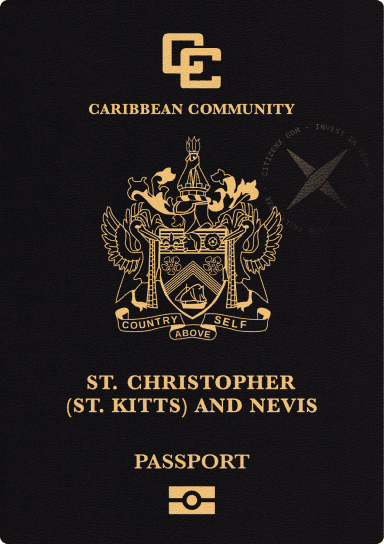
St Kitts and Nevis has run the world's original CBI program since 1984. The Sustainable Island State Contribution starts at 250,000 USD single applicant, real estate from 325,000 USD.
Roughly 150 to 160 destinations: the UK, all of Schengen, Singapore, Hong Kong. For a Filipino businessperson, that's the end of the embassy queue as a life feature. Europe for the trade fair, London for the daughter's graduation, booked like a domestic flight. Four decades of program continuity, the industry's most established due diligence, premium price for the premium document.
Other Caribbean options worth considering
Dominica starts at 200,000 USD, about 140 destinations including Schengen, one of the region's best-run programs. The value route to the same transformation, and where most Filipino conversations should start.
Grenada starts at 235,000 USD and adds two things: visa-free China, useful for Filipino-Chinese trading families whose business runs through the mainland, and the US E-2 treaty route. The Philippines has no E-2 treaty, so Grenada is the standard workaround for Filipinos wanting a US operating base, subject to the US rule requiring three years of Grenada domicile first for investment-acquired citizens. Given how central the US is to Filipino family geography, this deserves a serious look, planned honestly with US immigration advice.
Antigua and Barbuda starts at 230,000 USD and usually wins the per-person math for exactly the household size Filipino applications tend to be, parents, children, sometimes grandparents. About 150 destinations, five days of presence within five years.
Sao Tome and Principe, from about 90,000 USD, launched August 2025, is the lowest entry price in the industry, with around 70 destinations, still better than the Philippine passport. For families that want the second citizenship established at minimum cost, it's the bridge option, with a young program's growing pains priced in.
Vanuatu, from about 130,000 to 135,000 USD all-in, is the speed play, one to two months, though it lost EU and UK access, so it doesn't fix the travel problem. A fellow Pacific archipelago, for what that's worth, and a zero-tax jurisdiction.
El Salvador: the million-dollar outlier
Since late 2023, El Salvador has offered citizenship for a 1 million USD contribution paid in Bitcoin or USDT, six to eight weeks of processing, capped at 1,000 applicants a year, about 135 destinations including Schengen and the UK.
For nearly every Filipino buyer, St Kitts is a stronger document at a quarter of the price, and the analysis ends there. The exception profile, crypto wealth, speed preference, indifference to cost, exists in Manila's fintech scene, and the Philippines is one of the world's most crypto-adopting countries. If that's you, it's real. Otherwise, the Caribbean.
The strategic framework: how to think about this
For Filipino clients the sorting is refreshingly direct.
The travel transformation is the main event: Dominica for value, St Kitts for the benchmark, Antigua for the extended family. This is where most files should land.
If the US is the family's center of gravity and nobody holds a green card yet, price Grenada's E-2 path against EB-5 with a US immigration lawyer, honestly, including the domicile rule.
Then sequence the Philippine side: acquire, reacquire under RA 9225, and emerge dual. Get the property and business implications advised before the oath, not after.
And one reframe I offer every Filipino client: run the numbers against the slow lane. A decade of visa applications for a family of five, the agency fees, the denied-and-reapply cycles, the deferred trips, against a one-time 200,000 dollar purchase that also becomes your children's inheritance. Citizenship is heritable; visa histories aren't. For families who've already done everything else right, the fast lane is not an extravagance. It's arithmetic.
What the process actually looks like
Choose the program, build the file: clean NBI record, documented source of funds, organized business and banking records. Then the agent-managed application, due diligence, an interview at the Caribbean programs, and six weeks to six-plus months of processing depending on the route. After approval, the RA 9225 oath restores the Philippine side.
Beyond the investment, budget due diligence fees (5,000 to 10,000 USD per applicant), agent fees, government processing, and legal costs; add 20,000 to 50,000 USD for a family, plus Filipino counsel for the reacquisition sequencing.
What I'd do if I were a wealthy Filipino
Specifics, because vague advice is useless.
If I were Filipino with a net worth above 300 million pesos, here's my next 90 days.
File for Dominica or St Kitts for the whole household, and I mean the whole household, because the per-person math on families is where these programs are kindest.
Line up the RA 9225 sequencing with counsel so the dual status lands clean: land titles, corporate shareholdings, everything checked before the oath.
If the US matters, and in a Filipino family it usually does, get the Grenada-versus-EB-5 analysis done properly this quarter.
And I'd stop measuring the family's options by what the embassies decide. Forty years of OFW history taught Filipinos to endure the queue. Enough wealth, honestly earned, is permission to leave it.
The bottom line
The Philippines sends its people into the world better prepared and worse documented than any nation alive. The families who've already won that game owe themselves the upgrade the game never offered: a passport that matches how the family actually lives.
Cash is king. But passport is queen. The OFW decades built the cash. The queen costs 200,000 dollars, takes six months, and thanks to RA 9225, never asks you to stop being Filipino.
The queue was never the only way. It was just the only way then.
This article is for informational purposes only and does not constitute legal, tax, or immigration advice. Natural-born Filipinos who naturalize abroad may reacquire Philippine citizenship under RA 9225; sequence this with qualified Filipino counsel, particularly regarding property and corporate holdings.
CitizenX helps high-net-worth individuals secure second citizenships and build sovereign lifestyles. Contact us to discuss your Plan B.