Half a million Hong Kongers have left since 2020, and the ones who stayed are asking a sharper question: what does my HKSAR passport actually guarantee me, and who decides? The best second passport options for Hong Kongers in 2026, including how the BNO changes the math.
Half a million Hong Kongers have left since 2020, and the ones who stayed are asking a sharper question: what does my HKSAR passport actually guarantee me, and who decides? The best second passport options for Hong Kongers in 2026, including how the BNO changes the math.
Hong Kong invented the modern second-passport market. Before 1997, an entire generation of Hong Kong families acquired Canadian, Australian, and British documents as handover insurance, and the "astronaut family," one parent working in Hong Kong while the household held status abroad, was a Hong Kong export before anyone in the CBI industry had a name for it. The city has always understood, more fluently than anywhere on earth, that a passport is a hedge and a hedge is not a betrayal. It's how you stay.
What's changed since 2020 is that the question stopped being historical. The National Security Law, then the Article 23 legislation in 2024, the emigration wave, the BNO exodus to Britain: whatever your politics, the practical fact is that the rules governing Hong Kong life were rewritten from above, quickly, and the people with second documents had choices the people without them didn't.
I've been saying this for years. Cash is king. But passport is queen. Hong Kong wrote the textbook on the king: the offshore accounts, the multi-jurisdiction holdings, the family money structured through three legal systems. This is about the queen, in her specifically Hong Kong version.
Why Hong Kongers need a Plan B passport
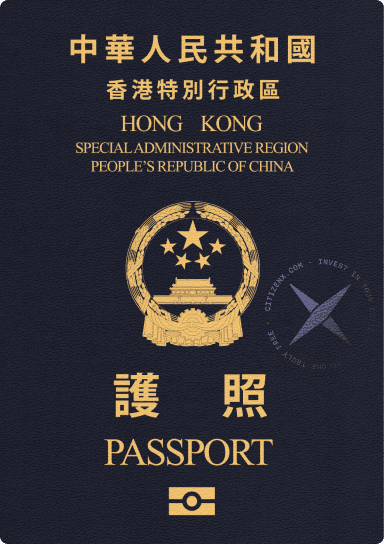
Not for travel. The HKSAR passport is strong, roughly 170 destinations without a visa, including Schengen, the UK, and Japan. On mobility alone, few documents beat it.
The issues sit underneath.
Who you are in law. Most Hong Kongers are, under China's Nationality Law, Chinese citizens, and China does not recognize dual nationality. Hong Kong practice has long tolerated residents quietly holding foreign passports, but the legal architecture is clear: inside Hong Kong and the mainland, you are Chinese only, foreign consular protection can be denied, and the tolerance itself is policy, not right. Policies in Hong Kong have been demonstrating their revisability for six years now. A second citizenship doesn't change what Beijing recognizes; it changes what the rest of the world owes you, and where you can go without asking anyone.
The document's issuer. The HKSAR passport is issued under the authority of a system whose direction of travel since 2020 needs no elaboration from me. Exit controls exist in mainland law and practice; Hong Kong has seen bail-condition passport surrenders and travel-ban litigation. None of this touches most people most of the time. All of it defines the tail risk that insurance exists for.
The one-way door problem. Hong Kongers who watched 2020-2021 remember how fast the calculus moved: rules announced, windows debated, flights booked. The families who moved smoothly were the ones whose paperwork existed before the deadline pressure. That's the whole argument, and Hong Kong has lived it within recent memory.
The BNO question: deal with this first
For roughly half of Hong Kong, the cheapest second passport already exists in a drawer.
British National (Overseas) status, held by millions of Hong Kongers born before 1997, carries since 2021 a visa route to the UK: five years of residence plus one, and you're a British citizen. If you hold BNO status and UK life is plausible for your family, this is the best-value citizenship path on earth, costing visa fees rather than six figures. Hundreds of thousands of your neighbors are already on it.
But notice what the BNO route requires: actually moving to Britain for six years. It's an emigration plan, not an insurance policy. For the Hong Konger whose life, business, and family remain in Hong Kong, and that's most of the wealthy ones, the BNO is either unusable or unattractive, and Beijing stopped recognizing the BNO as a travel document in 2021 besides.
That's the gap CBI fills: citizenship without relocation, acquired in months, requiring nothing but capital and a clean file. The two strategies aren't rivals; plenty of families run both, BNO clocks ticking in London for one branch, a Caribbean citizenship held in Hong Kong by another.
How citizenship by investment works
The mechanics are simple. A qualifying contribution to a country, usually a government donation or real estate purchase, in exchange for citizenship and a passport. Sovereign programs, international compliance vetting, worldwide recognition. Due diligence, background checks, an interview at the Caribbean programs, and three to eight months end to end.
Hong Kong applicants are accepted at every major program and clear due diligence as smoothly as any market in the world; the city's banking records are the global gold standard of documentability. Investment amounts in 2026 run from about 90,000 USD to 250,000 USD and up, plus fees. Fund from your existing offshore structure; for a Hong Konger, that sentence barely needs writing.
One planning note: the quiet-dual reality. Hong Kong practice doesn't require residents to declare a foreign citizenship unless they formally act on it (there's a declaration-of-nationality-change procedure at Immigration for those who choose it, with consequences for right of abode and status, and that's precisely the kind of decision to take with counsel, not by default). Most holders simply keep the second passport as what it is: a private document for the outside world.
St Kitts and Nevis: the benchmark
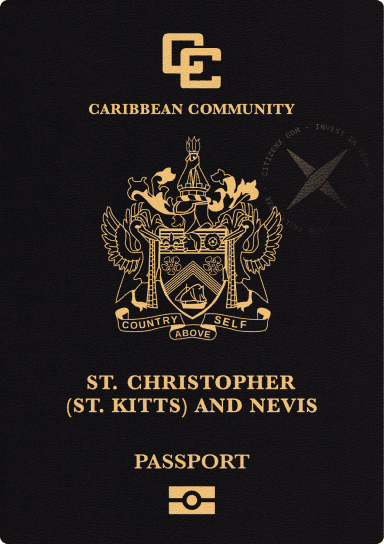
St Kitts and Nevis has run the world's original CBI program since 1984, and Hong Kong families were among its earliest Asian clients. The Sustainable Island State Contribution starts at 250,000 USD single applicant, real estate from 325,000 USD.
Roughly 150 to 160 destinations, a stable Commonwealth jurisdiction, and the industry's longest track record. For a Hong Konger the travel overlap with your own passport is heavy; what you're buying is the issuer: a citizenship whose continuation depends on nothing that happens in Beijing or Admiralty. That's the product, and St Kitts is its blue-chip form.
Other Caribbean options worth considering
Dominica starts at 200,000 USD, about 140 destinations, a decade-long integrity record. The value version of the same logic.
Grenada starts at 235,000 USD and carries the US E-2 treaty route, relevant here because neither China nor Hong Kong has E-2 access. For Hong Kong entrepreneurs with US ambitions, Grenada is the standard workaround, subject to the US rule requiring three years of domicile in Grenada before investment-acquired citizens can use the treaty. Plan it as a medium-term play with proper US immigration advice. Grenada also has visa-free China, which for a Hong Konger is a curiosity rather than a feature, but its passport strength stands on its own.
Antigua and Barbuda starts at 230,000 USD, usually the best per-person math for families, five days of presence within five years.
Sao Tome and Principe, from about 90,000 USD, launched August 2025, is the minimum-cost second identity: around 70 destinations, a young program, the lowest price in the industry.
Vanuatu, from about 130,000 to 135,000 USD all-in, is the speed play: one to two months to citizenship. No EU or UK access on the passport anymore, which your HKSAR document already covers anyway. If the goal is a completed insurance file by Chinese New Year, this is how.
El Salvador: the million-dollar outlier
Since late 2023, El Salvador has offered citizenship for a 1 million USD contribution paid in Bitcoin or USDT, six to eight weeks processing, 1,000 applicants a year. About 135 destinations including Schengen and the UK.
Hong Kong has one of the deepest crypto-wealth pools in Asia, so the El Salvador buyer profile, digital assets, maximum speed, price-insensitive, genuinely exists here. For everyone else, St Kitts is a stronger document at a quarter of the price, and that arithmetic doesn't really argue back.
The strategic framework: how to think about this
For Hong Kong clients the sorting happens fast.
If you hold BNO status and would genuinely live in Britain, start that clock; nothing in this industry beats its value. Run a CBI application alongside it only if you want a non-UK option too, or want citizenship now rather than in six years.
If you're staying in Hong Kong, which is most of my clients, the Caribbean insurance model fits: Dominica or St Kitts as the citizenship layer, held quietly, paired with residencies where the family already has gravity, Singapore, Japan, Canada, the UK.
If the US is the ambition, Grenada, planned around the domicile rule.
If the priority is speed or minimum outlay, Vanuatu and Sao Tome respectively.
And whatever you choose, remember the Hong Kong-specific piece: the decision about formally changing your status inside Hong Kong's system, declaring, keeping right of abode, exiting, is separable from acquiring the citizenship, and deserves its own advice at its own time. Buy the option first. Exercise decisions can wait for facts.
What the process actually looks like
Choose the program, build the file, clean criminal record, source of funds documented, trivially easy for most Hong Kong applicants, then the agent-managed application, due diligence, interview, and six weeks to six-plus months of processing depending on program.
Beyond the investment, budget due diligence fees (5,000 to 10,000 USD per applicant), agent fees, government processing, and legal costs; add 20,000 to 50,000 USD for a family. Add Hong Kong counsel if you're weighing any formal status decisions locally.
What I'd do if I were a wealthy Hong Konger
Specifics, because vague advice is useless.
If I were a Hong Konger with a net worth above 20 million HKD, staying in the city, here's my next 90 days.
Check the family's BNO position first, mine and my children's, because free options should be mapped before bought ones.
File for St Kitts or Dominica for the family, funded from the offshore structure, and let it live in the safe beside the property deeds. No declarations, no announcements, no changes to Hong Kong life.
If the US figures in the next decade, Grenada instead, with the three-year domicile math done honestly on paper first.
Make sure the family's assets match the documents: something meaningful under the new citizenship's jurisdiction or a neutral third one, so the paperwork and the money agree about where home could be if it ever had to be.
Hong Kongers did all of this before 1997 and mostly never needed it, and the ones who bought the insurance don't regret a dollar of it. That's the standard to plan to.
The bottom line
Hong Kong taught the world that a second passport is how a family stays calm inside uncertainty, and the city's own history keeps administering the refresher course.
Cash is king. But passport is queen. Your grandparents' generation bought Canadian and Australian queens before the handover. The current version costs 200,000 dollars, takes six months, and never requires you to leave Queen's Road at all.
The families who moved smoothly in every Hong Kong transition were the ones whose papers predated the pressure. Papers first. Always papers first.
This article is for informational purposes only and does not constitute legal, tax, or immigration advice. Chinese nationality law does not recognize dual nationality, and formal status decisions within Hong Kong carry consequences for right of abode and consular protection; consult qualified counsel before making them.
CitizenX helps high-net-worth individuals secure second citizenships and build sovereign lifestyles. Contact us to discuss your Plan B.