Best Second Passports for Kazakhstani Citizens in 2026
Best Second Passports for Kazakhstani Citizens in 2026
January 2022 gave wealthy Kazakhstanis a week-long demonstration of how fast everything can close: the internet, the airport, the banks. The best second passport options for Kazakhstani citizens in 2026, and how to plan around the dual-citizenship ban.
January 2022 gave wealthy Kazakhstanis a week-long demonstration of how fast everything can close: the internet, the airport, the banks. The best second passport options for Kazakhstani citizens in 2026, and how to plan around the dual-citizenship ban.
For most of the world, Qandy Qantar is a footnote. For anyone with assets in Kazakhstan, it was the formative week: fuel protests turning to nationwide unrest in days, Almaty's airport seized and closed, a total internet blackout, foreign troops invited in, and a shoot-without-warning order on the streets. Then, almost as suddenly, order restored, and a political reset that redistributed fortunes at the very top as a warning to everyone below.
Whatever you concluded about the politics, the practical lesson was unambiguous: in a bad week, the exits close before you decide to use them. The families who had options abroad, documents, accounts, somewhere to be, spent that week worried. The ones who didn't spent it trapped, refreshing dead browsers.
I've been saying this for years. Cash is king. But passport is queen. Kazakhstan's wealthy have done the cash half diligently, the London properties, the Dubai accounts, the Swiss structures. The queen is the harder half here, because Kazakh law forbids holding two, and that's exactly why the planning matters more, not less.
Why Kazakhstanis need a Plan B passport
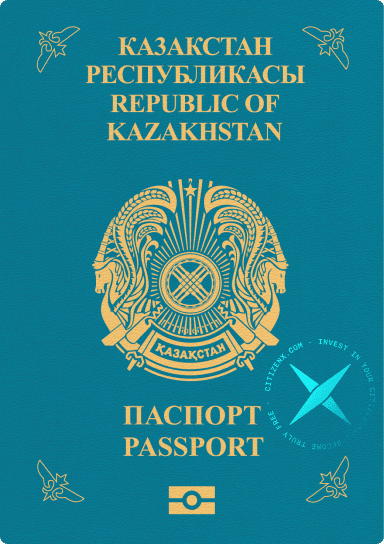
The Kazakhstani passport is middling: roughly 75 to 80 destinations without a visa, with useful CIS and Asian access but no Schengen, no UK, no US. Every European trip is an application; every appointment is a queue. For business families running between Almaty, Dubai, and Europe, the friction is constant.
The structural case is heavier.
Geography and dependence. Kazakhstan shares the world's longest land border with Russia, exports its oil mostly through Russian territory via the CPC pipeline, and lives every year with the tension of multi-vector diplomacy between Moscow, Beijing, and the West. The 2022 invasion of Ukraine turned this from abstraction to daily management: sanctions-compliance pressure on Kazakh banks, relocation waves of Russians into the country, and the standing question of what Moscow does next and what it costs Astana.
Concentration of power and wealth. The post-2022 "New Kazakhstan" reset showed both faces: reform rhetoric, and the demonstrated capacity of the state to reassign the fortunes of the previously untouchable. Wealthy Kazakhstanis understood the message. Assets and status inside the system exist at the system's pleasure, and diversification outside it is the only hedge that doesn't require predicting anything.
The tenge, commodity cycles, and a banking system that has already needed rescues within recent memory complete the picture.
The dual-citizenship problem, and the honest way through
Kazakhstan prohibits dual citizenship flatly. A Kazakhstani who acquires a foreign nationality is required to renounce one, concealment is penalized, fines, loss of the Kazakh citizenship, and the state has periodically discussed harsher measures. Registration systems catch quiet second passports more often each year, and border data-sharing across the region improves annually. I won't pretend otherwise, and I'd walk away from any advisor who does.
So the strategy for a Kazakhstani is architecture, not accumulation, and it has three honest shapes.
Residency-first. Permanent residency abroad, the UAE above all, but also Turkey, the Gulf, or European golden-visa jurisdictions, touches nothing in Kazakh law and delivers most of the insurance: a legal place to be, banking access, and a base that survives a Qantar-style week. For clients keeping their lives and businesses in Kazakhstan, this is the default recommendation, and it's a good one.
The family split. Citizenship for family members who are already abroad or emigrating, the daughter studying in London, the branch settling in Dubai, while Kazakhstan-based members hold residencies only. The family gains a citizenship anchor without any individual violating the ban.
The deliberate swap. For the member who is genuinely relocating for good, acquiring a strong second citizenship and formally exiting Kazakh citizenship is legal, orderly, and increasingly common. It's a serious step with property and inheritance implications inside Kazakhstan, so it gets planned with counsel, but for the emigrating founder or the retiring patriarch moving to Dubai or Vienna, it's often the cleanest answer.
What I steer people away from is the quiet middle path, holding both and hoping. The penalties are real, detection improves, and a plan that requires a state to stay incurious is not a plan.
How citizenship by investment works
The mechanics are simple. A qualifying contribution to a country, usually a government donation or real estate purchase, in exchange for citizenship and a passport. Sovereign programs, international compliance vetting, worldwide recognition. Due diligence, background checks, an interview at the Caribbean programs, three to eight months end to end.
Kazakhstanis are accepted at the major programs; Kazakhstan doesn't appear on the banned lists, which target Russia, Belarus, Iran, and similar. Expect thorough source-of-funds work, the compliance industry reads post-Soviet wealth carefully, and the standard advice applies double here: documented businesses, formal banking history, clean narratives. Wealth routed through years of UAE or European banking papers dramatically better than wealth arriving straight from home structures.
Investment amounts in 2026 run from about 90,000 USD to 250,000 USD and up, plus fees.
St Kitts and Nevis: the benchmark
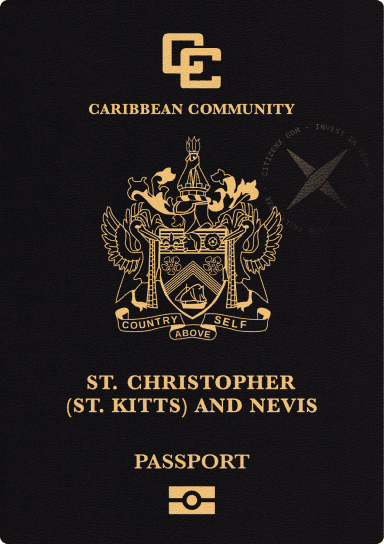
St Kitts and Nevis has run the world's original CBI program since 1984. The Sustainable Island State Contribution starts at 250,000 USD single applicant, real estate from 325,000 USD.
Roughly 150 to 160 destinations including the UK and all of Schengen, twice the reach of the Kazakhstani passport, from a stable Commonwealth jurisdiction with four decades of continuity. For the family member executing a deliberate swap, this is the premium landing: a document that upgrades travel, banking treatment, and legal neutrality in one move.
Other Caribbean options worth considering
Dominica starts at 200,000 USD, about 140 destinations including Schengen, a decade-long record of integrity. The value version of the same move.
Grenada starts at 235,000 USD, adding visa-free China, genuinely useful given Kazakhstan's Belt-and-Road economic reality, and the US E-2 treaty route, which Kazakhstan lacks. The US rule requiring three years of Grenada domicile before investment-acquired citizens use E-2 applies; plan accordingly.
Antigua and Barbuda starts at 230,000 USD, the family-math winner, five days of presence within five years.
Sao Tome and Principe, from about 90,000 USD, launched August 2025, the industry's lowest price, around 70 destinations. For the family-split strategy, where a relocating member wants citizenship established at minimum cost, it's the entry point, with a young program's slower processing priced in.
Vanuatu, from about 130,000 to 135,000 USD all-in, one to two months to citizenship, the fastest available, without EU or UK access. Speed for the family member whose relocation timetable is measured in weeks.
El Salvador: the million-dollar outlier
Since late 2023, El Salvador has offered citizenship for a 1 million USD contribution paid in Bitcoin or USDT, six to eight weeks of processing, 1,000 applicants a year, about 135 destinations including Schengen and the UK.
The buyer profile, crypto wealth, maximum speed, price-insensitive, exists in Kazakhstan, which spent several years as one of the world's largest Bitcoin-mining jurisdictions. The same honest math applies as everywhere: St Kitts is a stronger document at a quarter of the price. And the same Kazakh law applies too: it's a citizenship, so it belongs inside the swap or family-split architecture, not in a drawer in Almaty.
The strategic framework: how to think about this
For Kazakhstani clients I draw it as a sequence.
First, residency for everyone staying: UAE as the workhorse, secured now, with real banking and a real address behind it. This alone converts a Qantar-week from trap to inconvenience.
Second, map the family honestly: who is genuinely building a life abroad within five years? Those members are the citizenship candidates, via swap or via never having to choose because their futures are already elsewhere.
Third, choose the documents to fit: St Kitts or Dominica for the full upgrade, Grenada if China access or US ambitions matter, Vanuatu or Sao Tome when speed or budget governs.
Fourth, sequence the Kazakh side with counsel: exits from citizenship, property held through structures rather than personal title where sensible, inheritance planning that doesn't depend on documents Kazakh law won't recognize.
The whole design principle: nobody in the family should ever face a week where their only legal identity, their assets, and their physical location are all inside the same closing perimeter. January 2022 was the rehearsal. Structures get built between rehearsals.
What the process actually looks like
Choose the architecture first, then the program. Build the file early: clean criminal record, source of funds documented through as many years of international banking as you can show. Agent-managed application, deep due diligence, an interview at the Caribbean programs, six weeks to six-plus months depending on the route, and for swap cases, the Kazakh renunciation process sequenced with counsel on the far side.
Beyond the investment, budget due diligence fees (5,000 to 10,000 USD per applicant), agent fees, government processing, and legal costs; add 20,000 to 50,000 USD for a family, plus Kazakhstani counsel for the citizenship-law side. That last line item is not optional in this market.
What I'd do if I were a wealthy Kazakhstani
Specifics, because vague advice is useless.
If I were Kazakhstani with a net worth above 3 billion tenge, here's my next 90 days.
Secure UAE residency for every adult in the family, with accounts opened and funded. This is the no-regrets move and it violates nothing.
Write the honest five-year map of the family: who stays, who goes, who's already half-gone. The citizenship strategy falls out of that map, not out of program brochures.
Start the file for whichever member is the citizenship candidate, Dominica or St Kitts for the document, with the Kazakh-side legal sequencing planned before anything is signed.
Move the asset architecture to match: nothing critical held only in personal name, inside the country, in local currency. The week the internet died, the families who were fine were the ones who'd already assumed it someday would.
The bottom line
Kazakhstan's wealthy live between the world's most acquisitive neighbor, a state that demonstrated its reach in 2022, and a law that forbids the most obvious hedge. That's not a reason to skip the hedge. It's a reason to build it properly: residencies for those who stay, citizenships for those who go, and a family structure where the ban never has to be broken because the architecture routes around it.
Cash is king. But passport is queen. In Kazakhstan the queen can't sit on the same square as the king, so the winning players use the whole family as the board.
January taught everyone the closing speed. Build before the next lesson.
This article is for informational purposes only and does not constitute legal, tax, or immigration advice. Kazakhstan prohibits dual citizenship, and acquiring a foreign nationality carries legal obligations including renunciation requirements; consult qualified Kazakhstani counsel before any acquisition.
CitizenX helps high-net-worth individuals secure second citizenships and build sovereign lifestyles. Contact us to discuss your Plan B.