Spanish wealth, in other words, doesn't sit where the postcards suggest. The country's money is split between a dominant capital, an industrial north that quietly out-earns it per head, and a Mediterranean coast that imports affluence rather than producing it.
Spain's richest man doesn't live in Madrid or Barcelona. Amancio Ortega, the Zara founder whose fortune tops the Forbes list of Spanish billionaires by a huge margin, lives in A Coruña, a mid-sized port city in rainy Galicia that no wealth ranking would otherwise mention. Meanwhile the municipality with Spain's highest income per person is Pozuelo de Alarcón, a Madrid suburb most foreigners have never heard of, and the big city with the richest residents isn't Madrid at all – it's San Sebastián, up on the Basque coast.
Spanish wealth, in other words, doesn't sit where the postcards suggest. The country's money is split between a dominant capital, an industrial north that quietly out-earns it per head, and a Mediterranean coast that imports affluence rather than producing it.
If you're considering a move to Spain, a property purchase, or simply trying to understand where opportunity concentrates in the eurozone's fourth-largest economy, that three-part structure is the map that matters. It decides salaries, housing costs, and what kind of wealthy neighbors you'd have – executives in Madrid, industrialists in the Basque Country, or retired Germans in Mallorca.
Plenty of the internationally mobile families reading this are weighing Spain against other options anyway. Some pair a European base with a second passport from programs like Citizenship by Investment in Argentina – a natural fit given the language – or El Salvador, to keep long-term flexibility beyond the EU.
Here are Spain's ten richest cities in 2026, and what each one's wealth is actually made of.
How We Define "Richest"
Our sources here are mostly official and Spanish: the INE's household income atlas, regional GDP accounts, property market data, and the Forbes list for the country's large fortunes. As with our rankings for Europe and Portugal, we've blended several measures:
Income per resident, from the INE's income atlas, shows where households actually earn the most. This is where the Madrid suburbs and Basque cities dominate.
Economic weight favors the big metros. The Madrid region alone produces around a fifth of Spain's GDP, and no per-capita statistic changes what that concentration means for careers and business.
Property values mark where capital settles – Madrid's Salamanca district, Barcelona's Pedralbes, the Balearic coast.
Large fortunes, via Forbes, are scattered in a very Spanish way: Ortega in Galicia, the Ortega-adjacent textile wealth around him, banking families in Madrid, industrial dynasties in the north, and Juan Roig (Mercadona) in Valencia.
One thing we're deliberately not doing: ranking beach towns by glamour. Marbella and Ibiza host plenty of wealth, but most of it was made somewhere else. We'll treat imported-wealth enclaves as their own category.
The Top 10 Richest Cities in Spain (2026)
Madrid – The capital of Spanish money: a fifth of national GDP and nearly all of its corporate power
Pozuelo de Alarcón (Madrid) – Spain's highest-income municipality, at roughly €30,500 net per resident
San Sebastián (Gipuzkoa) – The richest major city per resident, and the Basque Country's elegant proof of it
Barcelona – Spain's second economy, still wealthy, still recovering its corporate headquarters
Bilbao & Getxo (Bizkaia) – Industrial money grown old and comfortable on the Nervión
Boadilla del Monte & the Madrid northwest – The executive belt where Spain's top earners actually live
Sant Cugat del Vallès (Barcelona) – Catalonia's income champion in the hills behind Barcelona
Valencia – Spain's rising third city, with Mercadona money and a growing expat economy
Zaragoza – Logistics, industry, and the quiet prosperity of Spain's crossroads
Palma de Mallorca – The Mediterranean's wealth importer
And then there's A Coruña, which deserves its own section, because one man distorts everything.
1. Madrid: The Capital of Spanish Money
Madrid's dominance of the Spanish economy has few parallels in Europe outside Paris and London. The region produces about 19-20% of national GDP with 14% of the population, hosts the headquarters of nearly every major Spanish company – Santander, BBVA, Iberdrola, Telefónica, Repsol – and runs the Bolsa, the country's stock exchange.
The past decade added a new layer: Madrid has become the preferred European base for Latin American wealth. Venezuelan, Mexican, Colombian, and Argentine families have bought heavily in the Salamanca district, drawn by language, direct flights, and a regional government that abolished its wealth tax. Prime Salamanca apartments now trade above €10,000 per square meter, prices Madrid had never seen before.
Incomes follow the pattern you'd expect: city households earn well above the national average, and the surrounding region tops Spain's disposable-income tables once the suburbs are counted. Unemployment sits below the Spanish average, and the job market in finance, law, consulting, and tech is the deepest in the country by far.
Madrid's pitch is simple. It's the only Spanish city that competes for global capital and talent at European-capital scale, and it remains cheaper than Paris, London, or Milan. The cost is Spanish-capital housing inflation: prices have climbed relentlessly since 2015, and the days of Madrid as a bargain are over.
2. Pozuelo de Alarcón: Spain's Income Champion
Every year the INE publishes its household income atlas, and every year the same name sits on top. Pozuelo de Alarcón, a leafy municipality of about 90,000 just west of Madrid, records Spain's highest net income per resident – roughly €30,500 in the latest data, nearly triple the national figure.
Pozuelo is where corporate Spain sleeps. Bank executives, CEOs, senior partners, footballers, and broadcasters live in gated developments like La Finca and Monteclaro, commute fifteen minutes to the towers of northern Madrid, and send their children to the private and international schools that cluster along the A-6 corridor. Real Madrid's training city sits next door, which explains some of the more spectacular gates.
Like the wealthy suburbs in our California ranking, Pozuelo produces little itself; it concentrates people who produce elsewhere. But the concentration is remarkable by Spanish standards, and it's durable – Pozuelo has led the income tables for as long as the INE has published them.
3. San Sebastián: The Richest Big City
Among Spain's larger cities, the wealth crown belongs to San Sebastián. In the INE's data, over 60% of the city's census tracts rank in Spain's high-income bracket – the largest share of any provincial capital, ahead of Madrid's 39% and Barcelona's 35%. Its province, Gipuzkoa, posts the highest income per resident in the country.
The money is Basque money, which means industrial. Gipuzkoa's economy runs on machine tools, components, cooperatives (the Mondragón group is headquartered nearby), and a dense network of exporting family firms. Add the Basque Country's special fiscal regime – the region collects its own taxes and consistently funds Spain's best public services – and you get broad prosperity rather than a thin crust of rich households.
The city wears it well. La Concha bay, the belle-époque architecture, and more Michelin stars per capita than almost anywhere on earth make San Sebastián Spain's most expensive housing market outside Madrid and Barcelona's prime districts. It is small, rainy, and not a place to build a global career. It is, arguably, the best place in Spain to already have one.
4. Barcelona: Rich, With an Asterisk
Barcelona is Spain's second economy and its most international brand, and its wealth is real: Catalonia produces about 19% of national GDP, the metro area leads southern Europe in startups and venture funding after Madrid, and districts like Pedralbes and Sarrià rank among the country's most expensive.
The asterisk is 2017. After the independence referendum, more than 3,000 companies – including CaixaBank and Banco Sabadell, the city's two banking giants – moved their registered offices out of Catalonia. Most operations stayed, and some registrations have quietly returned, but the episode handed Madrid a corporate lead it has never given back and marks the clearest turning point in the two cities' rivalry.
What Barcelona kept is formidable: the Mobile World Congress, Europe's biggest port-adjacent industrial zone in its region, global design and pharma clusters, and a lifestyle pull that keeps attracting foreign professionals and their employers. Salaries trail Madrid's, housing costs don't trail by much, and the political temperature has cooled considerably. Barcelona is the Montreal of Spain: second on the money tables, first on many people's list of where they'd actually rather live.
5. Bilbao and Getxo: Old Industrial Money
Bilbao built its fortune on iron, shipping, and banking in the nineteenth century, and the fortune stuck around. BBVA and Iberdrola trace their roots here, the city's Guggenheim-led reinvention turned a rusting river into a services economy, and Bizkaia province sits just behind Gipuzkoa near the top of Spain's income tables.
The wealth's home address is Getxo, the coastal municipality at the river mouth where the old shipping and banking dynasties built their mansions in the Neguri district. Getxo still ranks among Spain's richest municipalities, a Basque Westmount where the surnames on the gates match the names in the business-history books.
Bilbao's economy today mixes bank headquarters, energy, advanced manufacturing, and the same cooperative industrial depth as the rest of the Basque Country. For professionals it offers a rare package: big-city salaries under Basque fiscal treatment, housing far below Madrid prices, and a food culture that makes the rain negotiable.
6. Boadilla del Monte and Madrid's Executive Belt
Pozuelo is only the most famous of Madrid's rich suburbs. Boadilla del Monte and Majadahonda regularly hold the next places in the INE's national income rankings, and Alcobendas, to the north, contains La Moraleja – arguably Spain's single most exclusive neighborhood, home to bankers, ambassadors, and half the Real Madrid squad, behind hedges that would satisfy an English duke.
Santander's global headquarters campus sits in Boadilla, and the northern business corridor around Alcobendas hosts the Spanish head offices of dozens of multinationals. The whole northwest quadrant functions as a single executive habitat: international schools, golf, private healthcare, and commutes that reverse the usual direction.
For relocating families with corporate incomes, this belt – not central Madrid – is usually the actual destination, and it's where Spanish housing prices reach their national maximum outside a few streets of Salamanca.
7. Sant Cugat del Vallès: Catalonia's Income Champion
Barcelona's equivalent of Pozuelo sits over the Collserola hills. Sant Cugat del Vallès, twenty minutes from the city by train, posts Catalonia's highest large-municipality incomes and one of Spain's best-educated populations. Nearby Matadepera, a town of 9,000, actually ranks second in all of Spain in income per resident – the Catalan executive class packs a lot of wealth into a few square kilometers of pine forest.
Sant Cugat itself has become a corporate destination, not just a dormitory: HP, Roche, and a cluster of pharma and tech offices operate here, alongside international schools that serve Barcelona's expatriate professionals. Housing costs match the profile, running well above Barcelona's average.
It's the least famous entry on this list and one of the most representative: Spanish wealth increasingly lives in well-run, low-rise municipalities on the edges of the two big metros.
8. Valencia: The Rising Third
Valencia spent decades as Spain's underachieving third city. That's over. The Mercadona supermarket empire – whose founder Juan Roig is Spain's second-richest person on the Forbes list – anchors a growing corporate scene, the port has become the Mediterranean's busiest for containers, and the city has turned into southern Europe's favorite destination for remote workers and relocating families priced out of Madrid and Barcelona.
Incomes remain below the big two, which is precisely the attraction: Valencia offers perhaps Spain's best ratio of salary to cost of living among major cities, with housing prices that – despite sharp recent rises driven by foreign demand – still undercut Madrid by a wide margin. Districts like El Pla del Remei carry the city's old money; the beachfront and center absorb the new international arrivals.
Valencia's wealth is newer, thinner, and growing faster than anywhere else on this list. Ten years from now it may sit several places higher.
9. Zaragoza: Prosperity at the Crossroads
Zaragoza rarely makes glamorous lists, which is exactly why it belongs here. Halfway between Madrid, Barcelona, Bilbao, and Valencia, Spain's fifth city has converted geography into a logistics and industrial economy: the Opel/Stellantis plant is among Spain's largest factories, Inditex runs a major distribution hub at the PLAZA logistics park, and Amazon has followed.
The result is a solidly prosperous city – incomes above the national average, unemployment below it, and housing costs that let a normal professional salary buy what would be impossible in Madrid. Aragon's income per head ranks just behind the Basque provinces, Navarre, and Madrid in most years, a fact that surprises everyone except the Aragonese.
No one moves to Zaragoza for prestige. People move to it for the arithmetic, and the arithmetic is excellent.
10. Palma de Mallorca: The Wealth Importer
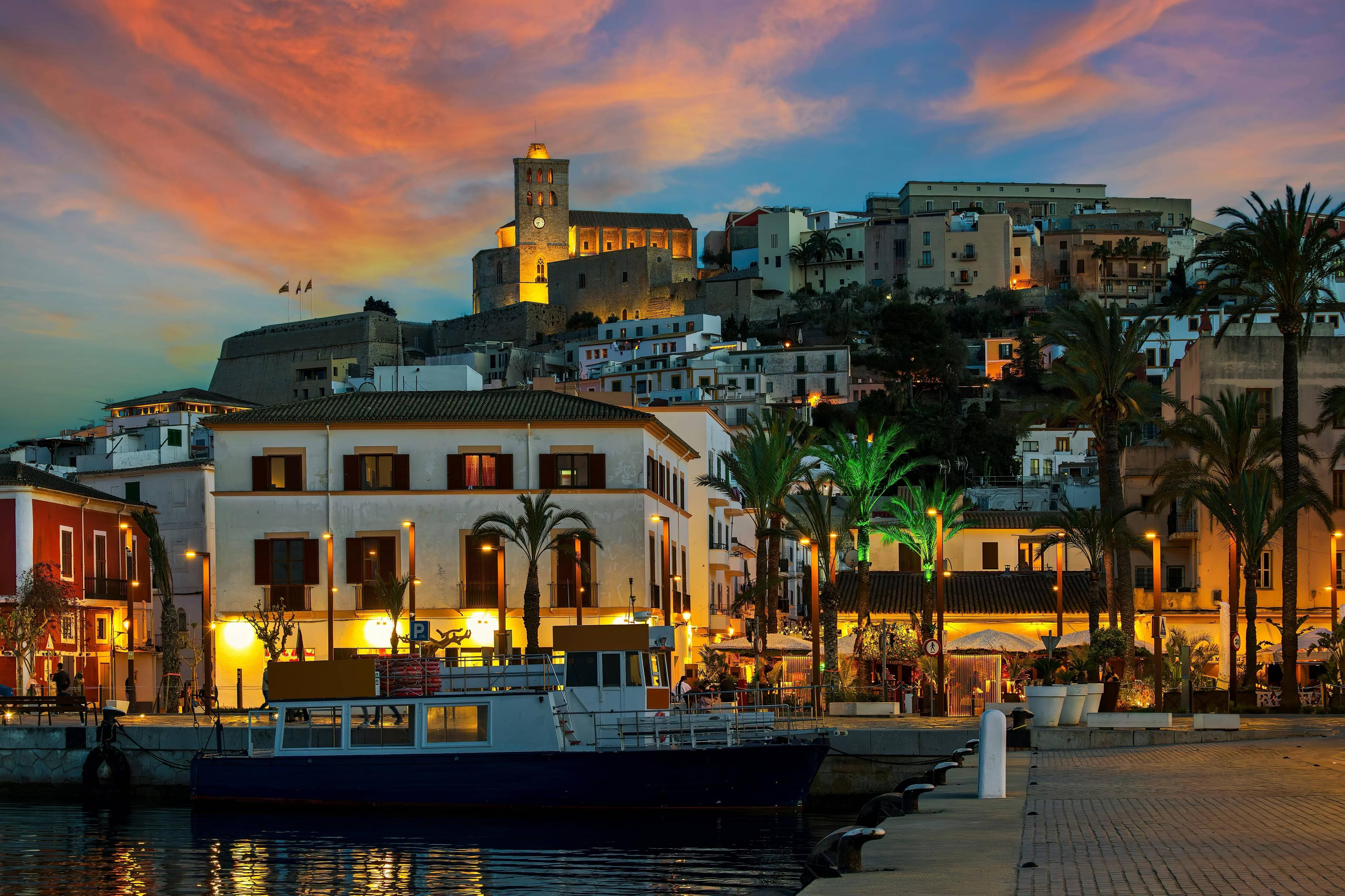
Palma closes the list as Spain's great importer of other people's money. The Balearic capital's economy runs on tourism and services, and local salaries are unremarkable. The wealth is in the marinas, the hillsides, and the land registry: German, British, Scandinavian, and increasingly American buyers have made coastal Mallorca one of Europe's most expensive property markets, with prime areas like Son Vida and Port d'Andratx trading at prices that match the French Riviera's second tier.
Palma is Spain's answer to our Caribbean and Victoria entries in other rankings: a place where net worth vastly exceeds income, because the net worth arrived by plane. For residents, that gap defines daily life – the Balearics have Spain's highest housing costs relative to local wages. For the international buyers who dominate the top of the market, Palma offers Mediterranean life with a real city, a real airport, and Spanish healthcare attached.
The A Coruña Question
Now, about Ortega. Amancio Ortega founded Zara in A Coruña in 1975, kept Inditex headquartered in neighboring Arteixo as it became the world's largest fashion retailer, and stayed. His fortune – by far Spain's largest on the Forbes list, and among the top ten globally in most years – is domiciled in a Galician city of 250,000 that otherwise ranks mid-table on every economic measure.
The distortion is instructive. One resident's dividends dwarf the combined income of entire Spanish provinces; his family office, Pontegadea, has become one of Europe's largest property investors from an office overlooking the Galician coast. Inditex's success has seeded a genuine local textile and logistics cluster, and A Coruña's professional scene is stronger than its size suggests.
But no one would call A Coruña one of Spain's richest cities in the sense this article means, and that's the lesson worth keeping: extreme individual wealth and broad urban prosperity are different things that only sometimes share an address. Spain, more than most countries, keeps them apart – the billionaire in Galicia, the salaries in the Basque Country, the corporate power in Madrid.
What Spain's Wealth Map Means for You
For careers, Madrid is the only globally scaled option, with Barcelona a strong second in tech, pharma, and design. The Basque cities pay nearly as well in industry and engineering with better public services and lower costs.
For cost-of-living arbitrage, Valencia and Zaragoza are the standouts: real economies, livable salaries, housing at half of Madrid's prices or less. That's the same play as Ingolstadt in our Germany ranking – earn near the top of the local market, pay mid-table prices.
For property, the safest long-term markets remain prime Madrid and the supply-constrained coasts (Balearics, San Sebastián). All now carry political risk around housing regulation, which Spain debates constantly and the Balearics and Barcelona have acted on.
And for tax planning, geography matters more inside Spain than in almost any EU country: regional governments control wealth and inheritance taxes, which is why Madrid – with its wealth-tax rebate – keeps winning wealthy movers, and why professional advice should precede any Spanish relocation. Families planning across borders often build in an extra layer of optionality first, whether through Latin American citizenship routes like Argentina's or long-horizon residency options elsewhere.
Final Thoughts
Spain's wealth map has a shape worth remembering: one capital with the power, one northern coast with the incomes, one Mediterranean coast with the imported fortunes, and one Galician city with the richest man. Almost nothing about that layout is new – the Basques were rich before Madrid was big, and Mallorca was selling views to northern Europeans before the euro existed.
What is new is the speed of change at the edges. Madrid is absorbing Latin American capital, Valencia is absorbing everyone Madrid prices out, and the suburbs keep pulling further ahead of the cities they orbit. The next revision of this list probably won't change the top. Watch the middle.