Best Second Passports for Mexican Citizens in 2026
Best Second Passports for Mexican Citizens in 2026
Wealthy Mexican families have run security-driven exit plans for decades; what's new is how cheap and legal the citizenship layer has become. The best second passport options for Mexican citizens in 2026, and what each one actually fixes.
Wealthy Mexican families have run security-driven exit plans for decades; what's new is how cheap and legal the citizenship layer has become. The best second passport options for Mexican citizens in 2026, and what each one actually fixes.
Every wealthy country club in Mexico has the same quiet infrastructure underneath it: the house in San Antonio or Houston, the kids at school in Texas or Madrid, the accounts north of the border, the SENTRI passes kept current. Mexican wealth learned generations ago to keep one foot outside the country, not out of disloyalty but because the security situation made it professional negligence not to. Kidnapping insurance and armored trucks are line items in family budgets; the second base abroad is simply the next line down.
What surprises me is how often that infrastructure stops one layer short. The family has the Houston house and the US accounts, and every member of it still carries only a Mexican passport, which means the entire structure depends on US visas: B1/B2s that expire, renewals that queue for months, an immigration politics in Washington that reprices unpredictably. The money made it out. The legal identity didn't.
I've been saying this for years. Cash is king. But passport is queen. Mexican families mastered the king a long time ago. This is about finishing the job.
Why Mexicans need a Plan B passport
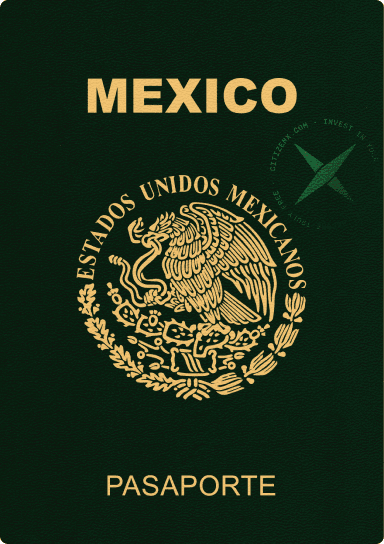
The Mexican passport is genuinely good: roughly 160 destinations without a visa, including Schengen, the UK, and Japan. The gap is the one that matters most: no visa-free access to the United States, the country where Mexican wealth actually keeps its second life, and no realistic prospect of that changing.
Beyond the US gap, the drivers are the ones you live with.
Security. I won't lecture Mexicans about their own country. I'll only observe what my Mexican clients tell me: the calculus isn't about the averages, it's about the tail. Extortion reaching businesses that were untouchable a decade ago, regional situations that turn fast, and the knowledge that if a specific family ever becomes a specific target, the response is measured in days. A second citizenship is the difference between fleeing as a tourist with a visa clock and arriving as a citizen with a right to remain.
Politics and institutions. Whatever your reading of the current project, Morena's consolidation, the 2024 judicial overhaul, the referendum habit, the direction is toward fewer institutional counterweights, and wealthy Mexicans remember enough history, expropriations, bank nationalization in 1982, peso crises, to know what unchecked moments can cost. Add the US variable: tariff politics and remittance-tax proposals that treat Mexico as leverage. Both sides of your world can reprice at once.
The legal part is easy, and familiar: Mexico has permitted dual nationality since 1998, millions of Mexicans hold it, and nothing about acquiring a second citizenship threatens the Mexican one. The constitution asks only that Mexicans enter Mexico as Mexicans. This is one of the friendliest legal environments in this entire series.
The US question: name it honestly
For most wealthy Mexican families, the honest first question isn't "which Caribbean passport." It's "what's our US strategy," because the US is where the second life already runs.
The direct routes are the EB-5 investor visa (roughly 800,000 USD into a qualifying project for green cards) and the E-1/E-2 treaty routes, and here Mexico holds an advantage many forget: Mexico has its own E-2 treaty with the United States. A Mexican citizen with a qualifying US business investment can pursue E-2 directly, no second citizenship required. If the US is your entire objective, talk to a US immigration lawyer before a CBI agent, and don't let anyone sell you Grenada for treaty access you already have.
Where CBI earns its place is everything the US routes don't cover: the EB-5 wait and exposure to US immigration politics, the E-2's non-immigrant impermanence, and above all the wisdom, which Mexican families understand viscerally, of not concentrating the entire Plan B in the same country your economy, your border, and your politics are already fused to. A Caribbean citizenship is the diversification layer: permanent, heritable, independent of both Mexico City and Washington.
How citizenship by investment works
The mechanics are simple. A qualifying contribution to a country, usually a government donation or real estate purchase, in exchange for citizenship and a passport. Sovereign programs, international compliance vetting, worldwide recognition. Due diligence, background checks, an interview at the Caribbean programs, three to eight months end to end.
Mexicans are accepted at every major program with no nationality restrictions. The due diligence emphasis for Mexican files is the one you'd expect: source-of-funds documentation that cleanly separates legitimate wealth from any question marks, and the compliance industry examines Mexican files with the region's realities in mind. Documented businesses, formal banking, and tax records get through smoothly; anything cash-heavy needs structuring and patience first.
Investment amounts in 2026 run from about 90,000 USD to 250,000 USD and up, plus fees.
St Kitts and Nevis: the benchmark
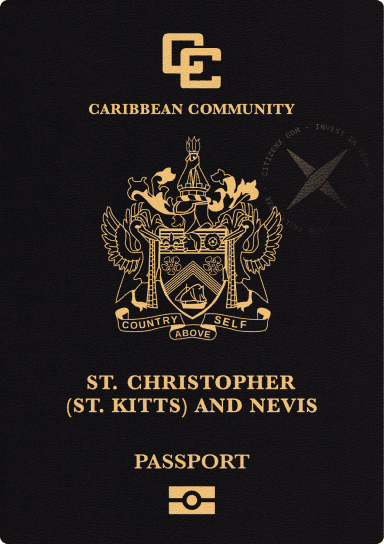
St Kitts and Nevis has run the world's original CBI program since 1984. The Sustainable Island State Contribution starts at 250,000 USD single applicant, real estate from 325,000 USD.
Roughly 150 to 160 destinations, four decades of continuity, and a stable Commonwealth jurisdiction three hours' flight from Miami, which for Mexican buyers makes it the most geographically practical program in the industry: the insurance jurisdiction sits inside the family's existing travel patterns. Premium program, premium price, and the standard against which the rest get measured.
Other Caribbean options worth considering
Dominica starts at 200,000 USD, about 140 destinations, a decade-long record of running things properly. The value route, and where most cost-conscious Mexican files should start.
Grenada starts at 235,000 USD. Its E-2 treaty headline is redundant for Mexicans, you have your own treaty, so it earns the premium only through passport strength and visa-free China, which for Mexican manufacturers sourcing in Asia is worth an honest look.
Antigua and Barbuda starts at 230,000 USD, usually the best per-person math for the large families Mexican applications tend to be, with five days of presence required within five years.
Sao Tome and Principe, from about 90,000 USD, launched August 2025, is the minimum-cost second identity: around 70 destinations, a young program, the lowest entry price in the industry.
Vanuatu, from about 130,000 to 135,000 USD all-in, delivers citizenship in one to two months, without EU or UK access on the passport, which your Mexican document already covers. Speed is the product; for a family that wants the file closed fast, it's the answer.
El Salvador: the million-dollar neighbor
Since late 2023, El Salvador has offered citizenship for a 1 million USD contribution paid in Bitcoin or USDT, six to eight weeks of processing, capped at 1,000 applicants a year, with a passport reaching about 135 destinations including Schengen and the UK.
For Mexicans, El Salvador is at least a neighbor with a familiar language and, under its current government, a security story that has drawn genuine interest across Latin America. But the product math is what it is: four times St Kitts's price for a weaker passport, payable only in crypto. The buyer it fits, the crypto-wealthy Mexican who wants speed and likes the Bukele-era direction, exists. Everyone else gets more for less in the Caribbean.
The strategic framework: how to think about this
For Mexican clients the architecture usually settles into three moves.
First, the US layer, run on its own logic: E-2 through Mexico's own treaty for operators, EB-5 for families who want green cards and can stomach the process, and honest US immigration advice either way. This layer already half-exists for most wealthy Mexican families; finish it deliberately.
Second, the diversification layer, which is the Caribbean citizenship: Dominica for value, St Kitts for the benchmark, Antigua for family math. Permanent, heritable, independent of both governments that currently bracket your life. This is the piece most Mexican structures are missing.
Third, the coordination layer: Mexican tax advice if any change of residence is plausible (Mexico taxes residents on worldwide income, and SAT has grown sharper about departures), and family-level planning so the documents, the assets, and the schools all agree about where the fallback actually is.
One habit worth borrowing from my most organized Mexican clients: they treat the whole structure as one file, reviewed annually, the way the business reviews insurance. Visas expire, programs reprice, kids age into new schools. The families that review annually never scramble.
What the process actually looks like
Choose the program, build the file: clean criminal record and source-of-funds documentation, assembled with more care than the average applicant because Mexican files get read carefully. Formal records, clean narratives, experienced agents. Then the application, due diligence, an interview at the Caribbean programs, and six weeks to six-plus months of processing depending on the route.
Beyond the investment, budget due diligence fees (5,000 to 10,000 USD per applicant), agent fees, government processing, and legal costs; add 20,000 to 50,000 USD for a family, plus US immigration counsel if that layer is in play.
What I'd do if I were a wealthy Mexican
Specifics, because vague advice is useless.
If I were Mexican with a net worth above 100 million pesos, here's my next 90 days.
Audit the family's existing structure honestly: which members hold which visas, what expires when, and what happens if a renewal is denied in a bad political year. Most families have never written this down, and writing it down is clarifying.
File for Dominica or St Kitts for the whole family. It's the missing layer, the law is friendly, and six months is the timeline, so the clock should start now.
If the US operation matters, get the E-2 or EB-5 track properly advised in parallel, using Mexico's own treaty rather than paying Grenada for a redundant one.
And put something real under the new flag: an account, a property, a trust. A passport with infrastructure behind it is a plan. A passport alone is a souvenir.
The bottom line
Mexican wealth has been building second lives across the border for three generations, and the discipline shows everywhere except the passports. The money diversified. The documents didn't.
Cash is king. But passport is queen. The queen costs 200,000 dollars, takes six months, is fully legal beside the Mexican one, and answers the question the Houston house was always secretly asking: what if we ever needed to arrive as citizens rather than visitors?
Finish the structure. This year, while it's a project and not an emergency.
This article is for informational purposes only and does not constitute legal, tax, or immigration advice. Consult qualified professionals, including US immigration and Mexican tax counsel where relevant, for advice specific to your situation.
CitizenX helps high-net-worth individuals secure second citizenships and build sovereign lifestyles. Contact us to discuss your Plan B.