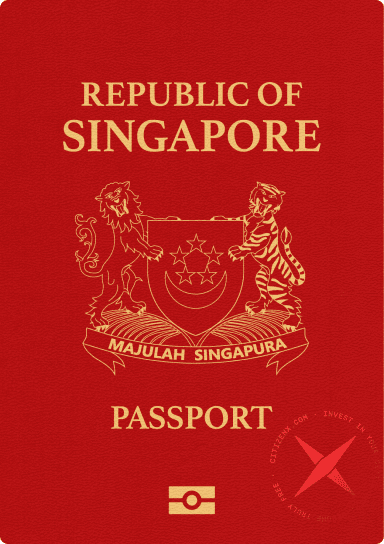
Singaporeans have a good reason to think carefully before buying a second passport: the citizenship they already hold is difficult to replace. If keeping it is the priority, the most useful Plan B will usually be residence abroad. Singapore does not allow its adult citizens to hold dual citizenship.
A family can have its money spread across several markets while its right to live somewhere remains concentrated in one country. The investment portfolio has options. The family may have fewer.
For a Singaporean entrepreneur, that is a worthwhile problem to solve. Perhaps you want the children to spend their teenage years overseas. Perhaps you want a base closer to European customers, or the ability to move near family without starting an immigration application from scratch. None of that requires a pessimistic view of Singapore.
But the solution has to leave you better off. Acquiring another nationality while putting your right to return home at risk is a very different decision from adding a residence permit to your existing passport.
I've been saying this for years. Cash is king. But passport is queen. If you already have a Singaporean queen, think carefully before making a move that could cost you her.
Why Singaporeans need a Plan B
The case starts with the difference between visiting a country and being able to live there.
A holiday, an overseas property, and enough savings to support yourself do not necessarily add up to permission to settle. The relevant immigration status matters when you want to stay, work, bring dependants, or build a life around local schools.
That is where I would focus the Singaporean conversation. Which country would you actually use? What would your family need to do there? How long could you stay under your existing arrangements?
Concentration is the other issue. If your income, business, home, and family's legal status all depend on Singapore, you have made a substantial commitment to one jurisdiction. You may be entirely comfortable with that commitment and still want an alternative.
A Plan B gives you more control over timing. You can make a move because the school, business opportunity, or family situation is right, with the necessary permissions already in place.
For someone who wants to keep Singaporean citizenship, the most useful measure is how much additional freedom a residence status provides. A second booklet is not the objective in itself.
The Singapore citizenship question: deal with this first
The Immigration & Checkpoints Authority's guidance on dual citizenship says that adult Singaporeans cannot hold two citizenships and should renounce Singapore citizenship as soon as possible after acquiring another.
There is no general route that lets an adult buy foreign citizenship and safely keep Singaporean citizenship indefinitely. Another country's willingness to accept dual nationality does not change Singapore's position.
Article 134 of the Singapore Constitution permits deprivation of citizenship for voluntary acquisition of foreign nationality from age 18, and for retaining nationality acquired through the specified voluntary acts before that age. Deprivation under that article takes effect by government order, rather than automatically upon naturalization.
Article 135 separately addresses foreign citizenship rights and, from age 18, applying for, renewing, or using a foreign passport. It also deems voting in a foreign political election an exercise of a foreign right. Its overseas-residence provision concerns ten continuous years abroad without entry using Singapore-issued status or travel documents, subject to specified service exceptions.
These provisions need to be read alongside ICA's guidance for minors. Do not interpret the absence of an immediate deprivation order as permission, or assume age 21 is the only relevant threshold.
For your own circumstances, have a Singapore citizenship lawyer review the intended steps before you apply. If you already hold another nationality, get advice on regularizing that position before further passport applications or travel. Simply allowing a passport to expire does not establish that the underlying citizenship has ended.
How to build a Plan B while keeping Singapore citizenship
Choose a foreign residence route that gives your family the rights you need, and keep any later naturalization decision separate. Eligibility to apply for citizenship is an option you can assess later. You do not need to make it the destination of every residence application.
Select the rights your family will actually use
A permit that allows you to reside but not work may suit retirement and be unsuitable for a founder who wants to run a local business. A route that excludes an older child may fail the family even if it works perfectly for the parents.
Ask about work rights, dependant eligibility, healthcare, schooling, renewal, and permitted absences before comparing investment amounts. These details determine whether the alternative home will function when you need it.
For a business base in the Gulf, the UAE's Golden Visa is a residence route worth examining against your eligibility. For a European base, start with where you want to live and assess the work, business, or family routes available to you.
Neither should be chosen solely because an advertisement promises a future passport. Evaluate the residence you receive and the country where you would live.
Make the application instructions explicit
Tell your adviser that retaining Singapore citizenship is a condition of the plan. Confirm whether each stage grants residence, permanent residence, or nationality, and whether any declaration or oath has citizenship consequences.
Marketing terms can obscure the difference. A “golden visa” is not a reliable description of the legal status being granted. Read the actual route and documents.
Use accurate citizenship information throughout. Privacy protections are useful for safeguarding personal data; they do not create an exemption from nationality law. A promise that the authorities will never find out is not a sound basis for a family decision.
Maintain both sides of the arrangement
Keep a calendar for foreign permit renewals, required visits, dependant age limits, and travel-document expiry. A residence status that lapses while you are living in Singapore provides little reassurance.
Review the Singapore obligations associated with a lengthy move, particularly the constitutional overseas-residence rule, National Service where applicable, and children's citizenship formalities. Review tax residence separately before changing where you spend your time.
The practical goal is a second place where the family can live, with clear conditions you are willing and able to maintain.
Children and National Service: plan each person separately
Children's circumstances require their own review. Nationality at birth, acquisition by descent, and later registration can produce different procedural questions.
ICA's guidance for existing young dual citizens says they may retain dual citizenship until 21, when proof of renunciation of foreign citizenship is required to retain Singapore citizenship. That guidance should not be treated as a blanket endorsement of buying an additional nationality for a teenager.
For those who obtained Singapore citizenship by descent or registration as minors, ICA's oath-taking requirements require the Oath of Renunciation, Allegiance and Loyalty after turning 21 and before turning 22. Failure to take it in time results in automatic loss of Singapore citizenship on the 22nd birthday. Foreign-citizenship renunciation documentation is part of the process where applicable.
Start early enough for the foreign country's renunciation process to finish. Keep the citizenship certificates and written confirmation of the child's requirements together, and obtain clarification from ICA where the acquisition history is unusual.
For sons, overseas residence does not remove National Service obligations. The Central Manpower Base's exit-permit guidance sets out requirements for National Service-liable males from age 13, with permits and bonds depending on age and the length of the overseas stay.
ICA also warns that unfulfilled National Service liabilities can affect renunciation and future Singapore immigration applications. Complete the education and relocation plan around the applicable obligations, with written clarification where needed.
How citizenship by investment works
Citizenship by investment remains relevant for someone who has deliberately decided to change nationality, or for a non-Singaporean family member whose own laws allow it.
The mechanics are familiar: a qualifying contribution or investment, an application through the authorized channel, financial and background checks, and a government decision. Interviews, biometric enrollment, and other formalities depend on the program.
The important question for a Singaporean is when citizenship is legally acquired. That may precede delivery of the passport. Counsel in both countries should establish the sequence before the applicant commits to it.
ICA's renunciation rules require an applicant to be at least 21, of sound mind, and already a citizen of another country. The transition therefore needs coordination; renouncing first and hoping a foreign application succeeds is not the standard route. National Service can also affect whether renunciation is accepted.
The comparisons below are for that deliberate nationality-change decision. They are not routes for preserving adult dual citizenship.
All amounts are starting contributions before due diligence, government processing, passport, and licensed agent fees. The relevant family quote can differ substantially.
St Kitts and Nevis: the benchmark
St Kitts and Nevis is a useful benchmark when someone has decided to acquire a different nationality through investment.
For a Singaporean, the decision should be about where you want to belong and the rights you need in your next chapter. Compare that with everything you would give up at home. The contribution is only one part of the cost.
If the objective is to keep living in Singapore with an alternative base overseas, I would return to the residence comparison before proceeding with this application.
Other Caribbean options worth considering
Dominica starts at 200,000 USD for one person under its Economic Diversification Fund, or 250,000 USD for a main applicant and up to three qualifying dependants. It deserves consideration where the applicant has decided on a nationality change and contribution cost matters.
Antigua and Barbuda starts with a 230,000 USD contribution under its National Development Fund option. Compare the household's full fees, eligibility, and ongoing requirements with St Kitts and Dominica before deciding which offers better value.
Grenada lists a 235,000 USD minimum contribution through its Investment Migration Agency. Its US treaty-investor connection often attracts attention, but Singaporeans should understand what they already have.
Singapore is itself on the US State Department's E-2 treaty-country list. A Singaporean entrepreneur can therefore meet the nationality requirement without acquiring Grenadian citizenship. The business, investment, and other visa requirements still apply.
For a Singaporean who wants to keep their nationality and develop a US business, assess that direct route first. There is no reason to purchase another nationality merely to solve a treaty-nationality problem you do not have.
Outside the Caribbean, São Tomé and Príncipe offers a lower contribution starting at 90,000 USD for a single applicant, while Vanuatu starts at 130,000 USD under its donation route, before fees.
Cost and processing speed may matter to someone intentionally changing nationality. They do not change the Singapore analysis. A cheaper program still grants foreign citizenship, and a faster one gives you less time to resolve the consequences.
El Salvador: the million-dollar outlier
El Salvador's Freedom Visa route is marketed around a 1 million USD contribution in Bitcoin or USDT and a pathway to citizenship.
For a Singaporean, I would only examine it closely if El Salvador itself features in the life you want to build. A serious business connection or intention to settle there gives the decision a purpose that a generic desire for another passport does not.
The program's name is not enough to determine whether a particular step grants residence or nationality. Establish that from the legal documents before proceeding.
At this price, the applicant should be able to explain why this country and this route justify the commitment. If the goal is simply somewhere else to live while retaining Singaporean citizenship, there are residence options to examine first.
The strategic framework: how to think about this
Start with the outcome you refuse to sacrifice. If keeping Singapore citizenship is essential, make that the first instruction in the brief.
Then choose the place where a second residence would be useful. A family that wants to live near grandparents has a different problem from a founder entering a new market. The best route follows the destination and the intended life there.
Next, assess each family member. Citizenship, age, work plans, dependency, and National Service status can all change the answer. A non-Singaporean spouse may have options that the Singaporean partner does not. Investigate any resulting family residence rights on their own terms.
Finally, separate the immigration purchase from the investment decision. I would rather pay transparently for a useful residence arrangement than accept a poor investment because someone attached a migration story to it. If a qualifying investment is required, examine its liquidity, fees, and downside as carefully as any other asset.
Optionality should make your life easier. A collection of renewal obligations in countries you will never use can achieve the opposite.
What the process actually looks like
For a Singaporean retaining citizenship, the first stage is a residence assessment and a review of the family's Singapore obligations.
Once the destination and route are chosen, prepare identity records, family documents, financial evidence, and any police certificates or translations required. Confirm that the application and its accompanying declarations deliver the intended residence status.
After approval, complete the local registration, appointment, or investment requirements and record the conditions for keeping the status. Establish how the family would actually move: housing, schooling, healthcare, banking, and access to money.
If you are deliberately changing nationality instead, add a coordinated citizenship and renunciation plan before the foreign application reaches a binding stage. Do not assume that giving up Singapore citizenship preserves a right to live or work there. Establish your intended future Singapore status separately.
In either case, use an itemized quote and a realistic timeline. The strongest plan is one you understand well enough to maintain without depending on a salesperson's assurances.
What I'd do if I were a wealthy Singaporean
If my family, business, and home were in Singapore, I would begin by protecting the citizenship that supports that life.
Over the next 90 days, I would identify one overseas country we would genuinely use and investigate the residence routes available to the whole family. I would compare the right to work, the conditions for renewal, and the time we would need to spend there.
If America were the ambition, I would examine the treaty-investor route available through Singaporean nationality with US immigration counsel. I would put the effort into a credible business plan.
If the children already had another citizenship, I would assemble their acquisition records and confirm their deadlines with ICA. For sons, I would align overseas education with the relevant National Service and exit-permit requirements.
I would fund the plan with enough accessible capital to make a move practical. An unused permit is more useful when the family also knows where it would stay and how it would support itself.
Only if I had independently decided that another nationality served my long-term life better would I compare citizenship-by-investment programs. That would be a considered change of nationality, with its consequences priced into the decision.
Building a Plan B while keeping Singapore home
A Singaporean family can create meaningful options abroad without making another citizenship the immediate objective.
A well-chosen residence status can provide somewhere else to live, work, or educate the children while preserving the connection to home. Its value comes from the life it allows you to lead and your ability to keep it in good standing.
My starting position is simple: protect the citizenship you want to keep, then build the additional rights your family needs.
Speak with CitizenX about your family's goals and whether residence abroad or a deliberate change of citizenship fits them.