The best second passports for South Africans in 2026, including the new dual citizenship position, Caribbean programs, family planning, and funding an application from South Africa.
You can love South Africa, keep your business there, and still want another citizenship. A second passport gives your family more options without requiring you to decide today that you are leaving.
That distinction matters. A founder in Johannesburg or a family in Cape Town may have good reasons to stay: customers, relatives, community, and a life they have spent years building. They may also want easier international travel and somewhere else where they have the right to live.
The strongest Plan B makes those choices easier. It lets you prepare while you have time, so a future move can happen on your terms.
I've been saying this for years. Cash is king. But passport is queen. South Africans who already diversify their investments should give the family's legal options the same attention.
There is also an important change to understand before applying. In May 2025, the Constitutional Court struck down the rule that caused South Africans to lose citizenship automatically when acquiring another nationality without prior retention permission. That changes the starting point for a second-passport strategy.
Why South Africans need a Plan B passport
The first reason is the difference between having money abroad and having the right to live abroad.
An offshore account can support your family financially. A foreign property provides somewhere to stay. Neither necessarily gives you permission to settle, work, or keep the children in school there indefinitely.
A second citizenship provides a legal home in the country that grants it. A suitable residence permit can also provide a practical alternative, subject to its conditions. Both deserve consideration before the family needs to make a move quickly.
The second reason is flexibility. An international business opportunity may require more time overseas. Children may study abroad and remain there afterward. You may want to spend several years elsewhere while keeping the option to return.
The third reason is concentration. If your income, company, property, and citizenship all depend on South Africa, several parts of your life can be affected by the same changes. You do not need to predict a particular crisis to decide that another option is useful.
Travel convenience belongs in the calculation too. Compare the destinations you actually use and the entry conditions attached to the proposed passport. A long list of countries is less useful than knowing whether it improves your family's regular trips.
My view is that the best case combines practical travel benefits with another country where the family can belong in law. The decision should support the life you want to keep as well as the life you might eventually choose.
The citizenship retention question: deal with this first
Older advice often tells South Africans to obtain permission to retain citizenship before naturalizing elsewhere. The legal position changed on 6 May 2025.
In Democratic Alliance v Minister of Home Affairs, the Constitutional Court declared section 6(1)(a) of the Citizenship Act unconstitutional from its commencement on 6 October 1995. People who lost citizenship through that provision are deemed not to have lost it.
The old automatic-loss rule therefore no longer makes prior retention permission a condition for keeping South African citizenship when acquiring another nationality. The ruling concerns that provision; it does not reverse every possible form of renunciation or loss.
For someone previously recorded as having lost citizenship, the legal result and the administrative records may need to be brought into line. Home Affairs announced a citizenship portal in November 2025 as part of implementing the judgment. Resolve your documentation before relying on it for travel.
A South African who has never acquired another nationality should still confirm that the destination permits the intended dual-citizenship arrangement. Both countries' rules matter, and unusual citizenship histories deserve individual advice.
How to use a second passport while keeping South Africa home
Keep the South African passport current.
The Border Management Authority's entry and exit guidance says South African citizens should enter and leave South Africa on a valid South African passport, including dual citizens. The 2025 judgment did not abolish that requirement.
For onward travel, use the document that satisfies the destination's rules and any visa or travel authorization attached to it. Carry both where necessary and ensure names and booking details match. Ask the airline to verify the relevant documents if the itinerary involves different passport requirements.
More broadly, keep citizenship separate from the decision to move. You can acquire another nationality while your business and home remain in South Africa. If you later relocate, review the immigration, tax, banking, and family arrangements associated with that actual move.
A second passport can make choices available. It does not automatically exercise all of them for you.
Check the family's existing options before buying one
Before comparing contribution programs, establish whether anyone already has a citizenship claim through a parent or grandparent.
Eligibility depends on the country, dates, family relationships, and sometimes registration steps taken by an earlier generation. A surname or an ancestor's birthplace is a reason to investigate, not proof of a claim.
Gather the birth and marriage records and have the relevant nationality route assessed. An existing entitlement may provide rights closer to the family's goals than a new investment application.
Then compare citizenship with residence. If the family specifically wants to live in Britain, Australia, or Portugal, assess the route that gives permission to live there. A Caribbean passport does not by itself confer settlement rights in those countries.
For a family staying in South Africa, a citizenship acquired without a years-long relocation process may be attractive. For a family ready to move to a particular destination, residence there may solve the immediate problem more directly.
The best route follows the objective. It does not always follow the most prominent advertisement.
How citizenship by investment works
Citizenship by investment gives eligible applicants a defined route to nationality through a qualifying contribution or investment.
An authorized agent prepares the file and submits it through the program's prescribed process. Government vetting covers identity, family relationships, criminal history, and the source of wealth and funds. Interviews, biometric enrollment, and other formalities depend on the country.
For a South African business owner, the financial explanation may involve dividends, the sale of a company, property proceeds, or accumulated earnings. Build a clear link between the source and the funds used for the application.
Approval remains a government decision. Published processing estimates should not become promises about when the family can move or travel.
The figures below are starting contributions before government processing, due diligence, passport, and licensed agent fees. Compare the full household rather than multiplying an individual headline price by the number of relatives.
I generally prefer to keep citizenship and investment decisions separate. If a qualifying property is a good purchase on its own merits, examine it. If your objective is citizenship, a direct contribution can be easier to evaluate than a property bundled with optimistic rental and resale projections.
St Kitts and Nevis: the benchmark
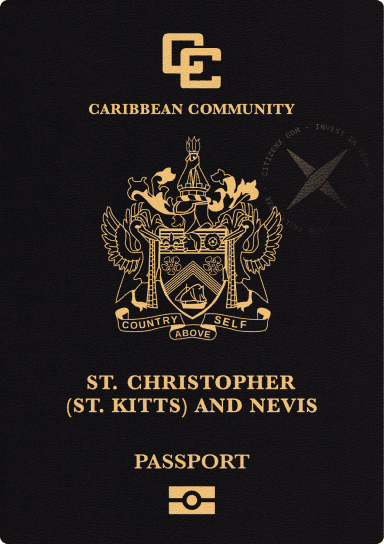
St Kitts and Nevis is where I would begin a general Caribbean comparison for a South African family.
The appeal is a direct contribution route and citizenship in a jurisdiction outside southern Africa. For someone continuing to run a South African business, the new nationality can form part of a longer-term family plan without making an immediate move the objective.
I would use St Kitts as the benchmark, then ask what another program offers that makes it more suitable. The answer might be lower cost, different dependant eligibility, or a specific business opportunity. It should be something concrete.
Other Caribbean options worth considering
Dominica starts at 200,000 USD for one person under its Economic Diversification Fund, increasing to 250,000 USD for a main applicant and up to three qualifying dependants.
For a single applicant, that contribution difference matters. For a family of four, the starting contribution matches St Kitts, so compare the remaining fees and requirements carefully.
Grenada lists a 235,000 USD minimum contribution through its Investment Migration Agency. It has a particular attraction for entrepreneurs interested in the United States: Grenada appears on the E-2 treaty-country list, while South Africa does not.
The E-2 allows qualifying investors to develop and direct a US business. It is not an automatic visa or a green card. Under the US treaty-investor rules, investment-acquired nationality generally requires three continuous years of domicile in the treaty country before an E application, subject to the statutory exception for previously granted E status.
Holding a Grenadian passport for three years while living in Cape Town does not establish domicile in Grenada. Work through that requirement and compare alternative US routes before making citizenship part of the business plan.
Outside the Caribbean, São Tomé and Príncipe starts with a 90,000 USD contribution for a single applicant. Its lower entry cost deserves attention where the goal is another nationality and an alternative home. Assess the specific travel rights the family needs before choosing primarily on price.
Vanuatu starts at 130,000 USD under its donation route, before fees, and is worth examining when processing speed matters. The European Union ended its visa exemption, so the program should not be chosen as a shortcut to Schengen travel.
El Salvador: the million-dollar outlier
El Salvador's Freedom Visa route is marketed around a 1 million USD contribution in Bitcoin or USDT and a pathway to citizenship.
For a South African family, I would want a strong reason to choose El Salvador itself. A business connection, personal attachment, or intention to build a life there gives the decision a purpose. A general desire for another passport does not make the premium persuasive.
A million dollars is four times the starting St Kitts contribution. That difference should buy something the family actually values.
Confirm the current legal route, the requirements, and the point at which citizenship is granted. Paying in digital assets does not remove the need to document the source of the funds or comply with applicable South African rules.
Funding the application from South Africa
For a South African resident, the payment plan deserves attention before an approval letter creates a deadline.
The Reserve Bank's April 2026 exchange-control circular increased the single discretionary allowance for eligible adult residents from R1 million to R2 million per calendar year. It also refers to the separate R10 million foreign capital allowance. These are subject to their applicable conditions and are not an unrestricted instruction to transfer any program payment.
Ask your authorized dealer to confirm how the intended citizenship contribution and related fees should be classified, what allowance remains available, and what tax-compliance or other supporting documents are required. Existing travel and transfers may have used part of the annual allowance.
If the funds already sit lawfully offshore, establish the supporting records the destination program and banks will require. Overseas location does not eliminate the need for a clear source-of-funds explanation.
Budget in the currency the government actually requires. A USD contribution can produce a different rand cost between the first quote and the payment date. Obtain a realistic conversion and transfer estimate from the bank rather than building the whole decision around a spot-rate calculation.
The application and the funding arrangements should be ready together.
A second passport does not change your tax residence
South Africa operates a residence-based tax system. As SARS explains, residents are generally taxed on worldwide income, subject to applicable exemptions and exclusions. Residence depends on the relevant tests and treaty rules, rather than simply the passport a person holds.
Acquiring Caribbean citizenship while continuing to live and run your affairs in South Africa does not, by itself, make you a non-resident taxpayer.
If you actually relocate, assess the tax consequences before the move. Ceasing South African tax residence may trigger a deemed disposal of assets for capital-gains purposes, subject to exclusions, and the change must be declared to SARS.
Citizenship, the right to live abroad, and tax residence answer different questions. Have the advisers responsible for each part work from the same intended facts.
The strategic framework: how to think about this
First, decide whether you want to stay, move, or simply preserve the ability to decide later.
For a family staying in South Africa, compare citizenship programs around the rights they add and the cost of obtaining them. For a family moving to a specific country, start with permission to live there.
Second, check existing citizenship claims before paying for a new one. A family entitlement may change the entire comparison.
Third, price the actual household. Children's ages, dependence, and the inclusion of parents can affect both eligibility and cost. Do not make the decision using a single-applicant headline.
Fourth, treat the United States as a separate planning objective. Grenada may be relevant, but the business and domicile requirements must fit the life you are prepared to lead.
Finally, match the documents with practical arrangements. Accessible funds, housing, schooling, insurance, and a business that can function during your absence make the option usable.
What the process actually looks like
Choose the objective and assess the family's eligibility. Resolve any existing citizenship-record issue and confirm the funding route with your bank.
Then prepare identity records, family documents, police certificates, and the financial evidence required by the chosen program. Have the authorized agent review the file before submission so missing records are identified early.
Government due diligence follows, with interviews or other appointments where applicable. Further questions can extend the timeline. For contribution routes that collect the principal payment after approval in principle, follow that prescribed sequence.
Once citizenship and passport formalities are complete, organize the family's travel documents and renewal dates. Keep South African passports valid and review entry rules before each trip.
An itemized quote should show the government contribution, charges, and licensed agent fees. The useful comparison is the total cost of achieving the intended result.
What I'd do if I were a wealthy South African
If my business and family life were in South Africa, I would begin with the assumption that staying is a valid choice. The purpose of the Plan B would be to make that choice easier to maintain.
Over the next 90 days, I would review the family's existing citizenship claims and documents, then decide which overseas rights we actually need.
For a general citizenship option, I would request full household quotes for St Kitts, Dominica, and Antigua. If the US were a serious business objective, I would add Grenada only after an honest assessment of the domicile requirement and alternative US routes.
I would arrange the payment path with the bank before the application reached a stage with a substantial funding deadline. I would also have a tax adviser examine any actual relocation we were contemplating, keeping that decision separate from the citizenship purchase.
Finally, I would make the plan usable. I would want to know where we could live, how the children would continue school, and how the business would operate if I spent six months abroad.
A second passport is more valuable when the family knows what it can do with it.
Building a Plan B while keeping South Africa home
South Africans can plan for another citizenship without assuming that acquiring it means leaving home behind.
The right choice depends on the rights you need, the family's eligibility, and the cost you can justify. The work is worth doing while you have the time to compare options and prepare a clean application.
Get your all-in quote from CitizenX to compare the options for your family, including licensed agent fees covering the full process with no additional CitizenX fees along the way.