I get some version of this question every week now. Someone has been researching second passports for a few months, they know the Caribbean programs are the industry standard, and then they stumble on Nauru, a Pacific island most people cannot find on a map, offering citizenship for less than half the price. Is it real? Is it a trap? Should they save the $150,000?
So let me give you the honest Caribbean vs Nauru citizenship by investment comparison, from someone whose company sells both. At CitizenX we process applications for all five Caribbean programs and for Nauru, so I have no incentive to trash either one. What I do have is a strong opinion about who should buy which, because I watch people overpay for the wrong program all the time.
Here is the short version. Nauru costs $128,375 all-in for a single applicant through CitizenX. A Caribbean passport costs roughly $230,000 to $290,000 all-in depending on the island. The extra money buys you a stronger passport, and above all it buys Schengen access. The problem is that the EU has formally told the five Caribbean states to phase out their citizenship programs by June 2028, and it has already shown with Vanuatu that it will pull Schengen access from a CBI country. If you are buying a pure plan B, an insurance policy you hope never to use, paying a $150,000 premium for a travel benefit with a published expiry threat is a questionable trade.
But Nauru comes with its own catch, and it is a big one. It is the hardest of the low-cost programs to actually get through. We rate it "Difficult" on CitizenX, and I will explain exactly why below, because nobody should wire $90,000 to a program without understanding what the process demands of them.
What Nauru's program actually is
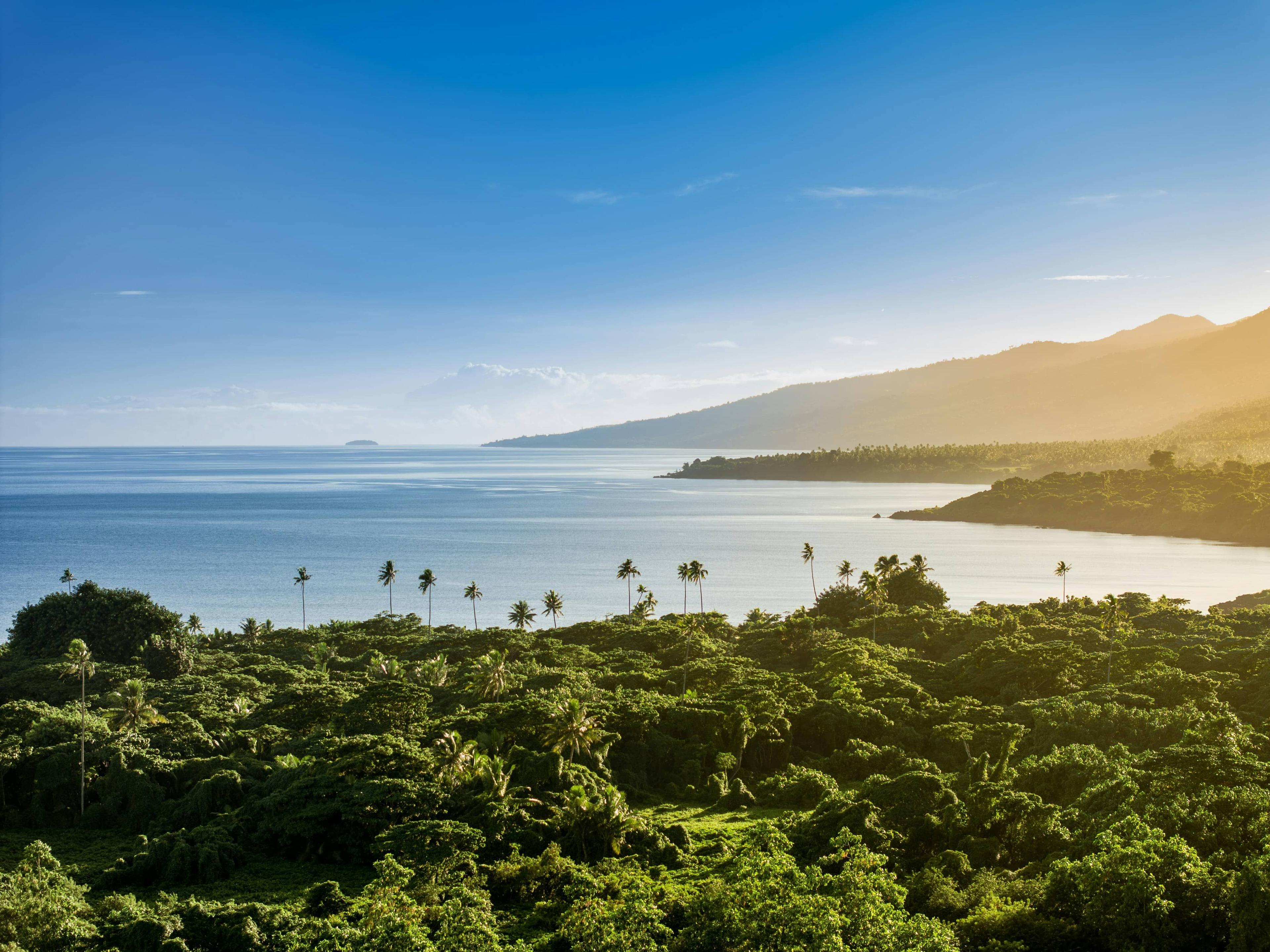
Nauru launched its Economic and Climate Resilience Citizenship Program in 2025, under the Economic and Climate Resilience Citizenship Act 2024. The framing matters here. Nauru is a 21 square kilometer island that faces genuine climate pressure, and the program exists to fund adaptation and economic resilience. Whatever you think of citizenship by investment as a concept, the money has a stated purpose, and the legal basis is a proper act of parliament rather than a ministerial decree.
The headline numbers: a $90,000 contribution for a single applicant, plus $12,700 in government fees, plus due diligence and professional costs. All-in through CitizenX, a single applicant pays $128,375. That makes Nauru the second cheapest citizenship by investment program in the world right now, behind only São Tomé and Príncipe.
What do you get? A passport valid for 10 years with visa-free or visa-on-arrival access to roughly 87 destinations, including the UK, Singapore, Hong Kong, the UAE, and South Korea. No Schengen. Dual citizenship is unrestricted, the citizenship is inheritable by your children, and you can include a wide family circle: spouse, children of any age, parents, grandparents, and even siblings. That dependent policy is broader than most Caribbean programs, and for some families it is the deciding factor on its own.
There is no visit requirement. The process runs remotely, with one significant exception I will get to: the mandatory interview.
What the Caribbean gives you for double the money
The five Caribbean programs, St. Kitts and Nevis, Dominica, Grenada, Antigua and Barbuda, and St. Lucia, are the benchmark everyone measures against, and for good reason. St. Kitts has been running its program since 1984. These are mature operations with decades of processed applications, established case law, and predictable outcomes.
Since the 2024 memorandum among the islands harmonized pricing, minimum donations run from $200,000 in Dominica up to $250,000 in St. Kitts, with Antigua at $230,000, Grenada at $235,000, and St. Lucia at $240,000. Once you add government fees, due diligence, and professional costs, a single applicant lands between roughly $230,000 and $290,000 all-in. Through CitizenX, St. Kitts comes to about $287,766 all-in for a single applicant, Grenada about $275,275, and Antigua about $274,180.
For that money you get a genuinely stronger travel document: roughly 145 to 155 visa-free destinations, including the Schengen area, the UK, Singapore, and Hong Kong. Grenada adds visa-free China and, uniquely, eligibility for the US E-2 investor visa treaty, which lets you live in the United States by running a business there. Timelines run about six months in typical cases, though Antigua applications in our data can stretch to 18 months and St. Lucia can run long too. Antigua requires a five-day visit after approval; the others have no presence requirement at all.
So the Caribbean case is real. Better passport, longer track record, more optionality. The question is whether those things are worth $150,000 more to you specifically, and whether the biggest single component of that premium, Schengen access, will still exist by the time you would actually rely on it.
The cost gap in plain numbers
Let me put the two side by side, because the gap is bigger than most people expect when they see it written out.
A single applicant going through CitizenX pays $128,375 for Nauru. The cheapest Caribbean route all-in sits around $230,000 to $240,000, and the popular options (St. Kitts, Grenada) are $275,000 to $288,000. Take Grenada at $275,275. The difference is $146,900. That is not a rounding error. That is a second citizenship's worth of money. It is literally more than the entire all-in cost of a Nauru or São Tomé application, with six figures left over.
What does the extra $147,000 buy? Primarily three things: Schengen access, program maturity, and in Grenada's case the E-2 treaty. Strip out Schengen, and you are paying $147,000 for maturity and optionality. Some buyers should absolutely pay that. Most plan B buyers should not, and I will explain why after we deal with Nauru's real weaknesses, because I do not want anyone reading this to think Nauru is a free lunch.
Why we rate Nauru "Difficult"
Here is where I part ways with the marketing you will read elsewhere. Nauru is cheap, but it is not easy. Among the low-cost programs (Nauru, São Tomé, Vanuatu, Sierra Leone), Nauru has the heaviest process by a clear margin, and we tell clients that upfront.
First, the documentation. Nauru wants a full picture of your financial life: statements of wealth, twelve months of bank statements, a bank reference letter, a professional reference letter, police clearance certificates from every country you have lived in for a year or more during the past decade, and a medical certificate. If you have lived in four countries in ten years, you are chasing four police certificates, each with its own bureaucracy, expiry window, and legalization requirements. Compare that with São Tomé, where certified true copies suffice and the document list is meaningfully shorter.
Second, the mandatory interview. Every principal applicant sits an interview with an independent due diligence firm, conducted virtually or in person. This is not a formality. The interviewers ask about your source of funds, your career history, your reasons for applying. Most clients pass without drama, but it adds preparation, scheduling, and a real possibility of follow-up questions that extend your timeline. None of the other low-cost programs require this. São Tomé has no interview at all, and no fingerprints, and no visit.
Third, the timeline. Nauru's official processing target is three months. In practice, from our experience, expect around nine months from engagement to passport in hand. The documentation load and the interview both contribute, and a young program processing at government speed does the rest. Nine months is longer than the six months a smooth St. Kitts application takes.
That last point deserves emphasis, because it breaks the usual argument for low-cost programs. With São Tomé (roughly four to six months) or Vanuatu (two to four months), you can honestly say you are paying less and getting your passport faster than the Caribbean. With Nauru you cannot. You are paying less and waiting about the same or longer. The case for Nauru is pure cost. If the process were the same difficulty at the same price, I would tell you to look elsewhere. It is the $128,375 number, and only that number, that keeps Nauru on the shortlist.
Who cannot apply to Nauru
One more filter before we go further, because it removes a meaningful share of readers. Nauru's restrictions are based on where you were born, not only your current nationality. If you were born in Iran, North Korea, Russia, or Belarus, you cannot apply, full stop, regardless of what passport you hold today. A Russian-born Canadian citizen who left at age two is excluded. Nationals of Myanmar, Afghanistan, Yemen, and Sudan are also ineligible unless narrow exceptions apply.
This birth-based exclusion is stricter than the Caribbean approach, where restrictions generally follow nationality and banking exposure rather than birthplace, though the Caribbean programs have their own restricted lists that shift with sanctions policy. If you fall into Nauru's excluded categories, this whole comparison is moot for you, and you should look at São Tomé (which restricts only North Korea) or talk to us about which programs remain open.
Caribbean vs Nauru: the comparison table
Nauru
Caribbean (five programs)
All-in cost, single applicant (via CitizenX)
$128,375
~$230,000 to $290,000 (St. Kitts ~$287,766; Grenada ~$275,275; Antigua ~$274,180)
Minimum contribution
$90,000
$200,000 (Dominica) to $250,000 (St. Kitts)
Time to passport
~9 months in practice (3 months official)
~6 months typical; Antigua up to 18 months
Visa-free destinations
~87 (UK, Singapore, Hong Kong, UAE, South Korea)
~145 to 155 (Schengen, UK, Singapore, Hong Kong; Grenada adds China)
Schengen access
No
Yes, but EU has asked for CBI phase-out by June 2028
Visit required
No
No (except Antigua, 5 days)
Interview
The Schengen problem nobody prices in
Now the part of this comparison that most of the industry would rather not talk about, because Schengen access is the Caribbean's main selling point and the reason the premium exists.
In December 2025, the European Commission published its 8th report under the Visa Suspension Mechanism. The language was blunter than anything the EU had said before: operating a citizenship by investment program is "in itself" grounds to suspend a country's visa-free access to the Schengen area. The report singled out the five Caribbean CBI states, noting they have issued over 100,000 passports through these programs with low application rejection rates. The Commission has reportedly followed up with letters asking these countries to phase out their CBI programs by June 1, 2028. You can read the Commission's visa suspension framework materials on the European Commission's migration and home affairs site.
If that sounds like an empty threat, look at Vanuatu. The EU suspended Vanuatu's Schengen access in stages starting in 2022, and in December 2024 the European Council made the revocation permanent, explicitly because of its citizenship by investment program. Vanuatu passport holders who bought partly for European travel lost that benefit entirely, and it has not come back. The EU has now done to one CBI country exactly what it is threatening to do to five more.
Add ETIAS to the picture. From late 2026, even visa-exempt travelers to the Schengen area will need pre-travel authorization, which gives the EU a per-traveler screening layer on top of the country-level suspension power. The direction of travel is unmistakable: Brussels wants CBI passports out of its visa-free ecosystem, and it has built the tools to make that happen.
So walk through the plan B buyer's math with me. You pay roughly $150,000 extra for a Caribbean passport, primarily for Schengen access. Your passport arrives in 2027. The EU's requested phase-out date is June 2028. Even on generous assumptions, where the islands negotiate, reform, and keep access longer, you are betting a six-figure premium on the EU backing down from a position it has already enforced against Vanuatu. For someone who flies to Europe monthly, taking that bet for a few years of guaranteed convenience can still be rational. For someone buying insurance they hope never to use, it is a strange allocation of money.
And here is the point I keep making to clients who care about Europe: if EU access is what you actually want, a residency permit is a sturdier tool than a visa waiver. You can hold a low-cost second passport for your plan B and separately pursue a European residency (Portugal, Greece, and others have well-trodden routes) that gives you the right to live in Europe rather than the ability to visit it. That combination often costs less than a single Caribbean passport, and no Commission report can revoke a residence permit you personally hold.
What the Caribbean premium still buys, honestly
I said this is not a hit piece, and I mean it. There are three buyer profiles where I recommend the Caribbean over Nauru without hesitation.
The first is the frequent Europe traveler. If you are in the Schengen area every month for business or family, the Caribbean passport pays for itself in saved visa applications and airport friction, today, right now. The 2028 phase-out is a request, not yet a regulation, and the islands are lobbying hard. If the access lasts even four or five more years, a heavy Europe traveler extracts real value in that window. Buy the tool that solves this year's problem, with your eyes open about the horizon.
The second is the E-2 buyer. Grenada is one of the few CBI countries with a US E-2 treaty. If your actual goal is to relocate to the United States and run a business there, no low-cost program touches this. Nauru does not solve your problem at any price.
The third is the buyer who values maturity above all. St. Kitts has run its program for over forty years. Banks know these passports. Processing is predictable. The programs have survived multiple rounds of international pressure by reforming rather than collapsing. If you are the kind of person who pays for the established brand because tail risk keeps you up at night, that preference is legitimate, and the Caribbean is where it points. Nauru launched in 2025. It has a real act of parliament behind it and a serious due diligence process, but it does not have a decades-long record, because it cannot yet.
If you fit none of these three profiles, you are the buyer the premium is wasted on.
Where São Tomé fits into this decision
There is a third option I have to mention, because for a lot of readers it beats both programs in this comparison. If Nauru's price appeals to you but the "Difficult" rating gives you pause, São Tomé and Príncipe is the same idea executed with far less friction, at an even lower price: $105,325 all-in for a single applicant through CitizenX, currently the cheapest citizenship by investment program in the world.
The contrast with Nauru is stark on process. São Tomé requires no interview, no fingerprints, no visit, and since April 2026 even the national ID card is issued remotely through a short video verification. Certified true copies suffice, so you skip the apostille circus. The contribution is paid only after approval in principle, which means your capital is not at risk while due diligence runs. Approvals have come through in as little as four weeks, with four to six months a normal total timeline. And São Tomé's CPLP membership gives its citizens a legislated path to residency in Portugal and Brazil, with codified naturalization timelines, which is a more durable route to Europe than any visa waiver.
I wrote a full comparison of the Caribbean against São Tomé separately, but the one-line summary for this article: if your reason for considering Nauru is purely the price, check São Tomé first. It is cheaper, faster, and much easier. The cases where Nauru wins are specific: you want the broader dependent circle (siblings, grandparents), you prefer a 10-year passport over São Tomé's 7-year document, you hold three or more nationalities already (a category São Tomé has on hold since April 2026), or you simply want the stronger visa-free list, since Nauru's 87 destinations beat São Tomé's 61 and include the UK.
How I would actually decide
Strip away the marketing and this decision comes down to four questions.
How often do you need to be in Europe? If the answer is monthly, the Caribbean earns its premium today, with the 2028 caveat priced in. If the answer is occasionally or rarely, Schengen access is not worth $150,000 to you, and you should be shopping in the low-cost tier.
Is this a plan B or a plan A? A plan B passport is insurance: an escape route, a banking fallback, a hedge against your home country's politics. Insurance should be cheap relative to what it protects. Nauru at $128,375 is a legitimate insurance product with a solid legal foundation and a 10-year passport. A plan A passport, one you intend to travel on constantly and build your life around, justifies paying for strength and maturity, and that points Caribbean.
Can you handle the Nauru process? Be honest with yourself. If you have lived in several countries recently, the police certificate chase alone is weeks of work. The interview requires preparation. Nine months requires patience. If you want cheap and easy rather than cheap and hard, São Tomé is sitting right there at $105,325.
Where were you born? If the answer is Iran, Russia, Belarus, or North Korea, Nauru is off the table regardless of everything above, and your comparison becomes Caribbean vs São Tomé vs the rest.
My general read, having watched hundreds of these decisions: most pure plan B buyers who consider the Caribbean are overpaying for a travel benefit the EU has scheduled for the exit, and most of them are better served in the low-cost tier. Within that tier, São Tomé is the default and Nauru is the specialist pick for families who need its dependent rules or buyers who want its stronger visa-free list and can tolerate its process. The Caribbean remains the right call for frequent Europe flyers, E-2 candidates, and maturity buyers, and I sell it to those people gladly.
The bottom line
Nauru at $128,375 all-in is a real program with a real act of parliament behind it, the second cheapest citizenship by investment option in the world, and a sensible plan B for someone with a strong primary passport who wants a 10-year fallback document and broad family inclusion. It is also the hardest of the low-cost programs: heavy documentation, a mandatory due diligence interview, around nine months in practice, and birth-based exclusions that rule out anyone born in Iran, Russia, Belarus, or North Korea. You buy Nauru for the price, not the process.
The Caribbean at $230,000 to $290,000 buys a stronger passport and four decades of institutional credibility, but the core of its premium is Schengen access that the European Commission's December 2025 Visa Suspension Mechanism report has explicitly targeted, with a requested phase-out by June 2028 and the Vanuatu revocation of December 2024 as proof the EU follows through. Pay the premium if you use Europe constantly, need Grenada's E-2 route, or want the most established programs money can buy. Skip it if you are buying insurance.
If you want to see exact costs for your family composition, we publish full pricing for Nauru, St. Kitts and Nevis, and São Tomé and Príncipe on CitizenX. Create a free CitizenX account to compare programs side by side, or request an advisory call and we will tell you plainly which passport fits your situation, including when the answer is the cheaper one.
Frequently asked questions
How much does Nauru citizenship by investment cost in 2026?
The minimum contribution is $90,000 for a single applicant, plus $12,700 in government fees, plus due diligence and professional costs. All-in through CitizenX, a single applicant pays $128,375. Families pay more per dependent, but Nauru allows an unusually wide circle: spouse, children of any age, parents, grandparents, and siblings.
Is Nauru citizenship faster than Caribbean citizenship?
No, and this surprises people. Nauru's official processing time is three months, but in practice expect around nine months from start to passport in hand, because of the heavy documentation and the mandatory due diligence interview. A smooth St. Kitts application takes about six months. Nauru's advantage over the Caribbean is cost, not speed. If you want a low-cost program that is also fast, São Tomé and Príncipe (roughly four to six months) is the better fit.
Does a Nauru passport give visa-free access to Europe?
Not to the Schengen area. Nauru's passport covers roughly 87 destinations, including the UK, Singapore, Hong Kong, the UAE, and South Korea, but not Schengen. Caribbean passports currently include Schengen access, though the European Commission's December 2025 Visa Suspension Mechanism report asked the five Caribbean CBI states to phase out their programs by June 2028, and the EU permanently revoked Vanuatu's Schengen access in December 2024 over its CBI program.
Who is not eligible for Nauru citizenship by investment?
Anyone born in Iran, North Korea, Russia, or Belarus cannot apply, regardless of current nationality. Nationals of Myanmar, Afghanistan, Yemen, and Sudan are ineligible unless specific exceptions apply. The birth-based rule is stricter than most programs, which restrict by nationality rather than birthplace.
Why is Nauru rated "Difficult" if there is no visit requirement?
Because of the paperwork and the interview. Nauru requires statements of wealth, twelve months of bank statements, bank and professional reference letters, police certificates from every country you have lived in for a year or more during the past decade, and a medical certificate. Every principal applicant also sits a mandatory interview with an independent due diligence firm. The application is fully remote, but it is the most demanding process among the low-cost programs.
Is a Caribbean passport still worth the extra $150,000?
For three kinds of buyers, yes: people who travel to Europe frequently today and will use Schengen access while it lasts, entrepreneurs who want US E-2 treaty eligibility through Grenada, and buyers who value forty years of program maturity. For a pure plan B buyer who rarely visits Europe, paying roughly $150,000 extra mainly for Schengen access the EU has asked the islands to wind down by June 2028 is hard to justify, and a low-cost program plus a separate EU residency is usually the smarter structure.
Mandatory, with due diligence firm
Varies; St. Kitts and others have introduced interviews
Documentation load
Heavy (wealth statements, 12 months bank statements, police records from every country lived in 1+ year over 10 years, medical)
Heavy, comparable
CitizenX difficulty rating
Difficult
Moderate, with mature processes
Restrictions
Born in Iran, Russia, Belarus, North Korea excluded; Myanmar, Afghanistan, Yemen, Sudan nationals ineligible
Nationality-based restricted lists, vary by island
Dependents
Spouse, children any age, parents, grandparents, siblings