Cheapest citizenship by investment in Africa for 2026
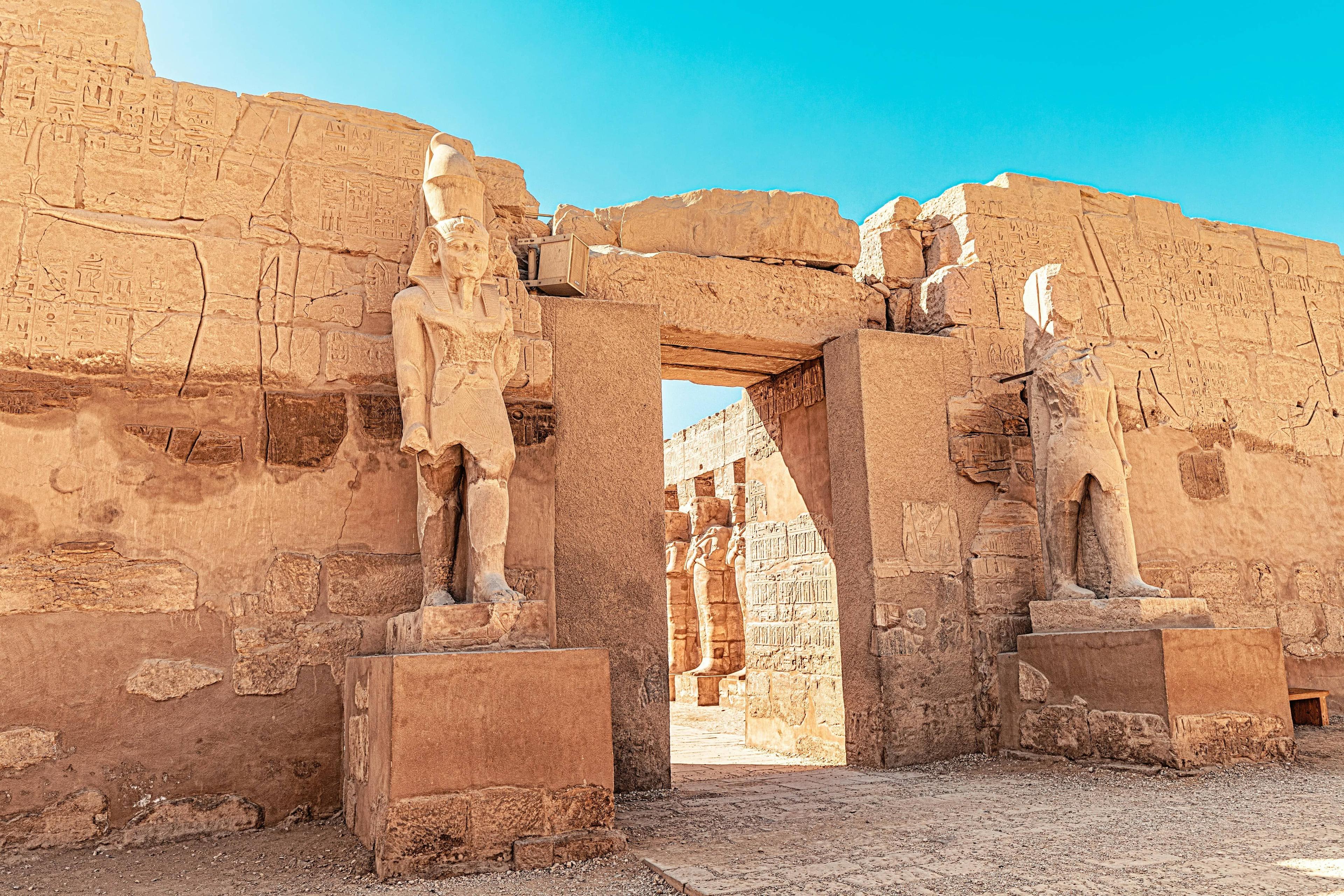
Africa now hosts the world's cheapest citizenship by investment at $90,000. We compare São Tomé, Sierra Leone, and Egypt on cost, legal foundations, and what you actually get.
AR
Co-founder & CEO
Reading time: 15 minAug 01, 2026 • 1:53 PM
The cheapest citizenship by investment program in the world is no longer in the Caribbean, and it is not in the Pacific either. As of 2026, it is a two-island nation in the Gulf of Guinea that most people cannot place on a map: São Tomé and Príncipe, where a passport costs $90,000.
Africa has quietly become the price floor of the entire investment migration industry. Three countries currently sell citizenship on the continent, at prices from $90,000 to $250,000, and a fourth ran a program so badly a decade ago that it remains the industry's favorite cautionary tale. The catch, and there is always a catch at this end of the market, is that the three live programs differ enormously in how solid the ground under them is. One is a codified statute. One is a presidential power being marketed as a program. One is a real law attached to a process so discretionary that the country approved just 36 applicants in all of 2025.
This guide covers all of it. We have verified every figure against current 2025-2026 sources, including official fee schedules and primary reporting, and where a number comes from marketing materials rather than gazetted law, we tell you.
If your search is really about Asia or Europe, we have companion guides on the cheapest citizenship by investment in Asia (which is where Jordan belongs, despite what other guides claim) and the history of citizenship by investment in Europe.
How we evaluate cheap programs
Price is the easy part. Anyone can rank three numbers. The questions that actually protect your money are different ones.
Is the program written into law? A citizenship program grounded in a published statute or decree-law, with defined criteria and pricing, creates something close to an entitlement: meet the requirements, pass due diligence, and the government's obligation is defined. A program that runs on a president's discretionary power to naturalize whoever he likes is not a program. It is a policy preference that can change with the next cabinet meeting, and your money is usually committed before you find out.
Where does the money go? Programs that pay into an earmarked, auditable fund age better than programs where the money disappears into general revenue or, worse, into structures nobody can see. The Comoros program collapsed over roughly $100 million in unaccounted revenue. This is not a theoretical risk on this continent.
What does the passport actually do? African CBI passports cluster between 50 and 70 visa-free destinations. None offers Schengen or the UK. If your goal is travel power, you are shopping in the wrong section. The realistic use cases are a genuine second nationality, a Plan B document, regional mobility (ECOWAS, for one of these), and diversification for people whose first passport is the problem.
With that frame, here are the three live programs, cheapest first.
1. 🇸🇹 São Tomé and Príncipe: the world's cheapest passport, one year old
São Tomé and Príncipe's citizenship by investment act took effect on August 1, 2025 (Decree-Law 07/2025), applications opened that September, and the first passports were issued around January 2026. One year in, it holds a title no African program has held before: the cheapest citizenship by investment in the world.
The numbers. A single applicant contributes $90,000 to the National Transformation Fund. Here is the part that makes it remarkable for families: a family of two to four pays $95,000 total. Not per person. Additional dependents beyond four cost $5,000 each. Add a $5,000 submission fee regardless of family size, then per-person issuance fees after approval: $350 for the passport, $150 for the national ID, $250 for the registration certificate. A family of four is all-in for barely more than $101,000, which works out to roughly $25,000 per passport. Nothing else on the market comes close.
Eligibility and process. Dependents can include a spouse, unmarried financially dependent children up to 30, and parents over 55. There is no interview, no residency requirement, and no obligation to visit; the program introduced remote passport issuance. The government's stated processing target is six weeks, and actual performance has averaged around two and a half months across the first ~27 approvals, with the fastest files closing in four weeks.
What the passport does. Roughly 61 visa-free destinations by IMI's count (up to the mid-80s if you count visa-on-arrival generously). South Africa is included. Europe is not. This is a diversification document and a genuine second nationality, not a travel upgrade for anyone holding a decent passport already.
The honest caveats. The program is administered by a Citizenship Investment Unit headquartered in Dubai, run by a UAE advisory firm under government oversight. Outsourced processing is not unheard of in this industry, but an offshore administrator for a brand-new program is a structure you should understand before wiring money. The program also accepts applicants from almost everywhere, including Russia and Iran, with only North Korea barred outright. That is commercially rational and reputationally risky: broad acceptance policies are precisely what triggered EU action against Vanuatu. And at one year old, the program has no track record through a change of government, which is when cheap programs get tested.
Our verdict. As codified cheap citizenship goes, this is the best-structured offer Africa has ever produced: a real decree-law, published pricing, earmarked fund, family pricing that borders on generous. Whether it stays that way depends on due diligence discipline the program has not yet had time to prove.
2. 🇸🇱 Sierra Leone: a presidential power wearing a program's clothes
Sierra Leone announced its citizenship offering on January 2, 2025, and on paper the prices slot neatly between São Tomé and Egypt: fast-track citizenship from $140,000 in about 90 days, or from $100,000 in about 60 days for applicants who can document African ancestry through DNA under the African Heritage route. There is even a permanent residency option from $65,000 that includes, and we are not making this up, the purchase of a kilogram of gold bullion. Dependents run $10,000 to $20,000 each, and a 2026 expansion extended eligibility to extended family and business partners.
Here is what the marketing does not lead with: there is no Sierra Leone citizenship by investment law.
The route runs on Section 27A of the Citizenship Act 1973, a provision that lets the president confer citizenship at his discretion. No dedicated statute was passed, no public debate was held, and the local press has raised questions about transparency and where the money goes that have not been convincingly answered. Even IMI Daily, the industry's paper of record, notes that it has not been able to independently verify the program's details against official government documentation beyond statements from the Chief Immigration Officer. Pricing has shifted repeatedly since launch, and most of the figures in circulation, including the ones above, come from agent and marketing channels rather than gazetted law.
Regular readers will recognize the pattern, because it is the one we keep warning about. This is citizenship by exception sold as citizenship by investment. The distinction is not academic. Under a codified program, meet the requirements and the government's obligation is defined. Under a discretionary power, the government decides. Every time, individually, for reasons it doesn't have to explain. There is no application portal to hold it accountable, no binding criteria to appeal against, and nothing that prevents next year's administration from repricing, pausing, or disavowing the whole arrangement. Discretion is not a guarantee, and a presidential power is not a statute.
What you would get if it works. A passport covering roughly 67 destinations on generous counts, with ECOWAS free movement across West Africa as the standout practical benefit. For diaspora applicants, the heritage route has genuine emotional and identity value, and we do not dismiss that. But an emotional case is not a legal one.
Our verdict. The cheapest thing about Sierra Leone's offer is the legal foundation. If the heritage route speaks to you personally, go in understanding that you are asking for a discretionary grant, structure the payment so as little as possible is committed before approval, and treat every agent claim of "guaranteed 60 days" with the suspicion it has earned.
3. 🇪🇬 Egypt: a real law, a $250,000 donation, and 36 approvals a year
Egypt has run Africa's most established citizenship by investment framework since 2019, and unlike Sierra Leone, it is anchored in actual legislation with four defined routes:
- Donation: $250,000, non-refundable, to the state treasury. The cheapest route and the most popular after real estate.
- Real estate: $300,000 in state-approved property, funded from abroad, held for five years.
- Business investment: $350,000 into an Egyptian company, plus a $100,000 non-refundable donation on top.
- Bank deposit: $500,000 with the Central Bank for three years, returned in Egyptian pounds without interest, which converts FX risk into a quiet haircut of unknowable size.
Every route also carries a $10,000 administrative fee remitted from abroad. A spouse and children under 21 can be included. On paper, processing runs 6 to 12 months through GAFI review and a temporary-residence window while you execute the investment.
Now the number that reframes everything: Egypt granted citizenship to 36 investors in all of 2025. Eleven in March, twenty-five in July, and the July batch was reportedly entirely Syrian backlog files. New Syrian applications have been suspended since December 2024 over document-verification problems. In 2025 Egypt also ended fully remote processing and introduced in-person verification requirements.
Thirty-six approvals is not a program throughput. It is a discretionary bottleneck with a fee schedule in front of it. Final sign-off runs through the interior ministry, the criteria applied at that stage are not published, and the gap between "applications submitted" and "citizenships granted" is where your $250,000 sits, non-refundable, while you wait.
What the passport does. Roughly 55 visa-free destinations, ranked in the high 80s globally. For most Western applicants that is a downgrade wrapped in a six-figure price. The buyers for whom Egypt makes sense are mostly regional: investors already operating in Egypt, and applicants from weaker-passport countries for whom Egyptian nationality is a genuine upgrade in stability and mobility.
Our verdict. Egypt is the mirror image of Sierra Leone: the law is real, but the practice is discretionary. A codified price list means little when approvals are this scarce and this opaque. If you pursue it, favor the recoverable routes over the donation, and price in a timeline measured in years, not the months in the brochure.
The ghost at the table: Comoros
No honest article about cheap African citizenship can skip Comoros, because it is the reason skeptics exist.
Between 2008 and the mid-2010s, Comoros sold economic citizenship at what was then the lowest price in the world, in bulk deals with Gulf states that bought passports for their stateless bidoon populations, alongside individual sales. A parliamentary inquiry later found roughly $100 million in missing revenue, along with passports issued outside any legal process entirely. The program was terminated in 2017 and passport issuance suspended by early 2018.
The lesson is not "African programs fail." Caribbean and European programs have produced their own scandals, and Cyprus's was arguably worse. The lesson is that the cheap end of this market fails in a specific way: weak institutions plus discretionary control plus opaque money flows. Every question we asked of the three live programs above (Is it statutory? Where does the money go? Who audits it?) is a question Comoros would have failed in 2010, in public, before a single buyer got burned.
Nine questions to ask before wiring money to a cheap program
We get asked constantly how to tell a young-but-legitimate program from a young-and-doomed one. Nobody can promise the difference in advance, but these questions separate the programs that can answer from the ones that change the subject.
- What statute or decree-law creates the program, and can I read it? São Tomé can hand you Decree-Law 07/2025. Sierra Leone cannot hand you anything equivalent, and that asymmetry should shape everything else.
- Is the fee schedule published by the government, or only by agents? Agent-quoted prices that appear nowhere official are prices that can be renegotiated after you have committed.
- When does my money actually move? The best structures collect due diligence fees first and the main contribution only after approval in principle. The worst collect everything up front and process at their leisure.
- Who runs due diligence, and is a third-party firm involved? "We check applicants carefully" is not an answer. Named international due diligence providers are.
- Which nationalities are barred? A program that takes nearly everyone is a program that will eventually take someone who makes headlines, and your passport shares a brand with theirs.
- Where does the money go, and who audits it? An earmarked fund with reporting obligations survived scrutiny in every jurisdiction that had one. General-revenue black holes produced Comoros.
- How many citizenships has the program actually granted? Approval counts tell you the difference between a program and a press release. Egypt's 36 grants in 2025 said more than its four investment routes ever did.
- Can passports be renewed remotely, and what does renewal cost? A citizenship you must fly across the world to maintain is worth less than the brochure implies.
- What happens to my application if the government changes? No program can bind its successor, but statutory programs survive transitions far more often than discretionary arrangements do. Ask how the program answers this, and listen for whether the answer cites law or personalities.
None of these questions is hostile. A well-run program answers all nine without flinching, because the answers are its sales pitch. Evasion on any of them is data.
What comes next in Africa
The pipeline suggests the continent's next moves are residency-first rather than passport-first. Kenya revived its golden visa plans in July 2026 to court foreign investors, and Ethiopia has set a $10 million threshold for a 10-year golden visa launching this year. Neither sells citizenship. Both signal that African governments have noticed the revenue, and the next generation of programs will be judged, fairly or not, against how São Tomé and Sierra Leone handle their first few years.
How to choose
If you want the cheapest legitimate citizenship money can currently buy: São Tomé and Príncipe, especially for families. $95,000 for a family of four, under an actual decree-law, is the best price-to-legal-certainty ratio at the bottom of this market.
If the African Heritage angle matters to you personally: Sierra Leone's route exists and is cheaper than the fast track, but treat it as the discretionary grant it legally is, not the product it is marketed as.
If you are already invested in Egypt or hold a weak regional passport: Egypt's framework is real, but let the 2025 approval numbers, not the brochure, set your expectations.
If anyone offers you Comoros: the program has been dead since 2017. That offer is a different kind of problem.
The thread running through all of it is the same one we trace in every market we cover: the meaningful line is not cheap versus expensive, it is codified versus discretionary. São Tomé wrote its program into law. Sierra Leone borrowed a presidential power. Egypt wrote the law and then ran discretion through the back of it. Those three structures produce very different risk at the same price point, and the invoice never mentions it.
That principle is why CitizenX built its work around statutory programs, including El Salvador's Freedom Visa, where capital moves only after due diligence approval under a codified process. The price of certainty varies. The value of it does not.
Frequently asked questions
What is the cheapest citizenship by investment in Africa in 2026? São Tomé and Príncipe, at $90,000 for a single applicant or $95,000 for a family of up to four, plus modest fees. It is currently the cheapest citizenship by investment program in the world.
Is the São Tomé and Príncipe passport any good? It covers roughly 61 visa-free destinations, including South Africa, but not Europe or the UK. It is best understood as a low-cost second nationality and diversification document rather than a travel upgrade.
Is Sierra Leone's citizenship program legitimate? It operates under a real legal power (Section 27A of the 1973 Citizenship Act), but that power is presidential discretion, not a citizenship by investment statute. Pricing and procedures come largely from marketing channels and have shifted since launch. It carries the highest legal uncertainty of the three live programs.
How much is Egyptian citizenship? From $250,000 as a non-refundable donation, with real estate ($300,000), business ($350,000 plus $100,000 donation), and bank deposit ($500,000) alternatives, plus a $10,000 fee. Note that Egypt approved only 36 investor citizenships in 2025.
Can Americans or Europeans benefit from these programs? As Plan B nationality and asset diversification, possibly. As travel documents, no: all three passports cover fewer destinations than US or EU passports. Buyers from strong-passport countries are usually solving a different problem, and should be honest with themselves about which one.
What happened to Comoros citizenship by investment? It was terminated in 2017 after a parliamentary inquiry found roughly $100 million in unaccounted revenue and widespread irregular passport issuance. It is the industry's standing reminder of what discretion plus opacity produces.
This article is general information, not legal, tax, or investment advice. Program rules at this end of the market change frequently and several figures above come from program marketing rather than gazetted law, as flagged. Always confirm the current position and seek qualified cross-border advice before making decisions.
Weighing a cheap second citizenship against a codified one? Book a consultation with a CitizenX citizenship expert. No obligation.
Related articles