Top 25 Wealthiest Cities in Africa in 2026
Africa's urban landscape is evolving rapidly, with cities across the continent becoming powerhouses of wealth creation and economic growth.
AR
Co-founder & CEO
Reading time: 31 minJul 07, 2026 • 7:41 PM
Africa's urban landscape is evolving rapidly, with cities across the continent becoming powerhouses of wealth creation and economic growth.
From the banking corridors of Johannesburg to the tech hubs of Nairobi, Africa's richest cities showcase the dynamic transformation happening across the continent. Let's dive into the fascinating world of Africa's wealthiest urban centers in 2026.
Introduction
Understanding Africa's Wealth Distribution
When we talk about wealth in Africa, we're looking at a fascinating but uneven picture. Africa's private wealth is heavily concentrated in a handful of large economies. According to Forbes, the continent counted 22 dollar billionaires in 2025 – a record – with South Africa (7), Egypt (5), Nigeria (4), and Morocco (3) accounting for the overwhelming majority.
That country-level pattern maps directly onto cities. Wealth in Africa tends to gather in urban centers with strong financial sectors, good infrastructure, and business-friendly environments – places like Johannesburg, Cairo, Lagos, Cape Town, Nairobi, and Casablanca.
Southern and North African nations hold most of the continent's private wealth, while many smaller economies lag well behind. This regional wealth gap is something to keep in mind as we explore the continent's richest cities.

How We Rank Africa's Richest Cities
Rather than relying on any single proprietary wealth database, our ranking combines publicly verifiable indicators:
Metropolitan GDP – the total economic output of the urban area, based on national statistics offices and multilateral estimates. This captures sheer economic scale.
GDP per capita and income levels – how that output translates into prosperity for residents.
Financial influence – the presence of major stock exchanges, banking headquarters, and standing in the Global Financial Centres Index (GFCI).
Billionaire presence – drawn from the Forbes annual list of Africa's billionaires, which tracks where the continent's wealthiest individuals base themselves.
Growth trajectory – using World Bank, IMF, and African Development Bank projections, since today's growth is tomorrow's wealth.
One important caveat: currency movements matter enormously in dollar-denominated comparisons. The Nigerian naira and Egyptian pound both depreciated sharply in recent years, while the South African rand has weakened steadily over the past decade. These swings mean city rankings in USD terms can shift even when local economies keep growing.
Table: Top 5 Wealthiest Cities in Africa (2026)
| Rank | City | Country | Est. Metro GDP | Key Industry |
|---|---|---|---|---|
| 1 | Cairo | Egypt | $100B+ | Diversified/Conglomerates |
| 2 | Johannesburg | South Africa | ~$80B | Finance |
| 3 | Lagos | Nigeria | $100B+ (PPP) | Oil/Finance/Tech |
| 4 | Cape Town | South Africa | ~$35B | Tourism/Real Estate |
| 5 | Nairobi | Kenya | ~$30B | Finance/Tech |
Africa's Economic Landscape in 2026
Africa's economic pulse is strong in 2026, with the World Bank projecting Sub-Saharan African growth of roughly 4.1-4.3%, making it one of the world's fastest-growing regions after Asia. Non-resource-rich economies are expected to grow above 6%, led by Ethiopia, Rwanda, Uganda, and Côte d'Ivoire.
This growth story, however, comes with nuances. High inflation and currency depreciations have eroded some wealth gains in dollar terms, particularly in Nigeria, Egypt, and Angola. Many Africans became "poorer" in USD terms despite local asset growth.
Stable, investment-friendly jurisdictions like Sao Tome & Principe have cultivated growing investor interest, whereas conflict-affected or policy-challenged states lag behind. Overall, Africa in 2026 presents a picture of concentrated wealth in a handful of countries and urban centers, amid a generally rising economic tide tempered by local challenges.
Top 10 Richest Cities in Africa
#1 Cairo
Key Facts About Cairo
Greater Cairo is Africa's largest metropolitan economy, generating an estimated $100 billion+ in annual output – roughly a fifth of Egypt's entire GDP. With over 20 million people in the greater metropolitan area, it is also one of the world's great megacities.
Cairo hosts more Forbes-list billionaires than any other African city. Egypt's five billionaires in 2025 – led by the Sawiris and Mansour families – largely base their conglomerates in the capital, spanning telecom, construction, automotive distribution, and consumer goods.

Historical Wealth and Modern Expansion
Cairo's historical position as a cultural and business center means it attracts considerable wealth, though the Egyptian pound's sharp devaluation has dented private fortunes in USD terms. Affluent districts such as Zamalek, New Cairo, and 6th of October City are known for luxury homes and gated communities.
Cairo's wealth drivers include:
- Family conglomerates in telecom, construction, and consumer goods
- Government and public sector
- Finance and banking (the Egyptian Exchange is among Africa's oldest)
- Real estate and construction
- Manufacturing and exports
The city is expanding with ambitious projects like the New Administrative Capital, a $45 billion development east of Cairo designed to ease congestion and create a new business hub. This massive project exemplifies Egypt's commitment to urban development and reflects the concentration of capital in and around Cairo.
#2 Johannesburg
Key Facts About Johannesburg
Johannesburg is Africa's financial capital and South Africa's economic engine, with a metropolitan GDP estimated around $75-80 billion – the largest city economy on the continent after Cairo by most nominal measures, and the richest in terms of financial-market depth.
Often nicknamed the "City of Gold" for its historic gold mining industry, Johannesburg has transformed itself into a modern financial center. The city's wealth is concentrated in affluent suburbs like Sandton, which has earned the nickname "the richest square mile in Africa" due to its concentration of corporate headquarters and upscale residential estates. Several of South Africa's Forbes-list billionaires, including mining magnate Patrice Motsepe and the Oppenheimer family, are associated with the city.

Main Industries Driving Wealth
Johannesburg hosts the Johannesburg Stock Exchange (JSE), Africa's largest exchange by market capitalization, which serves as the financial heart of the continent. The city's economic strength comes from:
- Finance and banking (headquarters of major African banks)
- Professional services (legal, accounting, consulting firms)
- Mining and resources (corporate offices of mining giants)
- Telecommunications (major telecom companies)
- Retail (luxury shopping centers and high-end retail)
The city's diversified economy and well-developed legal and financial infrastructure make it a magnet for investors across Africa and beyond. Despite challenges like inequality, power supply constraints, and security concerns, Johannesburg remains the continent's premier business address.
#3 Lagos
Key Facts About Lagos
Lagos is West Africa's economic heartbeat and Nigeria's largest city. With a population of around 15-20 million depending on the boundary used, Lagos State's economy is estimated above $100 billion in PPP terms – roughly a quarter or more of Nigeria's GDP – making it one of Africa's biggest city economies.
As Nigeria's commercial and financial capital, Lagos harbors the Nigerian Exchange, major banks, and industrial conglomerates like Dangote Group – whose founder Aliko Dangote remains Africa's richest person on the Forbes list. Most of Nigeria's four Forbes-list billionaires are Lagos-based. The city's affluent neighborhoods of Ikoyi, Victoria Island, and Banana Island are known for their expensive mansions and high-end apartments.
Factors Behind Lagos's Wealth Creation
The naira's steep depreciation has cut Lagos fortunes in dollar terms, yet the city's underlying wealth engines keep running:
- Oil and gas industry (many energy firms and executives)
- Financial services and fintech innovation
- Real estate development (including Eko Atlantic City)
- Entertainment industry (Nollywood and music)
- Telecommunications and technology startups
Lagos is also emerging as a tech hub in Africa, home to most of the continent's fintech "unicorns," with the Nigerian tech ecosystem attracting over $1 billion in venture capital in recent years and creating a new generation of tech wealth.
Despite infrastructure challenges, traffic congestion, and security issues, Lagos's sheer scale and entrepreneurial spirit solidify its place among Africa's top wealth centers.
#4 Cape Town
Key Facts About Cape Town
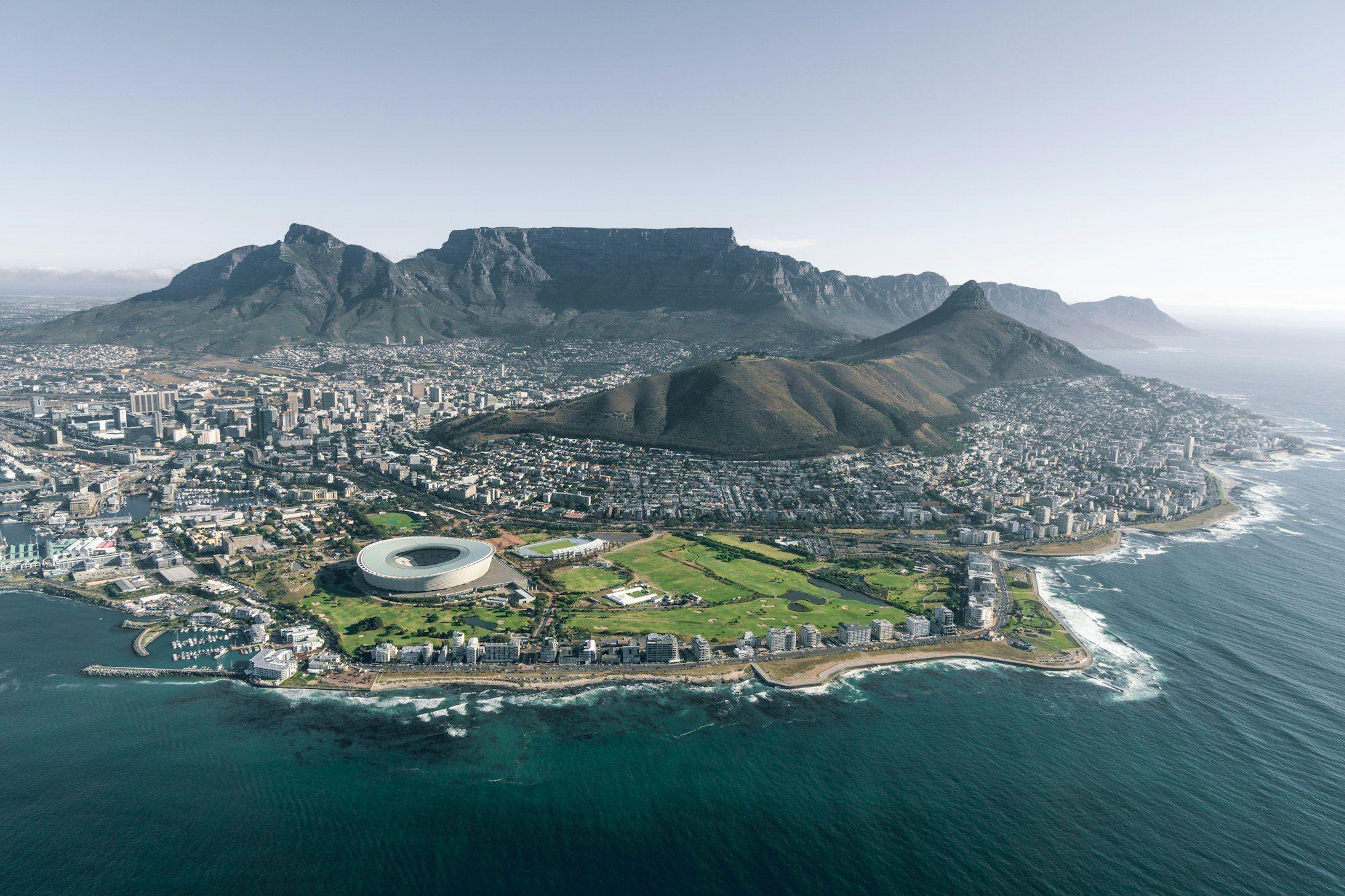
Cape Town, with its stunning scenery and high quality of life, ranks as Africa's premier lifestyle wealth center. Its metropolitan economy is estimated around $35 billion, anchored by tourism, real estate, finance, and a fast-growing tech scene.
Cape Town contains many of Africa's most opulent residential areas, including the exclusive coastal suburbs of Clifton, Camps Bay, and Constantia, which command the continent's highest residential property prices. Retail billionaire Christo Wiese and luxury-goods magnate Johann Rupert (based in nearby Stellenbosch) anchor the Western Cape's presence on the Forbes list.
Real Estate and Business Growth
Cape Town's real estate market is booming, driven by a "semigration" trend of affluent individuals relocating from other parts of South Africa for its lifestyle, governance, and safety advantages. This migration has fueled property prices in premium areas and created a thriving luxury real estate market.
Beyond real estate, Cape Town's economy is remarkably diversified:
- Tourism and hospitality (luxury hotels and experiences)
- Finance and professional services
- Technology (Africa's most developed startup ecosystem alongside Lagos and Nairobi)
- Film and creative industries
- Wine production and exports
Cape Town's economy benefits from its port, which serves as a trade hub, and its status as a top global tourism destination. With inward migration of affluent families continuing, many analysts expect the Mother City to keep closing the gap with Johannesburg.
#5 Nairobi
Key Facts About Nairobi
Nairobi stands as East Africa's richest city, generating an estimated $30 billion in GDP – roughly a quarter of Kenya's economic output according to national statistics. As Kenya's capital, Nairobi is a regional financial and business center, hosting multinational company offices, banks, and the Nairobi Securities Exchange.
The city's wealthy reside in long-established upscale neighborhoods like Muthaiga and Karen, which feature lush gated estates. Nairobi's pleasant climate (at 1,800m altitude) and status as a UN and diplomatic hub enhance its attractiveness for both businesses and wealthy individuals.
Investment Opportunities
Nairobi offers numerous investment opportunities across various sectors:
- Real Estate: Premium residential areas in Karen, Muthaiga, and Runda offer strong rental yields and capital appreciation. New developments like Tatu City provide master-planned environments catering to wealthy residents.
- Technology: Dubbed the "Silicon Savannah," Nairobi's tech scene offers investment opportunities in fintech, agritech, and e-commerce startups.
- Financial Services: Banking, insurance, and investment management firms are expanding to serve East Africa's growing middle and upper classes.
- Infrastructure: Public-private partnerships in transportation, energy, and utilities present opportunities for large-scale investment.
With Kenya among the economies the World Bank singles out for solid growth, Nairobi's role as East Africa's commercial capital looks secure.
Some foreign investors balancing East African opportunities with global flexibility also consider relocation-friendly routes like Paraguay Citizenship to complement their African investment exposure.
#6 Casablanca
Financial Hub of Morocco
Casablanca is Morocco's largest city and economic capital, with a metro economy estimated around $30 billion – roughly a fifth of Morocco's GDP. In the 2025 editions of the Global Financial Centres Index, Casablanca ranked as the leading financial centre on the African mainland, a remarkable validation of two decades of reform.
The city hosts the Casablanca Stock Exchange, one of Africa's largest, and serves as headquarters for major Moroccan companies, including the phosphate giant OCP Group and leading banks like Attijariwafa Bank. Casablanca functions as the financial heart of Francophone Africa, and Morocco's three Forbes-list billionaires all have deep business roots in the city.

Infrastructure & Development
The city's wealth is driven by:
- Manufacturing (automotive, aerospace)
- Port trade and logistics
- Banking and financial services
- Real estate development
- Professional services
Affluent districts such as Anfa and Californie feature luxury villas, while Casablanca Finance City attracts regional headquarters of international firms. Casablanca has also invested heavily in infrastructure, including Africa's first high-speed train line connecting to Tangier, a major port expansion, and new business districts. These investments position Casablanca as a gateway between Europe and Africa.
#7 Accra
Rapid Urban Growth
Accra is West Africa's second-richest city after Lagos, anchoring a metropolitan economy of roughly $25 billion. Ghana's capital is propelled by commodities (gold, oil, cocoa) and a strong services sector (banking, telecoms).
The city's wealthy reside in upscale areas like Cantonments, Labone, and East Legon, where luxury real estate developments have sprung up. Ghana's political stability and pro-business environment have made Accra a regional headquarters location for multinational firms – it also hosts the secretariat of the African Continental Free Trade Area (AfCFTA), underscoring its continental role.
Opportunities in Tech & Finance
Accra's profile as a safe and investment-friendly city (often called the "Gateway to West Africa") has attracted significant foreign investment in real estate and retail, further enriching some locals. Investment opportunities include:
- Financial services and fintech
- Real estate development (particularly in East Legon and Cantonments)
- Technology and telecommunications
- Retail and consumer goods
- Energy and resources
While income inequality persists and Ghana has weathered recent debt turbulence, Accra stands out as a hub where new wealth – from entrepreneurs in finance, oil, and tech – is being created at a steady pace.
#8 Addis Ababa
Capital of Africa's Fastest-Growing Large Economy
Addis Ababa earns its place through sheer momentum. Ethiopia has been among the world's fastest-growing economies for over a decade, with the IMF projecting real GDP growth above 9% – and Addis Ababa is where that growth concentrates.
The city is the political capital of Africa, hosting the African Union headquarters and the UN Economic Commission for Africa, which brings a large diplomatic and international workforce. It is also home to Ethiopian Airlines, Africa's largest and most profitable carrier, whose hub at Bole International Airport has made Addis a continental gateway.
From State-Led Growth to Private Wealth
Ethiopia's gradual economic liberalization – including the long-awaited opening of banking and telecoms to foreign investment and the launch of the Ethiopian Securities Exchange – is creating new private fortunes in a formerly state-dominated economy. Key sectors include:
- Aviation and logistics
- Construction and real estate (the skyline is transforming rapidly)
- Manufacturing (industrial parks in and around the city)
- Banking and telecommunications
- Agriculture exports (coffee above all)
Addis Ababa's wealth per capita remains modest compared with the cities above it on this list, but no serious survey of Africa's rising economic centers can leave it out.
#9 Algiers
Economic Center of Algeria
Algiers is the political and economic center of Algeria, one of Africa's largest economies (around $270 billion nationally, by IMF estimates) and a major oil and gas producer. The capital concentrates the country's wealth: many of Algeria's affluent are connected to the hydrocarbons sector or state contracts, and the country's sole Forbes-list billionaire, food-industry magnate Issad Rebrab, built his empire from here.
Algiers has affluent areas like Hydra and El Biar where government ministers, generals, and business magnates live in luxury villas.
Oil Wealth & Development
Oil and gas revenues funnel into Algiers through state-owned companies and banks, though wealthy Algerians often keep assets abroad. The city also has a large informal economy, and slower reforms have kept private wealth growth modest. Key sectors include:
- Oil and gas
- Construction and real estate
- Financial services
- Government contracting
- Import/export businesses
If Algeria continues opening up economically, Algiers could climb this list, given the country's resource base.
#10 Port Louis & Grand Baie (Mauritius)
Offshore Banking & Finance
Mauritius closes our top ten – a small island nation that punches far above its weight. In the September 2025 Global Financial Centres Index, Mauritius ranked among the top financial centres in the Middle East and Africa region, ahead of most mainland hubs.
Port Louis serves as the financial and business heart of the country, hosting the Stock Exchange of Mauritius, numerous offshore banking institutions, and corporate headquarters. The nearby resort town of Grand Baie has become a magnet for affluent relocators from South Africa, France, India, and China, drawn by low taxes, political stability, and a beautiful environment.

Investment & Residency Programs
Mauritius's strong legal framework (based on both French and British systems), investment-migration programs, and favorable property ownership laws for foreigners have attracted wealthy individuals from around the world. Key sectors include:
- Offshore financial services and investment management
- Luxury real estate (particularly beachfront properties)
- Hospitality and tourism ventures
- Trade and logistics (centered around the port)
- Retirement and lifestyle communities
Mauritius exemplifies how good governance and targeted policy can position a small jurisdiction as a significant wealth hub, rivaling much larger cities on the African mainland.
Cities to Watch
Beyond the top ten, several urban centers deserve attention:
Kigali (Rwanda) – Rwanda's capital has become a byword for clean governance and pro-business reform, with the IMF projecting national growth above 7%. Government initiatives have made Kigali a safe, orderly city attractive to investors, conference tourism (Kigali Convention Centre), and expatriates. Upscale neighborhoods such as Nyarutarama and Rebero host a growing affluent class.
Dar es Salaam (Tanzania) – East Africa's busiest port city drives Tanzania's economy and is home to industrialist Mohammed "Mo" Dewji, the country's Forbes-list billionaire. Upmarket areas like Oyster Bay and Masaki host diplomats and business tycoons in oceanfront mansions.
Abuja (Nigeria) – Nigeria's planned capital concentrates political wealth, with opulent districts like Maitama and Asokoro. Government contracting, construction, and services drive its affluent class, and prime land values have soared.
Marrakech & Tangier (Morocco) – Marrakech is one of the world's favorite second-home destinations for wealthy Europeans and Gulf buyers, with ultra-luxury hotels like Royal Mansour and La Mamounia. Tangier is booming on the back of Tanger-Med, one of Africa's largest ports, and a thriving automotive manufacturing cluster.
Windhoek (Namibia) – One of Africa's highest per-capita income countries, with wealth from diamonds, uranium, and a stable political environment. Emerging green hydrogen projects could transform its trajectory.
Luanda (Angola) – Once famed as the world's most expensive city for expatriates during the oil boom, Luanda remains a significant petro-wealth center, though currency depreciation and governance issues have constrained broader wealth growth.
Key Factors Contributing to Wealth Concentration
Economic Indicators and Growth Patterns
Several key economic indicators help explain why wealth concentrates in certain African cities:
-
Economic Diversification: Cities with diverse economies tend to be more resilient. Johannesburg, Cairo, and Cape Town have multiple economic pillars, protecting them from single-sector downturns.
-
Financial Sector Development: Cities with strong banking sectors and capital markets (like Johannesburg with the JSE, or Casablanca with its stock exchange) naturally attract and generate wealth through investment activities.
-
Infrastructure Quality: Well-developed infrastructure – reliable electricity, efficient transportation, and modern telecommunications – attracts businesses and wealthy individuals. Cities like Nairobi, Cape Town, and Kigali have invested significantly in infrastructure improvements.
-
Business Environment: Political stability, rule of law, and ease of doing business correlate strongly with wealth concentration. Rwanda's reforms have propelled Kigali's growth, while South Africa's established legal system benefits Johannesburg and Cape Town.
-
International Connectivity: Cities with international airports, ports, and global business links tend to accumulate more wealth. This explains why coastal and capital cities feature prominently in the rankings.
Growth patterns typically show that these factors compound over time – wealth attracts more wealth. Once a city establishes itself as a financial center or business hub, it often experiences accelerated growth in high-net-worth residents.

Premium Residential Areas and Investment Zones
Across Africa's richest cities, wealth tends to cluster in specific neighborhoods and districts:
-
Historical Wealthy Enclaves: In cities like Cairo (Zamalek), Nairobi (Muthaiga), and Johannesburg (Sandton), established wealthy neighborhoods have maintained their exclusivity for decades.
-
Waterfront and Coastal Areas: Premium property in Cape Town (Atlantic Seaboard), Durban (Umhlanga), and Alexandria (Mediterranean coast) commands the highest prices due to scenic views and lifestyle benefits.
-
Gated Communities and Lifestyle Estates: Security concerns have driven the development of exclusive compounds and estates across Africa. Examples include Banana Island (Lagos), Zimbali (near Durban), and gated compounds in New Cairo.
-
New Urban Developments: Master-planned districts like Eko Atlantic City (Lagos), Tatu City (Nairobi), and Waterfall City (Johannesburg) attract wealthy residents with modern infrastructure and amenities.
These premium areas typically offer excellent security, reliable utilities, quality schools, and high-end retail – amenities that are sometimes inconsistent in other parts of their respective cities. Property in these areas often serves as both residence and investment, with values appreciating faster than city averages.
Premium Residential Areas by City
Each of Africa's wealthy cities has its signature luxury districts:
- Johannesburg: Sandton (particularly Hyde Park and Sandhurst), Houghton, and Bryanston
- Cape Town: Clifton, Camps Bay, Bishopscourt, and Constantia
- Lagos: Ikoyi, Victoria Island, and Banana Island
- Nairobi: Muthaiga, Karen, Runda, and Kitisuru
- Cairo: Zamalek, Maadi, Garden City, and New Cairo
- Casablanca: Anfa, Californie, and Ain Diab
- Accra: Cantonments, East Legon, and Airport Residential
- Abuja: Maitama, Asokoro, and Guzape
- Marrakech: Palm Grove (Palmeraie) and Hivernage
These premium neighborhoods typically command prices several times higher than city averages, with Cape Town's Atlantic Seaboard widely regarded as the continent's most expensive residential real estate.

Major Investment Sectors
Africa's wealthy individuals tend to invest in several key sectors:
-
Real Estate: Property remains the preferred investment for affluent Africans, particularly commercial real estate, luxury residential developments, and land banking (holding undeveloped land for future appreciation).
-
Financial Services: Banking, insurance, and investment firms attract significant capital from Africa's wealthy, who often hold substantial stakes in local financial institutions.
-
Consumer Goods and Retail: From shopping malls to fast-moving consumer goods companies, retail businesses capture a growing share of African wealth investment.
-
Telecommunications and Technology: Mobile networks, internet service providers, and increasingly, technology startups are drawing investment from forward-thinking African wealth holders.
-
Energy and Resources: Traditional wealth sectors like mining, oil and gas, and increasingly renewable energy continue to create and attract fortunes across the continent.
-
Agriculture and Agribusiness: Large-scale commercial farming, food processing, and agricultural exports are growing investment areas, particularly in East and Southern Africa.
Many wealthy Africans maintain diversified portfolios with both local and international investments. The wealthiest often establish family offices to manage their assets across multiple sectors and geographies.
Investment Opportunities in Africa's Richest Cities
Real Estate Prospects
Real estate consistently ranks as a top investment choice for both local and international investors in Africa's wealthy cities. Prime opportunities include:
-
Luxury Residential Developments: High-end apartments and villas in secure complexes that cater to the growing affluent class. Cities like Cape Town, Johannesburg, Nairobi, and Lagos offer strong returns in this segment.
-
Commercial Real Estate: Office spaces, particularly in financial districts, remain in demand. Sandton (Johannesburg), Victoria Island (Lagos), Westlands (Nairobi), and Casablanca Finance City are prime locations.
-
Retail Properties: High-end malls and shopping centers in wealthy neighborhoods offer steady income through tenant leases. Examples include Sandton City (Johannesburg) and Accra Mall.
-
Hospitality Real Estate: Luxury hotels, serviced apartments, and resorts in tourism destinations like Marrakech, Cape Town, and Grand Baie (Mauritius) offer both income and capital appreciation.
-
Industrial and Logistics Properties: With e-commerce growing, warehouse and distribution facilities near major cities are increasing in value.
Returns on prime real estate in African cities can range from 7-12% annually, significantly higher than in mature markets like Europe or North America. However, investors must navigate challenges including title security, regulatory complexities, and sometimes volatile currencies.
Business Sectors Driving Growth
Beyond real estate, several business sectors offer compelling investment opportunities:
-
Financial Technology (Fintech): Digital payment solutions, mobile banking, and financial inclusion platforms are booming, particularly in Kenya, Nigeria, and South Africa.
-
Healthcare: Private hospitals, specialized clinics, and pharmaceutical manufacturing cater to the growing middle and upper classes seeking quality healthcare.
-
Education: Private schools, universities, and vocational training centers serve affluent families willing to invest in premium education.
-
Renewable Energy: Solar, wind, and hydroelectric projects are attracting significant investment as Africa addresses its energy deficits while embracing sustainable development.
-
Agribusiness: Value-added agricultural processing, from food production to export-oriented cash crops, offers returns in countries with strong agricultural sectors.
-
Retail and Consumer Services: Luxury retail, premium dining, and personalized services for the wealthy create opportunities in major urban centers.
These sectors benefit from Africa's demographic dividend – a young, growing population with increasing disposable income – as well as technological leapfrogging that allows businesses to adopt cutting-edge solutions without legacy infrastructure constraints.
Investment Migration Trends
Investment migration – obtaining residence or citizenship through investment – has become increasingly popular among both wealthy Africans and international investors looking at Africa. Some also benchmark African pathways against options outside the continent, such as Citizenship by Investment in Argentina, to diversify mobility and structure global holdings:
-
Outbound Investment Migration: Wealthy Africans from countries with weaker passports often seek second citizenship or residency in:
- Caribbean nations (Antigua & Barbuda, St. Kitts & Nevis)
- European countries (Portugal's Golden Visa, Malta's programs)
- United Arab Emirates (Dubai residence programs)
-
Inbound Investment Migration: Several African countries now offer residency or citizenship to foreign investors:
- Mauritius: Residence permits for property purchases above $375,000
- Egypt: Citizenship for investments of $400,000 or substantial bank deposits
- South Africa: Business and financially independent visas for investors
- Rwanda and Ghana: Facilitated residency for business investors and diaspora
These programs typically require real estate purchase, business investment, or financial contributions. They're increasingly used as wealth planning tools, offering tax benefits, travel freedom, and contingency planning for wealthy families.
The trend underscores the globalization of African wealth and the growing recognition of African jurisdictions as viable investment destinations rather than just sources of outbound capital.
Future Outlook: Africa's Next Wealth Capitals
Economic Projections
Looking ahead to the next decade, several economic projections will shape Africa's wealth landscape:
-
Sustained Regional Growth: The World Bank projects Sub-Saharan African growth around 4.1-4.3% in 2026, with non-resource-rich economies exceeding 6%. The IMF's fastest-growing list is dominated by African economies – Ethiopia, Rwanda, Uganda, and Côte d'Ivoire among them – suggesting wealth creation will accelerate in their capitals.
-
City Ranking Shifts: Cape Town's inward migration of affluent families, Kigali's reform-driven rise, and Addis Ababa's liberalization all point to a more contested ranking over the next decade, even as Cairo, Johannesburg, and Lagos retain their scale advantages.
-
Sector Evolution: New wealth is increasingly coming from technology, renewable energy, and financial services rather than traditional resources and trading. This shift favors cities with strong innovation ecosystems and skilled workforces.
-
Regional Growth Disparities: East Africa is projected to maintain the highest regional growth rates, potentially shifting more wealth to cities like Nairobi, Kigali, and Kampala. Meanwhile, West Africa's trajectory will be heavily influenced by Nigeria's economic reforms.
-
Second-Tier City Emergence: Beyond capital cities, watch for growth in secondary hubs like Tangier (Morocco), Mombasa (Kenya), Gqeberha (South Africa), and Kumasi (Ghana), which are developing as specialized economic centers.
Development Initiatives
Major development initiatives underway across Africa will shape future wealth distribution:
-
African Continental Free Trade Area (AfCFTA): This game-changing initiative, launched in 2021, reduces trade barriers across 54 countries. Cities strategically positioned for trade – like Dar es Salaam, Durban, and Djibouti – could see enhanced wealth creation as continental commerce expands.
-
New City Projects: Several ambitious new urban developments aim to create wealth centers from scratch:
- Egypt's New Administrative Capital (east of Cairo)
- Nigeria's Centenary City (Abuja)
- Kenya's Konza Techno City (near Nairobi)
- Ghana's Hope City (near Accra)
-
Infrastructure Corridors: Major transport and energy corridor projects will connect markets and potentially create new wealth nodes:
- Lamu Port-South Sudan-Ethiopia Transport Corridor
- Central Corridor (Tanzania to DRC)
- North-South Corridor (South Africa to Tanzania)
-
Strategic Industry Development: National industrial policies targeting specific sectors could elevate certain cities:
- Morocco's automotive manufacturing (Tangier, Casablanca)
- Ethiopia's industrial parks (around Addis Ababa)
- Kenya's technology hub (Nairobi)
- Nigeria's Lekki Free Zone (Lagos)
-
Climate Adaptation Investments: As climate change impacts Africa, cities investing in resilience and green infrastructure may attract both capital and wealthy residents seeking sustainable environments.
These initiatives will interact with existing economic patterns, potentially accelerating growth in some cities while challenging others to adapt or risk falling behind in the wealth rankings.
How to Access Africa's Wealthy Cities Through Investment
Residence by Investment Programs
Several African countries offer formal residence-by-investment programs that provide legal pathways to live in wealthy African cities:
-
Mauritius Premium Visa: Invest approximately $375,000 in approved real estate to obtain residency rights. After living in Mauritius for several years, investors may qualify for permanent residency. This provides access to both Port Louis and Grand Baie.
-
South Africa Business Visa: Invest about $75,000 in a South African business to obtain temporary residence, renewable based on business performance. This provides access to Johannesburg, Cape Town, and Durban.
-
South Africa Financial Independence Visa: Demonstrate net worth of approximately $860,000 and pay a fee. This allows residence in any South African city, with a pathway to permanent residence.
-
Egypt Residence by Investment: Deposit between $200,000 and $400,000 in a local bank or purchase property to obtain multi-year residence permits. This facilitates access to Cairo and Alexandria.
-
Rwanda Investment Residence: Invest $250,000 in business or real estate to obtain residence permits, providing access to Kigali with its rapidly growing economy.
These programs typically require clean criminal records, health insurance, and processing fees in addition to the core investment. Most are renewable as long as the investment is maintained.
Citizenship by Investment Programs
True citizenship-by-investment programs are limited in Africa, but a few options exist:
-
Egypt Citizenship Program: Launched in 2019, this program grants citizenship for:
- A $250,000 non-refundable donation to Egypt
- A $500,000 deposit in an Egyptian bank (refundable after 5 years)
- Purchasing property worth $400,000
-
Cape Verde Citizenship by Investment: While not fully implemented, legislation exists for a program requiring real estate investment of approximately €300,000.
Most African countries do not offer direct citizenship by investment, instead providing pathways to naturalization after several years of residence. This approach requires longer-term commitment but often results in deeper integration into local business communities.
Business & Real Estate Investments
For investors not seeking residence rights, direct investment options include:
-
Commercial Real Estate: Office buildings, retail centers, and industrial properties in major African cities offer rental yields of 7-12% – significantly higher than most developed markets.
-
Residential Development: Luxury apartments and gated communities in cities like Nairobi, Lagos, and Johannesburg provide both rental income and capital appreciation.
-
Private Equity: African private equity funds focus on high-growth sectors like financial services, consumer goods, healthcare, and technology, often centered in major cities.
-
Stock Market Investments: Public equities on exchanges like the Johannesburg Stock Exchange, Nigerian Exchange, and Casablanca Stock Exchange provide exposure to Africa's largest companies.
-
Business Acquisition or Development: Directly establishing or acquiring businesses in sectors like retail, services, or manufacturing provides operational control and potentially higher returns.
For most international investors, partnering with local experts is essential to navigate regulatory requirements, cultural nuances, and market dynamics. Cities with strong legal frameworks – like Johannesburg, Nairobi, and Casablanca – typically offer more secure investment environments.
Investment Migration Solutions
For those seeking comprehensive solutions combining investment, residence rights, and wealth management:
-
Family Office Establishment: Wealthy families increasingly establish private family offices in cities like Johannesburg, Cape Town, and Port Louis to manage African investments while accessing residence benefits.
-
Structured Investment Vehicles: Special purpose vehicles and holding companies in jurisdictions like Mauritius provide tax efficiency when investing across multiple African countries.
-
Philanthropy and Impact Investment: Establishing foundations or impact investment funds addresses social needs while building reputation and networks in African business communities.
-
Education and Healthcare Investment: Developing private schools, universities, or medical facilities serves growing demand while potentially qualifying for business investment visas.
-
Integrated Residence Planning: Working with specialized firms that combine investment advisory services with residence and citizenship planning for a comprehensive approach.
These solutions recognize that accessing Africa's wealthy cities is often about more than just financial returns – it's about building presence, networks, and long-term positioning in some of the world's fastest-growing urban economies.
Frequently Asked Questions (FAQs)
Which African City Has the Highest Number of Billionaires in 2026?
Cairo, Egypt holds the top spot. According to the Forbes list of Africa's billionaires, Egypt counts five dollar billionaires – more than any other country except South Africa – and they are overwhelmingly Cairo-based, including members of the Sawiris and Mansour families. This reflects Cairo's large economy and the concentration of Egypt's ultra-wealthy in the capital city.
What Are the Main Industries Driving Wealth in Johannesburg?
Johannesburg's wealth is driven by several key industries. The city hosts the Johannesburg Stock Exchange (JSE), Africa's largest exchange, making finance and banking a major wealth driver. Other significant sectors include mining and resources (many mining companies maintain headquarters here), professional services (legal, accounting, consulting), telecommunications, and real estate development. The city's diverse economic base has created a resilient wealth environment despite challenges in the broader South African economy.
How Has Lagos Created Wealth Despite Nigeria's Currency Challenges?
The naira's depreciation has cut Lagos fortunes in dollar terms, but the city's wealth engines keep running. The oil and gas industry remains a significant driver, while financial services and fintech have emerged as dynamic new sectors – Lagos is home to most of Africa's fintech unicorns. Real estate development (including ambitious projects like Eko Atlantic City) has created wealth for developers and investors. Additionally, Lagos has developed a thriving entertainment industry (Nollywood and music) and a growing technology startup ecosystem. These diverse wealth sources have helped Lagos maintain its position as West Africa's premier wealth center despite Nigeria's economic challenges.
What Investment Opportunities Are Available in Nairobi's Real Estate Market?
Nairobi offers diverse real estate investment opportunities. Premium residential areas in Karen, Muthaiga, and Runda feature luxury homes that provide strong rental yields (typically 6-9% annually) to investors targeting the expatriate and wealthy local market. New master-planned developments like Tatu City and Northlands City are creating integrated living and working environments. Commercial real estate in Westlands and Upper Hill areas targets corporate clients seeking modern office space. The hospitality sector offers opportunities in both high-end hotels and serviced apartments. Retail developments, particularly in affluent areas, cater to Kenya's growing middle and upper classes. Finally, student housing near major universities presents an emerging opportunity with strong demand fundamentals.
How Can Foreign Investors Access Residency Programs in Africa's Richest Cities?
Foreign investors can access residency programs through several pathways. Mauritius offers residency through real estate investment (around $375,000) or business establishment, providing a stable, tax-efficient base with access to Port Louis and Grand Baie. South Africa provides business visas for entrepreneurs investing approximately $75,000 in local businesses, and financially independent visas for those demonstrating substantial personal wealth. Egypt grants residence permits for property purchases or bank deposits, typically ranging from $200,000 to $400,000. Rwanda, Ghana, and several other countries have introduced investor-friendly residence programs targeting foreign capital. These programs typically require background checks, health insurance, and sometimes minimum stay requirements. Working with specialized immigration attorneys and wealth advisors familiar with African investment migration is recommended to navigate the application process successfully.
Final thoughts
Wrapping Up: Africa's Richest Cities Leading the Way
Africa's wealth landscape in 2026 tells a story of remarkable dynamism and potential. The concentration of economic power in cities like Cairo, Johannesburg, Lagos, Cape Town, and Nairobi reflects both historical development and emerging opportunities.
What stands out is the diversity of wealth sources across these cities – from Johannesburg's financial prowess to Nairobi's technology innovation, from Cairo's family conglomerates to Lagos's entrepreneurial energy. Each city presents a unique value proposition for both local wealth creators and international investors.
The future trajectory appears promising, with the World Bank and IMF projecting Africa to remain one of the world's fastest-growing regions. Cities that combine good governance, strategic infrastructure, and business-friendly environments – in Mauritius, Rwanda, Kenya, Morocco, and parts of South Africa – are positioned to climb the wealth rankings most rapidly.
For investors, these cities offer compelling opportunities in real estate, financial services, technology, and consumer sectors. Returns often exceed those available in more mature markets, albeit with additional complexity and risk considerations.
As Africa's urban economies continue to evolve, we can expect to see new wealth centers emerge while established ones reinvent themselves. The continent's richest cities stand not just as centers of affluence but as laboratories for economic development models that blend traditional strengths with emerging innovation.
The story of Africa's wealthy cities reminds us that prosperity is never static – it flows to environments that combine opportunity, stability, and vision. By understanding these dynamics, investors can position themselves to participate in one of the 21st century's most fascinating economic transformations.
Take action
Interested in exploring investment opportunities in Africa's richest cities? Our wealth advisory team specializes in African markets and investment migration solutions. Schedule a free consultation to discuss your objectives and discover tailored strategies for accessing these dynamic urban economies.