What Does "Slovakia Citizenship by Descent" Imply?
Slovakia citizenship by descent (also called citizenship by ancestry) refers to the legal process that allows individuals with Slovak heritage to claim Slovak citizenship based on their ancestral connections.
Take a 1-minute free test to confirm your eligibility for Slovakia Citizenship
This pathway to citizenship recognizes the familial ties between current Slovak citizens and their descendants living abroad, offering an opportunity for those with Slovak roots to reconnect with their heritage through legal citizenship status.
The concept reflects Slovakia's acknowledgment of its diaspora – people of Slovak origin who emigrated from the region throughout history. Through this process, eligible individuals can obtain full Slovak citizenship without meeting the usual requirements for naturalization, such as extended residency periods or Slovak language proficiency, which would typically apply to foreigners without Slovak ancestry.
When you obtain Slovak citizenship by descent, you gain all the rights and privileges of any Slovak citizen, including the right to live, work, and study in Slovakia and throughout the European Union. This makes it an attractive option for many descendants of Slovak emigrants worldwide, particularly those from countries like the United States and Canada with significant Slovak communities.
Historical Background and Context
Slovakia's history has been marked by significant emigration waves, creating large diaspora communities worldwide. The territory of present-day Slovakia was part of the Austro-Hungarian Empire until 1918, when it became part of the newly formed Czechoslovakia. This distinction is crucial for citizenship claims, as many ancestors emigrated before Czechoslovakia existed.
The first major wave of emigration occurred in the late 19th and early 20th centuries when many Slovaks left for economic opportunities in North America. This period saw hundreds of thousands of Slovaks settle primarily in the industrial regions of the United States and Canada, establishing vibrant Slovak communities that maintain cultural ties to this day.
Following World War II and during the Communist era (1948-1989), another significant wave of emigrants left Czechoslovakia, often as political refugees. After the Velvet Divorce in 1993, Czechoslovakia peacefully split into the Czech Republic and the Slovak Republic, creating separate citizenship regimes.
In 2010, Slovakia implemented strict dual citizenship restrictions, automatically stripping Slovak citizenship from those who voluntarily acquired another citizenship. This controversial policy affected many Slovaks living abroad. However, significant amendments to Slovakia's citizenship laws came into effect on April 1, 2022, creating a more accessible path for descendants and relaxing the previous dual citizenship restrictions.
The 2022 amendment to the Citizenship Act represented a major turning point, extending eligibility to more descendants and removing barriers that previously limited reconnection with Slovak heritage. This change was the culmination of 18 months of legislative debate, designed specifically to strengthen Slovakia's ties with its global diaspora.
Descent Criteria and Eligibility
Who Qualifies for Slovak Citizenship by Descent?
To qualify for Slovak citizenship by descent, you must have at least one parent, grandparent, or great-grandparent who was a Czechoslovak citizen born in the territory of present-day Slovakia. This means that eligibility extends up to the third generation – children, grandchildren, and great-grandchildren of qualifying Slovak ancestors.
It's important to note that the qualifying ancestor must have held Czechoslovak (or Slovak) citizenship at some point in their life. They don't need to have lived in Czechoslovakia their entire life; what matters is that they obtained citizenship by birth or other means.
If your qualifying ancestor lost their Czechoslovak/Slovak citizenship later (for example, by naturalizing in another country), this does not disqualify you. The key requirement is that they had Slovak/Czechoslovak citizenship at one point.
Additionally, as an applicant, you must never have been a Slovak citizen before (to avoid duplicating citizenship). You will also need to fulfill certain procedural requirements, notably obtaining a residence permit, which we'll discuss in detail later in this guide.
The generational limit is strictly enforced – if your closest Slovak ancestor is a great-great-grandparent or more distant, you cannot directly qualify under the standard descent provisions. However, there are alternative routes that we'll explore for those with more distant Slovak ancestry.
Slovakia's Citizenship by Descent – New Requirements
Slovakia's citizenship law underwent significant amendments that took effect in April 2022, creating a new ancestry-based route to citizenship. Before this change, obtaining Slovak citizenship by descent beyond the immediate parent-child relationship was very limited.
The 2022 amendment eased several conditions for acquiring citizenship, particularly by allowing second and third generation descendants of Slovak nationals to apply without meeting the long-term residency or language requirements that standard applicants face. It also loosened the strict 2010 provisions that had penalized dual citizenship.
As of April 1, 2022, children, grandchildren, and great-grandchildren of former Slovak or Czechoslovak citizens born in Slovakia have a facilitated path to citizenship. The law explicitly waives the usual 8-year continuous residency requirement for qualifying descendants and waives the Slovak language exam, recognizing that many second and third generation descendants may not be fluent in Slovak.
This change was intended to reconnect Slovakia with its diaspora and is estimated to make up to 1.5 million people of Slovak heritage worldwide potentially eligible for EU citizenship through this route.
If Ancestors Did Not Hold Czechoslovak Citizenship
If your Slovak roots trace back to ancestors who emigrated before Czechoslovakia existed (before 1918) or otherwise never obtained Czechoslovak citizenship, you do not qualify under the direct descent provision. However, there is an alternative Slovak diaspora route via the Slovak Living Abroad Certificate.
In such cases, individuals can apply for a "Slovak Living Abroad Certificate" (Osvedčenie Slováka žijúceho v zahraničí) to be officially recognized as a person of Slovak origin. This certificate route has different ancestry requirements: you must prove Slovak ethnicity or heritage, for example, an ancestor who self-identified as Slovak by nationality, even if they were technically citizens of Austria-Hungary or another state.
There is no requirement that these ancestors were citizens of Slovakia/Czechoslovakia or even lived in its territory, only that you have evidence of their Slovak identity. This could include Slovak nationality listed in old census records, church records, immigration documents, etc.
Once you obtain the Slovak Living Abroad Certificate, you become eligible for certain privileges, including residence in Slovakia. After at least three years of residing in Slovakia with this status, you can apply for Slovak citizenship under a facilitated process. The language test is waived for certificate holders as well.
This route is especially useful for descendants of 19th-century Slovak emigrants to the US, Canada, etc., who were never citizens of the later Czechoslovak Republic.
Dual Citizenship Possibilities
Slovakia's stance on dual citizenship has evolved significantly in recent years. Currently, Slovak law does not require you to renounce your existing citizenship when you acquire Slovak citizenship by descent.
In other words, an American, Canadian, or other foreign citizen can become Slovak without giving up their original citizenship – Slovakia permits dual citizenship for those gaining Slovak citizenship by descent or entitlement.
The main legal restriction had been the reverse scenario: previously, Slovak citizens who voluntarily acquired another citizenship could lose their Slovak citizenship. In 2010, a law automatically stripped Slovak citizenship from individuals who took a foreign citizenship, with very limited exceptions. This was highly controversial, especially affecting Slovaks living abroad.
Recent changes in 2022 have liberalized this policy. As of April 2022, Slovaks who have lived abroad for at least 5 years can obtain a second citizenship without losing their Slovak citizenship. The law now provides that if a Slovak citizen acquires a foreign citizenship and can prove at least five years of legal residence in that foreign country, they will not be stripped of Slovak citizenship.
Additionally, acquiring another citizenship by marriage, by birth, or as a minor no longer causes loss of Slovak citizenship. Those who did lose Slovak citizenship under the old rule (2010–2022) can now apply to have it restored under simplified terms.
For U.S. citizens, the situation is straightforward: The United States allows dual citizenship and does not require renunciation of U.S. citizenship when one naturalizes in another country. Therefore, a U.S. citizen obtaining Slovak citizenship by descent will retain their U.S. citizenship.
In summary, holding dual Slovak and another citizenship is legal as long as the acquisition of the second citizenship falls under the allowed categories – and citizenship by descent is one of those allowed categories.
Can Slovak Citizenship by Descent Be Passed On to Children?
Slovak citizenship acquired by descent can be passed on to children, but the process depends on the circumstances. If your children are born after you become a Slovak citizen, they will typically be Slovak citizens by birth (jus sanguinis principle), since at least one parent (you) is a Slovak citizen. In Slovakia, children generally assume the citizenship of their parents, so a child born to a Slovak parent is entitled to Slovak citizenship automatically.
If you already have minor children at the time you apply, Slovak law allows certain minors to be included in your citizenship application so that they become citizens together with you. In particular, you may include your child under 18 in your application by descent if the child also meets the ancestry criteria within the required generational limit.
Practically, this means the child must have the qualifying ancestor within three generations as well. For example, if your great-grandparent was the family member who was a Czechoslovak citizen born in Slovakia, you qualify (as their great-grandchild), but for your child, that ancestor is a great-great-grandparent – which is beyond the 3-generation limit. In that case, the child cannot be included under the special descent provision.
However, if you qualify through a parent or grandparent, then that ancestor is your child's grandparent or great-grandparent, which is within three generations for the child. In such a scenario, the child under 14 can be included in your application (with the other parent's consent).
Slovak law specifically notes that children up to 14 years old can be granted citizenship alongside the parent if the legal conditions are met; children 15–17 may need to meet additional conditions or apply separately. It's important to provide the other parent's notarized consent when applying to include a minor child.
Required Documents and Preparations
The Relevant Documents (Citizenship)
Applying for Slovak citizenship by descent requires numerous civil documents and official records to prove both identity and lineage, as well as to satisfy background check requirements. The core documents needed for your application include:
Proof of Identity: A valid passport or government ID showing your current name and a photo
Birth Certificate: Your full birth certificate, ideally the long-form version listing your parents
Documents Proving Lineage to the Slovak Ancestor: This typically includes birth, marriage, and death certificates as applicable for each generation linking you to the ancestor who was a Czechoslovak citizen
Proof of Ancestor's Citizenship: Documents like an old Czechoslovak passport, a certificate of Czechoslovak citizenship, naturalization papers that state the former nationality, etc.
Criminal Background Checks: You must provide a criminal record extract from each country where you are currently a citizen and each country where you have resided for more than 6 months in the last 15 years
Proof of Residence in Slovakia: Since having a Slovak residence permit is a condition for the grant of citizenship, you need to include evidence of your residence status in Slovakia
Proof of Marital Status: If applicable, documents showing your current marital status
Consent for Minor Children: If including children in the application, a signed and notarized consent of the other parent is required for each child
Curriculum Vitae (CV) & Questionnaire: A detailed structured CV and a standard questionnaire form from the Ministry of Interior
Additional supporting documents may be required depending on your case. For example, if you previously held any Slovak or Czechoslovak citizenship, you'd need the document proving loss or renunciation of it.
Certified Copies
All documents submitted must be either originals or properly certified copies. For most important documents, the Slovak authorities will want to see the original document or a copy that has been certified by an appropriate authority.
When providing certified copies, ensure they are stamped and signed by the issuing authority or a notary public. For documents issued outside Slovakia, they must be apostilled or legalized and then properly translated into Slovak by certified translators.
Certified copies are especially important for documents that prove your lineage, such as birth certificates, marriage certificates, and death certificates. The certification verifies that the copy is authentic and matches the original document.
The Living Abroad Certificate
The Slovak Living Abroad Certificate is a document issued by the Office for Slovaks Living Abroad (ÚSŽZ) that officially recognizes you as a person of Slovak origin. While not required for those qualifying directly via a Czechoslovak citizen ancestor, it's an essential document for those pursuing the alternative path to citizenship.
To obtain this certificate, you need to demonstrate Slovak ethnicity or cultural identity, which can be done through various documents showing your ancestors' Slovak nationality or connection to Slovak cultural traditions. The certificate itself serves as proof of Slovak origin and can exempt you from certain requirements when applying for residence permits in Slovakia.
Once obtained, the Slovak Living Abroad Certificate is a powerful document that gives you certain rights in Slovakia, including easier access to residence permits. It's valid indefinitely, though you might need to renew it every decade, and is recognized only in Slovakia.
For those who don't qualify for direct citizenship by descent (because their ancestors left before Czechoslovakia existed or were beyond the third generation), this certificate followed by three years of residence in Slovakia is the prescribed alternative path to citizenship.
Proving Lineage and Ancestry
Establishing the ancestral connection is the cornerstone of your application. You will need to prove both the bloodline link and the ancestor's eligibility (citizenship/birthplace). To do this effectively:
Gather Civil Records in Sequence: Obtain birth certificates for each generation from yourself back to the ancestor. For instance, if applying through a grandparent, you'd have your birth certificate (showing your parents), your parent's birth certificate (showing the grandparent), and the grandparent's birth certificate.
Prove Your Ancestor's Citizenship: Being born in Slovakia (or Upper Hungary) does not automatically mean the person became a Czechoslovak citizen in 1918, especially if they emigrated earlier. You need evidence that the ancestor "was a Czechoslovak citizen" and was born in what is now Slovakia.Useful evidence can include an old Czechoslovak passport, a certificate of Czechoslovak citizenship, or naturalization certificates from the country they emigrated to (as these often state the person's former nationality). Even U.S. census records or draft registrations noting the person was from Czechoslovakia can help, though by themselves they may not prove legal citizenship.
Address Name Changes and Variations: If names changed over generations (through marriage or spelling variations), include marriage certificates or legal name change documents to connect the dots. This is particularly important when surnames may have been anglicized or otherwise modified upon immigration.
Seek Multiple Sources of Evidence: The ideal is a document explicitly indicating citizenship status. In cases where direct proof is hard to find, submit a collection of indirect evidence – the authorities have shown some flexibility if the preponderance of evidence suggests the ancestor was a citizen.
Handling Incomplete Applications
It's crucial to submit a complete and accurate application. Slovak authorities take the vetting seriously – any false statements or missing documents can derail the process. If you fail to submit a required document or piece of information in the given time, the Ministry of Interior can stop (discontinue) the citizenship proceedings.
If after submission the Ministry requires additional evidence or corrections, they will notify you (usually via mail or through the consulate) and give a deadline to respond. Common issues that cause delays include untranslated documents, lack of apostilles, names not matching (without proof of name change), or uncertainty about the ancestor's citizenship.
If you cannot obtain a required document, prepare a sworn affidavit explaining the situation. For example, if an ancestor's birth record cannot be located due to destroyed archives, state that and provide secondary evidence. The law allows an affidavit to replace certain documents that are unreasonably difficult to get. However, you should exhaust all avenues to get the key documents first.
Remember, the burden is on the applicant to prove eligibility. The Ministry will do its own checks, but it expects you to provide all foreign-sourced documents. Meticulous preparation is the best way to avoid an incomplete application scenario.
Residence Permit and Other Preliminary Steps
Application for Residence Permit in the Slovak Republic
A unique aspect of Slovak citizenship by descent is that even though long-term residence is waived for qualifying descendants, you still must hold a residence permit in Slovakia at the time of your citizenship approval. In practice, this means a two-part application: one for a 5-year permanent residence permit on the basis of being a Slovak descendant, and one for the citizenship itself.
The good news is that Slovakia explicitly allows ancestry-based citizenship applicants to apply for permanent residence ("trvalý pobyt") at the same time as the citizenship application. Descendants of Slovak/Czechoslovak citizens are entitled to a 5-year permanent residence as a "special category," and this can be granted without the usual requirements like proof of employment or housing.
Some applicants balance this process with alternative residency routes elsewhere, including flexible nationality frameworks such as São Tomé and Príncipe Citizenship by Investment, depending on their long-term global planning.
When you prepare your documents, you will also prepare a few items specifically for the residence permit application: a valid passport, two passport-size photos, and the documents proving your Slovak ancestry (which you are already submitting for the citizenship application).
There is a specific application form for permanent residence for 5 years; if you apply abroad, the embassy will have you fill this out. Often, the residence permit card itself is not issued unless you request it or plan to live in Slovakia immediately – if you have no address in Slovakia, the Foreign Police will register your address at a local municipal office by default.
In such cases, they may not issue a physical residence ID card for you (since it's mainly a formality for the citizenship). If you do want a residence card (e.g., to travel in the EU as a resident before citizenship is done), you'll need to provide a Slovak address and pick up the card in person.
Holders of a Slovak Living Abroad Certificate can also obtain Slovak residence rather easily – in fact, such a certificate allows you to reside in Slovakia "regardless of the purpose" of stay. Certificate holders often apply for a temporary residence (which can later be converted to permanent) or sometimes permanent residence under a special provision.
Processing Time and Administrative Fees
The residence permit application fee is typically €250, but spouses of Slovak citizens and applicants under 18 are exempt. This fee may be paid at the embassy or later when picking up the permit; confirm with the embassy about their procedure.
For the citizenship application itself, Slovakia generally collects the fee only if the application is successful. You won't pay a big fee upfront at the time of filing (except perhaps a small consular fee or the residence permit fee). Once you are approved, you will be asked to pay the issuance fee for the grant of citizenship.
According to the fee schedule:
The fee for granting citizenship to a standard adult applicant is €700, though recent information suggests this may have increased to €1,000 for regular cases.
If your qualifying ancestor is a parent or grandparent (i.e., you are 1st or 2nd generation from a Slovak/Czechoslovak citizen), the fee is only €20. This is the same token fee that former Slovak citizens pay to reacquire citizenship.
If your qualifying ancestor is a great-grandparent (3rd generation), the fee is less clear. In the absence of a specified discount, one would pay the standard fee (around €700–1000).
Holders of the Slovak Living Abroad Certificate who apply for citizenship (after 3 years residence) have a fee of €400 for the citizenship grant.
Children granted citizenship pay a reduced fee: €100 for under 15; €150 for ages 15–18, unless they qualify for an even lower fee via the above rules.
Applicants over the age of 65 are exempt from the fee – they pay €0 upon approval.
Additionally, plan for incidental costs such as apostilles (which in the U.S. can cost ~$20 per document), notarizations, official translations (which can be €20-30 per page), travel costs to the embassy, and possibly hiring researchers for genealogy documents.
Application for Slovak Citizenship
Applying in Person vs. Remote Applications
Slovak citizenship applications must be submitted in person. You cannot mail in the application or have someone apply on your behalf (except in very limited cases of legal guardians applying for minors). This in-person requirement is to verify your identity and, if it were a normal case, to conduct a Slovak language interview – but for descent cases, the language test is waived.
If you live abroad, you will likely submit your application at the nearest Slovak embassy or consulate. For example, U.S. applicants can apply at the Slovak Embassy in Washington, D.C., or the Consulates General in New York or Los Angeles – you should contact them to determine the correct venue based on your jurisdiction.
You must book an appointment in advance for citizenship application, as the consulates have limited slots for this service. At the appointment, a consular officer will review your documents, have you fill out any remaining forms (including the citizenship questionnaire and the residence permit form if not done), and will administer a short interview mainly to confirm your personal details.
Unlike standard naturalization applicants, you will not be required to take a Slovak language exam or history test, since these are waived for ancestry applicants. However, the officials may converse with you in Slovak or English as needed. They will also take your oath that the information provided is true (often part of signing the forms).
If applying in Slovakia, the process is similar but done at the Regional Office (Okresný úrad) in the seat of the region (e.g., in Bratislava, Košice, etc.) at the Department of State Citizenship.
There is no fully remote or online application option – personal attendance is mandatory to initiate the process.
Step-by-Step Application Process
Where and How to Submit Documents
When applying at a Slovak embassy or consulate, bring all your original documents (or certified copies) to your scheduled appointment. The authorities will examine these documents, make photocopies to include in your file, and return your originals to you (except perhaps for the apostilled background check, which they might keep).
If you are applying with family members (e.g., siblings applying together, or a parent and minor child), each person's application is separate, but you can usually schedule back-to-back appointments and share some of the common documents (multiple originals or notarized copies might be required for each file).
Your documents should be organized in a logical order, with translations attached to the corresponding originals. All foreign documents must be properly apostilled or legalized and translated into Slovak by a certified translator.
During the appointment, you will sign the application form and swear an oath that the information provided is true. The consular officer will guide you through any additional forms or requirements specific to your case.
Review by Ministry of Internal Affairs
Once your application is submitted, the embassy or office forwards it to the Ministry of Interior of the Slovak Republic, Department of Citizenship in Bratislava, which is the deciding authority. The Ministry will log your application and begin a comprehensive review.
During this review process, several things happen in parallel:
Background Checks: The Ministry will verify your criminal record information, coordinating with Slovak law enforcement and possibly INTERPOL to ensure you don't have undisclosed criminal issues.
Verification of Documents: Your submitted documents, especially those proving ancestry, may be verified for authenticity. If something is unclear, they might consult an expert or request clarification via the embassy.
Consultations: The Ministry often seeks opinions from other agencies or ministries. For example, they might ask the Slovak Intelligence Service or other security agencies if they have any information on the applicant.
Residence Permit Issuance: In ancestry cases, since the citizenship is contingent on having a residence permit, the authorities will ensure your permanent residence permit is processed. Usually, not long after your application is submitted, the Foreign Police will issue a decision on your 5-year permanent residency.
If all goes well, the Ministry of Interior will issue a decision granting you Slovak citizenship. This decision is often accompanied by a request to take the oath of allegiance if you are an adult. The grant of citizenship is only finalized upon taking the oath (swearing fidelity to the Slovak Republic), which you usually do at the embassy or district office. After the oath, you will receive a Certificate of Slovak Citizenship.
Approval Timeline
By law, the process can take up to 24 months (2 years) from when the Ministry receives your complete application. This is a maximum; it does not mean every case takes that long, but it's an upper limit due to the various checks needed.
While 24 months is the official limit, most ancestry applications have been processed in significantly less time (anecdotally around 6–12 months in many cases). The Ministry's workload and the completeness of your application affect this.
If the Ministry must pause to wait for an external agency's report (for example, a security clearance or archival verification), the 24-month clock pauses ("is interrupted") during that waiting period. This means some cases can exceed 24 months if there is a long delay in obtaining a document or response from another authority.
As of early 2024, the Ministry reported thousands of applications in progress (many from new diaspora applicants), which can influence timelines. Patience is key – you can inquire about your case status if a year passes with no news, typically via the embassy, but frequent inquiries won't expedite a decision.
Milestones to Acquire Slovak Citizenship
Milestone 1 – Slovak Living Abroad Certificate
For those whose ancestors did not meet the citizenship criterion, the first milestone is acquiring the Slovak Living Abroad Certificate. This certificate is issued by the Office for Slovaks Living Abroad (ÚSŽZ) in Bratislava and essentially recognizes you as a member of the Slovak diaspora with Slovak ethnicity.
To apply, you will need to submit an application form, proof of your Slovak ancestry/ethnicity, two passport photos, a copy of your ID, and a background check (usually). Proof of ancestry for the certificate is broader than for citizenship – you can use evidence like documents where an ancestor declared Slovak nationality, membership in Slovak cultural associations, family name origin, and so forth.
The ancestor in this case can be more distant or born outside Slovakia, as long as they identified as Slovak. There is no generational limit by law for the certificate, but practically the evidence gets harder to gather beyond great-great-grandparents.
Once you gather evidence, you can apply for the certificate at a Slovak embassy or directly at ÚSŽZ. Processing takes a few months. When approved, you'll get an official certificate (in Slovak and English) stating you are a Slovak Living Abroad.
This certificate is a game-changer: it gives you the right to a Slovak visa/temporary residence and exempts you from some requirements in Slovakia. Think of it as a formal "acknowledgment of Slovak origin."
Milestone 2 – Residence Permit
For direct descent applicants, obtaining a residence permit is a necessary step, but Slovakia has made it straightforward, essentially treating it as a simultaneous part of the citizenship application process. While you will need to fill out a residence permit application, in many cases, the permit card itself may not be issued unless you specifically request it or plan to live in Slovakia immediately.
For those using the Slovak Living Abroad Certificate route, you will use your certificate to get a residence permit in Slovakia. Typically, certificate holders can get a 5-year temporary residence very easily (with minimal paperwork, since the certificate itself serves as proof of purpose). With that permit, you need to actually reside in Slovakia for at least 3 years continuously.
"Continuous" allows for short absences, but you should spend the majority of each year (at least 183 days/year to be safe) in Slovakia to be considered a resident. During this time, you integrate into Slovak life – although the language test is waived, living there will likely improve your language skills anyway.
Milestone 3 – Official Citizenship Grant
The final milestone is receiving the decision on your citizenship application. If approved, you will be invited to take the Oath of Allegiance to the Slovak Republic. The oath ceremony is usually short and formal: you (and any others being sworn in) will swear to uphold the Slovak Constitution and laws and be loyal to the Slovak Republic.
After taking the oath, you are officially a Slovak citizen. You will then receive your Certificate of State Citizenship of the Slovak Republic (Osvedčenie o štátnom občianstve), which is the proof needed to apply for a Slovak passport or ID card.
Many people opt to apply for a passport at the same consulate visit right after getting the certificate – you can usually do that, as the consulate can accept passport applications for new citizens. If the decision is a denial (which is uncommon for well-prepared descent cases), you have the option to appeal or reapply if the issues can be resolved.
Assuming approval, once you have the citizenship certificate in hand, congratulations – you have reached the goal of obtaining Slovak citizenship! You can now enjoy all the rights of a Slovak (and EU) citizen.
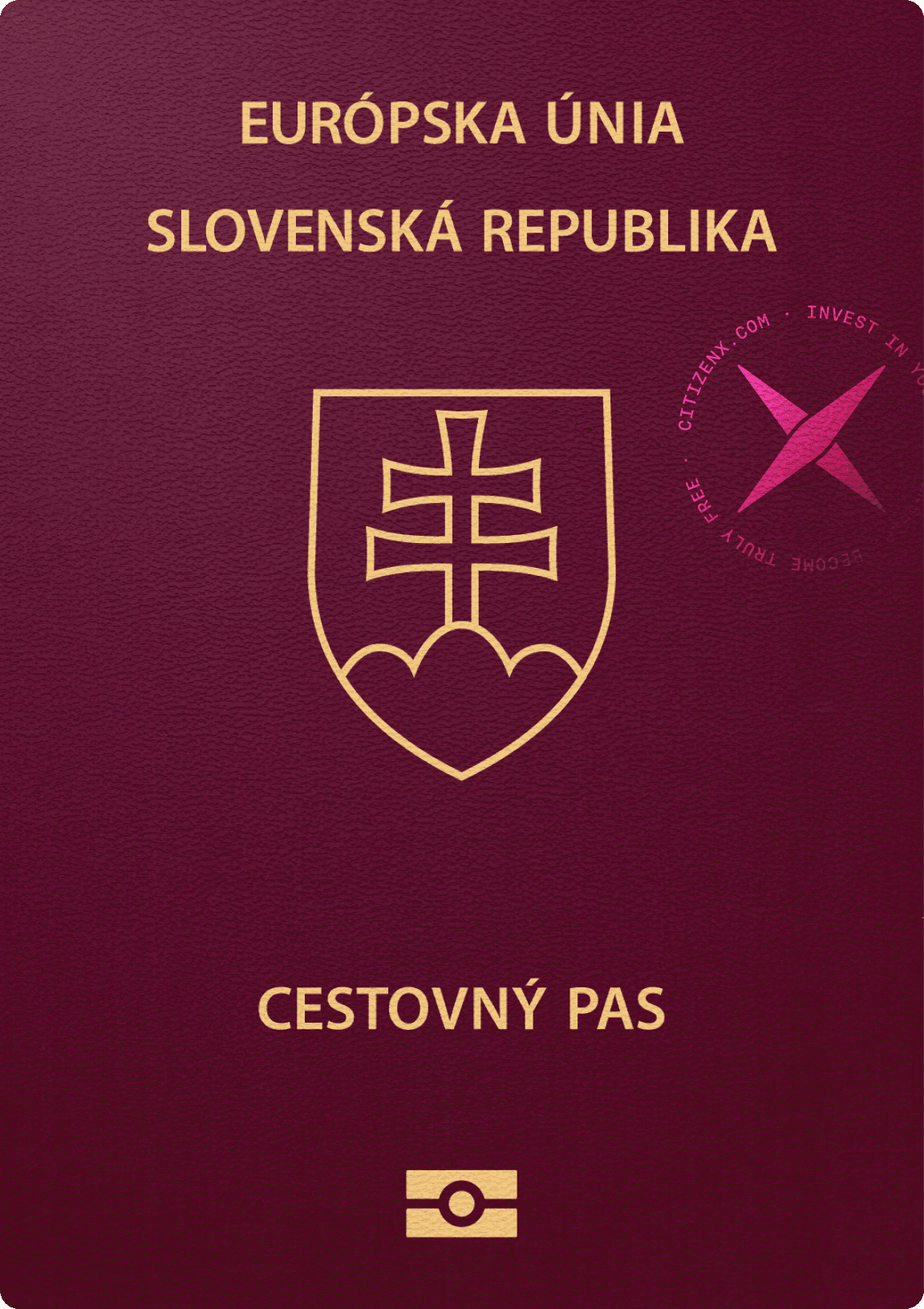
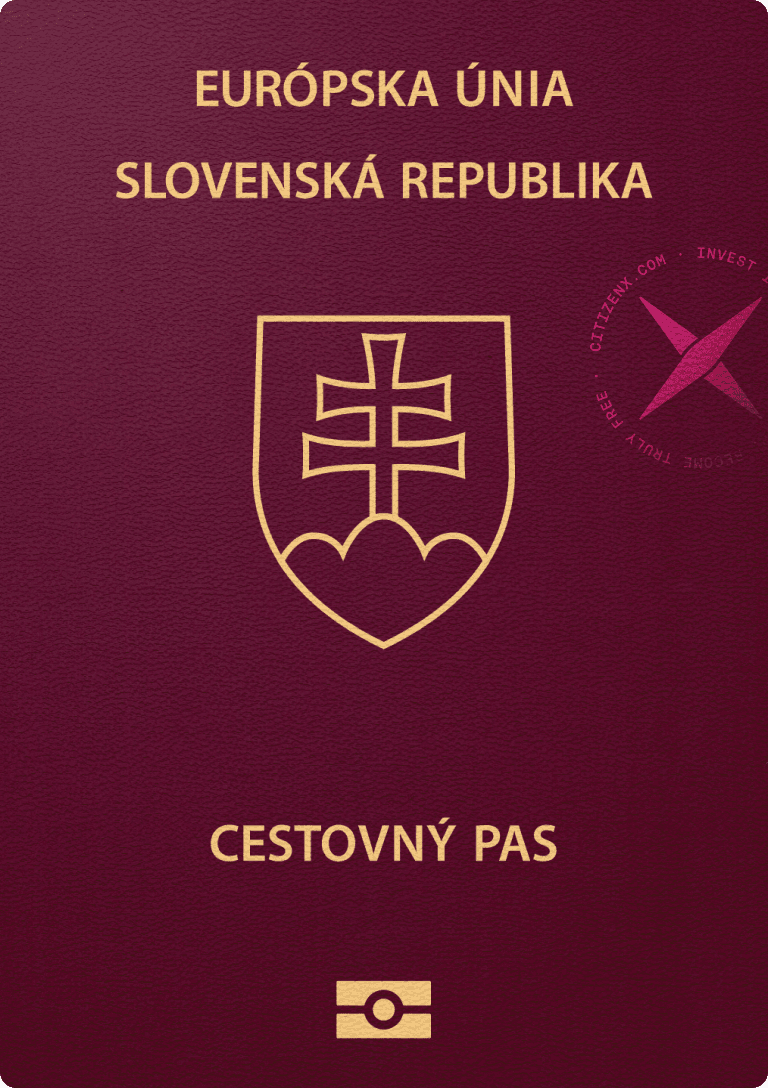
Slovakia Passport
Benefits of Slovak Citizenship
Advantages of Holding a Slovak Passport
A major benefit of Slovak citizenship is that it grants you citizenship of the European Union. As an EU citizen, you have the right to live, work, and study in any of the 27 EU member countries, as well as in EEA countries (Norway, Iceland, Liechtenstein) and Switzerland, without needing visas or work permits.
You can move freely, settle in Paris or Berlin if you wish, or retire in Spain – the entire EU becomes open to you. This also means you can cross borders within the Schengen Area freely, using the EU/EEA lines at airports.
The Slovak passport in 2025 is very powerful: it provides visa-free or visa-on-arrival access to approximately 180–184 countries worldwide, ranking it among the top passports globally. This includes the ability to travel throughout Europe, North America, and many other regions without visa hassles.
Additionally, as an EU national, you have the right to consular protection by any EU country's embassy when traveling abroad in a country where Slovakia has no mission – effectively giving you a broader network of diplomatic support.
Potential Tax Implications for New Citizens
One common question new dual citizens have is about taxes. Slovakia's tax system is residency-based, not citizenship-based. This means simply becoming a Slovak citizen does not make you automatically liable for Slovak taxes on your worldwide income, unless you actually move to Slovakia and become a tax resident there.
A tax resident of Slovakia is a person who either has permanent residency in Slovakia or stays in Slovakia for at least 183 days in a calendar year. If you continue living in the U.S. or elsewhere and do not spend significant time in Slovakia, you will be considered a non-resident for Slovak tax purposes.
Non-residents are only taxed on their Slovak-source income (for example, if you own property in Slovakia and rent it out). They are not taxed on foreign income. So if you live in the U.S. and work there, Slovakia will not tax your U.S. salary or investments.
However, if you move to Slovakia and live there more than 183 days a year, you become a tax resident and must file Slovak taxes on your worldwide income. Slovakia has a progressive income tax and social insurance contributions.
For U.S. citizens: Note that U.S. taxes are based on citizenship, so even if you become a Slovak citizen, if you maintain U.S. citizenship (which you likely will), the IRS will still expect you to file annual tax returns on your worldwide income. Having Slovak citizenship does not change your U.S. tax obligations.
The U.S. and Slovakia have a tax treaty to avoid double taxation, so if you're a U.S. citizen living in Slovakia, you can get credits so you don't pay tax twice on the same income.
Other Perks (Travel, Education, Healthcare)
Slovak citizenship entitles you to free or low-cost education in Slovakia. Slovakia has public universities where tuition is free for citizens. Moreover, as an EU citizen, you often qualify for "home student" tuition rates across the EU. Many European countries either charge no university tuition or have lower fees for EU citizens as opposed to international students.
As a Slovak citizen, if you reside in Slovakia, you will be part of the national healthcare system. Slovakia has a public health insurance scheme – typically, if you live there, you'd pay into it (or your employer would) and receive access to medical care with minimal out-of-pocket costs.
Even if you don't live in Slovakia, EU citizenship helps with healthcare when traveling or if living elsewhere in the EU. You can obtain a European Health Insurance Card (EHIC) as a Slovak citizen, which allows you to get emergency or necessary healthcare in any EU/EEA country on the same terms as local citizens.
Beyond the practical benefits, many descendants find it personally fulfilling to reclaim their Slovak citizenship. It can allow a closer connection to your ancestral homeland – you can participate in cultural life, obtain documents like a Slovak birth certificate, and even apply for restitution or property claims if those ever become relevant.
Frequently Asked Questions (FAQs)
Is Dual Citizenship Allowed?
Yes, in many cases. Slovakia formerly had a very strict approach where acquiring another citizenship led to automatic loss of Slovak citizenship (from 2010 to 2022). However, the law was amended in 2022. Now, Slovak citizens can hold dual citizenship if the second citizenship is acquired under certain conditions (5+ years of residence in that foreign country, through marriage, by birth, or by being a minor).
Importantly, foreigners who become Slovak (like through descent) are not required to give up their original citizenship. The U.S., for example, also permits dual citizenship. So an American who gains Slovak citizenship will end up a dual citizen legally in both countries.
Just remember that if you're a Slovak citizen and later get another citizenship, you need to inform the Slovak authorities within 90 days, so they record it. But you won't lose your Slovak status as long as you meet the law's conditions.
What If None of My Ancestors Had Czechoslovak Citizenship?
If you find that you don't qualify under the current descent law – for example, maybe your Slovak ancestor is a great-great-grandparent (too distant), or your ancestors left so early that you can't prove any of them were ever citizens of Czechoslovakia – you still have options:
Slovak Living Abroad Certificate route: You can pursue the certificate, which has more lenient ancestry requirements (just proof of Slovak ethnicity/heritage, no citizenship needed). With the certificate, you would then need to fulfill a 3-year residency in Slovakia to apply for citizenship.
Other Ancestry Options: Consider if you have ties to neighboring countries. Sometimes genealogical research shows mixed heritage. The Czech Republic, Hungary, and Poland all have their own ancestry-based citizenship programs with different requirements.
Regular Naturalization: If you have a strong desire for Slovak citizenship but no qualifying ancestors, you could consider moving to Slovakia and pursuing ordinary naturalization. The standard requirement is 8 years of continuous permanent residence, passing a Slovak language exam, and integration requirements.
How Does This Affect My Children?
If your children are born after you become a Slovak citizen, they will automatically be Slovak citizens by birth. In Slovakia, children generally assume the citizenship of their parents, so a child born to a Slovak parent is entitled to Slovak citizenship automatically.
If you already have minor children when you apply, they can be included in your application if they also qualify under the three-generation limit. Children under 14 can typically be included with their parent's consent, while those 15-17 may need to apply separately.
If your child's connection to the Slovak ancestor is beyond the three-generation limit (e.g., the ancestor is their great-great-grandparent), they cannot be directly included in your application. Once you become a citizen, however, you can help them apply through other means if necessary.
Can My Spouse Also Apply?
Your spouse is not automatically eligible for Slovak citizenship based on your Slovak ancestry or your acquisition of Slovak citizenship. They would need to qualify independently either through their own Slovak ancestry or through standard naturalization procedures.
However, having a Slovak citizen spouse does create an easier path to naturalization. While your spouse cannot be included in your ancestry-based application, once you become a Slovak citizen, your spouse can apply for a residence permit as a family member of a Slovak citizen.
After living with permanent residence in Slovakia for five years (reduced from the standard eight years due to marriage to a Slovak citizen), your spouse would be eligible to apply for citizenship through the standard naturalization process. During this naturalization, they would still need to demonstrate basic Slovak language skills and knowledge of Slovak culture, unlike ancestry applicants who are exempt from these requirements.
Additionally, being married to a Slovak citizen can exempt your spouse from certain residence permit fees, making the process more affordable.
When Will I Get Slovak Citizenship?
By law, the citizenship application process can take up to 24 months (2 years) from when the Ministry of Interior receives your complete application. This is the maximum legal timeline, though many ancestry cases are processed faster.
Most ancestry applications have been processed in approximately 6–12 months, depending on the complexity of the case and the Ministry's current workload. As of 2023-2024, with thousands of new applications in the system, processing times may trend toward the longer end.
If the Ministry needs to pause to wait for information from another agency (such as a security clearance or archive verification), the 24-month clock is officially paused during that waiting period. This means some complex cases can extend beyond the two-year mark.
After approval, you'll need to take the oath of allegiance and receive your citizenship certificate before you're officially a Slovak citizen. This typically happens within a few weeks of the approval decision.
Do I Have to Pay Taxes in Slovakia?
No, you don't automatically have to pay taxes in Slovakia just by obtaining citizenship. Slovakia's tax system is residency-based, not citizenship-based. You'll only be liable for Slovak taxes if you become a tax resident of Slovakia, which happens when you either establish permanent residence there or spend at least 183 days in a calendar year in Slovakia.
If you continue to live outside Slovakia, you'll only pay taxes on any Slovak-source income (like rental income from Slovak property), not on your worldwide income. For example, if you're an American living and working in the United States who obtains Slovak citizenship by descent, you won't need to file Slovak tax returns or pay Slovak taxes on your U.S. income.
However, if you decide to move to Slovakia, you'll become subject to Slovak taxation on your worldwide income. The Slovak Republic has tax treaties with many countries, including the United States, to prevent double taxation.
For U.S. citizens specifically, remember that the U.S. taxes based on citizenship, so you'll still need to file U.S. tax returns regardless of where you live or what other citizenships you hold.
What If the New Conditions Are Not Met?
If you don't meet the conditions for direct citizenship by descent (e.g., your ancestor is beyond the third generation or you cannot prove they held Czechoslovak citizenship), you still have alternatives:
The Slovak Living Abroad Certificate path is the primary alternative. This requires proving Slovak ethnicity rather than citizenship, followed by three years of residence in Slovakia.
If you're committed to obtaining Slovak citizenship but don't qualify through ancestry, you could pursue regular naturalization by establishing residence in Slovakia for eight years (or five years if married to a Slovak).
If you've already submitted an application but the Ministry determines you don't qualify, they will issue a denial with an explanation. You can sometimes appeal this decision if you believe it was made in error or if you can provide additional evidence.
If laws change in the future (as they did in 2022), your eligibility could change. Slovakia has been gradually liberalizing its citizenship laws, so keeping informed about legal developments could be beneficial.
Which Documents Need Apostilles or Legalization?
Virtually all civil documents issued outside Slovakia (and the Czech Republic) that you submit will need either an Apostille or official consular legalization, depending on whether your country is party to the Hague Apostille Convention.
Documents that typically require apostille or legalization include:
Birth certificates
Marriage certificates
Death certificates
Criminal background checks/police clearances
Court documents (divorce decrees, name changes)
Naturalization certificates
Documents like passports or ID cards are usually not apostilled; instead, you might just show the original and submit a notarized copy.
For U.S. documents, you'll need state-level apostilles for state-issued documents (like a birth certificate from Pennsylvania) and federal apostilles for federal documents (like an FBI background check). Canadian documents typically need certification by Global Affairs Canada and then legalization by the Slovak Embassy.
Documents issued in Slovakia or the Czech Republic do not need apostilles for use in Slovak proceedings due to mutual recognition.
How Do Certified Copies Work?
Certified copies are verified duplicates of original documents that carry legal weight. For your Slovak citizenship application, you'll need certified copies of key documents that prove your identity and lineage.
To obtain a certified copy, you typically have two options:
Have the copy certified by the issuing authority (e.g., the vital records office that issued your birth certificate)
Have a notary public certify that the copy matches the original document
The certification process typically involves the certifying authority examining both the original and the copy, then applying an official stamp or seal to the copy, along with a statement that it is a true copy of the original.
For documents that need to be submitted with your application but that you also need to keep (like your current passport), certified copies are essential. However, for some documents, Slovak authorities may insist on seeing the original first, then they'll make their own certified copies for their files.
When documents are in a foreign language, the certified copy will also need to be translated by an authorized translator. The translator will work from the certified copy, not the original, and will attach their official translation to it.
What Are Common Reasons for Application Delays?
Common reasons for delays in Slovak citizenship by descent applications include:
Incomplete documentation: Missing apostilles, insufficient translations, or absence of required documents can cause significant delays as the Ministry will pause processing until these are provided.
Difficulty verifying ancestor citizenship: If the evidence of your ancestor's Czechoslovak citizenship is thin or ambiguous, the Ministry might need to conduct additional research in archives, which takes time.
Background check issues: If your criminal background check reveals anything that needs further explanation, or if checks with security agencies take longer than expected, this can extend the timeline.
Administrative backlog: With thousands of new applications submitted since the 2022 law change, the Ministry faces a significant workload that can slow processing times across the board.
Complex lineage cases: Applications involving name changes, adoption, or multiple marriages may require additional verification and therefore take longer to process.
Administrative pauses: The 24-month processing clock can be legally paused when waiting for information from other agencies, potentially extending the overall timeline beyond two years.
Consular processing delays: Before your application even reaches the Ministry in Bratislava, it may sit at the consulate waiting for processing and forwarding, which can add weeks to the timeline.
If your application seems to be taking an unusually long time, you can inquire through the embassy or consulate where you applied, but be aware that frequent inquiries won't expedite the process.
How Do I Correct Mistakes or Missing Items in My Submission?
If you realize you made a mistake or omitted something from your application, contact the authority where you applied as soon as possible. For consular applications, reach out to the embassy or consulate; for applications in Slovakia, contact the relevant regional office.
If the Ministry discovers an issue or needs more information, they will send you a written request for explanation or additional documents. You'll typically have 30 days (sometimes more) to respond. The letter will be in Slovak, so have it translated if necessary or ask the embassy to explain it.
To correct errors, provide a clear written explanation and any supporting documents. For instance, if you accidentally gave the wrong year of an ancestor's birth, send a letter correcting it and attach the correct birth certificate if not already provided.
Always include the reference number of your case in correspondence. If you miss a deadline to submit additional information, the law allows the Ministry to stop processing your application, so respond promptly.
It's better to be proactive – if you find better evidence after applying (like discovering your ancestor's passport in your attic), forward it with a cover letter explaining you want to add it to your file.
Are You Interested?
Next Steps if You're Considering Slovak Citizenship
If you're interested in pursuing Slovak citizenship by descent, here are some practical next steps:
Research your family tree: Start by mapping out your family tree to identify your Slovak ancestors. Gather whatever documents your family may already have, such as old birth certificates, immigration papers, or naturalization certificates.
Verify eligibility: Determine if you qualify under the 3-generation rule (parent, grandparent, great-grandparent citizen) or need to pursue the Slovak Living Abroad Certificate path.
Contact Slovak authorities: Reach out to the nearest Slovak embassy or consulate for guidance on the application process and document requirements specific to your country.
Gather required documents: Begin collecting birth, marriage, and death certificates linking you to your Slovak ancestor, as well as evidence of your ancestor's citizenship. Also obtain the necessary criminal background checks.
Get documents apostilled and translated: Have all required documents authenticated with apostilles or legalization, then professionally translated into Slovak by authorized translators.
Prepare for application submission: Schedule an appointment at the Slovak embassy or consulate, organize your documents, and be ready to apply for both the residence permit and citizenship simultaneously.
Consider professional assistance: If your case is complex, consider hiring a genealogist or legal professional who specializes in Slovak citizenship applications.
Plan for the timeline: Be prepared for a potentially lengthy process, likely 6-24 months from submission to approval, and budget for at least two trips to the embassy (application and oath).
Remember that each case is unique, and the specific documents and evidence required may vary depending on your particular family history and circumstances.
Need Help With Your Application?
Who We Are
We are a specialized team of immigration and citizenship experts focusing on European citizenship by descent programs, including Slovakia's. Our advisors include legal professionals familiar with Slovak citizenship law, genealogical researchers who can help trace your Slovak ancestry, and document specialists who understand the intricacies of apostilles, legalization, and translation requirements.
Many of our team members have personal experience with the citizenship by descent process, either having gone through it themselves or having helped family members do so. This gives us practical insight beyond just theoretical knowledge of the law.
We can assist at any stage of your application journey, from preliminary eligibility assessment to document gathering, application preparation, and follow-up with Slovak authorities. Our goal is to make the process as smooth and stress-free as possible while maximizing your chances of success.
Conclusion
Final Thoughts and Key Takeaways
Slovakia's citizenship by descent program offers a valuable opportunity for descendants of Slovak emigrants to reconnect with their heritage while gaining the significant benefits of European Union citizenship. The 2022 amendments have made this process more accessible than ever, extending eligibility to third-generation descendants and relaxing dual citizenship restrictions.
Key takeaways from this guide include:
Eligibility extends to children, grandchildren, and great-grandchildren of former Slovak or Czechoslovak citizens born in Slovakia.
Even if direct descent criteria aren't met, the Slovak Living Abroad Certificate provides an alternative path to citizenship with three years of residence. Some applicants also compare this pathway with global alternatives such as Citizenship by Investment in Argentina, which provides a different route to secure mobility rights and long-term planning flexibility.
Dual citizenship is permitted, allowing you to maintain your original citizenship while adding Slovak citizenship.
The application process requires in-person submission but does not require Slovak language proficiency for descent applicants.
While gathering the necessary documentation requires effort, the benefits – including EU-wide freedom of movement, access to education and healthcare, and a powerful passport – are substantial rewards.
Whether your motivation is honoring family heritage, securing European mobility rights, or pursuing educational or professional opportunities in the EU, Slovak citizenship by descent represents a valuable opportunity worth exploring.
Navigation for Further Official Guidance
For the most current and authoritative information on Slovak citizenship by descent, refer to these official sources:
Ministry of Interior of the Slovak Republic: The official decision-making authority for citizenship applications. Visit their website (www.minv.sk) for the latest legal requirements and application forms (primarily in Slovak).
Ministry of Foreign Affairs of Slovakia: Provides information about consular services, including citizenship applications through embassies and consulates. Their site (www.mzv.sk) includes contact information for Slovak diplomatic missions worldwide.
Office for Slovaks Living Abroad (ÚSŽZ): The primary resource for information on the Slovak Living Abroad Certificate and diaspora matters. Visit www.uszz.sk for guidance on proving Slovak ethnicity and heritage connections.
Slovak Embassies and Consulates: Your closest Slovak diplomatic mission is the practical point of contact for applications. Find yours through the Ministry of Foreign Affairs website.
Remember that citizenship laws can evolve, and procedural requirements may change. Always verify current information through official channels before proceeding with your application.
The journey to Slovak citizenship by descent may be complex, but with proper preparation and patience, it offers a meaningful connection to your heritage and opens doors throughout Europe for generations to come.