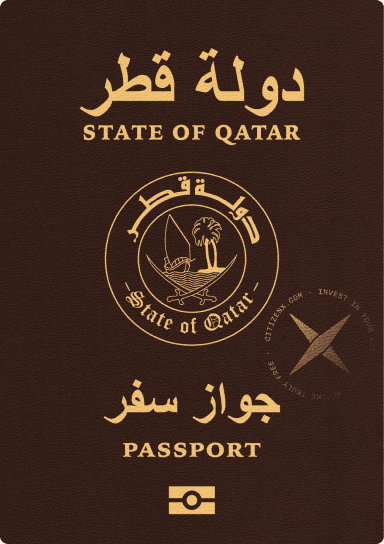
The best second passport options for Qatari citizens in 2026, Qatar's dual nationality rules, and how to build a Plan B while protecting your Qatari citizenship.
Qatari families have already seen how quickly a political dispute can change the practical meaning of a passport. The lesson is worth remembering even when life is comfortable: money abroad and the right to live abroad are two different assets.
Qatar's 2017–2021 Gulf crisis began with the severing of diplomatic ties and a blockade by neighboring states and Egypt. The Al-Ula Declaration brought the crisis to an end in January 2021. In between, regional connections that families and businesses had taken for granted became political questions.
You do not have to predict another crisis to want more options. A business owner in Doha can remain committed to Qatar while arranging somewhere else for the family to live, study, or spend an extended period. That is a reasonable way to manage a life that already crosses borders.
But Qatari citizenship is a substantial part of that life. Acquiring another nationality without resolving the Qatari legal position can put the very thing you want to protect at risk.
I've been saying this for years. Cash is king. But passport is queen. For Qataris, the strategy starts with understanding the value of the queen you already hold.
Why Qataris need a Plan B
The strongest reason is concentration.
If your business, income, property, and family's right to live somewhere all depend on one country, your personal position is less diversified than your investment portfolio might suggest. An overseas brokerage account helps with one part of that problem. Immigration status addresses another.
A second base can also make ordinary life easier. Perhaps your children will study abroad and you want to spend more than a visitor's allowance near them. Perhaps your business needs you in Europe for extended periods. Perhaps you want a retirement option prepared before it becomes urgent.
Those are concrete objectives. “A stronger passport” is a much less useful brief.
Qataris should also take stock of the travel access they already have. Qatar appears on the US State Department's Visa Waiver Program list, allowing eligible citizens with approved electronic travel authorization to visit for tourism or permitted business activities for up to 90 days. That permission does not authorize employment or permanent residence.
Qatari nationals also appear on the UK's electronic travel authorisation list, giving eligible travelers a route for short visits without a conventional visitor visa.
That changes the comparison. A Caribbean citizenship should be assessed for the specific rights and destinations it adds. It should not be sold to a Qatari as though every aspect of their existing mobility needs replacing.
The more valuable question is where your family could stay if a visit needed to become a year abroad.
The Qatari nationality question: deal with this first
Qatar's rules contain an exception, but it is an exception granted by the state.
Article 18 of Law No. 38 of 2005 on Qatari nationality prohibits holding another nationality alongside Qatari nationality unless permitted by a decision of the Emir. Article 11 allows Qatari nationality to be removed by an Emiri decision when a person acquires another nationality.
The distinction matters. The law does not describe an automatic loss at the instant of foreign naturalization, but it does not make unauthorized dual nationality safe.
The same law includes separate rules for naturalized Qataris. Article 12 includes absence exceeding one year without lawful justification among the grounds for withdrawal. Article 13 generally limits removal or withdrawal to the person concerned unless the decision states otherwise. Marriage and acquisition of a spouse's nationality can also engage specific provisions.
Before applying, have Qatari nationality counsel establish your position under the current Arabic law, the process for any required Emiri decision, and exactly whom that decision would cover. Ask what it would mean for your existing rights and obligations, as well as for the citizenship itself.
A lawyer's opinion can explain the law. It cannot substitute for the government decision the law requires.
How to build a Plan B while protecting Qatari citizenship
If retaining Qatari citizenship is essential, make that the first condition of the plan.
Where the necessary authorization for dual nationality has actually been secured, counsel can assess a citizenship application against its scope and conditions. Without that foundation, I would investigate residence abroad before making a foreign citizenship application.
A residence permit can give a family somewhere else to live without itself granting another nationality. Whether a particular arrangement fits your Qatari position still needs review, especially for naturalized citizens planning a long absence.
Choose a place the family would use
Start with the destination and the intended life there. A parent spending part of the year near a child's university needs different rights from someone moving a business and employing staff locally.
Compare permission to work, dependant eligibility, schooling, healthcare, renewals, and required physical presence. Ask whether older children can remain included and what happens when their dependency ends.
For Britain, begin with the actual work, business, family, or other immigration route available to you. Owning a London apartment does not by itself provide permission to settle there. Apply the same approach to any other destination: establish the right to live there before making a property commitment.
If geographic diversification is the objective, I would also consider how independent the destination is from the risks you are trying to reduce. Another nearby home may be convenient while still sharing many of the same regional disruptions.
Keep residence and citizenship as separate decisions
Confirm what each application stage grants. Residence, permanent residence, and citizenship are distinct legal statuses, even when an adviser markets them together as a single journey.
If a residence route eventually makes you eligible for naturalization, you can review that option later. There is no need to commit to the citizenship outcome at the beginning.
Ask for the renewal conditions in writing and decide whether the family can maintain them. A permit that quietly lapses while you are in Doha will not do the job you bought it for.
Resolve the legal position before relying on discretion
Keeping personal affairs private is sensible. Relying on secrecy to preserve citizenship is a different proposition.
An agent's claim that a program is confidential does not establish that Qatar permits you to acquire its nationality. Nor does leaving a foreign passport unused settle the consequences of the citizenship behind it.
Use accurate information throughout the application. If you already hold another nationality, get advice on your existing position before making further applications or representations to either country's authorities.
The goal is an arrangement you can use openly and maintain with confidence.
Family applications: assess each person separately
A family quote may group several people together financially. Their nationality questions still need individual answers.
Give your advisers the acquisition history of each citizenship, marriage and birth records, the children's ages, and any relevant government decisions. Confirm whether a proposed authorization covers the spouse and dependants rather than assuming it follows the main applicant.
For a mixed-nationality household, the non-Qatari spouse may have different citizenship options. Explore whether those options create useful residence rights for the family, and verify the conditions in the destination country before relying on them.
For children, establish whether an application grants nationality immediately, requires a later registration, or only creates eligibility. Do not import another country's rules about temporary dual citizenship or choosing nationality at adulthood into the Qatari analysis.
The best family plan is one in which every person's status works. A low per-person price cannot compensate for an unresolved legal consequence.
How citizenship by investment works
Once the Qatari position is resolved, the international application follows the chosen country's process.
An eligible applicant makes a qualifying contribution or investment and undergoes government vetting. The file generally includes identity and family records, police certificates, and evidence explaining both accumulated wealth and the funds used for the application. Interviews, biometric enrollment, and other formalities depend on the program.
For a Qatari business owner, the financial file should explain how the money became available personally. Company profits, dividends, inheritance, or a property sale each require the relevant evidence. A bank statement shows where money sits; supporting records explain where it came from.
Approval is a government decision. A substantial contribution does not remove the need for a complete, credible application.
The amounts below are starting contributions before due diligence, processing, passport, and licensed agent fees. Compare the full household cost and eligibility before choosing a program.
I also prefer to keep the citizenship decision separate from the investment portfolio. If an approved property is attractive on its own merits, examine it. If you mainly want another citizenship, a transparent contribution can be easier to assess than a property purchase wrapped in promises about yield and resale.
St Kitts and Nevis: the benchmark
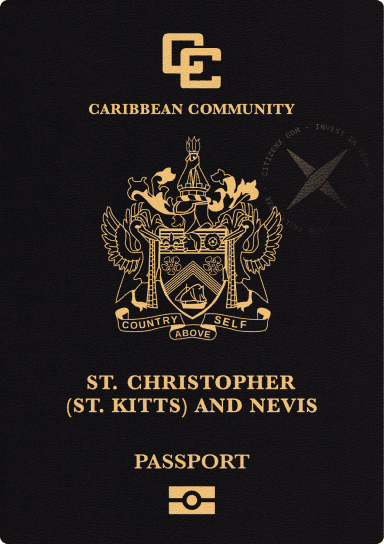
St Kitts and Nevis is where I would begin a Caribbean comparison for a Qatari family whose nationality position has been properly resolved.
The appeal is a direct contribution route and citizenship in a country outside the Gulf. Its value should be measured against what the family wants that additional nationality to do: provide another home, reduce dependence on one issuer, or support a longer-term international plan.
I would use it as the benchmark and ask each alternative to justify the difference in cost, eligibility, and requirements. For a family of four, the headline individual price at another program may be a misleading comparison.
Other Caribbean options worth considering
Dominica deserves attention for a single applicant. Its Economic Diversification Fund schedule starts at 200,000 USD for one person, increasing to 250,000 USD for the main applicant and up to three qualifying dependants, before fees.
That is a meaningful difference for an individual. For a family of four, the contribution matches the St Kitts starting amount, so the remaining comparison becomes more important.
Antigua and Barbuda starts at 230,000 USD under its National Development Fund option. It belongs on the family shortlist, with the actual processing charges, dependant rules, and ongoing obligations included in the calculation.
Grenada lists a 235,000 USD minimum contribution through its Investment Migration Agency. Its US treaty-investor connection deserves a careful explanation for Qataris.
Grenada appears on the State Department's E-2 treaty-country list, while Qatar does not. The E-2 concerns developing and directing a qualifying US business. Qatar's existing visitor access serves a different purpose.
Under the US rules for treaty investors, applicants who acquired treaty-country nationality through financial investment generally need three continuous years of domicile in that country before applying, subject to the statutory exception for previously granted E status.
Holding a Grenadian passport for three years while continuing to live in Doha does not establish that domicile. If a US business is the objective, assess the residence requirement, business plan, and alternative US immigration routes before choosing Grenada.
Outside the Caribbean, São Tomé and Príncipe starts with a 90,000 USD contribution for a single applicant. Its attraction is the lower entry cost. Evaluate the citizenship against the family's actual destination needs rather than treating price as the whole decision.
Vanuatu starts at 130,000 USD under its donation route, before fees, and is worth examining when processing speed matters. The European Union's removal of Vanuatu's visa exemption means it should not be chosen as a shortcut to Schengen travel.
For a Qatari applicant, neither a lower contribution nor a shorter processing estimate removes the need to settle the home-country position first.
El Salvador: the million-dollar outlier
El Salvador's Freedom Visa route is marketed around a 1 million USD contribution in Bitcoin or USDT and a pathway to citizenship.
I would treat it as a country-specific decision. If you want to build a business or a life in El Salvador, there is a reason to examine the route closely. If you mainly want a general Plan B, the price needs a stronger justification.
A million dollars is four times the starting St Kitts contribution. Being able to afford the difference does not make it irrelevant.
Establish the current legal route, the point at which nationality is granted, and the requirements for your family. The payment method tells you very little about whether the program is the right fit.
The strategic framework: how to think about this
For Qataris, I would make the decisions in this order.
First, decide what you want to preserve. If Qatari citizenship and your position at home are essential, they belong at the center of the brief.
Second, establish the lawful options. A second citizenship with the necessary government authorization and a foreign residence permit are different strategies. Choose from the options genuinely available to you.
Third, define the use case. Easier travel, an alternative home, education abroad, and a US business can require different solutions. Rank them rather than asking one passport to solve everything.
Fourth, compare the household. The spouse's nationality, children's ages, and inclusion of dependent parents may change both the legal route and the financial result.
Finally, test whether the plan would work in practice. Where would you live? Could the children enroll? Could you work? Would you have accessible funds? Could the business continue operating while you were abroad?
A document is useful when those answers come together.
What the process actually looks like
Begin with a Qatari legal review and a preliminary eligibility assessment for the destination. Before paying a non-refundable application fee, establish the legal outcome you intend to achieve and any authorization it requires.
Then prepare the identity, family, police, and financial records. Arabic documents may need certified translation and the legalization required by the receiving authority. Build enough time into the plan for records from other countries where family members have lived.
The authorized agent submits a citizenship file, or the relevant representative submits a residence application. Government review follows, with further evidence and appointments where required.
For contribution routes that collect the main payment after approval in principle, follow the prescribed payment sequence. Confirm when citizenship legally takes effect rather than assuming it begins when the passport arrives.
After approval, record the ongoing requirements. Residence renewals, passport expiry, required visits, and changes in dependant eligibility should all have an owner and a date.
Ask for an itemized quote from the beginning. Government charges and licensed agent fees should be visible, along with what the quoted service includes.
What I'd do if I were a wealthy Qatari
If my family and business were in Doha, I would start with the assumption that Qatar remains home.
Over the next 90 days, I would get a written nationality assessment for the whole family and establish whether an authorized second citizenship is a realistic option in our circumstances. I would not make the family's plan depend on an exception that had merely been discussed.
In parallel, I would identify one overseas country we would actually use. I would review residence options, schools, healthcare, and the time we could realistically spend there. This work has value even if we never pursue another nationality.
If the citizenship route were properly authorized, I would compare St Kitts, Dominica, and Antigua using full household quotes. I would add Grenada only if its US business route fitted an honest plan for domicile and investment.
I would also review the family's accessible funds. A second home on paper is more useful when there is enough readily available money to live there without disrupting the operating business.
The lesson I take from Qatar's recent history is that arrangements should exist before circumstances force you to use them. You can prepare calmly while remaining optimistic about the country where you built your life.
Building a Plan B while keeping Qatar home
For a Qatari family, more freedom should mean more usable choices while protecting the rights that already matter.
That may mean an authorized second citizenship. It may mean a well-chosen residence abroad, supported by practical arrangements for the family. The right answer depends on the legal position and the life you want to make possible.
Start there. Choose the document after the objective is clear.
Speak with CitizenX to compare the options for your family and get an all-in citizenship quote, including licensed agent fees covering the full process with no additional CitizenX fees along the way.