The best second passport options for Saudi citizens in 2026, from St Kitts and Nevis to Grenada, and the Saudi nationality rules to resolve before applying.
You can be optimistic about Saudi Arabia and still want a second passport. For a family whose business, assets, and future depend heavily on one country, having another option is ordinary financial sense. The question is which citizenship adds something useful, and whether you can acquire it without putting your Saudi status at risk.
A business owner in Riyadh can hold international equities, own property abroad, and send the children to school overseas while the whole family's right to live somewhere remains concentrated in Saudi Arabia. The investment portfolio is international. The family's legal options may be much narrower.
That gap matters. Owning a London apartment does not give you the right to live in Britain. Having enough money to support your family in Europe does not give you permission to stay there. Wealth buys comfort once you arrive. Immigration status determines whether you can make the move at all.
I've been saying this for years. Cash is king. But passport is queen.
For Saudis, the strategy takes more care than a comparison of passport rankings. Saudi citizenship is valuable, and Saudi law restricts acquiring another nationality. A useful Plan B has to account for both sides of that equation.
Why Saudi Arabians need a Plan B passport
The first reason is concentration.
If your operating business, property, income, and citizenship all depend on the same country, a change there can affect several parts of your life at once. You would question an investment adviser who put your entire portfolio in one market. It is worth applying the same scrutiny to the family's ability to live and work elsewhere.
This does not require a prediction that Saudi Arabia will do badly. You can keep investing in the Kingdom because you believe in its future. Another citizenship, where legally available, gives you more room to decide what happens if your own circumstances change.
The second reason is mobility, although the sales pitch often exaggerates this.
Saudi nationals already appear on the UK's electronic travel authorisation list, which makes eligible short visits possible without a conventional visitor visa. The European Commission's rules for Saudi applicants resident in the Kingdom also provide for five-year multiple-entry Schengen visas for qualifying applicants, subject to passport validity and individual exceptions.
If your only problem is the annual summer holiday, start by using the options you already have. A second citizenship should justify its cost through more than a shorter queue of visa applications.
The third reason is permanence. A visitor visa permits a visit. Citizenship gives you a home in the country that grants it, subject to that country's laws. That distinction becomes important when a family needs somewhere to settle rather than somewhere to spend three weeks.
My view is that the strongest case combines all three: less dependence on one jurisdiction, useful travel access, and another country where your family belongs in law.
The Saudi nationality question: deal with this first
Before choosing a country, establish whether acquiring its citizenship is compatible with your Saudi position.
Article 11 of the Saudi Arabian Nationality Law prohibits a Saudi citizen from acquiring foreign nationality without prior permission from the Prime Minister. It also says that someone who acquires another nationality without permission remains Saudi unless the government withdraws that nationality under Article 13. Unauthorized acquisition can therefore expose Saudi citizenship to withdrawal; loss is not simply automatic at the moment of naturalization.
Family consequences require separate attention. The law contains provisions concerning spouses and children, so permission for one person should never be assumed to settle the position of everyone in an application.
Get Saudi nationality counsel to establish the applicable permission process and the consequences for each family member before committing to a citizenship application. Permission to acquire another nationality should not be treated as a blanket assurance that every existing right remains unchanged.
This is where a Saudi strategy differs from a generic second-passport article. Keeping a foreign passport in a safe does not resolve the legal issue created by acquiring the citizenship behind it.
If a lawful citizenship route is unavailable or the consequences are unacceptable, consider residence abroad. A residence permit can provide a practical alternative home without immediately acquiring another nationality. Any later naturalization would be a separate decision.
Preserving your existing position is part of building a better one.
How citizenship by investment works
Citizenship by investment allows eligible applicants to apply for nationality through a qualifying contribution or investment. Depending on the program, that can mean a donation to a government fund or investment in approved real estate.
An authorized agent prepares and submits the application. The authorities review identity, family relationships, criminal history, source of wealth, and the source of the money being invested. Interviews and biometric enrollment may also form part of the process. Approval remains a government decision.
For a Saudi entrepreneur, the practical work often starts with explaining how business wealth became personal funds. Company ownership, audited accounts, dividends, a property sale, or inheritance documents may all matter. A large bank balance is only one piece of the file.
The contribution figures below are starting amounts, before due diligence, processing, passport, and licensed agent fees. Family composition can change the comparison considerably.
I generally prefer to separate the citizenship decision from the investment portfolio. Buy the citizenship that solves your family's problem. Buy real estate because you would want to own that property on its own merits. Trying to make one transaction deliver freedom, a holiday home, and an exceptional return usually makes the decision harder to judge.
St Kitts and Nevis: the benchmark
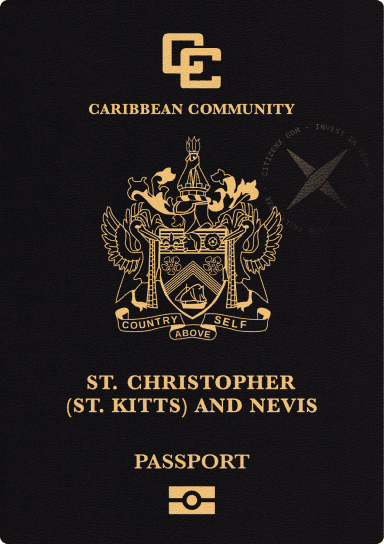
St Kitts and Nevis is where I would begin the comparison for a Saudi family with the legal position resolved and a budget for an established Caribbean program.
Its official Sustainable Island State Contribution starts at 250,000 USD for a main applicant or a family of up to four. Due diligence and other applicable charges are additional. The unit publishes a 120-to-180-day window from acknowledgment of submission to notification of approval in principle, denial, or a processing delay; that is not a promise of a passport within that period.
The appeal is a straightforward contribution route and a citizenship in a jurisdiction outside the Gulf. For a family keeping its business in Saudi Arabia, that geographic separation is a substantial part of the value.
I would use St Kitts as the benchmark, then ask every alternative a simple question: what does this give my family that makes it a better choice?
Other Caribbean options worth considering
Dominica deserves a close look for a single applicant. Its official Economic Diversification Fund schedule starts at 200,000 USD for one person and 250,000 USD for a main applicant with up to three qualifying dependants, before fees.
That distinction matters. Dominica's lower individual contribution does not translate into the same saving for a family of four. Compare the actual household, including the children's ages and any dependent parents, before deciding which program is cheaper.
Grenada adds a particular consideration for entrepreneurs interested in the United States. Its Investment Migration Agency lists a minimum contribution of 235,000 USD, and Grenada appears on the US State Department's E-2 treaty-country list. Saudi Arabia does not.
The E-2 is a route to develop and direct a qualifying US business. It is not an automatic visa or a green card. Under the US rules for treaty investors, people who acquire treaty-country nationality through financial investment generally need at least three continuous years of domicile in that country before applying, subject to the statutory exception for previously granted E status.
Three years holding a Grenadian passport while living in Riyadh is not the same as three years domiciled in Grenada. If America is the objective, work through that requirement with US immigration counsel before choosing the passport.
Antigua and Barbuda belongs on the family shortlist. Its National Development Fund option starts at 230,000 USD per application, with processing and due diligence fees affecting the final household cost. Check the applicable presence and renewal requirements as part of the decision.
Outside the Caribbean, two alternatives serve different priorities.
São Tomé and Príncipe starts with a 90,000 USD contribution for a single applicant. Its attraction is the lower entry cost. I would assess it as a second nationality and an alternative home, then check the specific destinations the family needs. A cheaper passport is only good value if it solves the intended problem.
Vanuatu starts with a 130,000 USD contribution under its donation route, before fees, and is worth considering when processing speed matters. But the European Union ended Vanuatu's visa exemption, so it should not be purchased as a shortcut to Schengen travel. For a Saudi family, the case has to rest on the citizenship itself.
El Salvador: the million-dollar outlier
El Salvador's Freedom Visa route is marketed around a 1 million USD contribution in Bitcoin or USDT and a pathway to citizenship.
I would put it in a separate category. The buyer needs a reason to choose El Salvador itself: a serious interest in the country, a business connection, or a desire to build a life there.
For a Saudi family seeking a general Plan B, a million-dollar contribution needs a stronger justification than novelty. It is four times the starting St Kitts contribution, before comparing fees and household eligibility.
If El Salvador is where you want your future to develop, examine the current legal route and naturalization requirements closely. If you mainly want another citizenship at a reasonable cost, start elsewhere.
The strategic framework: how to think about this
For Saudis, the order of decisions matters.
First, resolve the nationality question. If the necessary permission and consequences do not work for your family, develop a residence strategy instead.
Second, name the job the new status needs to do. There is a difference between easier travel, an alternative place to live, and a route to operating a business in America. Put those goals in order rather than expecting one document to maximize all of them.
Third, compare the household. A single founder, a couple with young children, and a family including adult dependants can get very different answers from the same price list.
With those questions answered, I would compare St Kitts, Dominica, and Antigua for a general Caribbean option. I would add Grenada when its US treaty route fits a realistic residence and business plan. São Tomé would enter the discussion when cost is the main constraint, and Vanuatu when speed carries particular value.
Finally, distinguish the country that grants citizenship from the country where you actually want to live. If the family wants a permanent base in London or Madrid, plan the relevant immigration status there. A Caribbean passport does not by itself grant that right.
What the process actually looks like
Start with the Saudi legal review and a preliminary assessment of program eligibility. Then assemble the family documents, police certificates, financial records, and supporting evidence for the chosen route. Arabic documents may require certified translations and the legalization specified by the receiving authority.
The agent submits the completed file. Government due diligence follows, along with any required interview or biometric appointment. Further questions can extend processing, especially where ownership structures or funds need additional explanation.
For contribution routes that collect the main donation after approval in principle, make that payment at the prescribed stage. Citizenship documentation and the passport follow according to the program's procedures.
Budget from an itemized quote. The contribution, government charges, due diligence, and licensed agent fees should all be visible. There is little value in choosing a program because its headline number looks lower and discovering later that your family composition changes the result.
Build the timeline around a properly prepared application. A flight booking or school deadline does not make a government process move faster.
What I'd do if I were a wealthy Saudi Arabian
If my business and family life were in Saudi Arabia, I would start with what I wanted to preserve: my ability to live at home, run the business, and keep the family's existing position secure.
During the next 90 days, I would get a written Saudi nationality opinion covering myself, my spouse, and the children. I would establish what permission is required and whether the proposed route makes sense after considering the consequences.
In parallel, I would write down the family's actual needs. Where would we go? Would we want to live there for three months or three years? What happens to schooling, healthcare, and the business if we spend an extended period abroad?
If acquiring another citizenship lawfully worked for us, I would request full household quotes for St Kitts, Dominica, and Antigua. I would choose based on eligibility, total cost, requirements, and practical usefulness. Grenada would join that shortlist if I had a credible US business plan and could accommodate the domicile requirement.
I would also make sure the financial arrangements supported the relocation plan. Readily accessible funds, suitable banking, and a realistic housing budget matter more than a collection of passports with no plan behind them.
If the nationality question ruled out a second citizenship, I would spend that time building the best available residence option. The objective is a family with more choices. The document is a means to achieve it.
Building a Plan B while keeping Saudi Arabia home
Saudi Arabia can remain the center of your life while you prepare for a future that may require more flexibility.
A sensible second-citizenship strategy starts by protecting the Saudi status you already hold. From there, choose the country and program that give your family useful options at a cost you can justify.
The right time to arrange those options is while you have the patience to compare them, the records to support the application, and no urgent reason to leave.
Get your all-in quote from CitizenX to compare the options for your family, including licensed agent fees that cover the full process with no additional CitizenX fees along the way.